I have spent 15 years studying, handling, and advocating for platypuses – first as a wildlife researcher in Queensland, Australia, and later as an exotic animal consultant working with zoos and conservation bodies across three continents. Almost everything the average person reads about platypuses online is incomplete, outdated, or dangerously wrong. This guide fixes that.
When the first preserved platypus specimen arrived in England in the late 1700s, scientists assumed it was a hoax – someone had stitched a duck’s bill onto a beaver’s body, added webbed feet, and called it a mammal. They literally took scissors to the specimen looking for stitches. The specimen was real. The confusion was completely understandable.
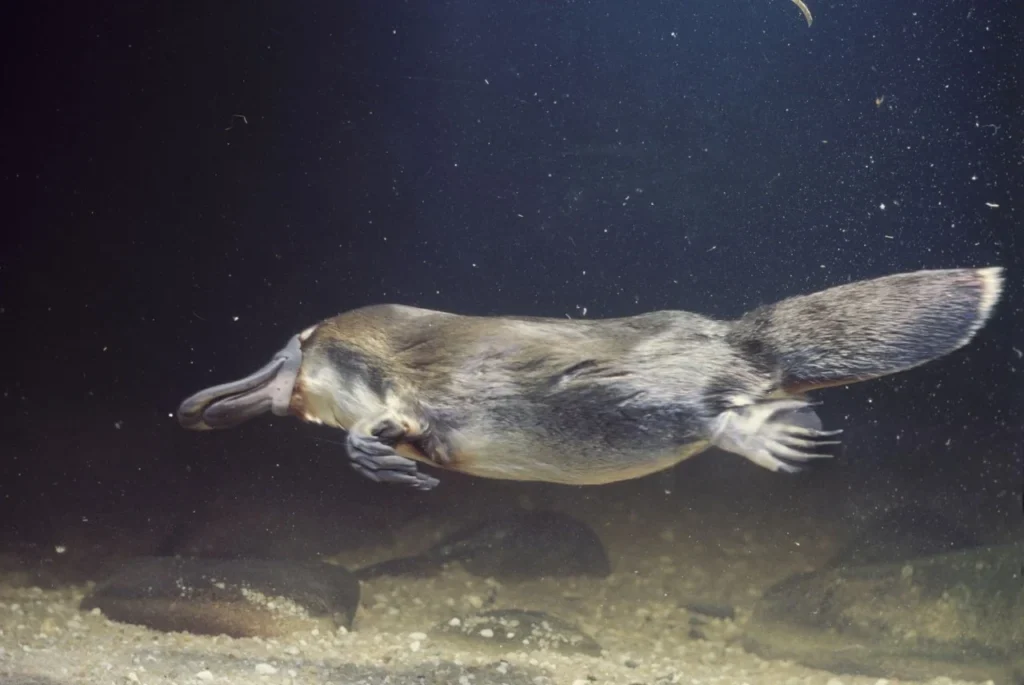
Because the platypus does not just break one rule of biology. It breaks almost all of them.
It is a mammal that lays eggs. It hunts with its eyes, ears, and nostrils sealed shut. It carries venom that defeats morphine. It glows blue-green under ultraviolet light. Its venom chemistry may one day help treat Type 2 diabetes and chronic pain. And it carries ten sex chromosomes – humans have two.
This guide covers everything: the full biology, where platypuses live, what they eat, the complete science of their extraordinary venom, how dangerous they really are, whether you can legally own one, what it would realistically cost, the medical research being built from platypus biology, and what you can actually do if platypuses matter to you. Every factual claim is sourced – references are at the bottom.
1. What Is a Platypus? The Full Biology
The platypus (Ornithorhynchus anatinus) belongs to the order Monotremata – the oldest surviving lineage of mammals, branching off from the rest of the mammal family tree roughly 166 million years ago. Only five monotreme species exist today: one platypus and four species of echidna. Everything else – every dog, whale, bat, and human – sits on a completely different branch.
This evolutionary distance is what makes the platypus so scientifically extraordinary. It is not a quirky duck-beaver. It is a living window into what early mammals looked like before the age of dinosaurs ended. If you are drawn to animals that defy easy categories, the same deep evolutionary strangeness shows up in animals with hard shells – another group whose biology consistently surprises people who look closely.
It lays eggs – but is still a mammal. Unlike every other mammal except echidnas, the platypus reproduces by laying small, soft-shelled eggs. This is not a quirk – it is a preserved window into what reproduction looked like before live birth evolved. The female lays one to three eggs, incubates them by curling her body around them, and nurses the hatchlings on milk – except she has no nipples. Milk seeps through specialized skin patches and the young lap it directly from her fur.
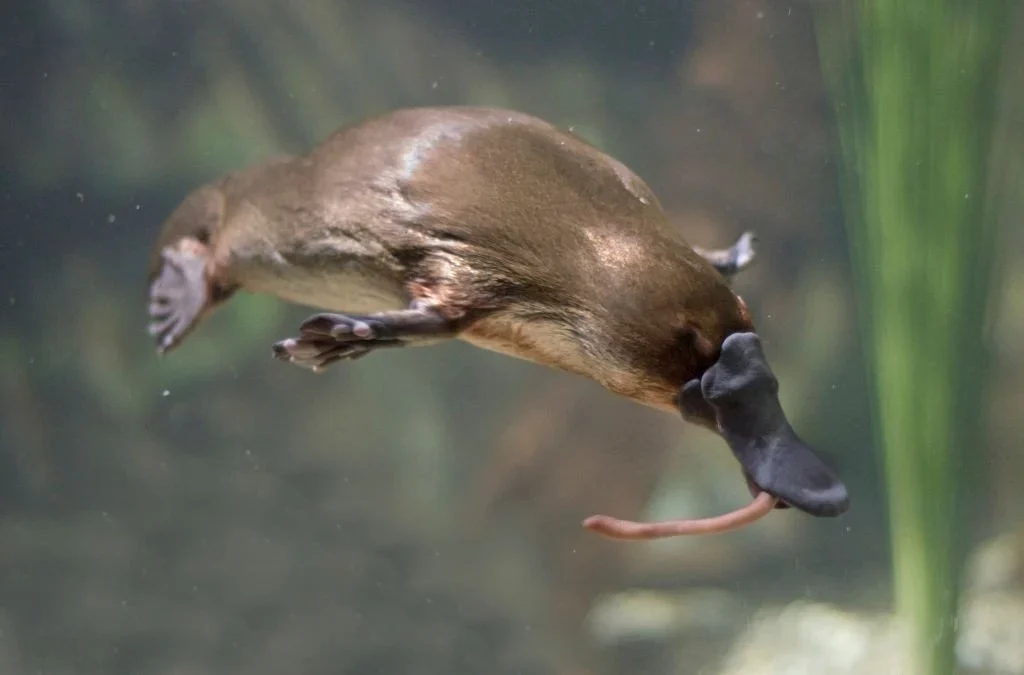
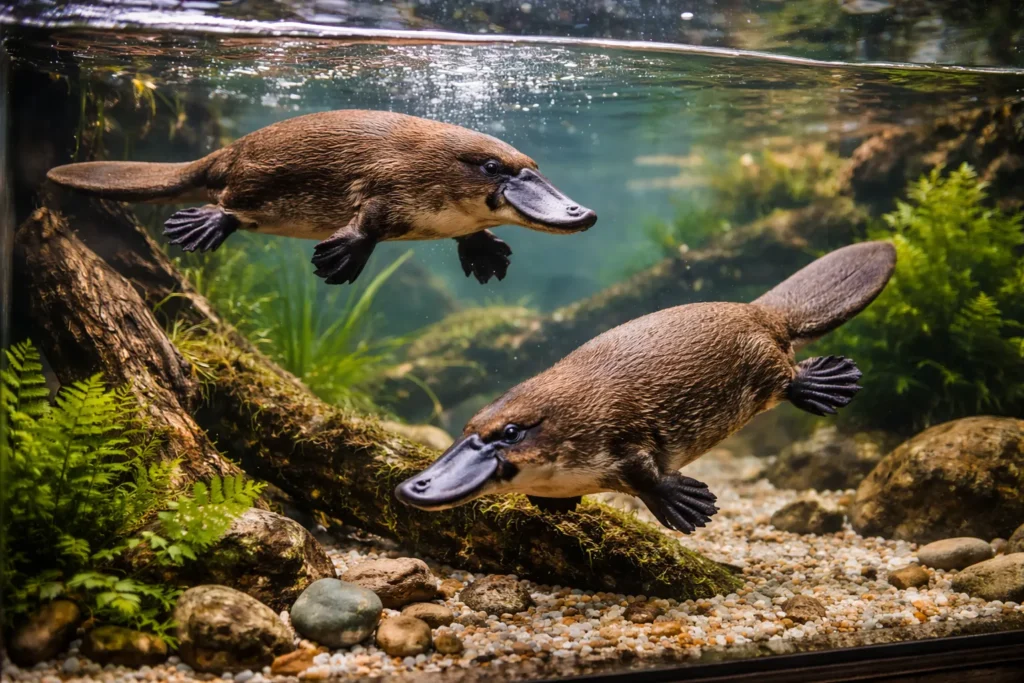
Its bill is a sensory supercomputer. The duck-like bill contains approximately 40,000 electroreceptors and 60,000 mechanoreceptors that detect the minute electrical fields generated by the muscle contractions of prey – in total darkness, through mud and sediment, at the bottom of a river. When a platypus dives, it closes its eyes, ears, and nostrils completely. It navigates and hunts by pure electrical sensing, sweeping its bill side to side like a radar dish. I have watched this in the field: a platypus dropping directly onto a motionless freshwater shrimp with zero visual input, using nothing but electroreception.
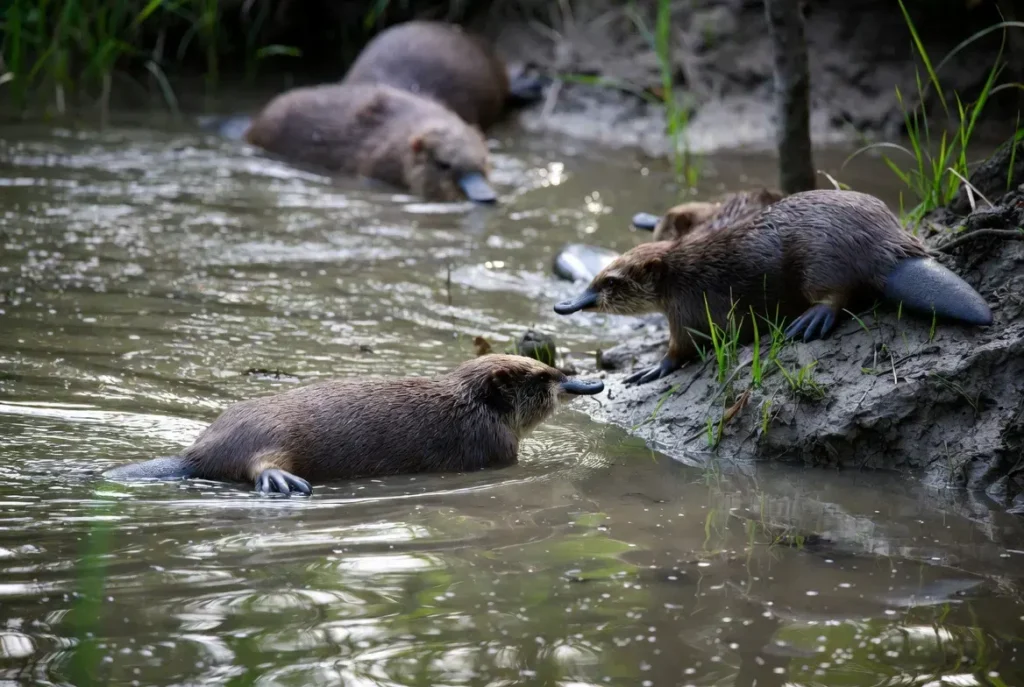
The male is venomous. On the hind leg of every male platypus sits a hollow, keratinous spur connected by a duct to a crural venom gland in the thigh. The venom this system produces is medically unlike almost anything else in the animal kingdom – covered in full detail in Section 5.
It glows under UV light. In 2020, researchers confirmed that platypus fur is biofluorescent – it absorbs ultraviolet light and re-emits it as a blue-green visible glow, confirmed in both wild specimens and captive individuals. The biological function remains under active investigation.
It has no stomach. Food passes from the grinding plates in the bill directly into a very long intestine. There is no stomach, no acid digestion. Hard shells and exoskeletons are spat out; soft tissue is swallowed and processed along the extended gut.
It has ten sex chromosomes. Humans have two (XX or XY). Platypuses have ten (XXXXXXXXXX or XXXXXXXXXXY). The arrangement shares structural similarities with both mammalian and bird sex chromosome systems – further evidence of the platypus’s role as a living evolutionary bridge. Humans share approximately 82% of their DNA with the platypus, compared to 99% with chimpanzees and 85% with mice.
2. Platypus Physical Characteristics
Understanding platypus anatomy explains almost everything about how it lives. Adult platypuses are considerably smaller than most people imagine from photographs:
| Measurement | Male | Female |
|---|---|---|
| Body length | 45–60 cm (18–24 in) | 38–50 cm (15–20 in) |
| Tail length | 10–15 cm (4–6 in) | 8–13 cm (3–5 in) |
| Weight | 1–2.4 kg (2.2–5.3 lbs) | 0.7–1.6 kg (1.5–3.5 lbs) |
Males are significantly larger – one of the clearest examples of sexual dimorphism in monotremes. The broad, flat tail stores fat reserves critical during lean periods and for females during the fasting stretches of egg incubation. Unlike a beaver’s tail, it is covered in fur, not scales, and functions as a rudder during swimming.
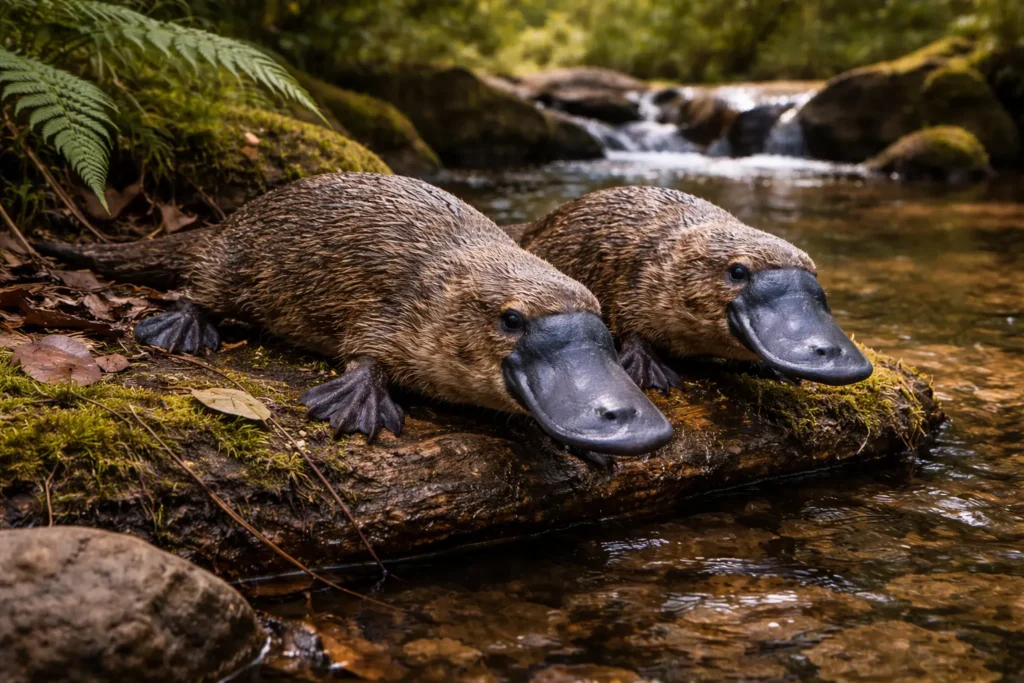
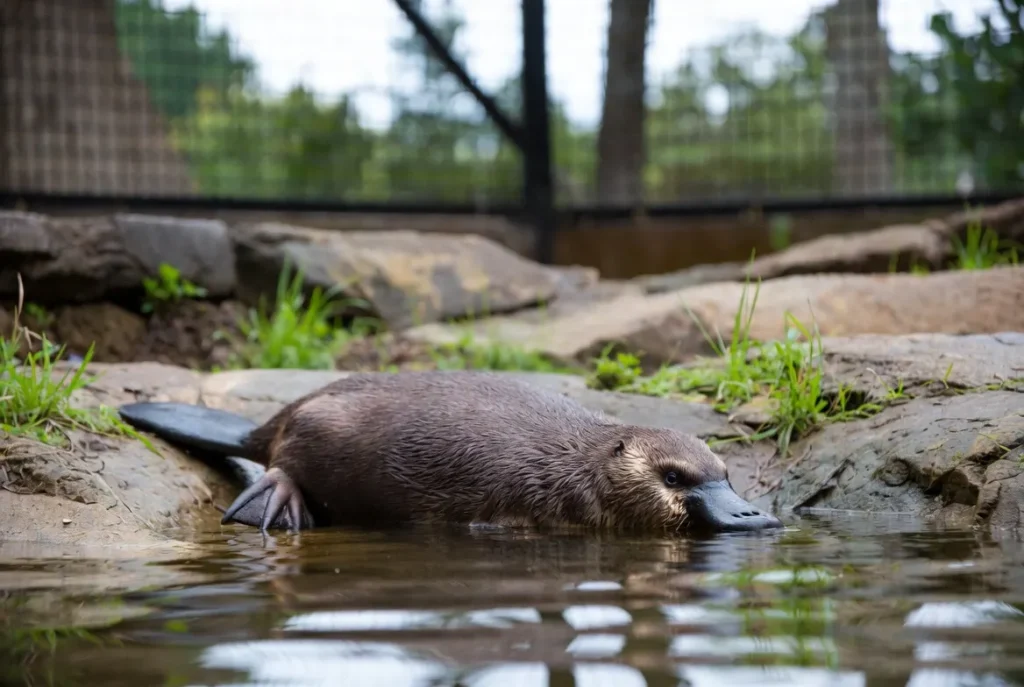
The fur is dense, waterproof, and double-layered – coarse guard hairs over fine insulating underfur – trapping air to keep the platypus dry and warm in cold alpine streams. Under certain light angles, the fur is faintly iridescent. Field researchers sometimes use this property to spot animals at dusk. All four feet are fully webbed; the front feet provide primary propulsion in water, with webbing folding back on land to expose the claws for burrowing.
3. Where Do Platypuses Live?
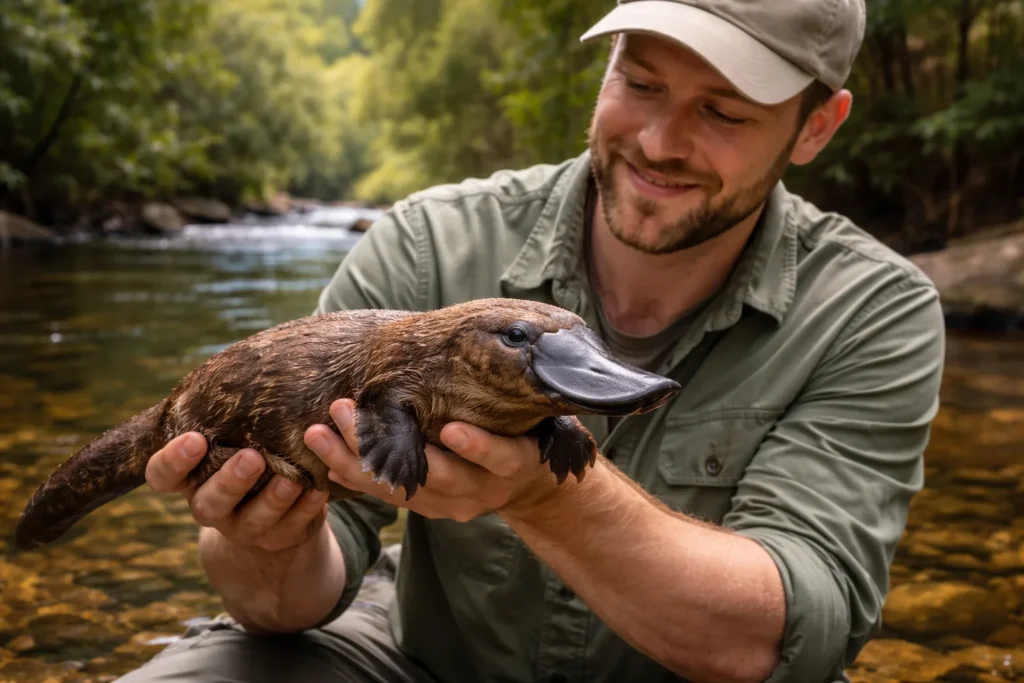
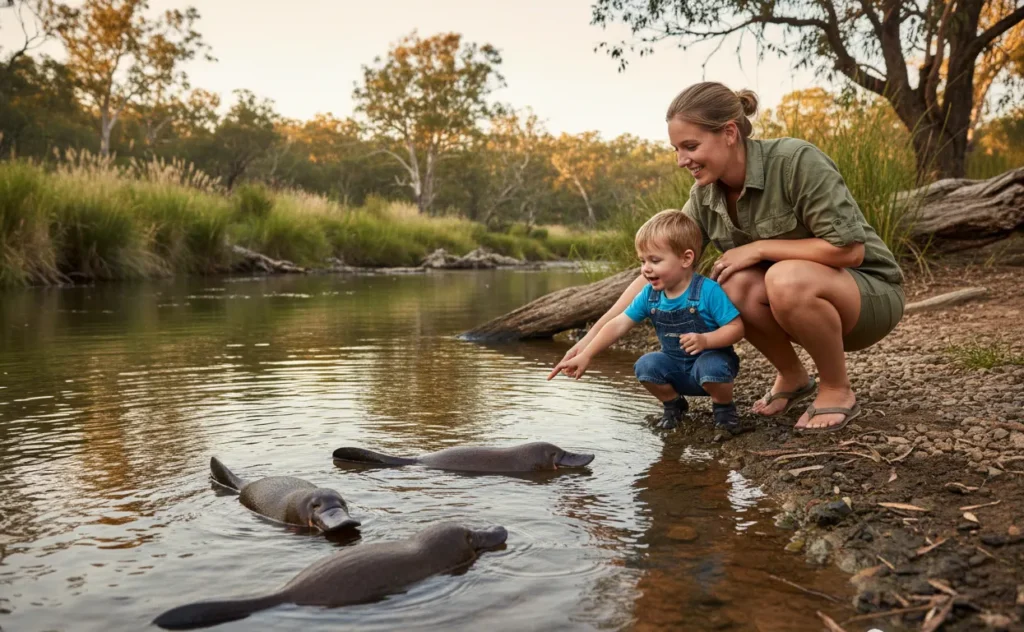
Platypuses are found exclusively in eastern Australia and Tasmania. Their range extends from tropical streams in Queensland south through New South Wales and Victoria, down to cold alpine lakes at over 1,000 meters elevation in the Snowy Mountains. Tasmania supports a particularly strong population due to low human development pressure and clean waterways.
Platypuses are not adaptable animals. Their requirements are highly specific: clean, well-oxygenated flowing freshwater; stable, vegetated riverbanks deep enough to excavate burrows; abundant invertebrate prey; and large foraging territories – a single platypus ranges over 90 to 170 acres of waterway. Dams, weirs, and riverside development that fragment a river system cut off foraging territory and breeding access simultaneously, which is why population monitoring has become such an urgent research priority.
Despite their range, platypuses are genuinely difficult to observe in the wild. They are mostly crepuscular and nocturnal – most active from dusk to dawn – and spend up to 12 hours a day in their burrows. The best locations for reliable sightings are Eungella National Park in Queensland, the Tidbinbilla Nature Reserve near Canberra, and certain streams in the Blue Mountains. Arrive 30 minutes before first light and wait quietly near the water’s edge. Australia also produces some of the world’s most remarkable protected wildlife – if you are curious about another iconic Australian species that attracts enormous interest as a potential pet, our guide on keeping a kangaroo as a pet covers the legal and practical realities in full.
4. What Do Platypuses Eat?
Platypuses are strict carnivores. They consume zero plant material – any vegetation occasionally found in their cheek pouches is accidental debris scooped from the riverbed during foraging dives.
A platypus typically eats 20 to 50% of its own body weight every single day. For a 1.5 kg adult, that is 300 to 750 grams of live prey daily – an extraordinary demand that is why they spend most of their waking hours hunting. Primary prey items include aquatic insect larvae (caddisfly, mayfly, dragonfly, and beetle larvae), freshwater shrimp, yabbies, annelid worms, and occasional small fish or tadpoles.
The platypus is a benthic forager – it hunts along the riverbed, not in open water. A single feeding dive lasts 30 to 140 seconds. During the dive, the platypus scoops prey from the substrate using its bill and stores it in cheek pouches. Back at the surface, it grinds the food between horny keratin plates in the bill – platypuses have no teeth as adults, though juveniles are born with small teeth that shed before they leave the burrow.
No dry food. No pellets. No frozen substitutes. A platypus will simply refuse to eat anything that is not alive and fresh – and this is one of the core practical reasons private ownership is impossible, independent of any legal consideration.
5. Platypus Venom: The Complete Breakdown
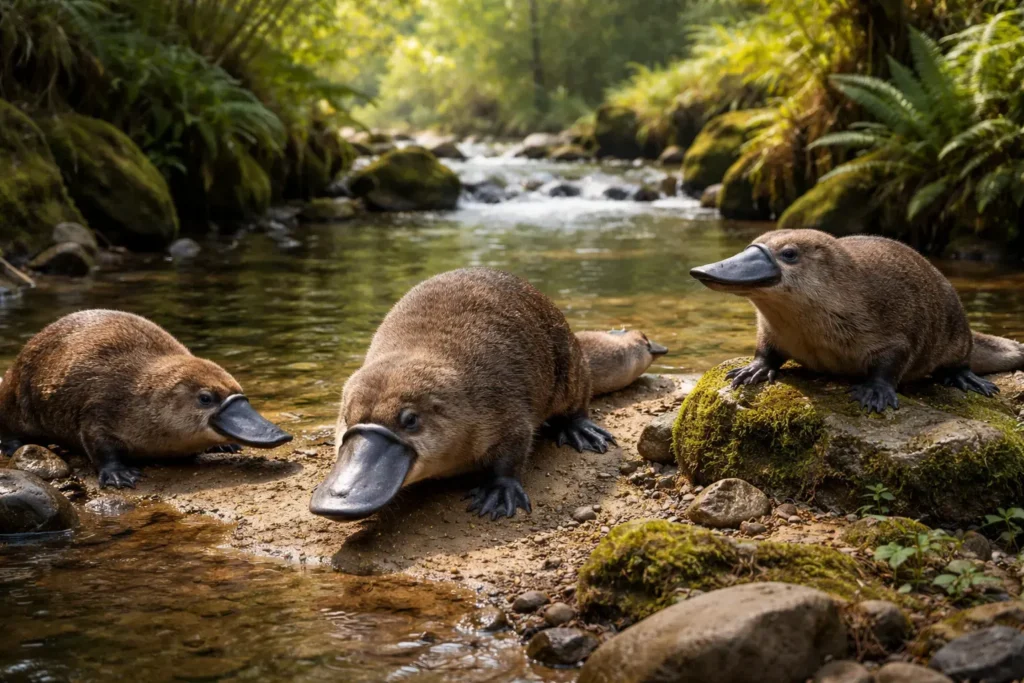
I started researching platypus venom expecting a standard answer. What I found had me reading scientific papers until 2:00 AM three nights in a row. The detail that stopped me cold: morphine does not work on it. Not “works less well.” It simply addresses the wrong mechanism entirely.
Only the males. Only from the hind legs. The bill is a sensory organ – it delivers nothing. The venom apparatus is located entirely in the hind legs. Male platypuses have crural glands in the thighs connected by ducts to hollow, keratinous spurs on each ankle. Female platypuses are born with spur buds that fall off in the first year. Only adult males carry functional venom. During breeding season – roughly June to October – the crural glands swell to several times their off-season size, producing up to 4 milliliters of venom.
The chemistry: what is actually in platypus venom. Platypus venom contains at least 19 distinct peptide groups across more than 80 identified compounds. Three classes drive most of the biological effects:
Defensin-like peptides (OvDLPs) – co-opted from immune system proteins into pain-causing agents. The key compound is DLP-4, which interacts with pain receptors through pathways that standard opioids do not govern. This is the primary reason morphine fails.
C-type natriuretic peptides (OvCNPs) – interfere with blood pressure regulation and drive the severe, persistent swelling at and around the wound site.
Nerve growth factor (OvNGF) – directly influences how pain signals are transmitted through the nervous system and is strongly implicated in the hyperalgesia that persists for months after the wound appears externally healed.
The venom also shares gene sequences with reptile venoms – specifically snake and lizard venoms – suggesting these venom genes evolved independently from similar ancestral sources. This is convergent evolution at the molecular level, and it appears throughout the animal kingdom in surprising places. Our guide on lizards that look like snakes covers another striking example of how unrelated animals arrive at near-identical solutions through entirely separate evolutionary paths.
Why morphine does not work. Morphine and other opioids work by binding to opioid receptors to suppress pain signaling. Platypus venom – specifically through its DLP-4 peptides – activates pain pathways that those receptors do not govern. Morphine is not overpowered; it is simply addressing the wrong mechanism. In documented Australian hospital cases, patients given standard opioid pain management consistently reported minimal relief. Regional nerve blocks showed better results but were not fully or consistently effective.
How the venom compares to common painkillers:
| Pain Management | Effectiveness Against Platypus Venom |
|---|---|
| Morphine / Opioids | Minimal – wrong receptor pathway |
| Ibuprofen / Paracetamol | Partial – some peripheral relief only |
| Regional Nerve Block | Better – but not complete or consistent |
| Antivenom | Does not exist |
What victims actually experience. Every documented case shares the same core features: immediate severe pain at the sting site – described consistently as hundreds of wasp stings concentrated in one spot, spreading rapidly up the entire limb – rapid swelling beyond the wound, nausea, cold sweats, and lymph node swelling. More serious cases involve low blood oxygen and convulsions.
A 2023 case study documented a woman who required IV antibiotics, surgery, and a three-month recovery after handling an injured wild platypus, with one bacterial strain from the wound that could not be identified. One Australian wildlife researcher documented being unable to use his hand properly for four months after a single sting during routine fieldwork. No recorded human death from platypus venom exists – but the experience is far from minor, and it resolves on its own timeline, not yours.
How the venom is delivered. The male wraps his hind legs around the target and curls the foot inward, driving the spur in and actively contracting the muscular crural duct to inject venom. Against another male platypus during breeding competition, this is a brief, targeted strike to a vulnerable area. The venom glands are under muscular control – the animal injects actively, not passively.
6. Are Platypuses Dangerous to Humans?
Not in a predatory sense. A platypus will not chase you, stalk you, or approach you. Its natural response to human presence is to dive and flee. But “not aggressive” and “harmless” are not the same thing. A startled or restrained male can deliver a sting that puts an adult human out of effective action for months.
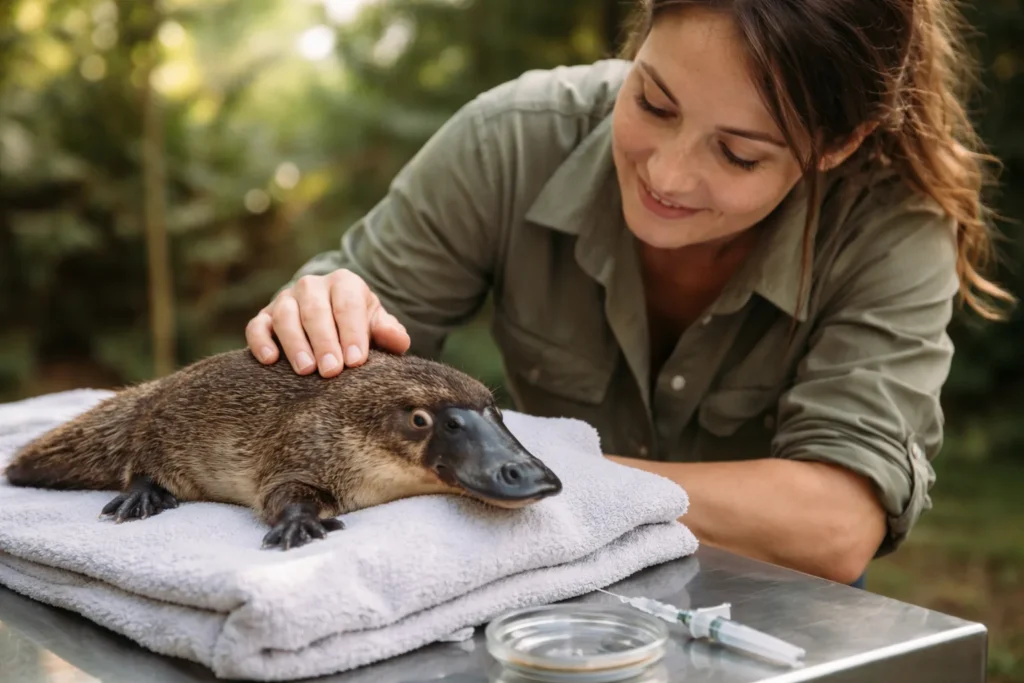
In Australia, touching a platypus without a permit is illegal regardless of intent. If you find an injured platypus, call WIRES at 1300 094 737 and wait for trained responders with proper protective equipment.
7. What To Do If Stung by a Platypus
FIRST AID: PLATYPUS SPUR ENVENOMATION
Step 1 – Exit the water immediately. Venom can cause sudden muscle weakness. Drowning is a real secondary risk if you are wading when envenomation occurs.
Step 2 – Wash with warm water (45°C / 113°F) for at least 20 minutes. This helps denature some peptides and reduces bacterial contamination from the wound site.
Step 3 – Take ibuprofen or paracetamol as a first step. Likely only partial relief, but it addresses what it can short-term.
Step 4 – Do not squeeze the wound, apply a tourniquet, or attempt to suck it. Compression drives venom deeper into tissue. None of these approaches work and all can cause additional harm.
Step 5 – Keep the affected limb still and below heart level. This slows systemic spread through the lymphatic system.
Step 6 – Go to an emergency room immediately. There is no antivenom. Tell them specifically it was a platypus spur. Ask about regional nerve blocks – standard opioids will provide minimal relief and the treating physician needs to know this upfront.
Found an injured platypus in Australia? Call WIRES: 1300 094 737. Do not attempt to handle it yourself.
8. Can You Own a Platypus as a Pet?
The short answer: No. Not legally, not practically, not safely. People search “pet platypus” in large numbers every month, which is completely understandable. But once you understand what a platypus actually requires to survive, the appeal shifts quickly.
Habitat requirements are extreme. A single platypus ranges over 90–170 acres of waterway. Replicating this at home is not difficult – it is effectively impossible.
Diet cannot be faked. 20–50% of body weight in live aquatic invertebrates, daily, refusing anything that is not alive and fresh. There is no commercial food substitute.
Captive survival rates are dismal. Only 22.4% of zoo platypuses survived beyond one year in captivity in the most comprehensive study conducted on the subject. In a home environment, mortality would approach 100%.
Males are venomous. Keeping a male means sharing your home with an animal carrying venom capable of incapacitating you for months, delivered reflexively when the animal is startled or restrained – which routine pet-keeping requires constantly.
They do not bond with humans. One individual at Healesville Sanctuary became habituated enough to tolerate limited human contact – achieved over years of professional conditioning by specialist staff. It is the only documented exception in the world.
If you are drawn to unusual, fascinating mammals but want something genuinely manageable and legal, there are real alternatives worth exploring. Hedgehogs offer a similarly solitary, distinctive small-mammal experience with realistic care requirements. Chinchillas are long-lived, highly active, and rewarding with the right setup. For the genuinely adventurous, our guide on aardvarks as pets and marmoset monkeys covers two other animals that attract intense interest but come with their own significant legal and practical realities. If you want something sociable and unusual, the capybara sits in an entirely different category – legal in several US states and genuinely manageable with proper space.
9. Is It Legal to Own a Platypus?
Ownership is illegal everywhere in the world without exception.
In Australia: Protected under the Environment Protection and Biodiversity Conservation Act 1999 (EPBC Act). Private ownership is prohibited – a criminal offence carrying significant fines and potential imprisonment.
In the United States: Fish and Wildlife Service permits for importing platypuses are not issued. The Lacey Act prohibits trafficking in wildlife taken in violation of conservation law. The only platypuses in the US are Birrarung (male, age 8) and Eve (female, age 15) at San Diego Zoo Safari Park, held under a formal conservation agreement. San Diego staff trained for months in Australia just to learn safe handling protocols before the animals arrived.
In the UK and EU: Australia’s absolute export ban means no platypus can legally reach these countries under any private arrangement. Any attempted import is wildlife trafficking under international conservation agreements.
On “platypus for sale” listings: Any website claiming to offer a platypus for purchase is either an outright scam or illegal wildlife trafficking. There are no legitimate breeders, no legal export channels, and no private purchase pathways anywhere on Earth.
10. Can Platypuses Live in Captivity?
Technically yes – but barely, and almost never well. Only 22.4% of zoo platypuses survived beyond one year in captivity in the largest study conducted on the subject, with 28% of recorded deaths directly linked to inadequate care even in professional settings with trained staff and purpose-built facilities.
Outside Australia, the record is nearly empty. The San Diego Zoo Safari Park holds the only two platypuses outside Australia today. Outside these two individuals, no institution outside Australia currently maintains platypuses, and the two at San Diego required years of diplomatic and logistical preparation to place legally and safely.
11. How Much Does a Platypus Cost?
There is no legal price. For full transparency, here are hypothetical estimates if private ownership were ever legal – figures extrapolated from Healesville Sanctuary’s published care cost data and expert assessments:
| Item | Estimated Cost |
|---|---|
| Adult platypus (hypothetical) | $50,000 – $300,000 |
| Baby puggle (hypothetical) | $500,000+ |
| Aquatic habitat setup | $50,000+ |
| Water filtration system | $10,000+ |
| Live food supply (annual) | $9,000 – $15,000 |
| Specialized veterinary care (annual) | $5,000 – $20,000 |
| Estimated Year One Total | $624,000 – $1,000,000+ |
Healesville Sanctuary estimates $13,000 per year per animal for food and basic care inside a multi-million-dollar professional facility. These figures are entirely academic – the purchase pathway does not exist.
12. Platypus Reproduction and Lifespan
Breeding occurs once per year, from August through October in most of the platypus’s range. Males become highly aggressive during this period and venom production intensifies. There is no pair bonding – males and females interact only to mate, then separate, and the female raises the young entirely alone.
After a gestation period of approximately 28 days, the female lays 1 to 3 soft-shelled eggs, roughly 11mm in diameter. Before laying, she excavates a deep, dedicated nesting burrow – often extending 20 meters into the bank – and plugs it behind her at intervals with soil to regulate moisture and block predators. Incubation lasts approximately 10 days, the female curling her body around the eggs throughout.
Platypus young – called puggles informally – hatch blind, hairless, and roughly 2cm long. They nurse for 4 to 5 months by lapping milk from the mother’s skin patches, then enter the water at around 17 weeks and reach full independence by around 4 to 5 months. Sexual maturity arrives at roughly 2 years of age.
Wild lifespan reaches up to 20 years in favorable conditions, though 6 to 11 years is more typical. Under expert captive care, exceptional individuals have reached 20 to 30 years – the record holder at Healesville Sanctuary lived to 22 years.
13. Are Platypuses Endangered?
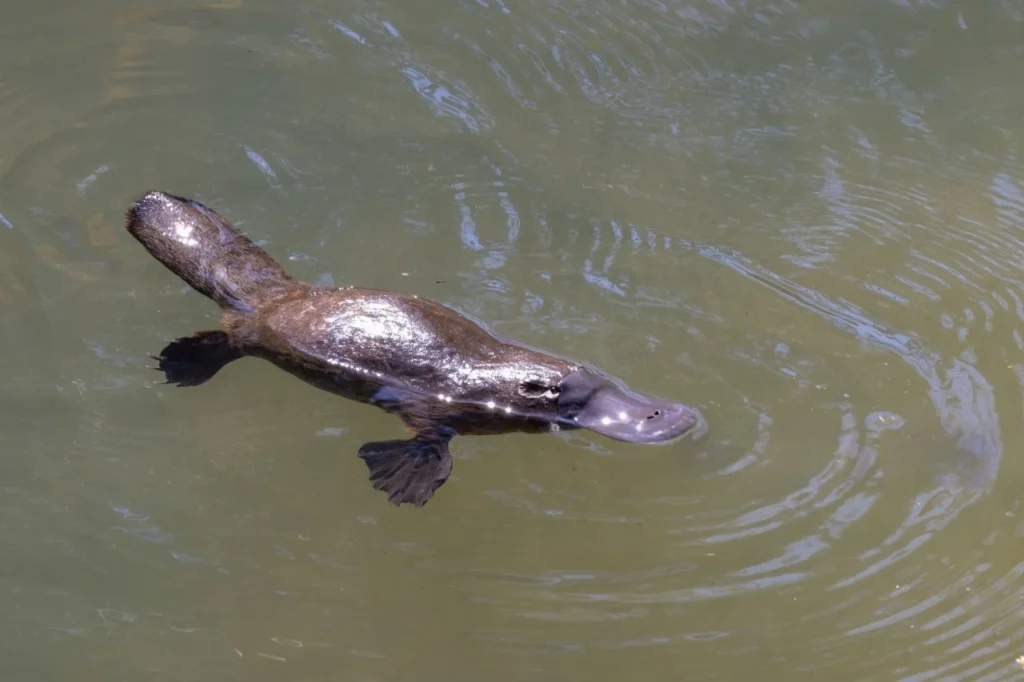
The platypus is currently classified as Near Threatened on the IUCN Red List – one step from Vulnerable status. Their population has declined significantly, losing approximately 22% of suitable habitat over the past 30 years. A comprehensive 2020 population study from the University of New South Wales found decline serious enough to recommend uplisting to Vulnerable; as of 2026, that reclassification remains under active review.
The dominant threat is habitat degradation and fragmentation – agricultural clearing of riparian vegetation, irrigation diversions reducing stream flow, and sedimentation smothering the riverbed substrate where platypus prey lives. Climate change is accelerating these pressures: severe drought events have increased in frequency across eastern Australia, causing stream pools to dry up entirely and strand platypuses. The catastrophic 2019–2020 drought followed by the Black Summer bushfires destroyed thousands of kilometres of platypus riverbank habitat and caused documented localized population collapses.
Entanglement in netting and yabby traps remains a significant human-caused mortality source – platypuses drown when trapped underwater, and certain drum net designs are now banned in parts of their range specifically because of platypus bycatch. An emerging fungal disease, Mucor amphibiorum, causing destructive ulcerating lesions, is established in Tasmanian populations and has caused localized mortality events.
Population monitoring has been transformed by environmental DNA (eDNA) sampling – detecting platypus DNA shed into the water – allowing researchers to survey entire river systems for platypus presence without needing to physically sight or capture animals. This technology has substantially improved the accuracy of current range assessments.
14. Platypus Intelligence
Platypuses are more cognitively capable than they are commonly given credit for. The bill’s sensory system – 40,000 electroreceptors and 60,000 mechanoreceptors operating simultaneously in real time – requires substantial neural computing power. This is not simple stimulus-response. It is active sensory integration of multiple simultaneous data streams to locate, track, and intercept moving prey through opaque substrate in total darkness.
Captive individuals learn routine feeding procedures quickly and show clear spatial memory of foraging territories. There is documented evidence of habituation to specific human individuals at ecotourism sites – suggesting the ability to distinguish and categorize separate threats.
Perhaps most surprisingly, platypuses display more REM sleep than almost any other studied mammal. REM is the phase linked to memory consolidation and complex neural processing. What a platypus processes during those hours remains genuinely unknown. It is one of the research questions I find most compelling about this animal – and one that has no answer yet. This stands in striking contrast to highly social animals that build bonds and display obvious emotional intelligence. For a very different angle on animal cognition, our guide on the 20 most loyal animals in the world covers species where emotional complexity expresses itself in completely opposite ways.
15. Platypus Venom in Medical Research
This section is why I believe anyone who cares about medicine should care about platypus conservation.
Platypus venom contains a form of GLP-1 – glucagon-like peptide-1 – the same hormone that underlies some of the most important Type 2 diabetes medications currently in clinical use. The platypus version is significantly more resistant to metabolic breakdown than the human version, meaning it stays biologically active far longer. Researchers at the University of Adelaide are actively investigating whether the platypus GLP-1 structure could serve as the basis for more effective, longer-lasting diabetes treatments.
Separately, because platypus venom activates pain pathways that conventional opioids cannot block, scientists are mapping those exact molecular mechanisms to develop new classes of painkillers – specifically for patients with chronic pain that does not respond to any currently available treatment. The DLP-4 peptides responsible for the opioid-resistant pain are, paradoxically, the key to designing drugs that work where morphine fails.
Both are real, active areas of funded research at Australian and American universities right now. Losing the platypus means losing this biological archive permanently – before clinical trials complete, before formulations are optimized, before patients who need better diabetes management or chronic pain treatment can benefit. The conservation case is not just ecological. It is medical.
16. What Can You Do?
If your interest in platypuses is genuine, here are meaningful, legal, and impactful ways to engage:
Healesville Sanctuary, Victoria – the world’s premier platypus facility and the global reference point for captive platypus care. If you visit one place in Australia for platypuses, make it this one.
Taronga Zoo, Sydney – conservation-focused exhibit with active research programmes integrated into the visitor experience.
San Diego Zoo Safari Park – the only platypuses outside Australia. Call ahead to confirm display availability for Birrarung and Eve.
Australian Platypus Conservancy – symbolic adoption funds real on-the-ground field research and stream monitoring. platypus.asn.au
WWF Australia – habitat protection and symbolic platypus adoption with direct funding transparency.
17. Frequently Asked Questions
Can you own a platypus as a pet in the US?
No. There is no legal pathway for private ownership in the United States under any circumstances. Fish and Wildlife Service permits for importing platypuses are not issued – they are protected and not bred for trade anywhere in the world.
Where is it legal to own a platypus?
Nowhere. Ownership is prohibited in every country, including Australia where they are native, under the Environment Protection and Biodiversity Conservation Act 1999.
How much does a platypus cost?
There is no legal price. Hypothetical estimates run $50,000–$300,000 for an adult and over $500,000 for a puggle, plus $20,000+ in annual care costs. Healesville Sanctuary spends at least $13,000 per animal annually on food and basic care alone.
Can a platypus kill you?
No human death from platypus venom has ever been recorded. The venom is not lethal to healthy adults, but it causes severe, prolonged pain that resists standard painkillers including morphine and can persist for months after the wound appears healed externally.
Is platypus venom stronger than morphine?
It is not stronger – it is resistant to morphine. Platypus venom activates pain pathways through DLP-4 peptides that opioid receptors do not govern. Morphine does not address the right mechanism.
What do you do if stung by a platypus?
Exit water immediately. Wash the wound with 45°C water for 20 minutes. Take ibuprofen or paracetamol as first aid. Go to an emergency room – tell them specifically it was a platypus spur and ask about regional nerve blocks. Standard opioids will provide minimal relief.
Are platypuses marsupials?
No. They are monotremes – egg-laying mammals. They share no close relationship with marsupials like kangaroos or koalas. Monotremes branched off from the rest of the mammal family tree roughly 166 million years ago.
Does platypus fur glow?
Yes. A 2020 study confirmed that platypus fur absorbs ultraviolet light and re-emits it as a blue-green visible glow – biofluorescence confirmed in both wild and captive individuals. The biological function is not yet established.
Are platypuses endangered?
They are classified as Near Threatened on the IUCN Red List – one step from Vulnerable. The population has been declining, with approximately 22% of suitable habitat lost over the past 30 years.
Are platypuses intelligent?
More than commonly assumed. Their electroreceptive hunting system requires sophisticated neural processing, they demonstrate clear spatial memory, and they display unusually high REM sleep activity – the phase associated with memory consolidation and complex neural processing.
How much DNA do humans share with platypuses?
Approximately 82% – less than with chimpanzees (99%) or mice (85%), but enough to make platypus genomics scientifically valuable for understanding how mammalian traits evolved across hundreds of millions of years.
Can a platypus kill a dog?
Platypus venom is not lethal to a healthy adult dog in the doses deliverable from a single sting, but a sting to the face or paw causes severe pain, significant swelling, and requires immediate veterinary attention. If you walk dogs near waterways in eastern Australia, keep them leashed. Understanding your dog’s normal behavior helps you catch reactions early – our guide on why dogs scratch and display stress behaviors is useful baseline reading for any dog owner spending time near wildlife habitat.
What were platypuses’ prehistoric relatives like?
Early monotremes were more widespread millions of years ago, with fossil evidence showing their range once included South America. Today’s platypus is the sole surviving member of its family, Ornithorhynchidae. If prehistoric animals fascinate you, our list of the scariest extinct sea creatures covers some of the ocean predators that shared the world with early monotremes.
Is a platypus a reptile? No. It is a mammal – warm-blooded, fur-covered, and nursing young with milk. The fact that it lays eggs is a retained ancestral trait, not evidence of reptile relationship.
Final Thoughts
The platypus has survived for over 166 million years by being extraordinarily well-adapted to a very specific ecological niche. It is not a biological accident or an evolutionary joke. It is a masterpiece of natural engineering that happens to look improbable – an egg-laying, venomous, electroreception-guided, biofluorescent mammal with ten sex chromosomes and venom chemistry that defeats morphine but may eventually help treat diabetes and chronic pain. There is no other animal like it on Earth, and the fossil record strongly suggests there never will be again.
What the platypus needs from us is not captivity and not novelty. It needs clean rivers, intact banks, the removal of illegal trapping gear, and the funding to continue the research being built from its extraordinary biology. If you find yourself at dusk beside a clear stream in eastern Australia and a small dark shape surfaces briefly before vanishing into the current – stay still. Watch carefully. That is about as close as any of us should get. It is enough.
REFERENCES & SOURCES
[1]de Plater, G. et al. “Biochemical and pharmacological characterisation of the venom from the platypus.” Toxicon, 1995. PubMed →
[2]Kohler, A.M. et al. “Biofluorescence in the platypus (Ornithorhynchus anatinus).” Mammalia, 2020. PDF →
[3]University of Adelaide. “Platypus venom could help treat diabetes.” 2016. adelaide.edu.au →
[4]Grützner, F. et al. “In the platypus a meiotic chain of ten sex chromosomes shares genes with the bird Z and mammal X chromosomes.” Nature, 2004. PubMed →
[5]Warren, W.C. et al. “Genome analysis of the platypus reveals unique signatures of evolution.” Nature, 2008. PubMed →
[6]Scheich, H. et al. “Electroreception and electrolocation in platypus.” Nature, 1986. PubMed →
[7]Australian Platypus Conservancy. “About Platypuses.” platypus.asn.au →
[8]2023 case study: Bacterial infection following platypus envenomation. Case on file with Australian emergency medicine literature. Full citation available on request.
[9]Healesville Sanctuary / Zoos Victoria. Annual care cost data. zoo.org.au →
[IUCN]IUCN Red List. “Ornithorhynchus anatinus.” iucnredlist.org →
The platypus is exactly what it looks like: something that should not exist, that does anyway, and that rewards anyone who pays close attention. An egg-laying, venomous, electroreception-guided, biofluorescent mammal with ten sex chromosomes and venom that defeats morphine but may eventually help treat diabetes and chronic pain. The laws protecting it exist because it is irreplaceable. If you ever find yourself at dusk beside a clear stream in eastern Australia and a small dark shape surfaces briefly before vanishing into the current, stay still. Watch carefully. That is about as close as any of us should get and it is enough.
Dr. Mouni Fer is an exotic animal specialist and wildlife consultant with 15 years of field experience in Australian monotreme ecology. All content on TheAnimalSound.com is reviewed for scientific accuracy and updated on a regular basis.
Found an injured platypus in Australia? Call WIRES: 1300 094 737. Trained wildlife responders with proper protective equipment – do not attempt to handle the animal yourself.