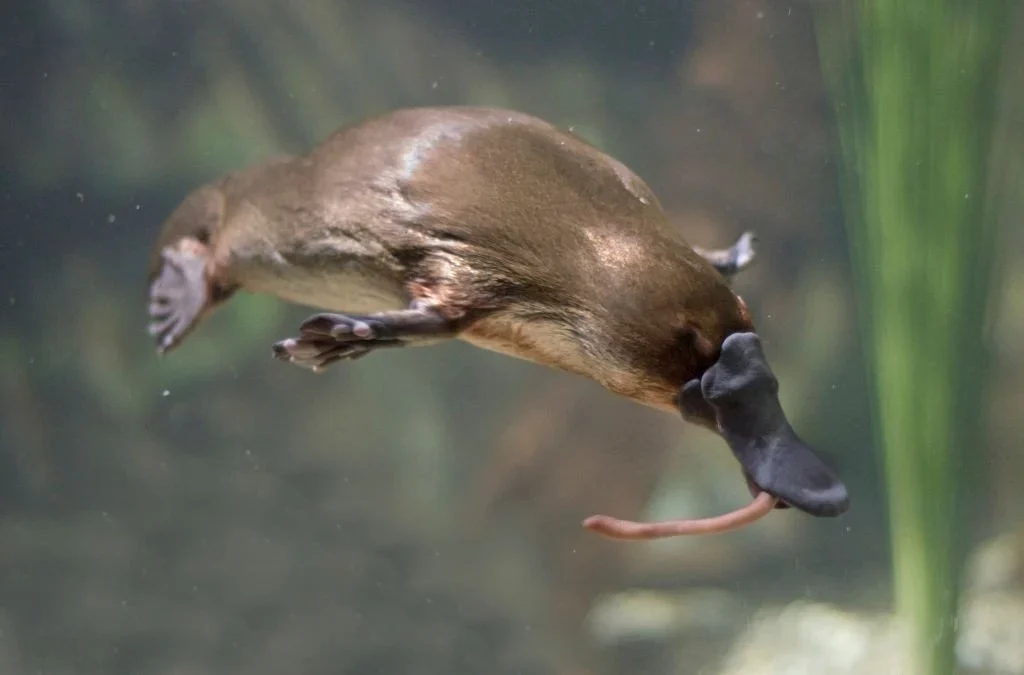
How Do Platypuses Live? Platypuses live in freshwater creeks, rivers, and lakes in eastern Australia and Tasmania. They are semi-aquatic mammals, which means they live both on land and in water. They dig burrows in riverbanks where they rest and stay safe. Their thick, waterproof fur keeps them warm in the water. They use their sensitive bills, which can detect tiny movements, to find food like shrimp, worms, and insect larvae at the bottom of rivers and lakes.
This is how platypuses survive and live in their natural habitat.
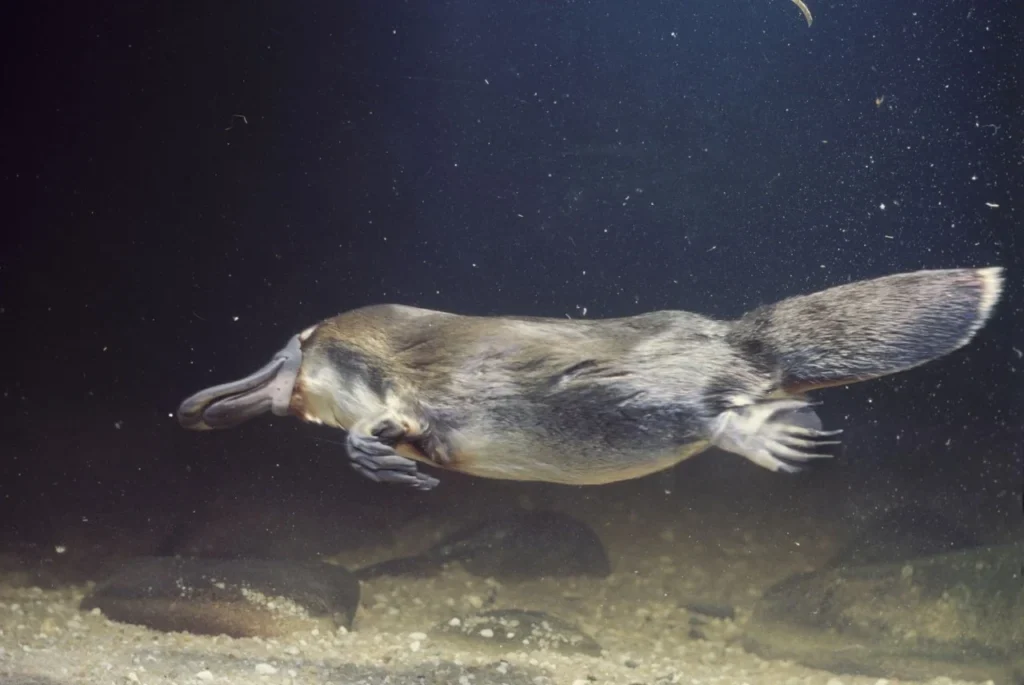
They use webbed feet to swim and stealthy electrolocation in their bills to find shrimp, insect larvae, worms and tadpoles on the riverbed. Essentially, a platypus needs clean, flowing freshwater full of bugs and insects, plus sturdy riverbanks lined with vegetation for safe burrows, in order to survive. Stick around as we splash through a platypus’s day-to-day survival needs, and why, as charming as they are, platypuses absolutely don’t make good pets. you can check ” Is it Legal to Own a Platypus?”
Life in the Wild: Creekside Burrows and Night Dives
Platypuses are endemic to eastern Australia,from the tropical streams of Queensland down to the cold alpine lakes of Tasmania. You won’t find them swimming in UK rivers or North American ponds – they’re exclusive Down Under. In their watery habitat, they prefer slow-moving creeks and rivers where they can hunt. A WWF guide notes they “inhabit a wide variety of freshwater systems, from warm tropical streams … all the way down to Tasmania”.
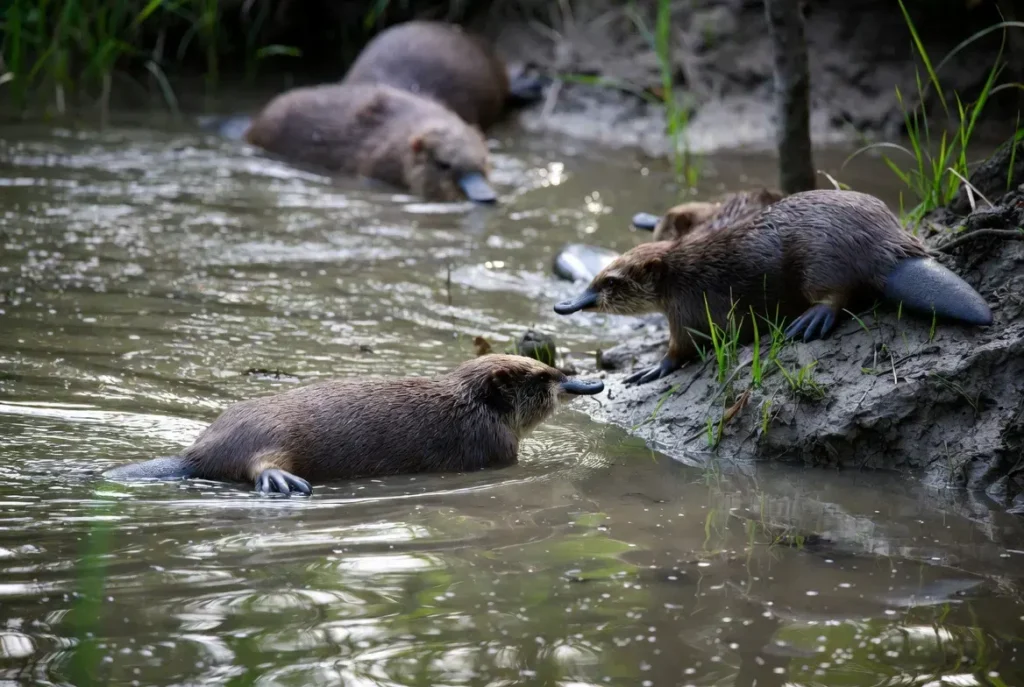
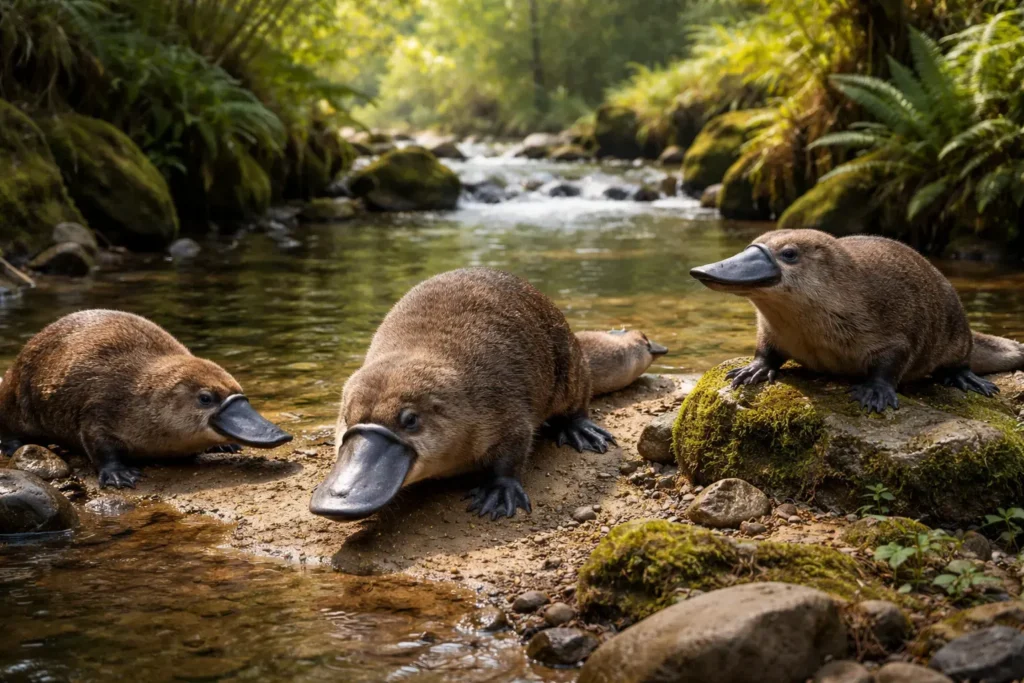
Each animal usually keeps to about a two-kilometre stretch of creek, foraging roughly a kilometer upstream and downstream from its burrow. These burrows are dug into high, vegetated banks – a smart move. The high ground protects the burrow from floodwaters and collapsing banks, and thick vegetation provides cover from predators like eagles, snakes and goannas.
Once night falls (or even in daylight during winter), the platypus flips on its paddles. It swims by alternating each front foot in turn, steering with its webbed hind feet and tail. As a semi-aquatic mammal, it has to breathe air, so it dives for about 30–40 seconds, then pops up to take a breath before diving again. Remarkably, it can forage in very cold water (even below 5 °C) by maintaining a low body temperature.
After a series of dives, a platypus might spend roughly half its day hunting underwater. When its tummy is full (and it gets tired), it trudges ashore and retreats into its cozy burrow. These dens can be simple slits just big enough to hide in, or elaborate tunnels – some are over 30 m long, ending in nesting chambers lined with grasses. Mom platypuses even build multiple burrows along the bank; if a flood threatens, she’ll pack one up and move to the next dry hole. With riverbank degradation and climate change accelerating, the prospect of Platypuses Extinct in the wild puts these remarkable den-building behaviors at risk of being lost forever.
All About Platypus Diet and Survival Needs
Despite the unusual looks, a platypus is basically a water-borne carnivore. It noses along the river bottom, scooping up any small creatures in sight. Think shrimp and yabbies, beetle larvae and worms, snails and even small fish or clams. It grabs all this with its sensitive bill and stuffs it into cheek pouches. Once on the bank, it’ll chew up and swallow the pouch-full of snacks all at once. In short, these animals live on a diet of invertebrates.
In fact, they eat almost constantly – about 20% of their own body weight each day! That’s roughly 500 grams of critters for a typical adult. Nursing moms need even more. So a healthy platypus habitat must be rich in clean-water bugs and crustaceans.
The platypus is a master of staying hidden, which is vital because many predators would love a platypus snack. Riverside forests and underwater debris give them cover from hawks or large fish. Thick vegetation over the water’s edge keeps them concealed when they leap out of the creek for a quick rest. A heavily cleared stream leaves a platypus exposed.
Conservationists note that removed vegetation or dams (man-made) can really harm platypus survival, they need healthy, connected waterways. Put simply: clean rivers teeming with bugs, stable banks to burrow, and good cover are essential for a platypus to stay alive. And because they can range over hundreds of hectares, shrinking their home range (by damming or development) is like cutting off their pantry and bedroom in one go.
What Do Platypuses Need to Survive?
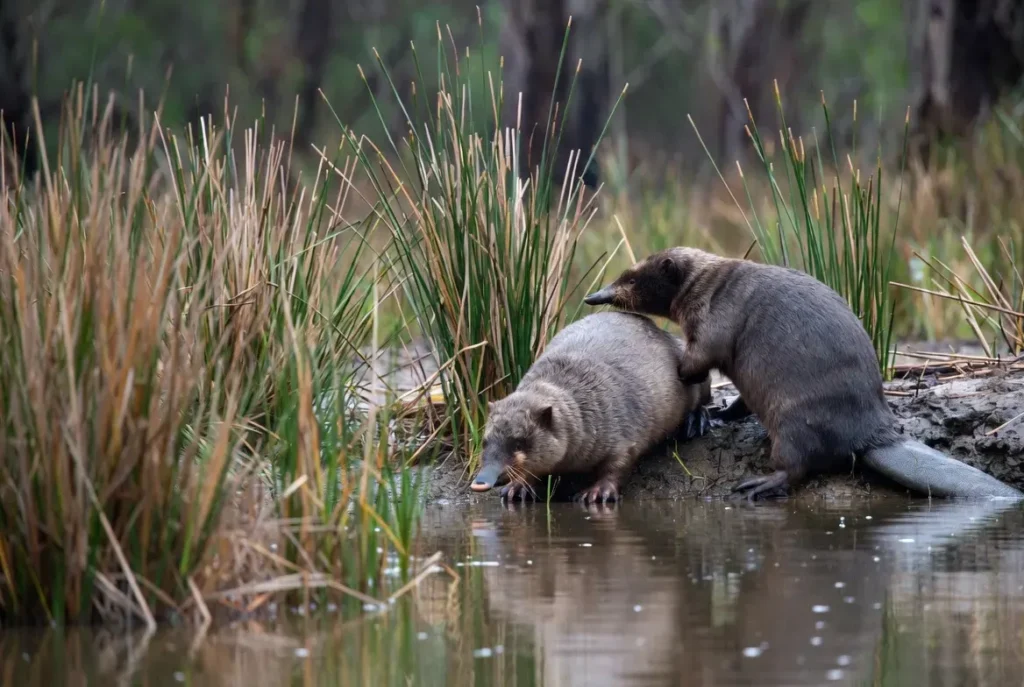
You might ask: what exactly does this critter need? First off, freshwater streams are non-negotiable – they’re air-breathing mammals and rely on submerged river hunts. Those streams must have high, vegetated banks so platypuses can dig burrows out of flood range. In eastern Australia, heavy rains can sweep creeks for days, so a little height and thick roots keep the burrow dry. Water quality matters, too: pollution or muddy water means fewer insect meals. Indeed, research shows platypus numbers shrink when water is mismanaged or too dry.
Food-wise, they’re fussy about eating live prey. They simply won’t eat pellets or dead fish in captivity. They need aquatic invertebrates – beetle larvae, worms, shrimp, yabbies – at nose-level. Because they eat ~20% of their body weight every day, a good platypus stream has riffles and pools that support all sorts of nymphs and bugs. Watergum conservationists emphasize that moms need even more food, so a diverse, bug-rich habitat is a must.
On top of Platypuses food and water, little details matter: they need lots of room to swim and explore. Each platypus may travel up to 2 km along waterways looking for food. Anything that fragments the river – like roads or dams – can hurt them by chopping up that range.
If any one of these needs isn’t met, the platypus can’t eat or breed properly. And nowadays that’s a serious concern. WWF reports that platypus numbers have fallen in the west of their range, largely because streams dried up or were dammed. Events like the 2019–20 bushfires and ongoing drought wiped out many habitats – thousands of kilometers of riverbanks were destroyed. Scientists worry that climate change and land-clearing will keep dropping platypus counts. So the short answer: platypuses need big, stable river systems with food, and those are exactly what we humans tend to mess with.
Can Platypus live in Captivity
You’ve probably guessed that these strict needs mean platypuses do not do well in cages. In fact, zoos and aquariums around the world struggle to care and keep platypuses alive. It’s not just that you can’t buy one at the pet store (you absolutely cannot legally!) – it’s that even experts find them nearly impossible to house.
First, the legal side: platypuses are protected by law everywhere. Australia, their only home country, makes it illegal to buy, sell or keep a platypus as a pet. The laws carry big fines or jail if you break them. Outside Australia, any platypus in a human-controlled setting is there under very special permit – usually only for legitimate research or rehabilitation. In other words, no one can just take one home.
Even if you could, caring for one is a nightmare. They need a massive enclosure of clean water with a constant supply of fresh prey. One conservancy FAQ bluntly explains: “These animals need a lot of food (as much as one-fifth of their body mass each day) and are quite picky about their diet,” preferring live aquatic bugs, and they need spacious tanks with strong filtration. Imagine feeding your pet 500 grams of live insect larvae every day – and changing all the water nightly. Any lapse, and the platypus gets sick. On top of that, adult male platypuses are venomous (enough to cause agonizing pain in humans) and don’t appreciate being handled, so training one to be cuddly? Forget it.
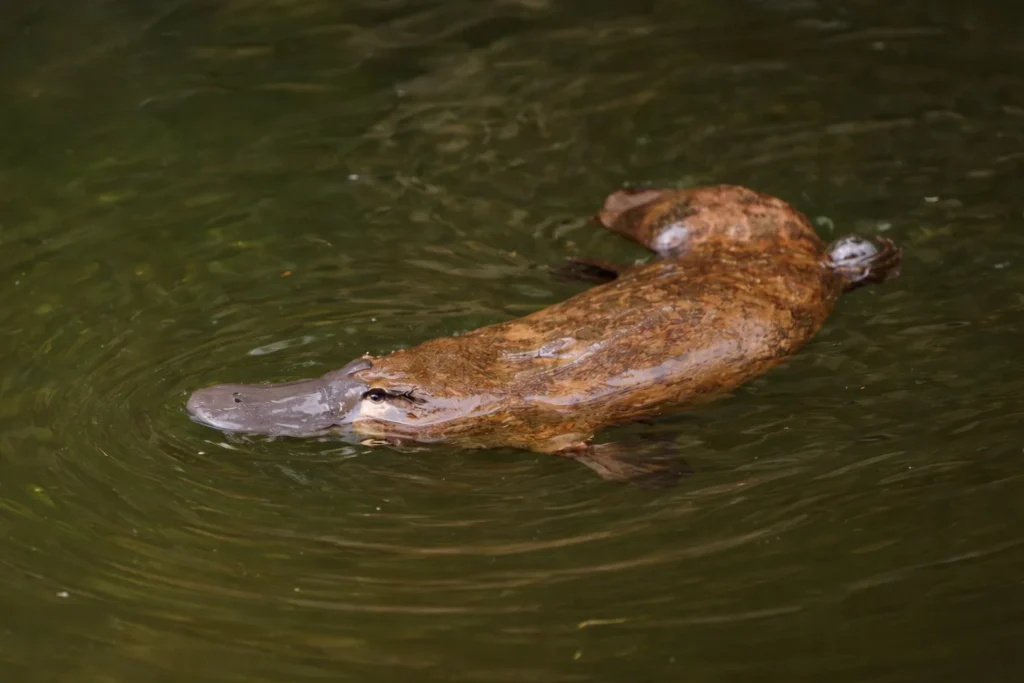
Because of these challenges, only a handful of facilities in the world maintain platypuses. Early 20th-century zookeepers had no success at all, and it wasn’t until 1943 in Healesville Sanctuary (Australia) that the first ever captive breeding occurred. Since then, there have been maybe a few dozen births in all of history – most zookeepers agree it’s the hardest native Australian animal to care for. Today, only a few approved institutions (like Healesville, Taronga Zoo in Sydney, and the San Diego Zoo Safari Park) keep small platypus displays. The San Diego park, for example, has just two platypuses living there, and that’s unusual outside Australia.
Where to Find Platypuses for Sale
Many people dream of owning a platypus and spend time searching for platypuses for sale, but the honest truth is that these wonderful animals are completely off limits as pets. Australian wildlife protection laws make it illegal to buy, sell, or own a platypus anywhere across the globe, so no legitimate seller or breeder will ever have one available. The great news is that wildlife sanctuaries across Australia welcome visitors who want to see these incredible animals in person, and conservation adoption programs let you sponsor a real platypus from the comfort of your own home. A truly unforgettable way to show your love for this one of a kind species!
Platypus Venom
The platypus is one of the few mammals in the world that produces venom. Male platypuses have sharp spurs on their back legs that can inject venom, mainly used during fights with other males in the breeding season. While platypus venom is not deadly to humans, it can cause extremely intense pain, swelling, and temporary loss of movement in the affected area. The pain can last for days or even weeks and may not respond well to typical painkillers. Although encounters are rare because platypuses are shy animals, their venomous spurs make them one of the most unusual and fascinating creatures in the animal kingdom.
Has Anyone ever owned a Platypus
So what about the burning question: can a platypus live with humans, or as a pet? Honestly – no way. Platypuses are wild animals through and through. They don’t crave companionship, toys or belly rubs. A-Z Animals notes that “platypuses are wild animals, and under no circumstances do they act like domesticated pets”. They get stressed easily, hate being touched or held, and the sight of a human can send them fleeing. One large study of platypus behavior suggests they are as far from cuddly otters as you can get. They do not purr, wag tails, or do tricks; they forage, hide, and breed on their own schedule.
You may have heard about a particularly tame platypus at Healesville that seemed to “love” being fed by people. That’s the exception that proves the rule – and even that sweet anecdote involved strict supervision and safety barriers. In normal circumstances, a platypus in your house would be underfed, bored, and incredibly anxious (not to mention jailed for it). And let’s be real: we’d be in danger from its venomous spur.
Read More: Are Platypuses Dangerous to Humans?
A Truly Unique Creature (But Not Your Pet)
These bizarre little mammals remain fascinating precisely because they thrive on their own terms. Biologists point out that the platypus is one of only five living monotremes (egg-laying mammals) on Earth – it’s a living relic of early mammal evolution. It’s featured on stamps, currency, and has been part of Indigenous creation stories for centuries. Since 1912 it’s been fully protected across Australia, meaning hunting it for fur (or pets) is outlawed. Today it’s classed as Near Threatened, with scientists urging extra care for its dwindling habitat.
In plain talk: keep wild platypuses wild. We can’t adopt them as pets and we wouldn’t want to. Instead, we can admire them from afar — on a hike along an Aussie stream, in documentaries, or at sanctioned zoo encounters (the kind where experts feed them). The best way to “live with” a platypus is to help ensure the rivers and creeks they call home stay healthy. Because when it comes to platypuses, the only proper roommates are riverbanks, billabongs, and undisturbed bush.


Pingback: What Do Platypus Eat? - Animal Sound
Pingback: Can Platypus live in Captivity? - Animal Sound
Pingback: Can You Own a Pet Platypus? - Animal Sound
Pingback: Is it Legal to Own a Platypus? - Animal Sound
Pingback: Are Platypuses Dangerous to Humans? - Animal Sound
Pingback: Platypus Venom: What It Does, How Dangerous It Is! - Animal Sound
Pingback: Are Platypuses Extinct? Here's What's Actually Going On - Animal Sound
Pingback: Platypuses for Sale: Can You Actually Buy One as a Pet? - Animal Sound