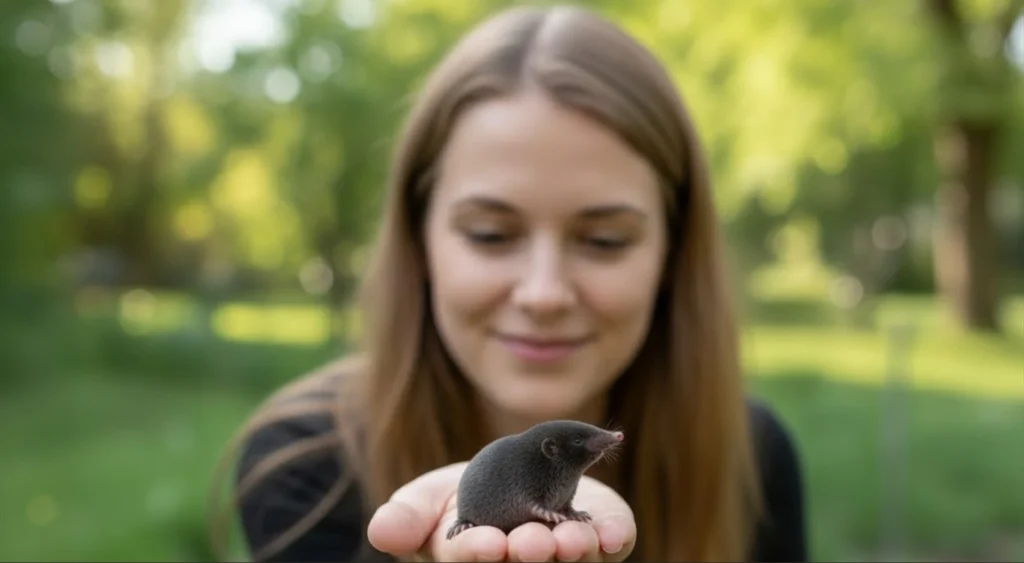
No, having a mole as a pet really isn’t a good idea. Even if you’re thinking about getting more pets and want something weird-cool, moles are super picky: they need tunnels, tons of dirt to dig in, and they freak out when handled. They’re happier underground, not hanging out in your living room. If you want more pets, go for animals that actually want to live with you.
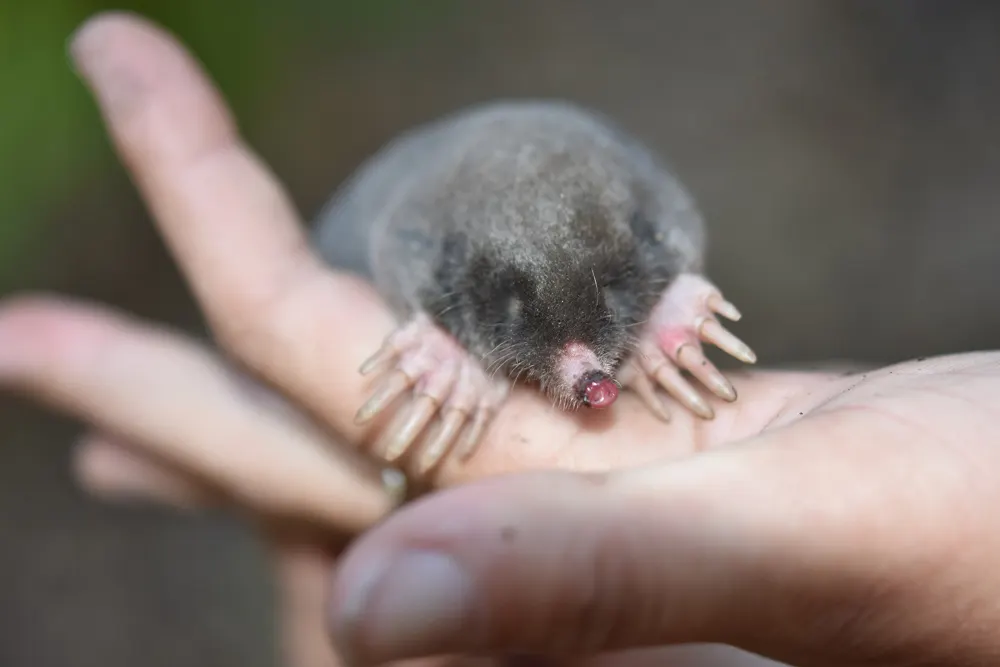
What kind of Animal is a Mole?
Moles are small subterranean mammals with cylindrical bodies, velvety fur, and powerful digging forelimbs. They spend most of their lives in elaborate tunnel systems, feeding on earthworms and other soil invertebrates. While these traits are fascinating, I must emphasize that keeping a mole as a pet is extremely challenging.
As one veterinary source bluntly states, moles “should not be kept as pets” because they don’t handle stress well and cannot express their natural subterranean behavior in captivity. Much like the highly sensitive desert rain frog, which also perishes rapidly when denied its deep, temperature-controlled burrowing environment, moles simply deteriorate outside of their native habitat. In this article, I’ll cover mole biology, diet, behavior, legal restrictions, and even cost/availability, so you can understand the reality behind the idea of having a mole (or a pet mole rat) in your home.
Biology and Natural Behavior of Moles
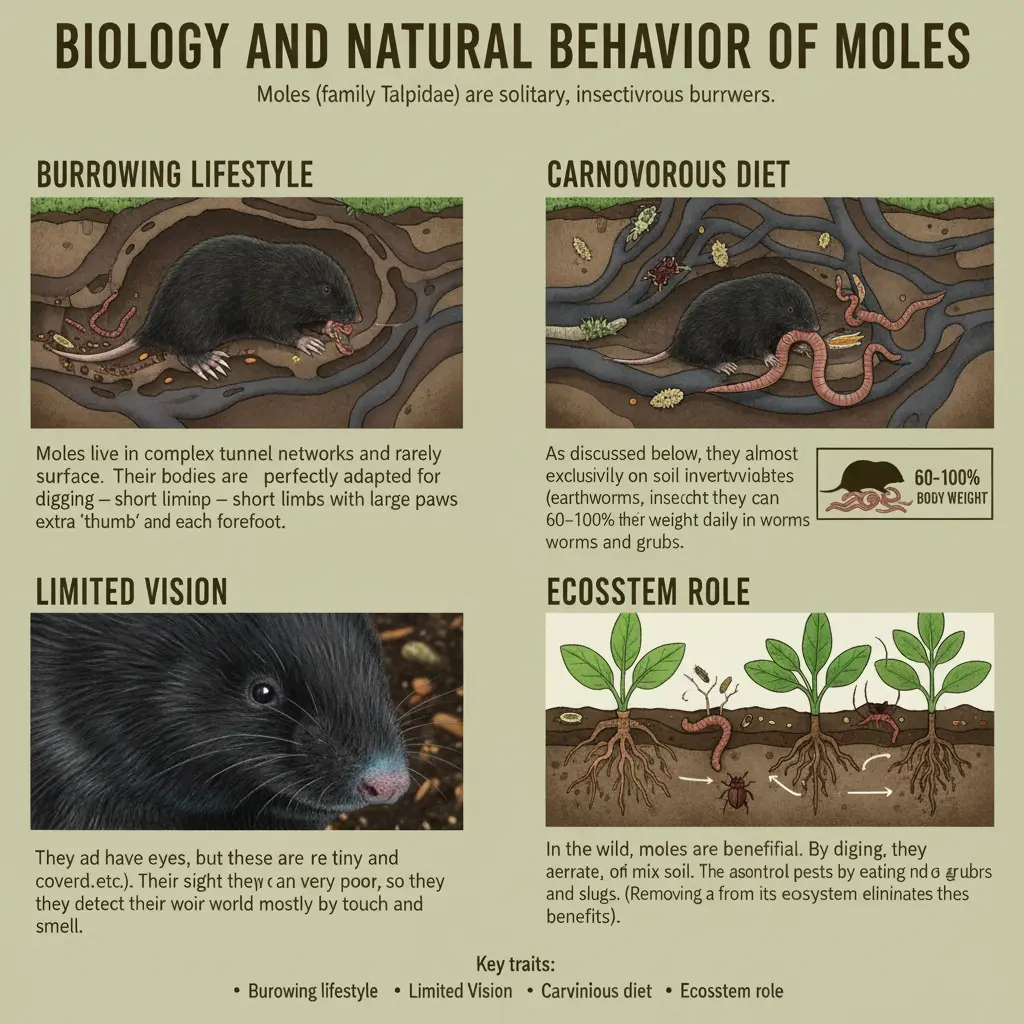
Moles (family Talpidae) are solitary, insectivorous burrowers. They have very small, inconspicuous eyes and ears (their eyesight is limited to sensing light and dark). Instead, moles use their touch-sensitive snouts (with Eimer’s organs) and keen sense of smell to navigate underground. In the wild, a mole may eat half its body weight or more in prey per day; a study reports they can consume 60–100% of their weight daily in worms and grubs. Key traits:
- Burrowing lifestyle: Moles live in complex tunnel networks and rarely surface. Their bodies are perfectly adapted for digging – short limbs with large paws and even an extra ‘thumb’ on each forefoot.
- Limited vision: They do have eyes, but these are tiny and covered by fur. Their sight is very poor, so they detect their world mostly by touch and smell.
- Carnivorous diet: As discussed below, they feed almost exclusively on soil invertebrates (earthworms, insect larvae, etc.).
- Ecosystem role: In the wild, moles are beneficial. By digging, they aerate and mix soil. They also control pests by eating large numbers of garden grubs and slugs. (Removing a mole from its ecosystem eliminates these benefits.)
Even though I find moles fascinating as a wildlife biologist, those same adaptations make them very difficult to care for in a home terrarium.
If you’re exploring unique underground animals, you may also wonder can mice chew through concrete?
Mole as a Pet: Challenges and Considerations
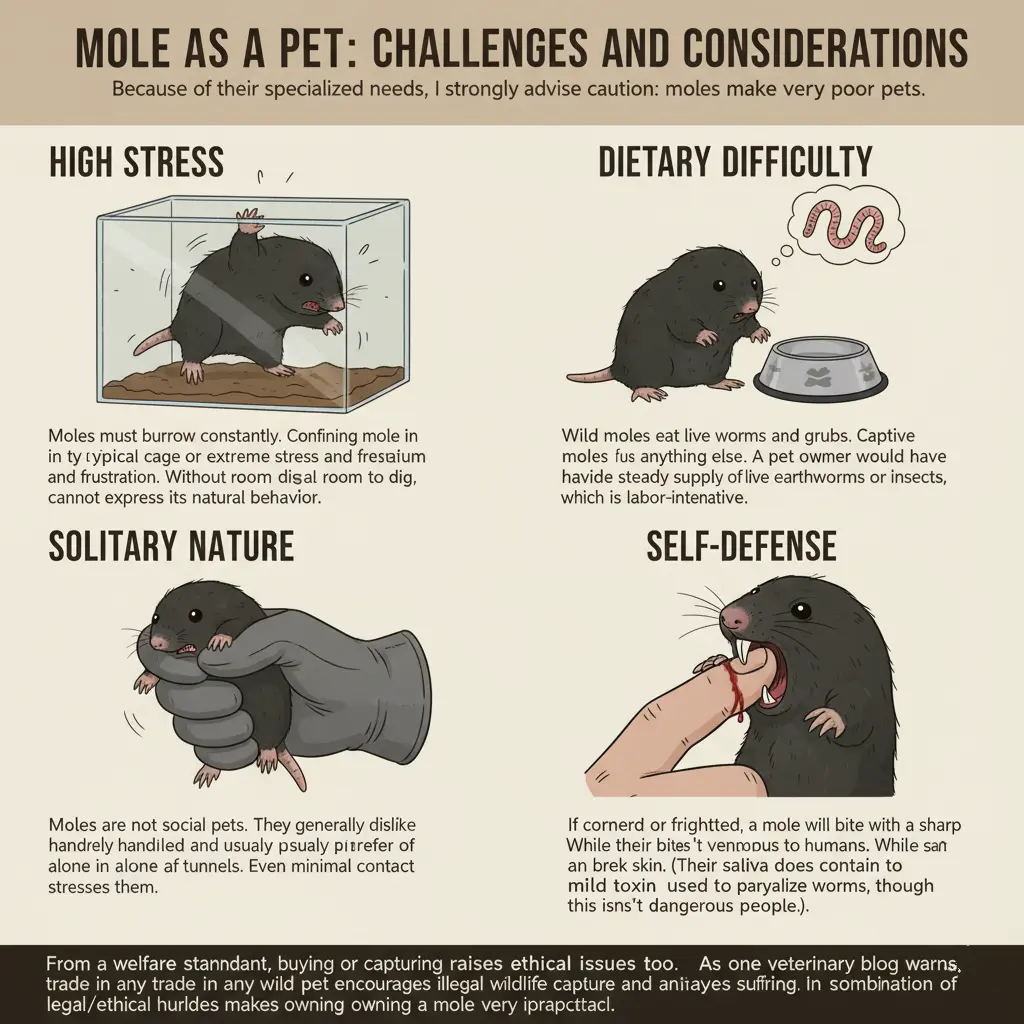
Because of their specialized needs, I strongly advise caution: moles make very poor pets. In my experience and according to exotic-pet experts, the main challenges include:
- High Stress: Moles must burrow constantly. Confining a mole in a typical cage or terrarium causes stress and frustration. Without room to dig, a mole cannot express its natural behavior.
- Dietary Difficulty: Wild moles eat live worms and grubs. Captive moles usually refuse anything else. A pet owner would have to provide a steady supply of live earthworms or insects, which is labor-intensive.
- Solitary Nature: Moles are not social pets. They generally dislike being handled and usually prefer to be alone in their tunnel. I’ve seen that even minimal contact stresses them.
- Self-Defense: If cornered or frightened, a mole will bite with its sharp teeth. While their bite isn’t venomous to humans, it can break skin. (Their saliva does contain a mild toxin used to paralyze worms, though this isn’t dangerous to people.)
From a welfare standpoint, buying or capturing a mole raises ethical issues too. As one veterinary blog warns, supporting the trade in any wild pet encourages illegal wildlife capture and animal suffering. In short, the combination of stress, diet needs, and legal/ethical hurdles makes owning a mole very impractical.
How Much Does a Pet Mole Cost?
Because moles are essentially unobtainable as pets, there is no standard market price. Searches for “pet mole for sale” turn up nothing but unrelated results (toys or pest-control gadgets). In other words, you won’t find moles at pet stores or breeder ads. There are no licensed mole breeders that I’m aware of. If a mole is “for sale,” it would almost certainly be through clandestine or illegal channels. Reports suggest that any available moles would fetch a high price due to rarity, but these are anecdotal; I found no reliable listings or price guides.
For context, some exotic rodents (like naked mole rats) might sell for $10–$30 at specialty retailers, but true Talpidae moles would be far more expensive if they could be sold at all. The reality is: buying a mole usually means breaking the law or buying from a disreputable source. As one wildlife pet article warns, acquiring a mole would likely fuel the unregulated wildlife trade. In practice, I recommend that interested people instead research legal alternatives (see below) rather than chase an impossible price tag.
How to keep a Mole as a Pet
The idea of keeping a mole as a pet might stem from their soft fur, mysterious underground life, or simply curiosity about an unusual animal. However, despite their interesting qualities, moles are not well-suited for life in captivity. While it might be tempting to rescue or raise one, there are significant challenges and ethical concerns involved.
Moles Are Wild, Not Domesticated
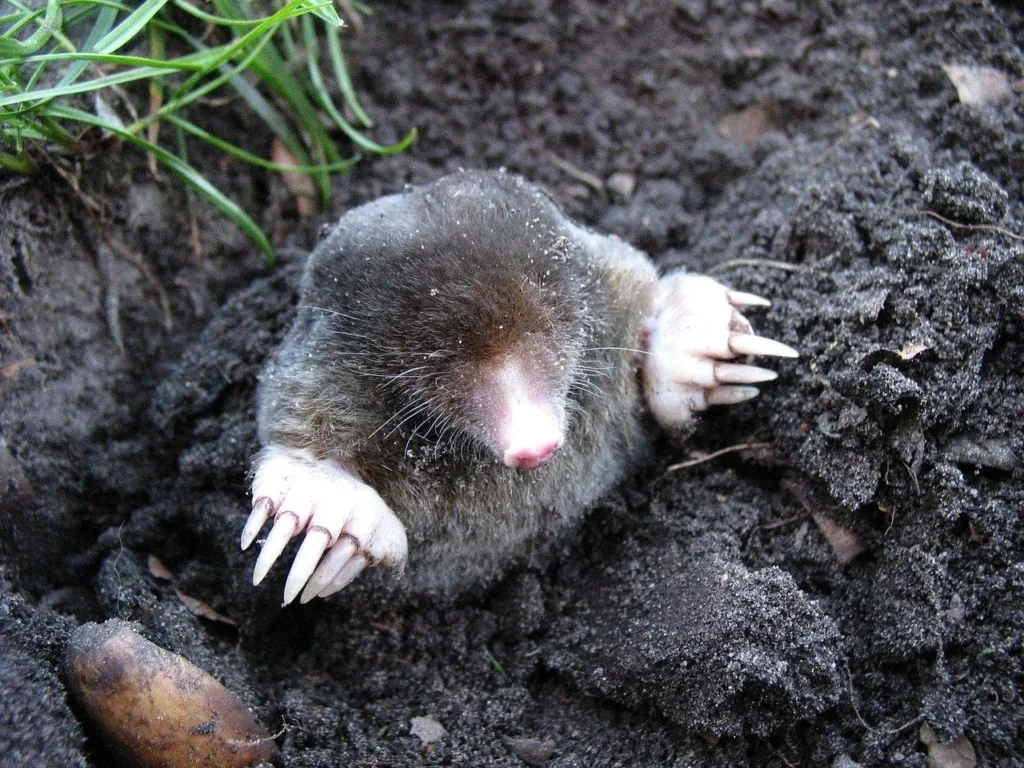
Moles are highly specialized wild animals, perfectly adapted to a solitary life underground. Unlike dogs, cats, or even small rodents like hamsters, they haven’t undergone generations of breeding to live alongside humans. Their instincts are geared toward digging, hunting for food beneath the soil, and avoiding predators — not social interaction or dependence on human care. Trying to keep a mole as a pet means forcing it into a completely unnatural environment, which is often deeply distressing for the animal.
The Difficulty of Providing the Right Environment
Moles spend nearly their entire lives tunneling through soil. They have powerful front limbs for digging and a metabolic system that demands near-constant movement. In the wild, they can dig up to 18 feet of tunnel per hour. No pet enclosure — even a large one — can replicate the complexity and freedom of their natural habitat. When confined to a cage or small space, moles quickly become stressed, disoriented, and sick. Their physical and psychological well-being depends entirely on their ability to move and dig without restraint, something very difficult to replicate at home.
What Do Moles Eat?
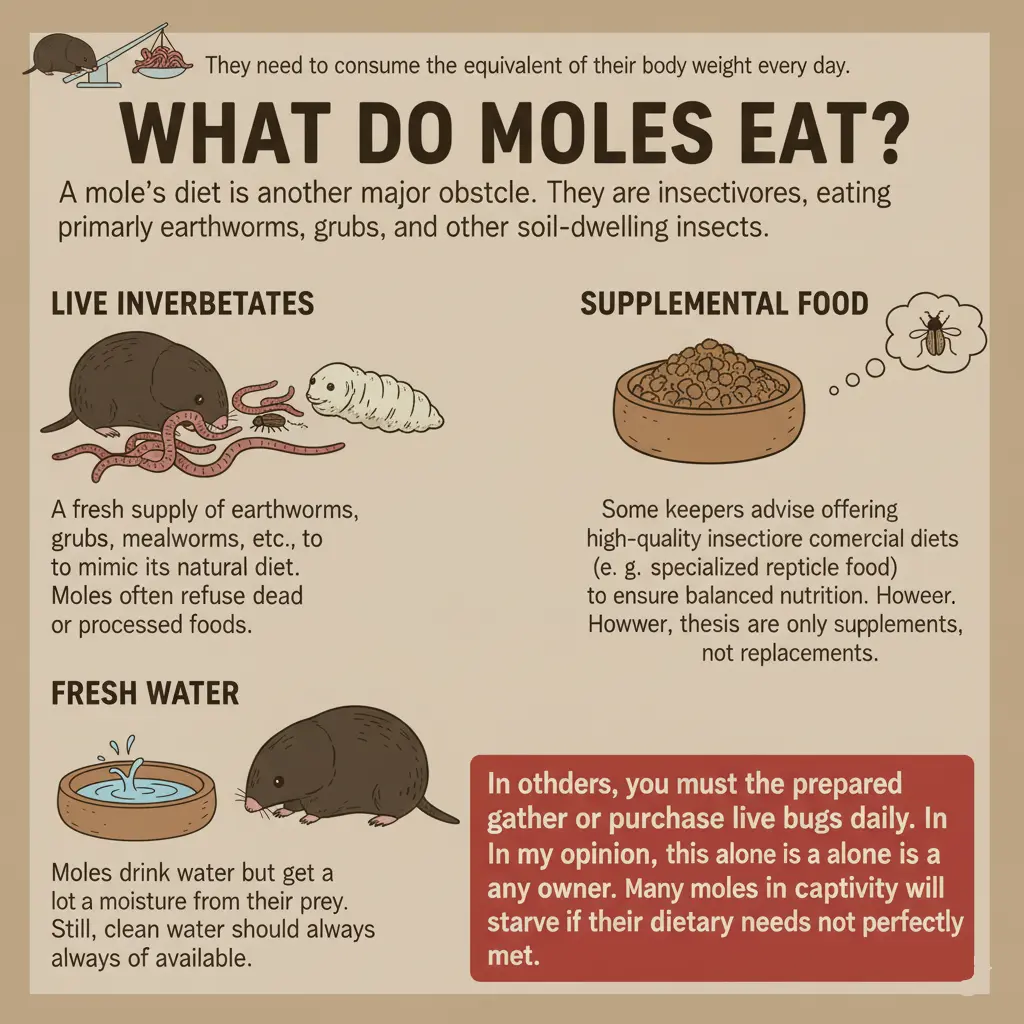
A mole’s diet is another major obstacle. They are insectivores, eating primarily earthworms, grubs, and other soil-dwelling insects. Their bodies require a high-protein diet, and they need to consume the equivalent of their body weight every day. This isn’t just a preference — without frequent feeding, they can quickly starve. Providing a constant, fresh supply of live insects is difficult and expensive, and most pet owners are not equipped to meet these demands. Traditional pet foods or substitutes simply aren’t suitable.
- Live Invertebrates: A fresh supply of earthworms, grubs, mealworms, etc., to mimic its natural diet. Moles often refuse dead or processed foods.
- Supplemental Food: Some keepers advise offering high-quality insectivore commercial diets (e.g. specialized reptile food) to ensure balanced nutrition. However, these are only supplements, not replacements.
- Fresh Water: Moles drink water but get a lot of moisture from their prey. Still, clean water should always be available.
In other words, you must be prepared to gather or purchase live bugs daily. In my opinion this alone is a major hurdle for any owner. Many moles in captivity will starve if their dietary needs are not perfectly met.
f small mammals interest you, check our guide to the best rat foods.
Health and Longevity in Captivity
Even under the best intentions, moles kept in captivity rarely live long. Their high stress levels, inappropriate diets, and inadequate space usually lead to a rapid decline in health. They can suffer from malnutrition, dehydration, and stress-induced conditions that are hard to detect until it’s too late. While moles in the wild typically live only two to three years, their lives in captivity are often shorter and less comfortable, making it a questionable endeavor from a welfare standpoint.
Ethical and Legal Considerations
There are also ethical and sometimes legal issues surrounding the idea of keeping a mole as a pet. In many places, it is illegal to capture or keep wild animals without a special license or permit. These laws exist to protect both wildlife and humans, preventing the spread of disease and ensuring ecosystems remain balanced. Ethically, taking a wild animal out of its natural environment for personal interest can be seen as harmful, especially when that animal is unlikely to thrive in captivity.
A Better Way to Appreciate Moles
If you’re fascinated by moles, there are still ways to connect with them. Creating a garden that supports insect life and observing signs of mole activity can be a rewarding way to witness their presence in nature. Wildlife documentaries, books, and live streaming cams from conservation projects also offer insight into their world without disrupting it. If you’re looking for a small, exotic pet, species that have been bred in captivity — like hamsters, rats, or hedgehogs — are a much better and more humane option.
Do Moles have Eyes!
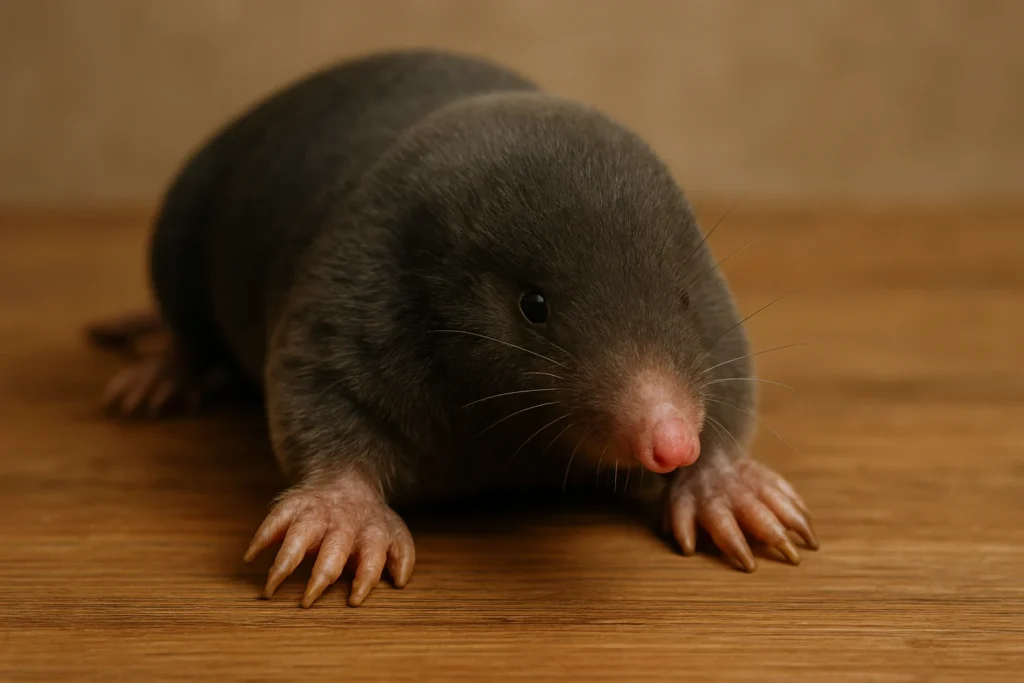
There’s a common myth that moles are blind. In reality, moles are not blind, but their eyes are tiny and eyesight is very poor. For example, a pest-control expert notes that moles have “weak eyesight specifically designed for moving about underground”. According to a wildlife facts site, moles “have very poor vision” and “their eyes can only just recognize light”. So, they can see bright light versus darkness, but they cannot form clear images or see colors well. Instead of vision, moles rely on other senses: they have sensitive whiskers and skin sensors to detect vibrations and chemical cues.
In summary, do moles have eyes? Yes, but almost vestigial ones. Are moles blind? No, but for practical purposes they navigate mostly by touch and smell, not sight.
Is a Mole a Harmful Animal?
Fortunately, moles are not dangerous to humans or pets in general. They are timid, non-aggressive animals that rarely interact with people. CritterControl explains that a mole’s default behavior is to burrow away, not attack: “Given their fear, moles will fight to escape, and, in doing so, often bite people with their sharp teeth”. In other words, a mole will only bite if it feels threatened or is handled roughly. Even if a mole bites, it does not carry rabies, so the bite is not usually medically serious.
The real risk from moles is indirect. Wildlife experts note that moles can carry parasites such as fleas, ticks, or stomach worms. A pet dog or cat that digs into a mole tunnel might pick up these pests, or even bite the mole and get a scratch. But to emphasize: moles themselves are not venomous or disease vectors for people or household pets. They do eat grubs and worms that could harbor contaminants, but the mole will usually not transmit pathogens directly to you. In short, don’t fear a mole attack – just handle them with care (and preferably not at all) if you ever encounter one.
Do moles bite
Yes, moles can bite, but it’s pretty rare. They’re not aggressive at all—most moles would rather run (well… dig) away than fight. They usually only bite if they feel trapped, scared, or handled roughly. Their teeth are sharp enough to hurt, but they’re not out there looking to chomp on people.
Is It Legal to Have a Pet Mole?
Legality varies widely by location, but in most places keeping a wild mole as a pet is heavily restricted or outright illegal. For example, in the UK, wild moles are protected under the Animal Welfare Act 2006; trapping or keeping one can lead to fines or jail time. In the United States, laws depend on the state: some states ban wildlife pets across the board, others may require special permits for insectivores. As one care guide explains, “In the U.S., laws vary by state. Some states have strict regulations against keeping wild animals, including moles, as pets. Other states may allow it but require specific permits”. Similarly in Canada, regulations differ by province, and authorities typically expect you to obtain a wildlife permit before possessing a native mole.
Veterinarian sources emphasize checking laws: “In some parts of the world, it may be illegal to keep a mole as a pet. In other jurisdictions, a permit might be needed”. Keep in mind that even if no law specifically mentions moles, they are generally treated as wildlife or pests by animal-control agencies. As I always advise, always consult local wildlife authorities or departments before considering any wild pet – the penalties for illegal possession can be severe (even if you don’t mean harm).
Can you have a Mole as a pet in California
In California, having a mole as a pet is basically not legal. Moles are listed as restricted wildlife, and the state only gives special permits for things like research, education, or wildlife rehab—not for keeping a mole as a pet at home. Even if you really want more unique pets, California law doesn’t allow moles because they’re considered wild animals that could harm native ecosystems and don’t do well in captivity.
Mole Rats vs. True Moles (Pet Mole Rat Confusion)
It’s important not to confuse moles with mole rats. Despite the name, mole rats are rodents, not insectivores. For example, the famous naked mole rat (Heterocephalus glaber) is a social burrowing rodent native to East Africa. Zoo and pet owners know naked mole rats as the “desert mole rat” – they live in colonies and feed on underground tubers and roots, very unlike a wild mole’s lifestyle. If you see the term pet mole rat, it almost always refers to naked mole rats or similar rodents (or even blind mole rats, genus Spalax).
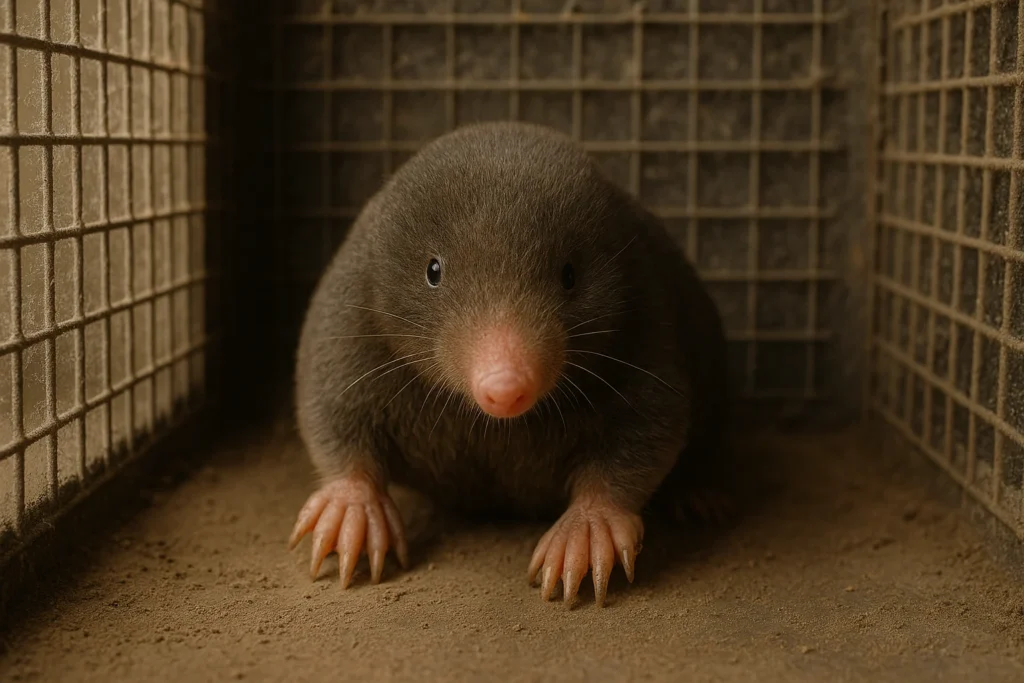
The distinction matters: true moles (Talpidae) are insect-eating, solitary, and extremely poor candidates for captivity. Mole rats (rodents) can be kept in captivity (they’re often exhibited in museums or sold to enthusiasts). For instance, Wikimedia Commons describes the naked mole rat as “a very unusual burrowing rodent”. In summary, a “pet mole rat” is not the same as a “pet mole.” Naked mole rats have completely different care requirements (they need social colonies and a vegetation-based diet). So if you come across a “pet mole rat” listing or video, remember that’s a rodent, not a Talpidae mole.
For something totally different, see what it’s like to keep a pet beetle.
What Reddit Users Say About Having Moles as Pets
- Moles are not good as pets
- On r/ask, one user asked if moles can be pets, and another replied that while they are “incredibly cute,” keeping one is very difficult.
- Another comment: “No, they don’t have a long life span in captivity … because of the amount of stress … they will likely die.”
- Burrowing behavior is a big problem
- In a thread about making your yard a “mole haven,” one top comment strongly warns against it: “Mole just kinda go where they want … If you somehow acquire a mole and loose it in your garden … it will destroy your yard … and then move onto your neighbors.”
- Also: “They will dig for MILES … Get another rodent you CAN actually keep as a pet.”
- Diet is very specialized
- In a post “Could I keep a wild mole happy as a pet?”, someone said: “i heard they need to eat every 2 hours or they die. … they also … need a rather large amount of space.”
- This reflects a belief that their metabolism and feeding needs are very demanding.
- Stress & captivity problems
- Same thread: “they also ever rarely live if kept in captivity … short … likely due to stress and difficulty of mimicking their natural diet.”
- Someone also noted that to even approximate their wild life, you’d need a “specialized containment unit … it would spend most of its time underground.”
- Risk of biting
- In a few places, users mention that moles may bite if cornered or stressed. For example, on a pet-advice thread: “A mole … if cornered … will bite … they have sharp teeth.”
- Another said their “saliva contains a mild toxin used to paralyze worms.”
- Ethical / conservation concerns
- From a comment on breeding: some imagine “fancy mole” breeding (like domestic rats), but acknowledge that currently moles are wild and keeping them is more problematic than just having a cute animal.
- Many feel removing a mole from the wild is “an injustice” to the animal.
- Some find them adorable
- On r/aww: “They’re adorable in their own way! … Their fur is so soft … Their front paws have crazy muscles …”
- But even there, people recognize they are wild and “once found a suitable patch … they’d furiously dig down … and be gone in mere moments.”
What Expert / Vet‑Verified Sources & Wildlife‑Care Sites Say (Echoing Reddit)
- According to vet‑verified sources, moles do not handle stress well; a typical cage or terrarium doesn’t allow their natural burrowing behavior, which is very important for their welfare.
- Their diet is very specialized: they eat a lot of live invertebrates (worms, grubs), and replicating that in captivity is very hard.
- Handling is difficult: moles are solitary, don’t like being touched, and may bite when frightened.
- There are ethical and legal risks: keeping wild moles can disrupt their natural ecosystems, and in some places it may even be illegal.
- Health risks: moles can carry parasites (ticks, fleas) that could pose a risk to humans or other pets.
My Conclusion / What Most People Agree On
- Overall, people strongly caution against keeping moles as pets: both Redditors and experts say it’s very difficult for a mole to thrive in captivity.
- The challenges are big: diet, enclosure, stress, legal/ethical considerations.
- If someone is fascinated by moles, a better (and more ethical) way is to observe them in nature, support conservation, or choose a domesticated pet that’s easier to care for.
In my experience, moles are best enjoyed in the wild, not in a cage. Their biology is remarkable, but their needs are so specialized that even experts advise against trying to keep them as pets. Any attempt to own a mole faces huge obstacles: stress for the animal, an impossible diet, and legal hurdles. If you’re set on a burrowing pet, consider more traditional options (hamsters, gerbils, etc.) instead. I hope this detailed overview gives you a clear picture of the realities of “moles as pets.” Always remember to respect wildlife laws and animal welfare – appreciating moles is easy, but protecting them is even more important.





why is great to have mole as a pet !
Thanks for finally writing about > Can you Have a Mole as a Pet?
– Animal Sound zorroescu01
Thanks for finally writing about > Can you Have a Mole as a Pet?
– Animal Sound < Loved it!
Pingback: Mole vs. Shrew vs. Vole: Which One is the "Best" Pet? - Animal Sound
Pingback: Desert Rain Frog as a Pet Guide: What Nobody Tells You First - Animal Sound