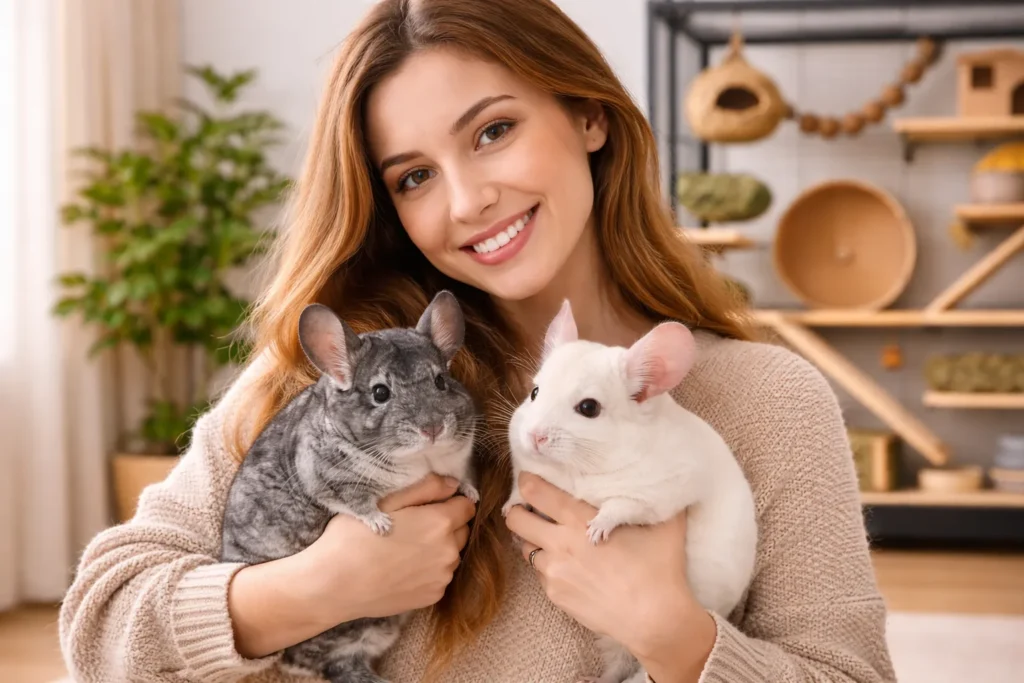
Chinchillas are fascinating, charismatic animals that can make incredible companions for the right person. With their impossibly soft fur, playful personalities, and curious nature, it’s easy to see why so many people are searching for “chinchilla for sale” or looking into chinchilla adoption every day. But before you bring one home, it’s important to understand that chinchillas are all about chinchillas because their needs are very specific, and caring for them properly takes real dedication.
This beginner’s guide covers everything you need to know about chinchilla care, from setting up the perfect chinchilla home, to feeding, grooming, and keeping your new pet happy and healthy for years to come.
Understanding Your Chinchilla
Personality and Temperament
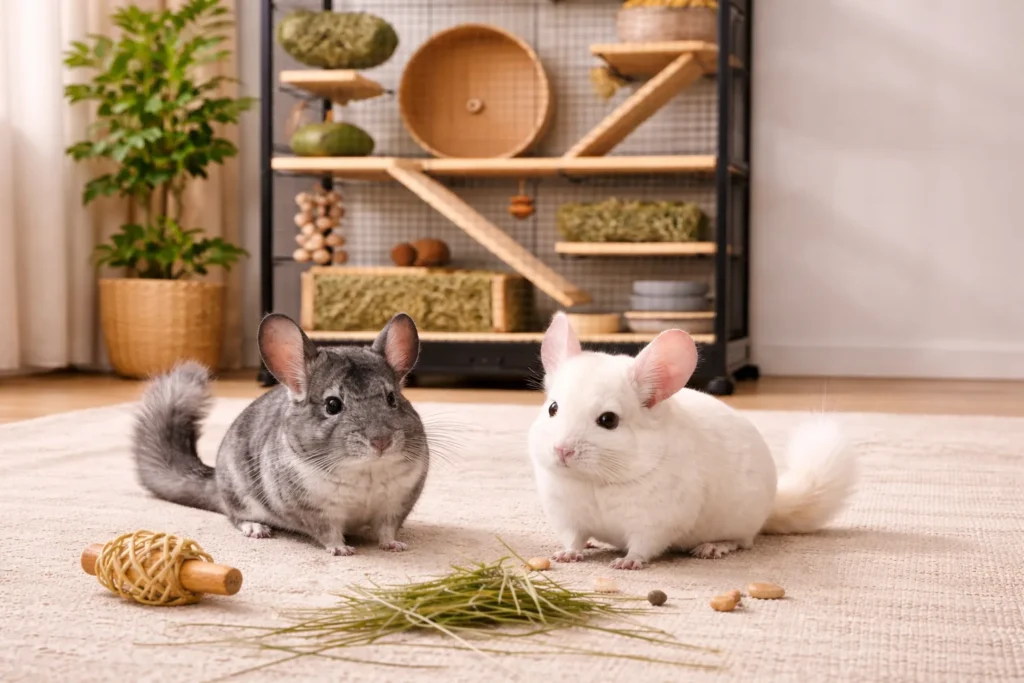
Before anything else, set realistic expectations. Chinchillas are crepuscular, meaning they are most active at dawn and dusk. They are not lap animals like cats : most chinchillas prefer to run, jump, and explore rather than sit still and be cuddled. Think of them as “chinnavision”: hysterical to watch and endlessly entertaining, but not always interactive on your terms. Some individuals do enjoy sitting with their owners, while others would rather race around the room using you only as a momentary perch.
Each chinchilla has its own quirks, and respecting their personality is the foundation of a good relationship. Never force handling on a reluctant chinchilla. A frightened chin may release large tufts of fur as a defense mechanism called fur slip, a completely normal but startling behavior.
Are Chinchillas Right for You?
Ask yourself the following questions honestly before adopting:
- Can you maintain a home temperature between 60–74°F (15–23°C) at all times? An air conditioner is not optional : it is essential.
- Can you commit one to two hours of daily care and playtime?
- Are you prepared for a 15–20 year commitment? Chinchillas are unusually long-lived for small rodents.
- Does anyone in your household have allergies to hay, dust, or animal dander?
- Do you have small children? Chinchillas have a delicate bone structure and are not well-suited as pets for young kids without intense adult supervision.
Important: Chinchillas are not good pets for small children. Their bones are fragile, they move very fast, and their care needs are subtle and easy to miss.
Chinchilla and Dog : Can They Coexist?
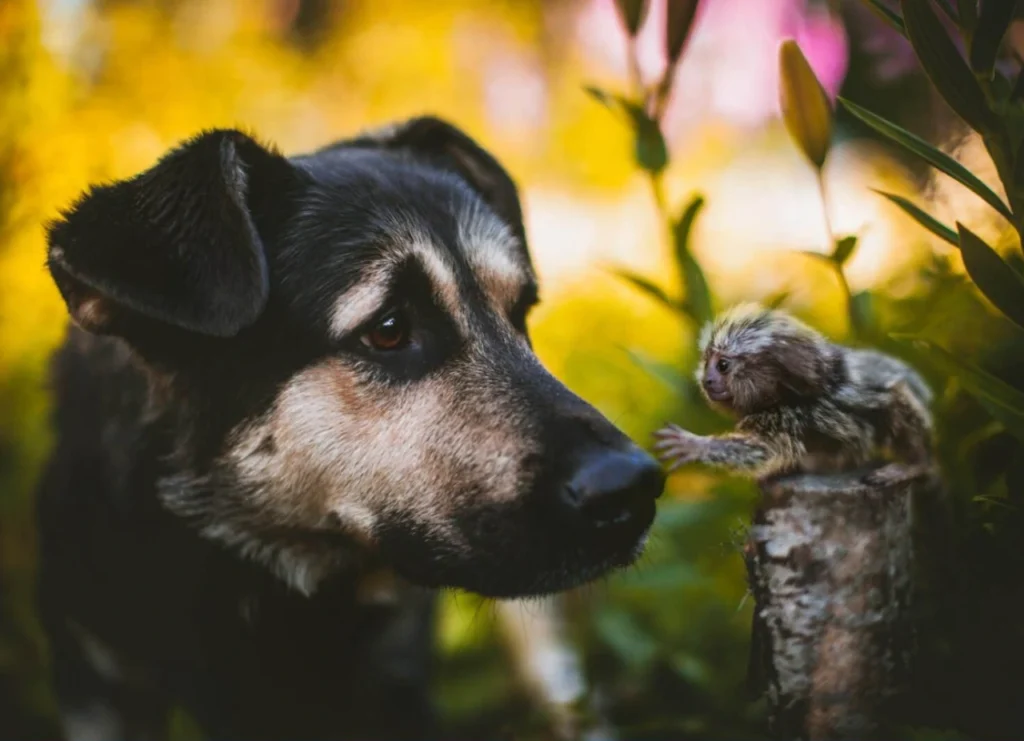
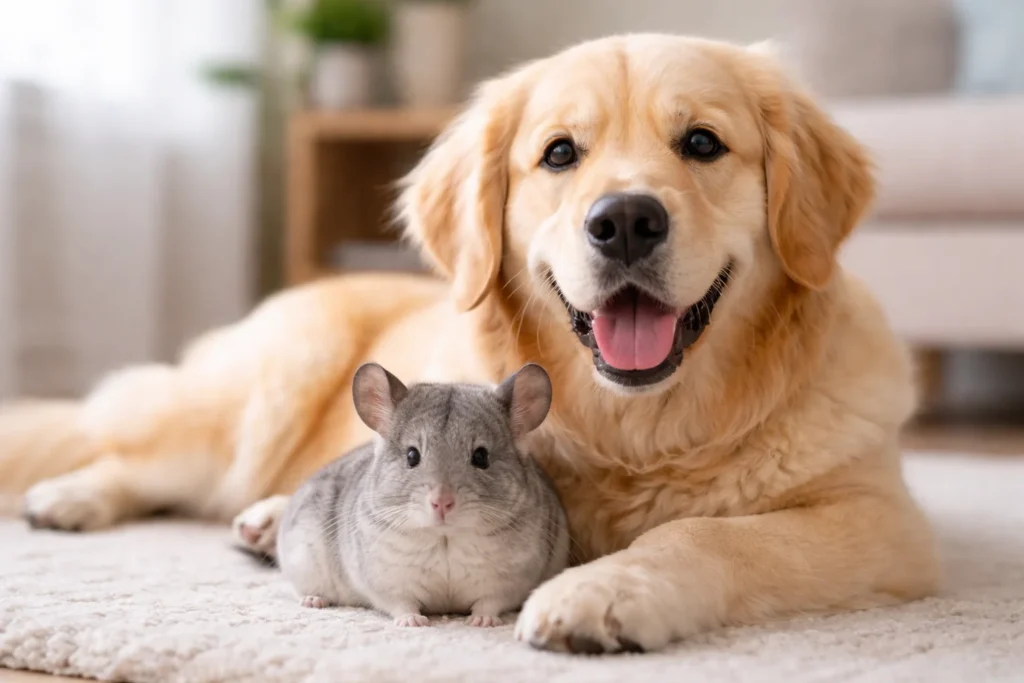
Many prospective owners wonder about keeping a chinchilla and dog in the same home. The short answer is: proceed with extreme caution. Dogs with strong prey instincts can cause chinchillas to experience fatal stress, even without direct physical contact. If you do have a dog, the chinchilla’s room must be completely off-limits and the cage must be inaccessible at all times. Never allow free roam time when a dog is present. With careful management, peaceful coexistence is possible but the chinchilla’s safety must always come first.
Setting Up the Perfect Chinchilla Home
Choosing the Right Cage
Selecting the right cage is one of the most critical decisions you will make for your chinchilla pet. The cage is their entire world when they are not out for playtime, so investing in the right setup from the start will save you money and headaches later.
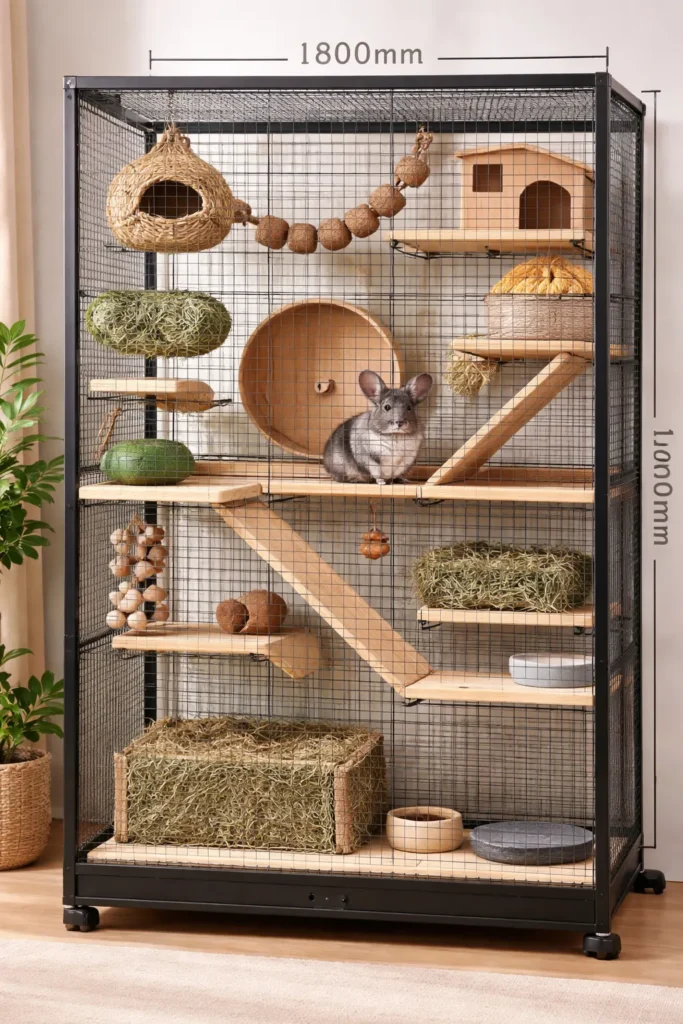
The minimum cage size for a single chinchilla is 24″ x 24″ x 24″, but bigger is always better. Chinchillas are rock-hoppers by nature and love to climb, jump, and perch. The ideal chinchilla cage is wide rather than tall, and any tall cage should be fitted with wooden shelves spaced no more than 18 inches apart to prevent injury from falls. Wire mesh on shelves must be no larger than ½” x ½” to prevent broken limbs.
Popular and well-regarded cage options include the Ferret Nation and Critter Nation by Midwest Cages, as well as cages from Martin’s Cages and Quality Cages. Many experienced owners upgrade the standard trays with deep custom trays from Bass Equipment to better contain litter and droppings.
Location and Temperature
Your chinchilla’s enclosure should be placed in a room where your family spends time : the living room is ideal. Avoid direct sunlight, drafty corners, and any area near heating or cooling vents. The optimal temperature is between 55–70°F, and it should never exceed 75–80°F. Humidity must be kept below 50%. High heat and humidity can be fatal. Always have a backup plan for power outages if you live in a warm climate.
Bedding and Cleaning
Use aspen shavings, CareFresh, or Yesterday’s News as bedding. Cedar shavings are toxic to small animals and must never be used. Standard wood shavings (pine, etc.) can cause respiratory irritation and intestinal blockages if ingested.
Spot-clean the cage daily to remove soiled bedding and leftover food. Do a full cage cleaning with soap and water at least once a week. Food and water containers should be washed daily.
Good to know: Some owners line their cage floors with fleece over towels for easy cleaning. This works well as long as it is washed frequently to prevent bacterial buildup.
Toys and Enrichment
A bored chinchilla is an unhappy chinchilla, and boredom can lead to fur chewing and other stress behaviors. Rotate a variety of safe wooden chew toys weekly. Apple, pear, willow, pecan, mulberry, and manzanita wood are all safe choices. Grape vine balls and wreaths are also popular. Many bird toys made from safe woods work perfectly for chinchillas as well.
A quality exercise wheel is an essential part of any chinchilla cage. Choose one with a solid running surface (no cross-bars or wire) and a minimum diameter of 14 inches , with 16 inches preferred. Popular options include the Chin Spin and the Flying Saucer. Never place your chinchilla in a rolling exercise ball as chinchillas overheat quickly and cannot move it properly.
Hidey holes (wooden or hay houses placed in the corners of the cage) give your chinchilla a safe retreat for sleeping and resting. Cardboard boxes with cut-out doors and windows are also excellent, cheap, and endlessly entertaining for both chinchilla and owner.
Feeding Your Chinchilla
The Basics of a Healthy Diet
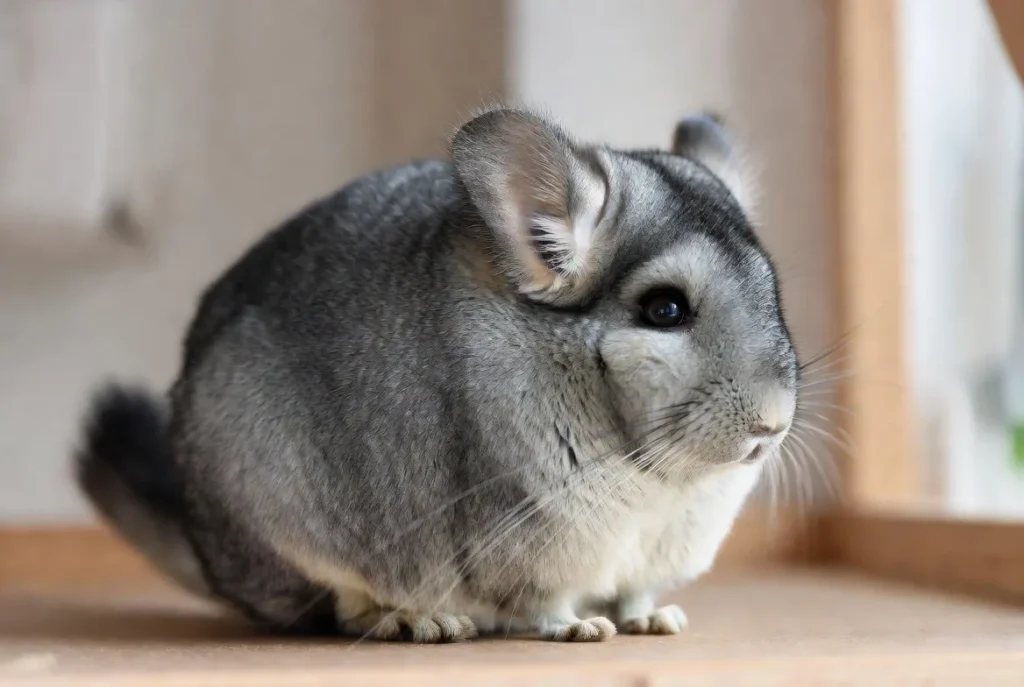
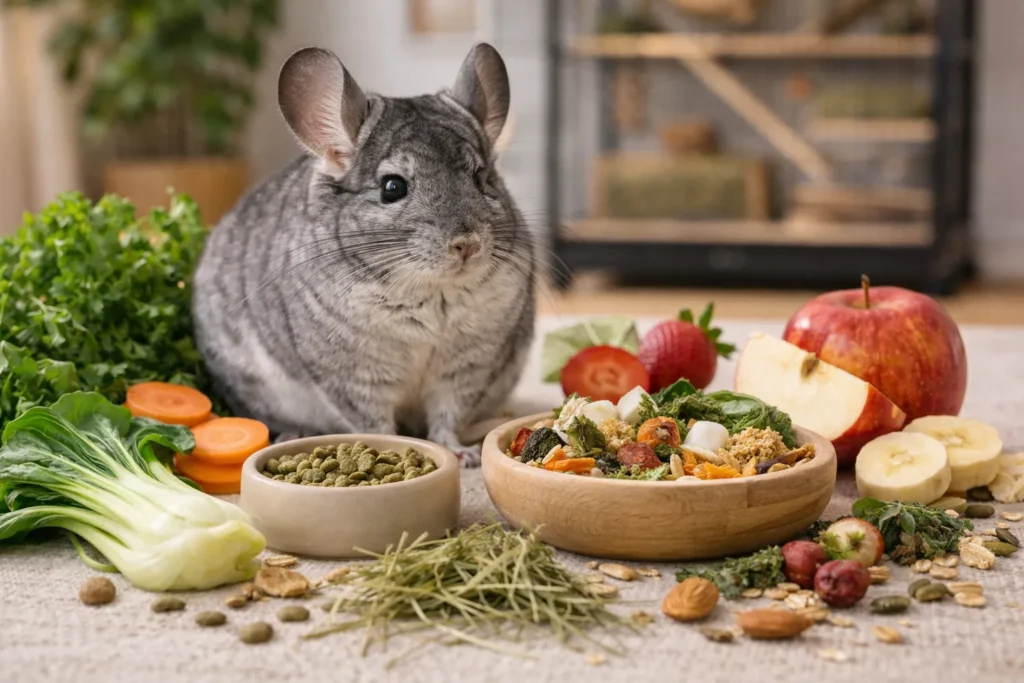
Chinchillas are herbivores that evolved in the harsh, sparse landscape of the Andes Mountains in South America. Their digestive systems are built for a tough, fibrous, nutritionally lean diet. Feeding them rich, sugary, or high-fat foods even in small amounts, can quickly lead to serious gastrointestinal and dental problems. Keep the diet simple: quality pellets, fresh hay, and clean water.
Chinchillas have 20 teeth that grow continuously throughout their lives. A high-fiber diet is essential not only for digestion but for wearing down the teeth naturally. A diet low in fiber leads to dental overgrowth, which is one of the most common and serious health problems in domestic chinchillas.
Pellets
Offer one to two tablespoons of quality chinchilla pellets per day, ideally in the morning or evening. Good pellet brands include Oxbow, Mazuri, American Pet Diner (APD), and Purina Advanced Nutrition Rabbit. Stick to plain green pellets : foods with colorful bits or seeds are essentially treats and will throw off the nutritional balance of the diet.
Hay
Hay is the most important part of a chinchilla’s diet and should be available at all times in unlimited quantities. Timothy hay is the gold standard, with orchard grass and bluegrass also being excellent choices. All hay should be sweet-smelling, dust-free, and never moldy or damp. Alfalfa hay is high in calcium and protein and can be offered once or twice a week as a treat, but should not be the primary hay for adult chinchillas. Use a hay rack to keep hay clean and off the cage floor.
Water
Fresh, filtered water must be available at all times. Use a hanging water bottle rather than an open bowl for hygiene reasons. Chinchillas drink more when water is cool and fresh. Clean the bottle and spout weekly to prevent bacterial buildup. No additives, vitamins, or flavorings are necessary in the water.
Treats
Treats should be limited to once or twice a week. Safe options include: unsweetened shredded wheat, a few rolled oats, dried rose hips, dried hibiscus flowers, dried chamomile, and dried dandelion greens. Small pieces of apple wood or other safe woods can be offered daily and are actually excellent for dental health.
Avoid dried fruit, fresh fruit (except in tiny amounts occasionally), fresh vegetables in large quantities, sunflower seeds, peanuts, and any commercially-made chinchilla treat that contains seeds, nuts, oils, or sugar. Chocolate, caffeine, and alcohol are toxic and must never be given.
Grooming, Hygiene, and Health Care
Dust Baths : Chinchilla Sand and Grooming
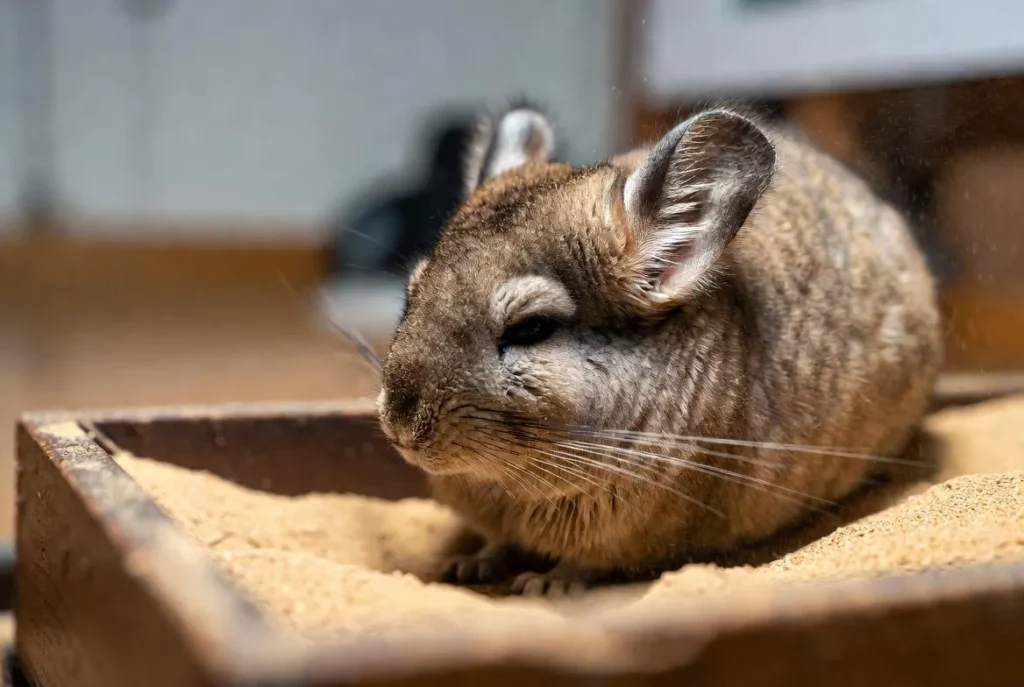
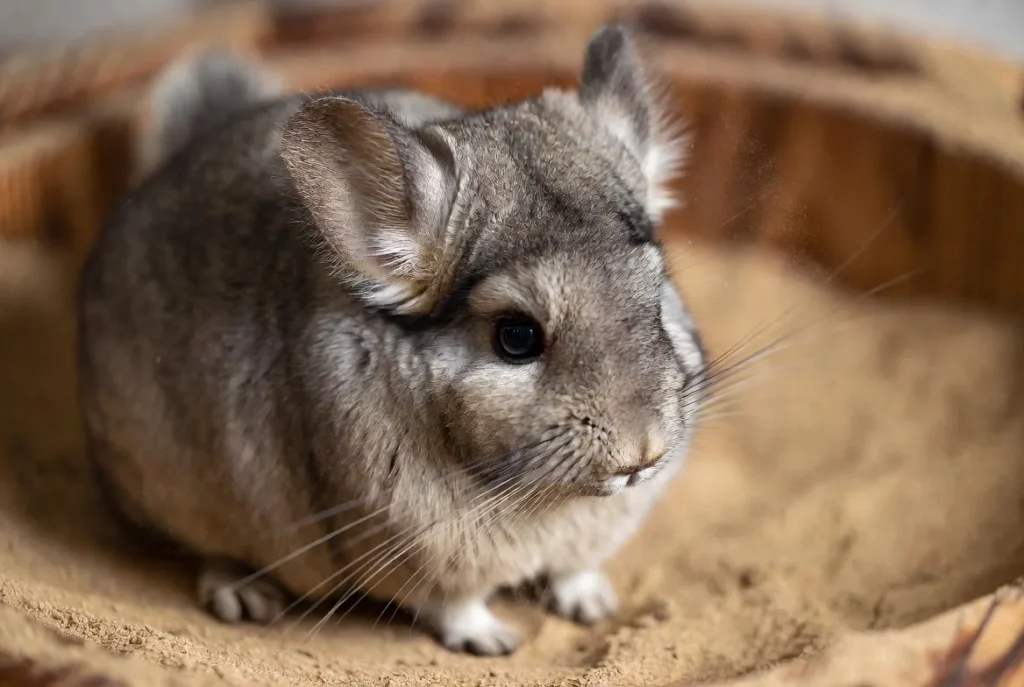
One of the most distinctive and delightful aspects of chinchilla ownership is the dust bath. Chinchillas cannot be bathed in water : their fur is so incredibly dense that it takes a very long time to dry, and damp skin can quickly lead to fungal infections and hypothermia. Instead, they clean themselves by rolling in fine volcanic dust, which absorbs oils and keeps their coat soft and pristine.
Offer a dust bath at least three times a week, for 20–30 minutes each session. Use a dedicated chinchilla sand or dust (sometimes called chinchilla sand) , such as fine pumice or blue cloud dust, are popular choices available at most pet stores. Never use regular sand or building sand; it is too coarse and will damage your chinchilla’s coat and skin. The bath container should be large enough for your chinchilla to roll around comfortably , about 9 inches wide and at least 10 cm deep is a good guideline.
Do not leave the Chinchilla dust bath in the cage permanently. Chinchillas will use it as a toilet, and excess dust exposure can cause eye irritation and conjunctivitis. Always supervise bath time and place the bath outside the cage or on a shelf, not directly on the cage floor.
Read More: The Best Chinchilla Dust for a Luxurious Coat 2025
Brushing and Fur Care
Between dust baths, you can gently brush your chinchilla with a soft-bristled brush in the direction of their fur growth. This helps remove loose hairs and keeps the coat in good condition. Never use water or wet wipes to clean your chinchilla’s fur.
Watch for fur chewing : this is when a chinchilla excessively grooms and pulls out its own or a cagemate’s fur. This is a sign of stress, boredom, loneliness, or inadequate fiber in the diet. Address the root cause rather than just treating the symptom.
Handling Your Chinchilla Safely
When picking up a chinchilla, support their entire body : cradle them like a football, supporting the rear end firmly while cradling the front. Never grab by the tail or limbs. Never hold too tightly. If your chinchilla is squirming and distressed, wrapping them gently in a small towel can help. Keep handling sessions short at first, and gradually increase duration as your chinchilla becomes more comfortable with you.
If your chinchilla is barking, vocalizing in protest, or showing signs of aggression, respect that and return them to the cage. Trust is built slowly and patiently : never forced.
Veterinary Care and Common Health Issues
Chinchillas require an annual checkup with an exotic animal veterinarian. Not all vets have experience with chinchillas, so find a specialist before you ever need one. Having an experienced vet in advance provides peace of mind.
Signs of a healthy chinchilla include bright, clear eyes, a full and even coat, normal eating and drinking, regular droppings, and active, playful behavior. Signs that should prompt a vet visit include: soft or loose stool, not eating or drinking, significant fur loss, labored breathing, eye or nasal discharge, drooling, limping, weight loss, or unusual lethargy.
Common health issues in chinchillas include dental disease (malocclusion), gastrointestinal stasis, urinary stones (urolithiasis), fractures, fur chewing, and respiratory infections. Most of these can be prevented or minimized by maintaining the correct diet, clean housing, proper temperature, and low-stress environment.
Chinchilla Cost: What to Expect to Spend
Chinchilla Price
The initial chinchilla price varies significantly depending on where you get your pet. A standard gray chinchilla from a breeder or pet store typically costs between $150 and $350. Rarer color mutations such as white, violet, sapphire, or ebony can command prices between $200 and $600 or more. Keep in mind that the purchase price is just the beginning of the financial commitment.
Initial setup costs can be significant. A quality cage can cost between $150 and $400 or more. Factor in a wheel ($50–$150), bedding, food, a water bottle, dust bath supplies, and toys. A realistic first-year budget for a new chinchilla owner, including veterinary fees, is often $800–$1,200 or more.
Ongoing costs include hay (a significant monthly expense for fresh, quality hay), pellets, bedding, dust, toys, and routine vet care. Emergency vet care for chinchillas can quickly reach several hundred dollars. Vet exams alone often start at $50 and go up depending on what testing or treatment is needed.
Chinchilla Adoption
Chinchilla adoption through a rescue or shelter is an excellent alternative to buying from a pet store or breeder. Rescue chinchillas are often already socialized, and adoption fees typically include an initial health check and sometimes even spay/neuter services. Adoption fees usually range from $50 to $150 per chinchilla.
When considering chinchilla adoption, look for reputable small animal rescues and specialty chinchilla organizations. Adopting a pair is often recommended, since chinchillas are social animals that generally thrive with a companion. If you are bringing a new chinchilla home to an existing one, introduce them gradually : start with side-by-side cages, swapping cage furniture and dust baths to exchange scents, and only combining them once both animals are consistently showing relaxed, positive behavior.
Adoption tip: Adopting a bonded pair from a rescue is one of the best things you can do for these animals. They will already have an established social bond, which reduces stress for both chinchillas.
Breeding Chinchillas: What Beginners Should Know
Breeding chinchillas is not recommended for beginners. While it may seem appealing, breeding chinchillas requires deep knowledge of genetics, color mutations, and reproductive health. Chinchillas can have two to three litters per year with one to three kits per litter. Kits are born fully furred with eyes open , which is unusual among rodents, but the mother and young require a stress-free environment and highly experienced monitoring.
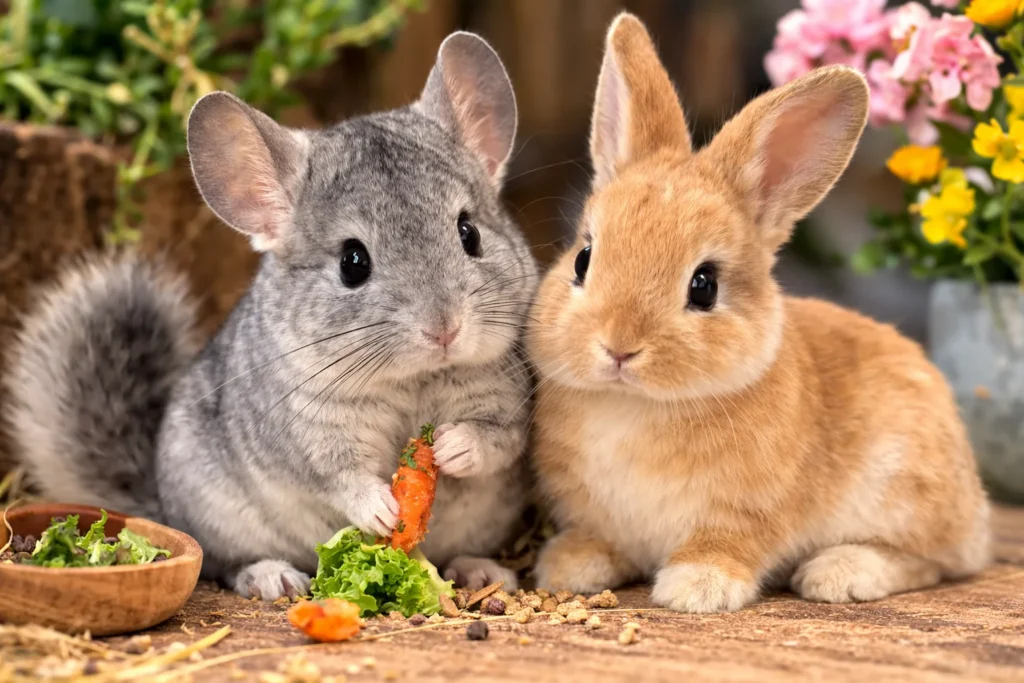
If you are not deliberately working toward a breeding program, always house males and females separately. A male chinchilla housed with an unspayed female will breed. Litter mates can be housed together safely if they are the same sex. If you have mixed-sex chinchillas and do not intend to breed, have the male neutered. Never house chinchillas with rabbits : rabbits can carry Pasteurella bacteria, which can be fatal to chinchillas even without direct physical contact.
What people ask about Chinchillas Care!
Are chinchillas good pets?
When handled daily and treated as members of the family, chinchillas can be wonderful pets and are unusually long lived for small animals.
Are chinchillas friendly?
Although personalities differ, regularly socialized chinchillas can be very friendly. They are, however, very active and very fast, so they may not make appropriate pets for young children.
Are chinchillas easy to take care of?
Chinchillas are relatively low-maintenance. They do not require an excessive amount of attention, but rather the appropriate care. As with many pocket pets, you’ll just have a few daily responsibilities, such as giving them fresh food and water and removing waste.
Chinchillas do require daily care and time out of their cage to run, play, and socialize, Generally, a chinchilla will likely require one to two hours per day to have their needs met adequately.
Are chinchillas cuddly?
Although they can be very affectionate, most chinchillas are not particularly cuddly.
They tend to be very active and busy animals and therefore typically don’t want to spend time snuggling.
How big does the dust bath need to be?
The bath needs to be large and deep enough for your chinchilla to roll around in without injuring themselves, so the dust should be about 10cm deep.
Where can I buy chinchilla dust?
This can be bought from most pet shops. Never use ordinary sandpit or builders’ sand as this is too coarse and will damage the chinchilla’s fur and skin.
Will my chinchillas need a water bath?
You should never bathe your chinchilla with water as this can cause hypothermia – their fur is so dense that it takes a long time to dry.
With regular dust baths, and providing their teeth are in good condition, chinchillas can maintain their own fur.
Final Thoughts: All About Chinchillas
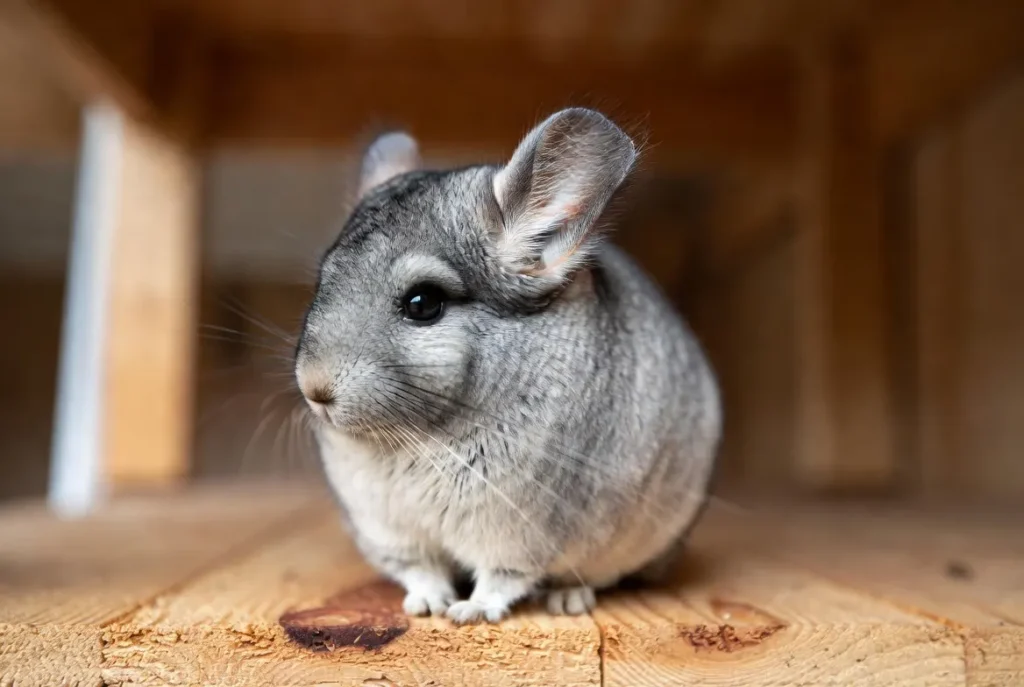
All about chinchillas comes down to this: they are extraordinary, long-lived, and deeply rewarding animals for owners who are willing to meet their very specific needs. The commitment is real in time and money, but for the right person, a chinchilla is an endlessly entertaining, uniquely beautiful companion unlike any other pet.
Before you search for a “chinchilla for sale” at your local pet shop, consider chinchilla adoption first, set up your chinchilla home properly, do your research, find an exotic vet you trust, and prepare to be charmed by one of the most remarkable little animals on the planet.