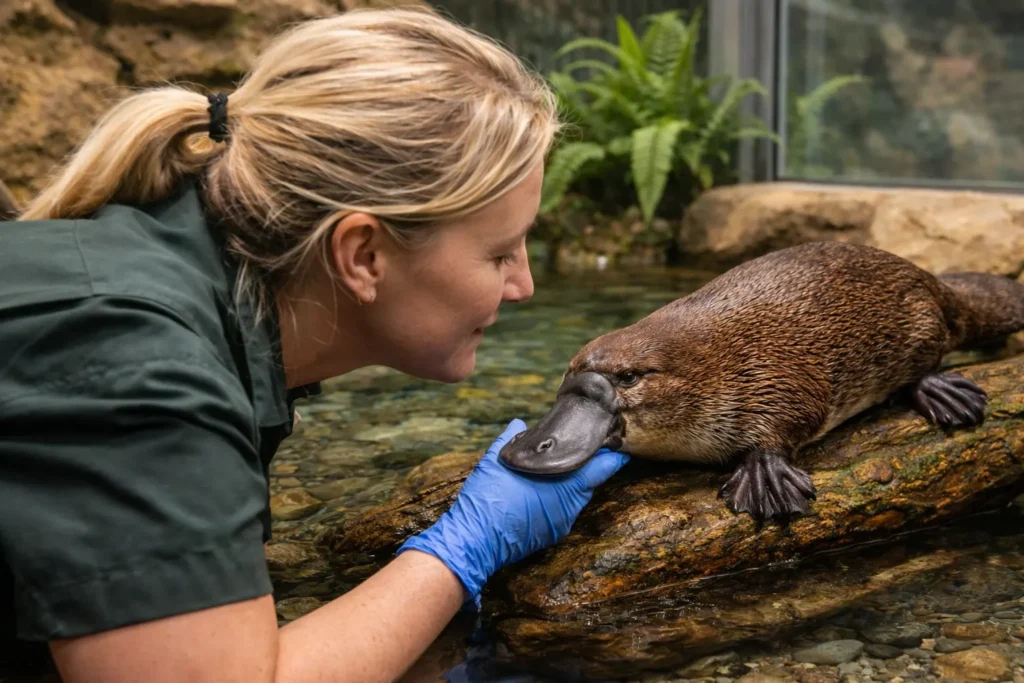
No, not really. In almost every country you will find that owning a platypus as a pet is either illegal or effectively impossible. These strange, semi-aquatic mammals are fully protected wildlife, not domestic animals.They cannot be bought, sold or kept by ordinary people. In fact, one expert summary bluntly states “it is illegal to own a platypus anywhere in the world”. Even in Australia, where they live naturally, private ownership is banned and only licensed wildlife professionals can ever handle them for research or rehabilitation. In short, you can’t walk into a pet store or online shop and buy a platypus – it’s simply off-limits by law and conservation rules.
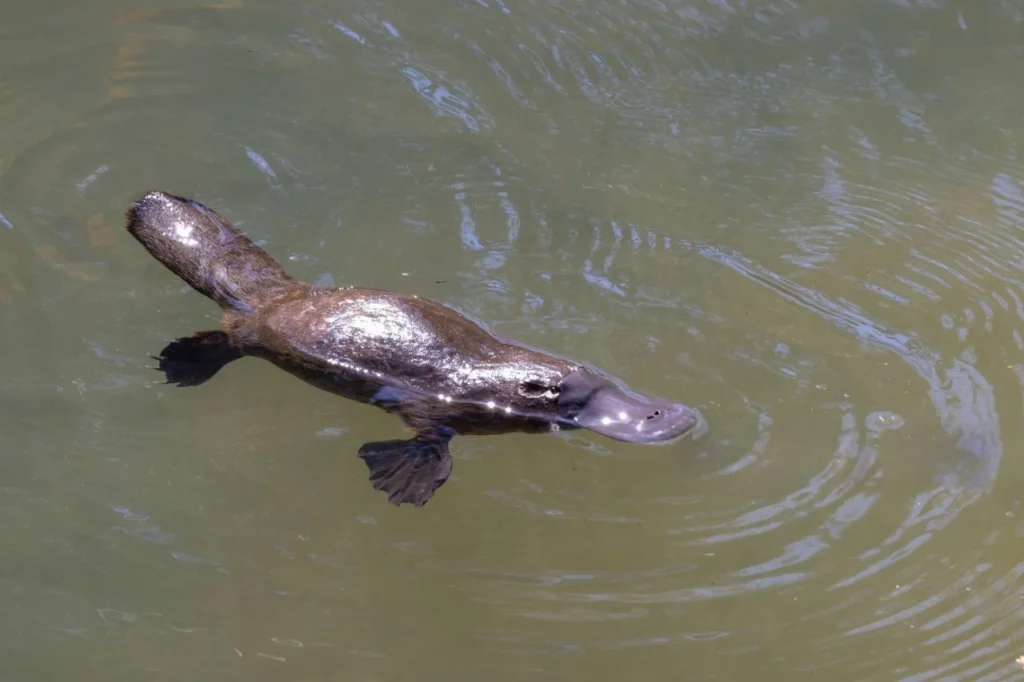
Can You Keep a Platypus as a Pet?
That answer probably surprises any cartoon fans or nature lovers who’d love a duck-billed pal. But given how quirky they are, it’s worth explaining why. Platypuses are not like cats or dogs (or even most “exotic” pets). They have very special needs and protected status. Below we break down the legal situation in the USA, UK and Australia, and also look at whether they can thrive in captivity and why you can’t really buy one. The bottom line is the same in every country: no plain-clothes platypus petting for you – they belong in the wild or under official care, not in your living room.
Read More : Platypus Venom: What It Does, How Dangerous It Is!
Owning a Platypus in the USA
In the United States, platypuses are considered nonnative exotic animals, and strict laws apply. No state allows a private citizen to casually keep a platypus. On the federal level, any import would require Fish & Wildlife Service permits and must comply with wildlife conservation laws. In practice these permits are not issued for platypuses because they are protected and not bred for trade. Many states also ban exotic mammals outright or require special licenses. For example, California’s Fish and Game Code explicitly lists “platypuses” among animals you cannot possess without a zoo or research permit. (In California it is literally unlawful to have one without permission.) Other states have similar rules under their exotic animal laws or under the federal Lacey Act that prohibits trafficking in wildlife taken in violation of law.
Read More: Are Platypuses Dangerous to Humans?
The Only Platypuses in the U.S. Are at the San Diego Zoo Safari Park
Even those two platypuses living in the US are strictly at the San Diego Zoo Safari Park – no private person can have them. In fact, the San Diego Zoo notes it is “home to two platypuses – the only platypuses outside of Australia”. That gives you an idea: only accredited zoos or sanctuaries have them, and even then only under special conditions. In short, if someone in the USA tried to get a platypus as a pet, they would hit brick walls of regulations (and federal/state penalties if caught). It’s treated the same as importing any endangered or exotic species illegally – you can’t. Bottom line: under US law a platypus cannot be owned by an ordinary pet keeper.
Owning a Platypus in the UK
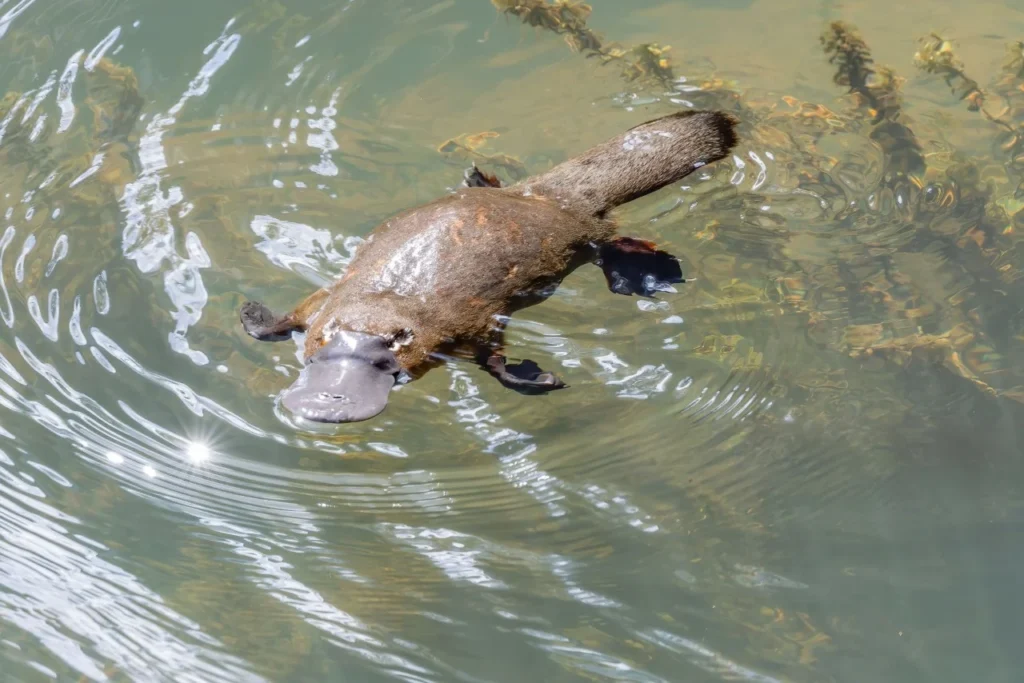
The UK has no native platypuses, so the laws are more indirect. By the letter of one old law, platypuses aren’t even listed as “dangerous wild animals” under the Dangerous Wild Animals Act 1976. That might make it seem legal in principle, but there’s a catch: no one in the UK can actually import a platypus because Australia absolutely forbids it. Australia’s export ban on platypuses is very strict, so the UK government never had to explicitly ban them by name.
Platypuses and the UK: Historical Attempts and Challenges
To put it another way, Britain trusts Australia’s rules. In fact, a 2021 account of Winston Churchill’s request for a platypus notes that “a strict law [in Australia] preventing the removal of platypuses…was in place” during WWII. Even so, Churchill got a special exemption (just once) to send one here, and that platypus arrived safely but died after 12 days due to the journey. According to the same source, “in 1943, no platypus had ever been brought to England alive, nor has one since”. In other words, despite an old zoo in London, no UK zoo ever succeeded in keeping a platypus alive long-term (the one in New York’s Bronx Zoo in 1912 only lived seven days).
Why You Can’t Legally Keep a Platypus in the UK
So while UK domestic law doesn’t specifically list the platypus as a banned pet, practically speaking it cannot happen. There is no legal export from Australia, no breeding program in the UK (impossible without Australian help), and keeping one would violate international wildlife trade norms. Any attempt to buy or import a platypus into the UK would be considered wildlife trafficking. British readers can be assured: even if you find a website or person offering a “pet platypus,” it is not a legal sale – if it happened at all, it would involve serious crime. In short, a platypus as a pet in the UK is as real as magic – officially impossible.
Owning a Platypus in Australia
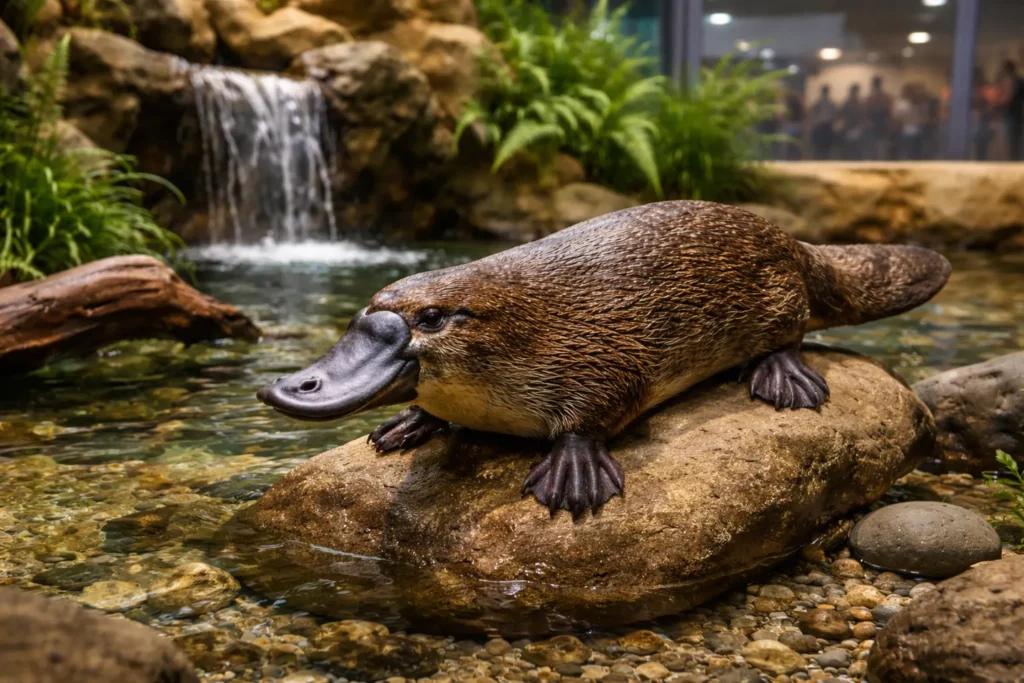
You might think Australia is the one place it would be possible – after all, platypuses are native here. But actually, Australia has made platypuses totally protected. Every Australian state and territory treats the platypus as a protected wildlife species. It has been illegal to hunt or trap platypuses for over a century, and private ownership is banned. According to Australian authorities, platypuses are “completely protected by law across Australia”. This means you cannot keep one in your backyard even if you tried. Only very specialized facilities (like certain government-run sanctuaries or research centers) may temporarily hold a platypus under strict license.
Platypus Ownership and Export Restrictions in Australia
For example, outside of museums or scientific programs, there are essentially no legal options for petting or owning one. Exports are similarly restricted: Australia’s environment department explicitly states that “specific conditions apply to the export of…platypus”. In plain language, you can’t export platypuses except under very rare scientific circumstances. One wildlife site sums it up: Australians label them a protected species, and “they cannot be owned, bred, sold, or traded within the country or for export”.
In short, Australians who love their cute monotremes cannot keep them as pets. All the platypuses in captivity are in government or conservation hands. Several Australian zoos (Healesville, Taronga, etc.) have small breeding programs, but even they have to meet rigorous standards. Private individuals have absolutely no legal route to own a platypus in Australia.
Can Platypus Live in Captivity?
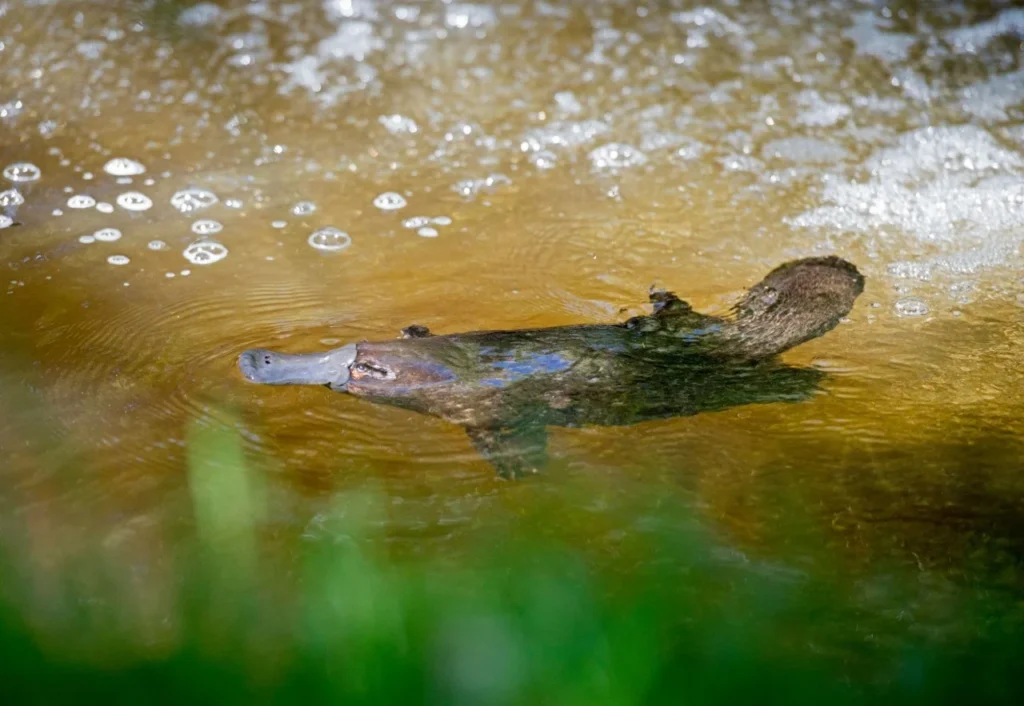
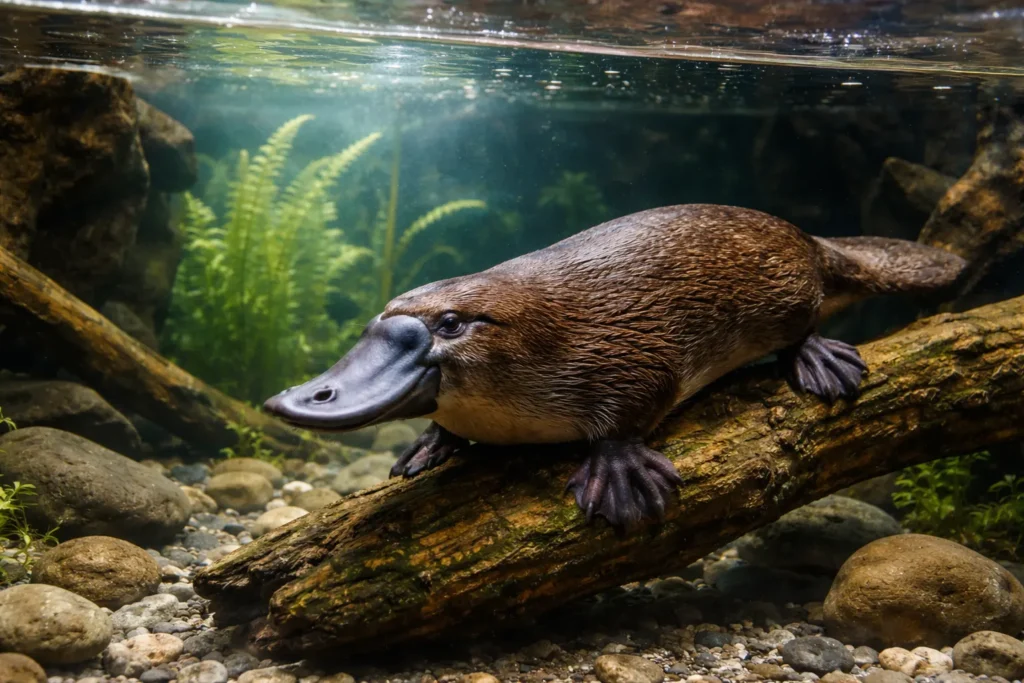
Setting legality aside for a moment, the practical question is: could a platypus even make a tolerable pet, or a manageable zoo animal? The answer is: only under very controlled conditions. Platypuses are semi-aquatic, nocturnal, egg-laying mammals. In the wild they live in muddy freshwater creeks and rivers, using their duck-like bills to hunt by touch and electroreception at night. They are not built to live on land; they spend most of their lives swimming and digging burrows near the water’s edge. To replicate that, a captive platypus needs a large, naturalistic pool with clean flowing water, plus room to burrow in the stream bank.
The Challenge of Feeding a Platypus
Then there’s the diet. Platypuses feed almost entirely on aquatic insect larvae, worms, snails and small crustaceans. In fact, they eat an enormous amount: roughly 20–50% of their body weight in food every single day. Zoo keepers must feed them live aquatic prey (like larvae and crayfish) and keep the water very clean. This makes them extremely high-maintenance. In short, the “platypus diet” is not chow you can buy off the shelf – it requires growing or collecting aquatic bugs, changing water daily, and closely monitoring health.
Why Platypuses Struggle in Captivity?
All of this makes platypuses very poor candidates for captivity. Experts note that they “require huge habitats” and have “complex eating habits” that are hard to replicate. Even the best zoos struggle. Indeed, dozens of platypuses have died in aquariums and zoos around the world because they stress easily and have such precise needs. A-Z Animals notes that “hundreds have died over the last century” in captivity, and today only a handful of organizations keep them alive. For example, as of 2019 the only platypuses outside Australia were the two at San Diego Zoo Safari Park. (Those two are kept on a special nocturnal schedule with constant veterinary care.)
Temperament and Dangers of Keeping a Platypus
The platypus’s temperament adds to the challenge. They are shy, secretive animals that don’t like being handled; they can also deliver a painful venomous spur if stressed (males have a venom spur on the hind legs). They are wild animals through and through – not cuddly pets. So even setting aside the legality, caring for a platypus in captivity is a monumental task. Most zoos that try must invest huge resources. In fact, some wildlife experts joke that keeping platypuses is so hard that the only way a private person could do it is if they built a river in their living room, hired a team of biologists, and filled it with live bugs!
Can You Buy a Platypus?
No – buying a platypus is a non-starter everywhere. There are no legitimate breeders, pet stores or catalogues selling platypuses. The combination of laws and biology makes it effectively impossible to purchase one. First, they’re a protected species (see above), so selling one is illegal in and of itself. In Australia it’s expressly forbidden to “sell or trade” platypuses. In the US and UK, trafficking in illegally obtained wildlife (via the Lacey Act or wildlife trade laws) would make any attempted sale a serious crime. Then, even if someone tried, there is nowhere to get a live platypus. Australia forbids exporting them for anything other than approved scientific exchanges. So there is no legal export channel. Without legal import/export, any “for sale” listing is either a scam or outright illegal.
Beware of “Platypus for Sale” Scams
Websites that claim to sell a “platypus pet” should be treated with extreme caution – almost certainly a fraud (or animal cruelty trafficking). An online search will turn up crackpots and possibly illicit dealers, but these are black-market operations at best. According to a Maine Department of Inland Fisheries news story, it’s “not only against the law to have [a platypus] in Maine, you’re not allowed to have them anywhere outside of Australia”. In other words, even in jurisdictions without a specific platypus law, general rules on exotic animals and conservation will shut down any sale.
Why You Can’t Legally Import or Buy a Platypus
If by some wild chance someone did try to bring a platypus into the US or UK, customs and wildlife officials would seize it. The platypus isn’t listed under CITES (the global endangered-species treaty) but Australia’s own export ban fills that gap. And as noted, in Australia itself you can’t legally sell one. So, in effect, you cannot buy a platypus in any honest, legal way. There are simply no licit breeders or markets.
Strict Export Rules Even for Scientific or Zoo Purposes
Even for scientific or zoo uses, export permits are extremely restrictive. Australia’s environment department explicitly requires that any platypus export must meet “specific conditions”. (These conditions are designed for research or diplomacy – remember, Churchill got one only as a political gift in wartime.) For an ordinary person asking “can I buy one?”, the answer remains a firm no. Without a government-to-government treaty exception, there’s no channel. It’s worth noting that animal-care experts themselves emphasize that platypuses “cannot be legally kept as pets in Australia” and that there are “no legal options for exporting them overseas”. This underscores how absolute the ban is.
Conclusion
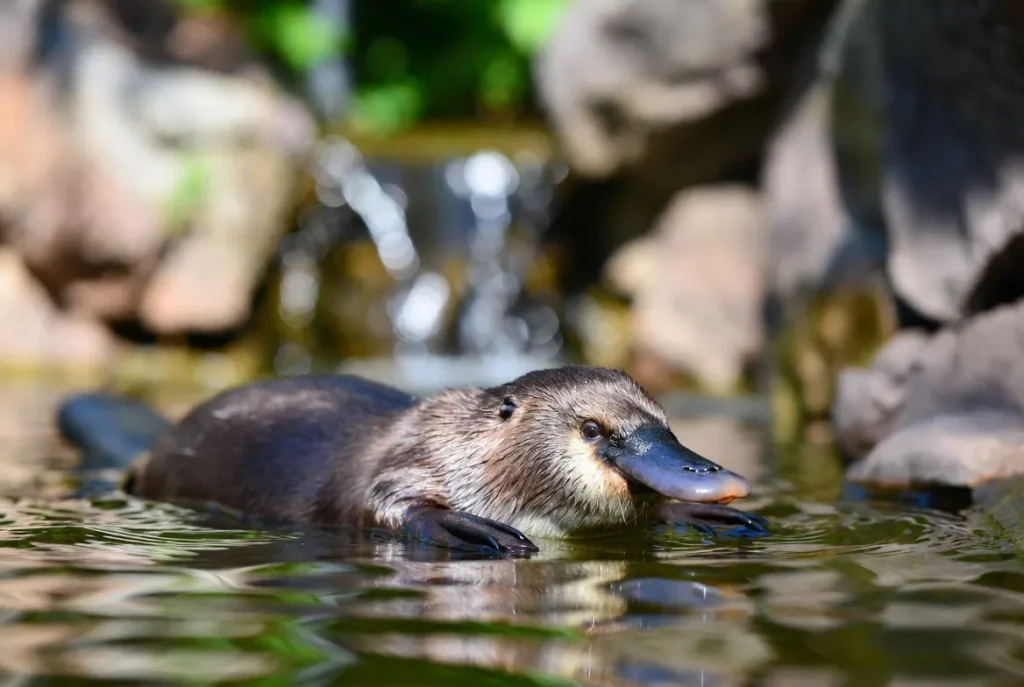
In summary, a platypus is not a legal or realistic pet in the USA, UK, or Australia. These animals are fully protected by law and have such specialized care needs that only highly trained professionals and zoological institutions even attempt to keep them. For everyday readers in the US or UK, the key points are: laws on exotic animals and international wildlife trade make it illegal to import or own a platypus. Australia’s protective laws mean even Australians can’t have one at home. Even if you had the money, space and know-how (imagine trying to recreate a river biotope!), the paperwork and permits simply don’t exist for private ownership. If you ever see a platypus advertised “for sale,” it’s either a scam or a violation of international law. As threats to their natural habitat grow, the risk of Platypuses Extinct in the wild makes protecting them in their environment — not in private homes — more critical than ever.
If you love platypuses, the best thing is to appreciate them in their natural habitat (or in accredited aquariums/zoo sanctuaries), and to support conservation of their waterways. But as a pet, a platypus is off-limits. It’s one of those rare cases where the answer is easy: legally speaking, you cannot have one. Their status as wild, near-threatened wildlife combined with strict laws makes owning a platypus a no-go – one that even Winston Churchill learned the hard way during WWII.



Pingback: What Do Platypus Eat? - Animal Sound
Pingback: How Do Platypuses Live? - Animal Sound
Pingback: Can Platypus live in Captivity? - Animal Sound
Pingback: Can You Own a Pet Platypus? - Animal Sound
Pingback: Platypus Care and Price Tags - Animal Sound
Pingback: Are Platypuses Dangerous to Humans? - Animal Sound
Pingback: Platypus Venom: What It Does, How Dangerous It Is! - Animal Sound
Pingback: Are Platypuses Extinct? Here's What's Actually Going On - Animal Sound