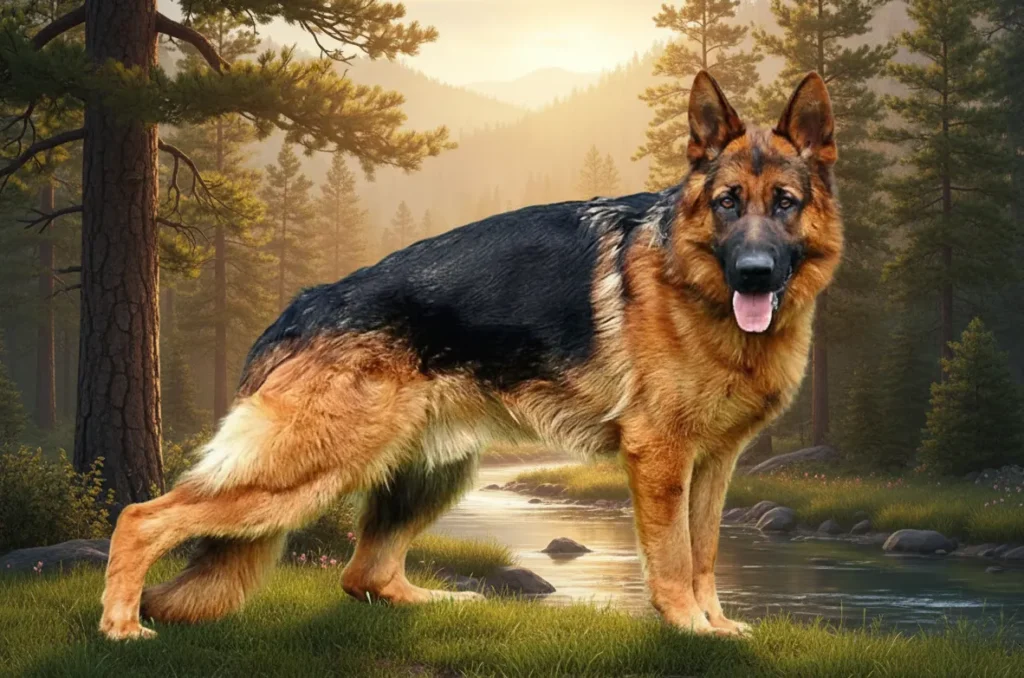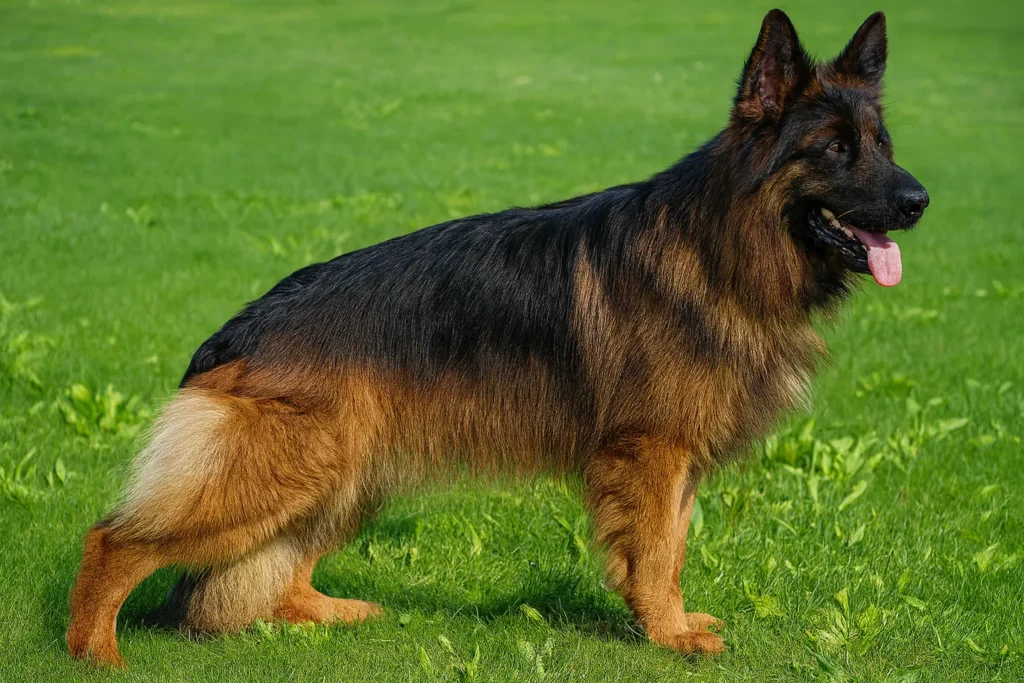
The German Shepherd Dog (GSD) is a large, agile working breed known for its intelligence and loyalty. A key identifying trait is that it’s one of the classic double-coat dog breeds: nearly every purebred GSD carries two fur layers. The coat has a rough, weather-resistant top layer of guard hairs and a thick, woolly undercoat beneath.
This native two-layer coat acts like built-in armor – the coarse guard hairs shrug off rain and snow, while the plush undercoat traps heat in cold weather (and even helps vent heat in summer). As a vet who sees GSDs regularly, I always remind owners that this fur is part of the Shepherd’s heritage: bred in German climates to handle cold, heat, or even direct sun.
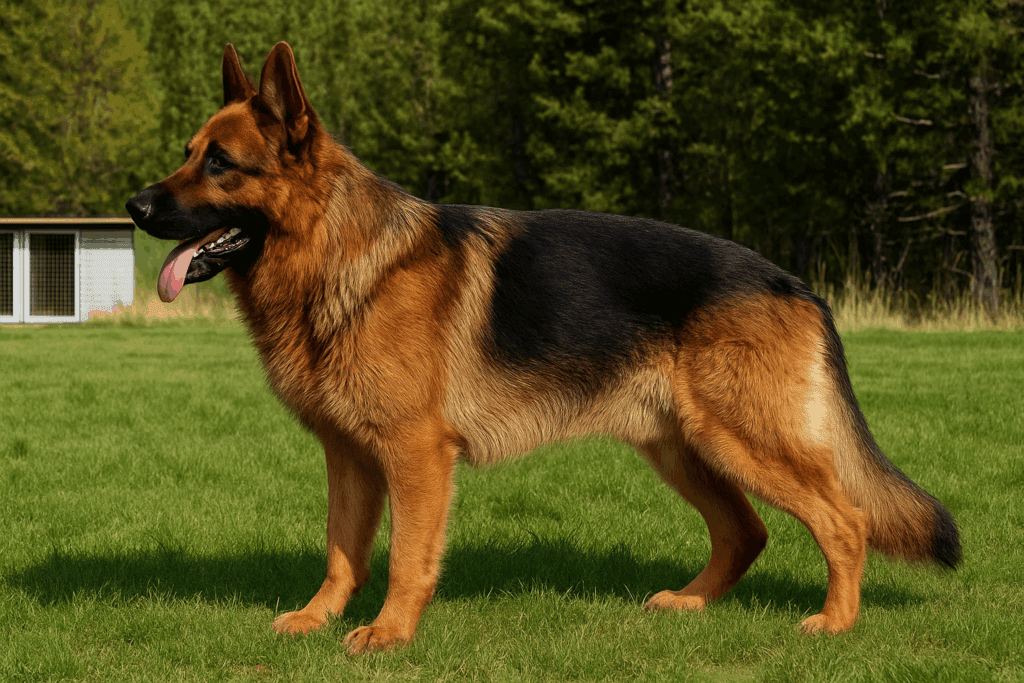
In practice, if someone asks about a “GSD double coat,” I tell them it’s by design – the German Shepherd dog comes standard with a double coat.
The annotated diagram above highlights how the layers of a GSD’s coat function. The stiff outer fur provides weather and UV protection, while the dense inner coat offers insulation (labeled “Insulation” on the ear). In other words, a properly maintained double coat truly shields these dogs from rain, snow and even strong sunlight. The long guard hairs naturally repel moisture and dirt, and the soft undercoat traps warmth.
In hot weather, a healthy undercoat can be shed to help the dog stay cool. I see it all the time: with a good double coat, a German Shepherd handles both a freezing morning and a sweltering afternoon with far more comfort than a short-coated dog.
Identifying the Double Coat
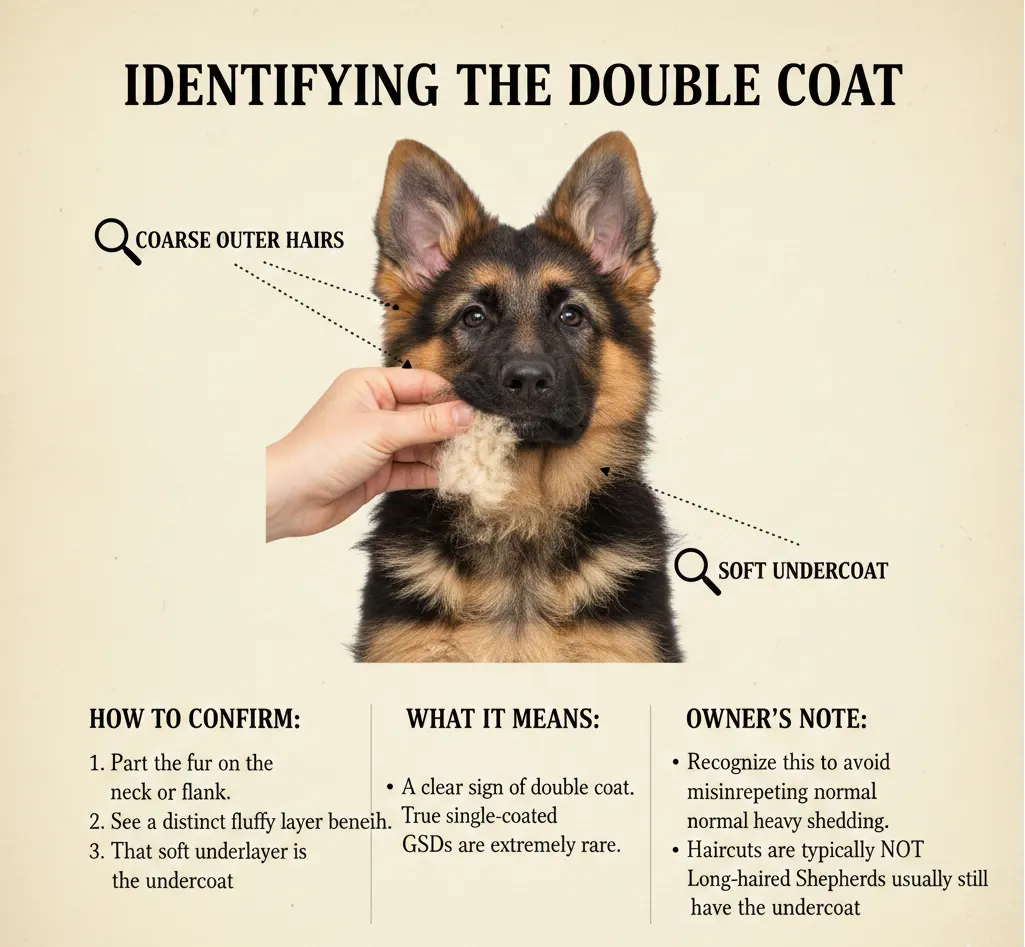
If you’re checking a Shepherd puppy or new dog, here’s how to confirm the trademark double coat. Simply part the fur on the neck or flank: you should see a distinct fluffy layer beneath the coarse outer hairs. That soft underlayer is the undercoat – a clear sign of a double coat. In my experience, true single-coated GSDs are extremely rare – nearly all will reveal the undercoat when you do this. It’s important for owners to recognize this: without seeing the undercoat, you might misinterpret normal heavy shedding or think a haircut is needed. (On a side note, so-called long-haired Shepherds usually still carry an undercoat; only the very rare recessive longhair fails to do so.)
Coat Types and Variations
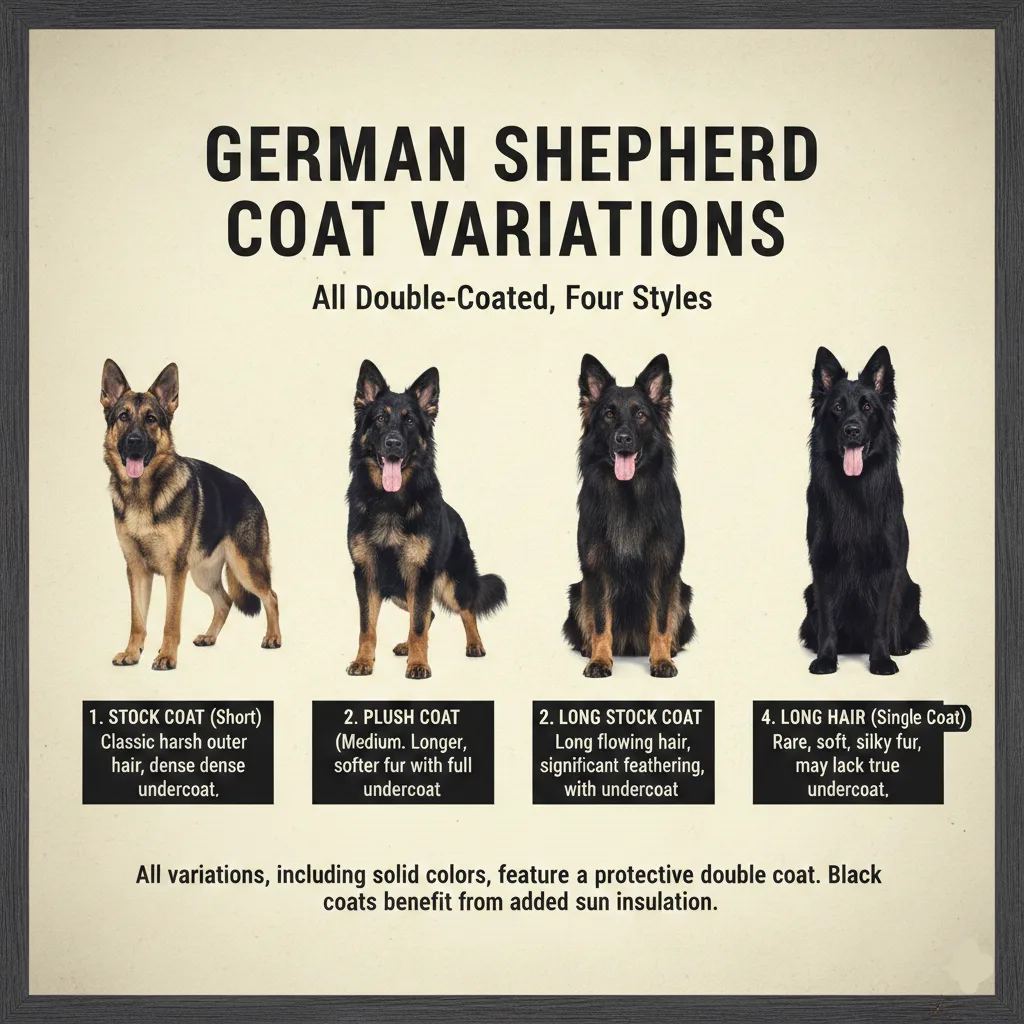
Within the breed, German Shepherds can have different coat lengths – but they’re all variations on the same double-coated theme. Breeders generally recognize four types of GSD coats:
- Stock (Short) Coat: The classic show-line coat – short, harsh outer hair with a thick, dense undercoat. This is the standard double coat.
- Plush (Medium) Coat: Slightly longer and fluffier overall, but still carries that full undercoat beneath. (Some call this the “American plush” coat.)
- Long Stock Coat: Long flowing hairs (especially feathering on the ears, tail and back of legs) plus an undercoat. Basically a long-haired version of the double coat.
- Long Hair (Single Coat): Rare long coat with silky fur; the outer coat is soft instead of coarse and may lack a true undercoat. It looks long like the above but usually sheds much less (at the cost of some insulation).
All of the above are essentially double-coated dogs – the long-haired types are just extreme length. Even solid-color GSDs follow this rule. For example, a black German Shepherd dog still has the same two-layer coat as a black-and-tan or sable Shepherd. In fact, that thick coat is especially useful on black dogs: it helps protect their skin from sun and heat, since black fur absorbs extra solar radiation.
Grooming and Care for the Double Coat
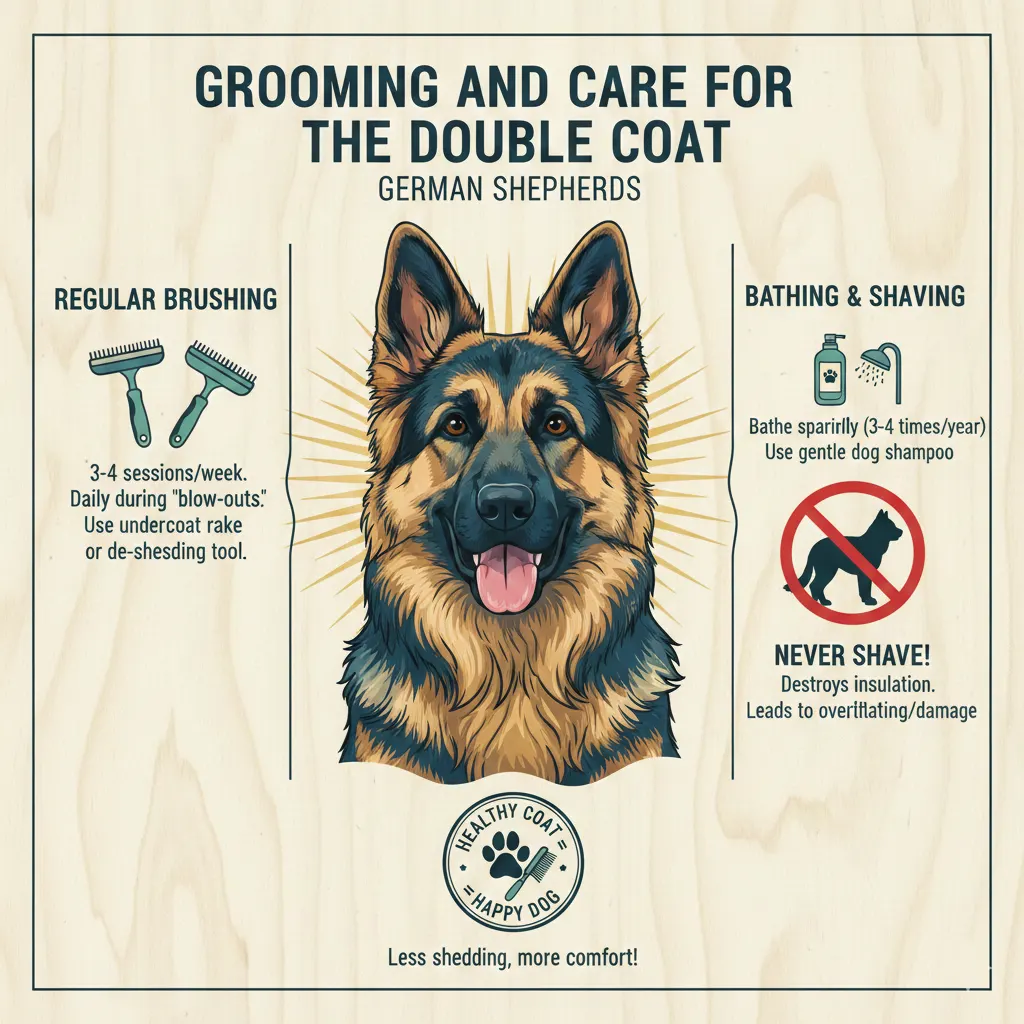
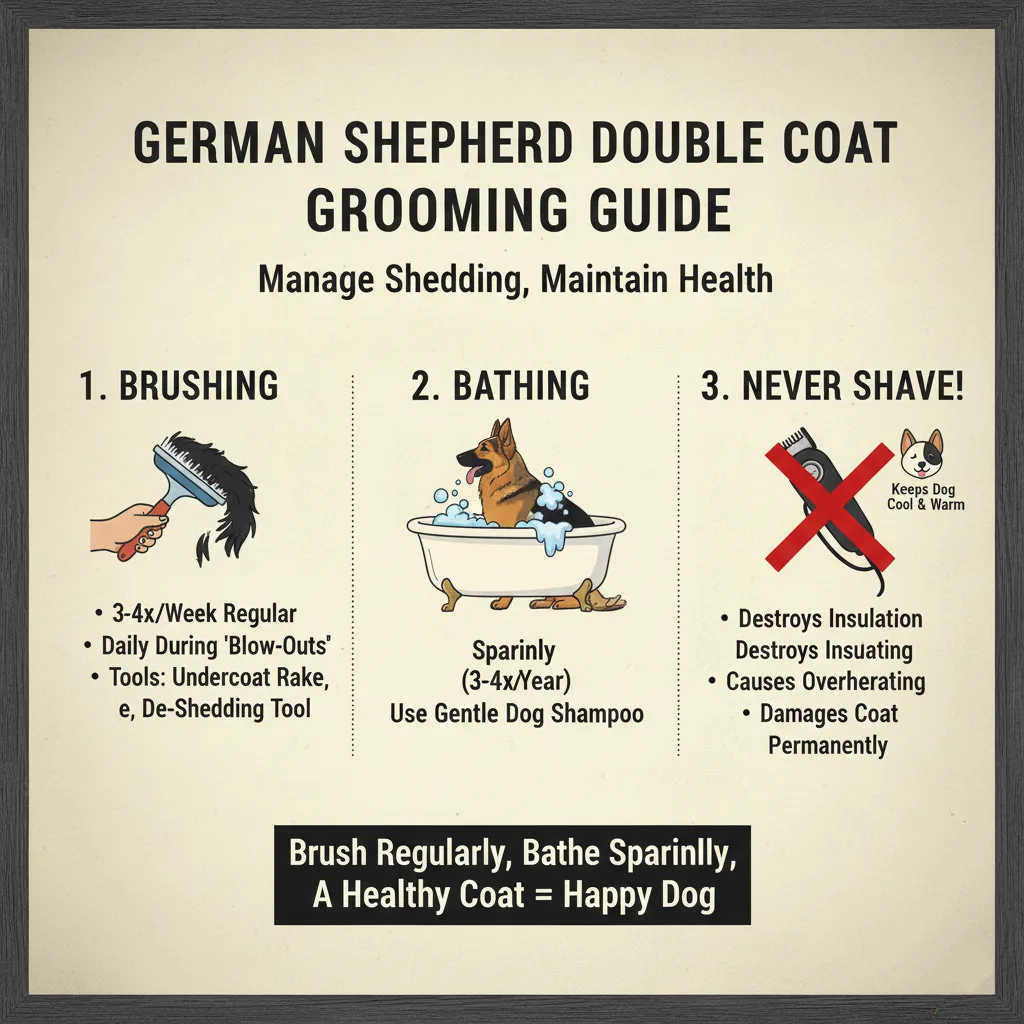
Because of this dual-layer fur, German Shepherds need regular grooming. In my practice, I tell owners to brush frequently: aim for about 3–4 sessions per week, and brush daily during the seasonal “blow-outs” in spring and fall. Using the right tools is key – an undercoat rake or de-shedding tool (like the Furminator) lets you reach deep into the coat and pull out loose underfur safely.
Bathe the dog sparingly (usually only a few times a year) with a gentle dog shampoo – once every 3–4 months is generally enough for a double-coated breed. And never shave your Shepherd’s coat: veterinarians and breeders warn that shaving destroys the coat’s insulating design. The double coat acts as an insulator, keeping them cool in the summer and warm in the winter, so shaving can lead to overheating or coat damage.
In short, use grooming to manage shedding (which regular brushing and good diet can greatly reduce) and keep the coat healthy, but leave the coat itself intact. A well-groomed double coat means a happy, comfortable German Shepherd – and far fewer fur tumbleweeds around the house.
Grooming & Shedding
How often should I brush a GSD with a double coat?
Best brush: Use tools designed for double coats. An undercoat rake or de-shedding tool (like a Furminator) will reach through the topcoat to pull out dead undercoat hairs. Finish with a slicker or bristle brush to smooth the outer coat. This approach works for any GSD – even a black German Shepherd with a double coat.
What’s the best brush for a double-coated German Shepherd?
Best brush: Use tools designed for double coats. An undercoat rake or de-shedding tool (like a Furminator) will reach through the topcoat to pull out dead undercoat hairs. Finish with a slicker or bristle brush to smooth the outer coat. This approach works for any GSD – even a black German Shepherd with a double coat.
How much do GSDs shed, and when is “blowing coat” season?
Shedding amount & “blowing coat”: German Shepherds shed year-round, with especially heavy shedding (“blowing coat”) in spring and fall. In those seasons your GSD will lose much of its old undercoat to make way for a new one. Expect clumps of fur to come out, and plan on daily brushing during these peak periods.
Excessive shedding from scratching may also be related to allergies —to know more about it check out my guide on why does my dog always scratch himself.
How can I reduce shedding in my double-coated GSD?
Reducing shedding: Regular grooming is key. Brush often – removing loose fur before it falls out keeps shedding under control. Bathing with a deshedding shampoo can also help loosen undercoat hairs. Feeding a high-quality diet rich in omega-3 and omega-6 fatty acids supports a strong, healthy coat, which in turn reduces excess shedding.
For traveling with heavy-shedding breeds like GSDs, the 7 best dog cages for car offers safe transport options.
Cutting or Shaving the Coat
Is it safe to shave a double-coated German Shepherd?
Safe to shave? No. Do not shave a GSD’s double coat. The coat is a natural insulator. Many owners think shaving cools the dog, but it actually destroys the coat’s heat-and-cold regulation. Removing the coat exposes skin to sunburn and heat and can lead to overheating, skin irritation, or infection.
Does shaving ruin the double coat?
Effect of shaving: Shaving a double coat can ruin it permanently. Once shaved, the undercoat and guard hairs often grow back unevenly or patchy. The new hair may be thinner or coarser, because shaving disrupts the natural growth cycle of the two layers.
Will the coat grow back the same after shaving?
Will it grow back? If you shave your GSD, the coat typically doesn’t grow back the same. Regrowth can take many months or over a year, and often the texture is altered. For example, AKC breeders warn that a shaved GSD’s coat is “hard to get back properly.” Bottom line: instead of cutting it short, stick to regular grooming to manage fur.
Temperature & Coat Function
Does the double coat help in hot weather?
Hot weather: Surprisingly, a double coat actually helps keep a GSD cool. The thick fur acts as a natural temperature regulator. In summer the undercoat shields the skin from direct sun and traps a layer of cooler air close to the body. In other words, the coat defends against heat rather than causing it.
Does it protect them in winter?
Cold weather: In winter the undercoat provides excellent insulation. It traps warm air next to the skin, while the coarse outer coat repels snow and rain. This is why GSDs can live outdoors in cold climates if needed – their double coat does the work of a heavy parka.
Should I trim the coat in summer to keep a GSD cool?
Trimming in summer: You should not trim or shave the coat for summer coolness. Cutting the coat short will actually make your dog hotter and more vulnerable to sunburn. A light trim for aesthetics (like tidying paws) is fine, but don’t remove the insulating layers. Regular brushing is a much safer way to help your GSD beat the heat.
Bathing & Skin Care
How often should I bathe a GSD?
Bath frequency: GSDs generally need very infrequent baths. Too many baths strip the coat of its natural oils and can dry out the skin. Most experts recommend only once or twice a year, unless your dog gets especially dirty. Some groomers suggest about every 3–4 months for a double-coated GSD.
Which shampoos are best for double-coated breeds?
Shampoo choice: Always use a gentle, dog-safe shampoo. An oatmeal or hypoallergenic shampoo is good for sensitive skin. For heavy shed periods, a specialized deshedding shampoo can help loosen loose undercoat. Never use human shampoo – canine skin is more alkaline and will get irritated by harsh soaps.
Can frequent baths damage the coat?
Bathing too often: Avoid frequent baths. Over-bathing will damage the coat by removing protective oils. If you must bathe more often (for example, puppy play-time cleanups), follow up with a dog-conditioner or brush-out to help restore moisture. In general, brushing between baths is better than bathing for routine cleaning.
Coat Health & Issues
What causes a German Shepherd’s coat to look dull or thin?
Dull or thin coat: A dull, thin, or patchy coat often means something is off nutritionally or health-wise. The most common cause is poor diet. Deficiencies in protein or essential fats (omega-3/6) can make the coat dry and brittle. Also check for hormonal issues (like low thyroid) or parasites if the fur is falling out in spots. In many cases, switching to a high-quality, grain-free food or adding fish oil/omega supplements will help restore shine.
Another skin issue DSGs may suffer from is irritated feet; to detect early infections, see our guide on why my dog’s paws are red between the toes.
Why is my GSD’s undercoat not growing back?
Undercoat not growing back: If the undercoat seems slow to return (for example, after clipping for surgery), remember it can take months to fully grow back. If your GSD was shaved, expect up to a year for the full double coat to reappear. Persistent bald spots or a thinning undercoat not related to shaving could indicate skin problems or nutrient deficiencies. In that case, consult your vet. Otherwise, keep the coat clean and well-fed, and it will regrow on its own.
What should I feed my dog for a healthier coat?
Diet for a healthy coat: Feed your GSD a nutrient-rich diet. Foods with high-quality protein and healthy fats (salmon, flaxseed, eggs) promote coat health. Supplements like fish oil or a balanced omega-3 formula can make the fur glossier and reduce shedding. Ensuring adequate zinc, biotin, and vitamins also helps – deficiencies in those can cause a dull coat. In short, good nutrition = a strong, shiny coat.
Show & Breed Standards
What’s the difference between a plush coat, long coat, and standard double coat?
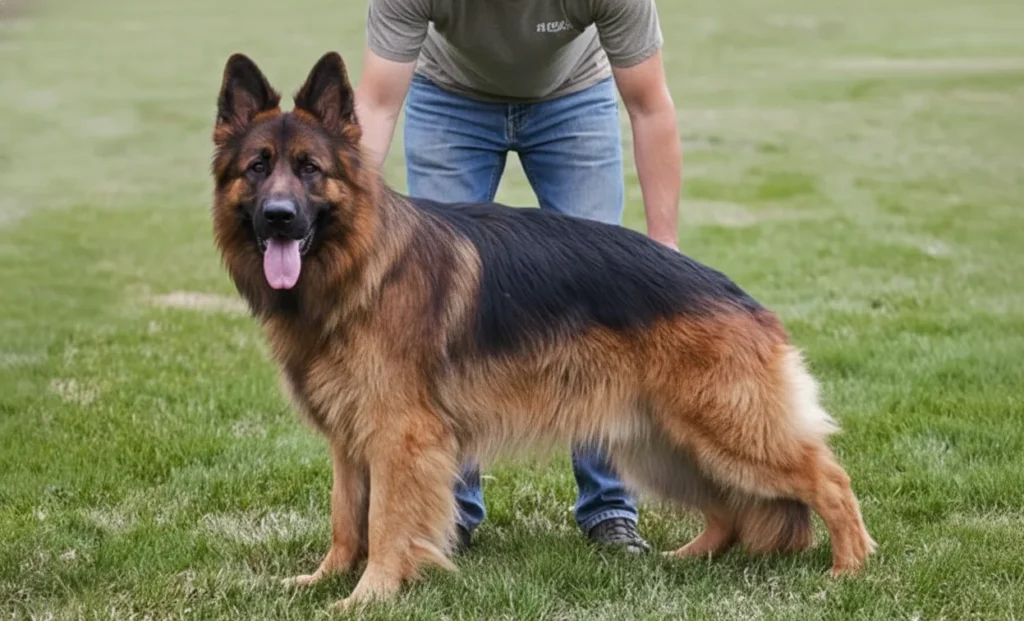
Coat types: German Shepherds have four coat types: short (stock), medium (plush), long with undercoat, and long without undercoat. The short/stock coat is the classic “program.” The medium (plush) coat is slightly longer and fuller than the short coat. Long coats feature noticeable feathering on the ears, legs, and tail. Some long-haired GSDs have the full undercoat (a true double coat) and others (rare) have almost no undercoat, just a soft outer layer.
Is a long-haired GSD still double-coated?
Long-haired & double coat: Yes, many long-haired GSDs are double-coated – they just have longer guard hairs. Only the long-haired lines lacking undercoat don’t have the insulating layer. In practice, any GSD with a dense undercoat (even a long-haired one) needs the same grooming routine. All coat colors (black, sable, etc.) and types share the double-layer structure, so terms like “black German Shepherd double coat” simply mean the coat has the same two layers regardless of color.
Are long-coat GSDs allowed in shows?
Show ring standards: In AKC and most kennel club standards (USA), the ideal GSD coat is medium-length, double-coated. Short and plush coats are preferred in conformation. Excessively long hair or lack of undercoat is often penalized. In fact, long-haired GSDs are generally not shown in AKC conformation, because the breed standard calls for the stock or plush coat. In other countries or working lines (SV standard), long coats may have their own classes, but for USA pet owners, focus on maintaining the natural double coat your GSD was born with.
What People on Reddit Say About the GSD Double Coat
- Shedding Is Very Heavy / Relentless
- Many owners describe that German Shepherds shed constantly because of their double coat. “They are called German Shedders for a reason … there’s literally nothing to be done outside of regular grooming.”
- Some report “butt fluffs” or entire undercoat tufts that come off during shedding times.
- There are seasonal “blow-outs”: GSDs can shed their undercoat heavily twice a year, according to several comments.
- One user said their dog’s “hair sweater” is permanent — meaning they’re used to having GSD fur everywhere.
- Grooming Is a Big Part of Ownership
- Owners strongly recommend investing in good de-shedding tools and brushing very often.
- Some use undercoat rakes, slicker brushes, or “Furminator”-type tools; others warn that certain tools (if used aggressively) can damage or cut the coat.
- There’s a suggestion that high-powered dog blowers (no heat) help remove loose hair, especially before seasonal shedding spikes.
- For big shedding episodes, some people take their GSD to professional groomers for a “de-shed” session.
- Shaving Is Very Controversial / Discouraged
- A lot of owners warn strongly against shaving a GSD: “Shaving a dog can make them hotter. They’re double-coated … It would ruin his coat … You can permanently ruin the coat.”
- Some say shaving interferes with the natural insulating function of the double coat.
- Instead of shaving, people suggest managing heat by giving the dog shade, water, or a cooler area — not cutting off their coat.
- Managing the Hair Load Is a Lifestyle
- Many users admit that you just have to accept the fur. Vacuuming and brushing are constant chores.
- Some suggest getting a robot vacuum or very good vacuum cleaner to help keep up with the shedding.
- On the positive side: some owners say despite the hair, GSDs are “worth every bit” of the grooming work.
- Supplements like fish oil (omega-3) are mentioned by some to help coat health and reduce shedding somewhat.
- Variation Exists Between Dogs
- Not all GSDs shed equally. Some owners say their GSDs barely shed outside of the big seasonal blow-outs.
- According to some, the amount of shedding depends on factors like diet, genetics, climate, and grooming habits.
- For example: “Some shed worse than others … climate, grooming… there are just so many factors.”