I still remember the exact moment I decided I needed to know everything about keeping a beaver. A friend of mine, a guy who already owned a capybara and thought he’d seen it all, called me at 11pm saying he’d just put a deposit down on a “semi-tame” orphaned beaver kit from a wildlife rehabber in Louisiana. He’d seen one of those TikTok videos where a beaver sits in someone’s lap, chewing on a carrot, looking basically like the most adorable thing on earth. Three weeks later, he called me again. His kitchen floor was in pieces. Literal planks, gnawed through to the subfloor. The beaver was fine. The apartment was not.
A beaver as a pet is legal in a small handful of U.S. states with proper permits, but the reality is that most people are completely unprepared for what beavers actually need. They are not domesticated, they chew through everything, they need constant access to deep water, and they can and will bite hard enough to send you to urgent care. If you’re asking whether you can have one… maybe. If you’re asking whether you should, almost certainly not.
What Beavers Actually Are (And Aren’t)
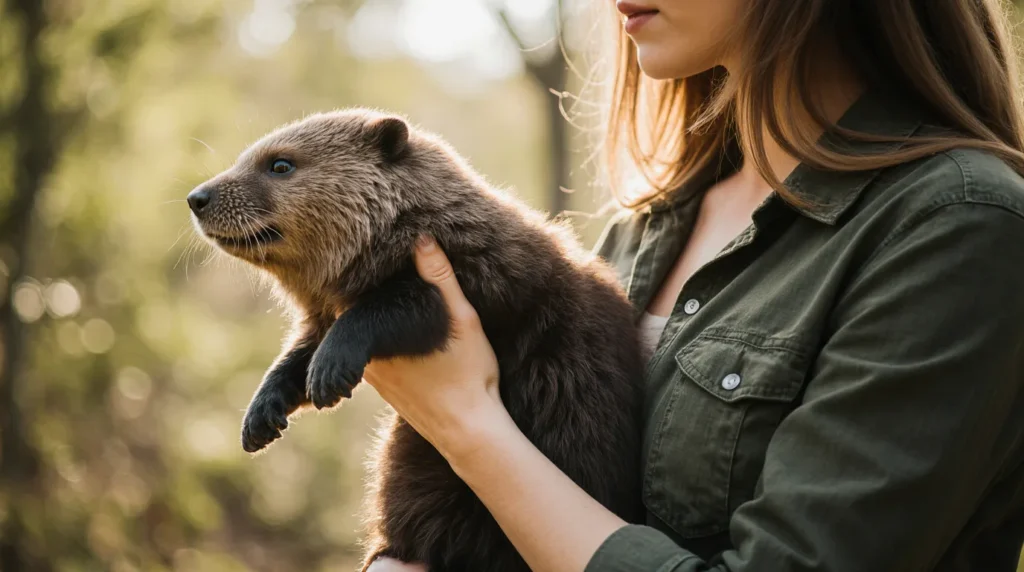
Let’s get this out of the way: beavers are not oversized hamsters. They are North America’s largest rodent, and according to the Smithsonian’s National Zoo, adult North American beavers (Castor canadensis) typically weigh between 35 and 65 pounds, with some reaching 100 pounds, roughly the size of a large dog, but shaped like a waterlogged football with teeth designed to fell trees.
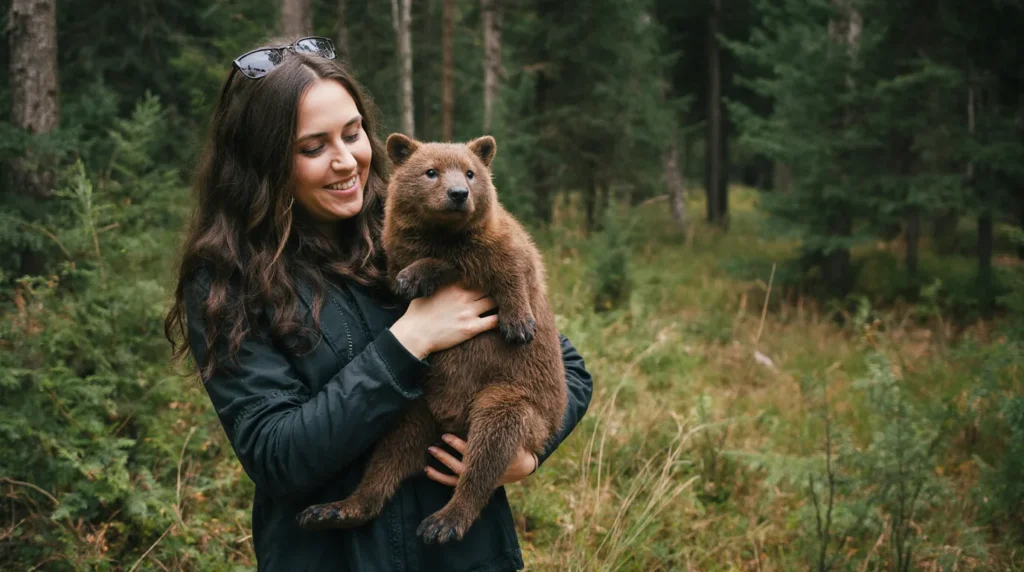
When you first handle even a young beaver kit, you’ll immediately notice the density of it, not soft like a rabbit, not wriggling like a ferret, but dense and muscular in a way that feels almost industrial. Their front paws are astonishingly hand-like. The claws feel sharp and deliberate against your skin, like being gripped by a small, determined mechanic.
The teeth are the thing that should give you the most pause. Those orange incisors never stop growing. According to the Smithsonian, they are self-sharpening, the front enamel is harder than the back dentin, so chewing creates a perpetual chisel edge. A beaver can cut down a tree the diameter of a person’s finger in a single bite. Whatever you own that is made of wood? It is now a food source and a building project.
Most pet sites will tell you beavers are manageable with the right setup, but after 15 years of working with exotic and semi-wild animals, I’ve found that the “right setup” for a beaver is basically a small wetland ecosystem, which is not something most households can provide in any meaningful way.
Will Any State Actually Let You Keep a Beaver as a Pet?
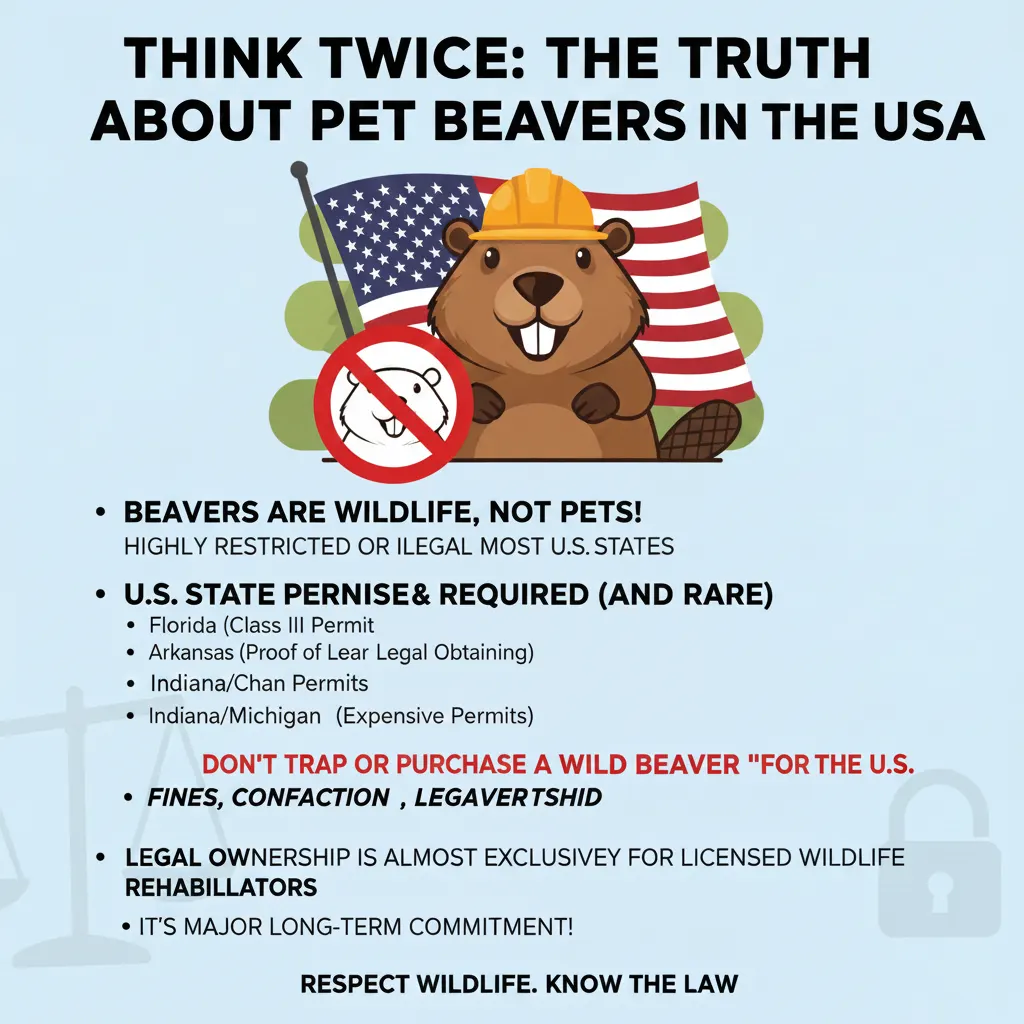
This is where the answer gets genuinely complicated. Beavers fall under state exotic and wild animal statutes across the U.S., and the legal picture varies dramatically by location. Based on research from KoalaPets and wildlife law sources:
- Arkansas may permit ownership if you can document legal acquisition.
- Indiana allows it with a Class II wild animal possession permit.
- Missouri allows it with a Wildlife Hobby Permit.
- Texas has a unique permissive framework, unless the animal is specifically prohibited or requires a permit, residents in low-population counties west of the Pecos River can own up to 25 non-game wildlife animals without a permit.
- Florida may allow it with a Class III permit.
- Michigan, Nebraska, North Dakota, and Kentucky each have their own permit pathways, but all require demonstrating appropriate housing and care standards.
Before you even think about sourcing a beaver, check your state wildlife agency’s current regulations. These rules change. What was permitted two years ago may not be today.
If you’re in Canada, the situation is even more restrictive, the North American beaver is Canada’s national animal and is tightly protected under federal and provincial wildlife law.
What the Internet Gets Completely Wrong About Beavers as Pets
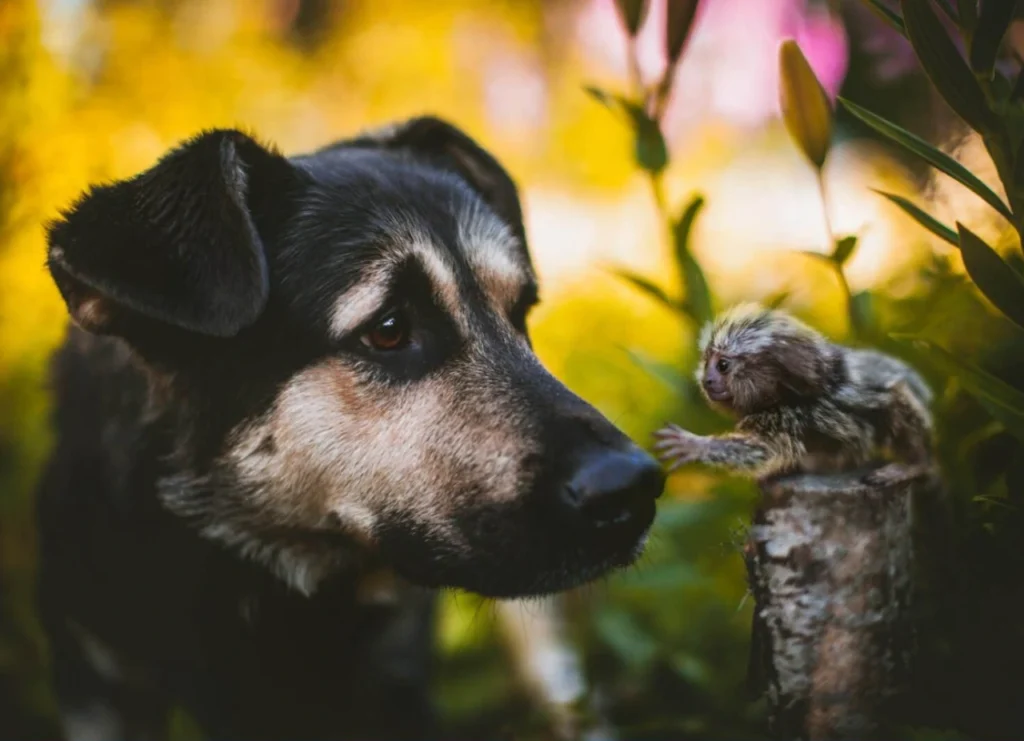
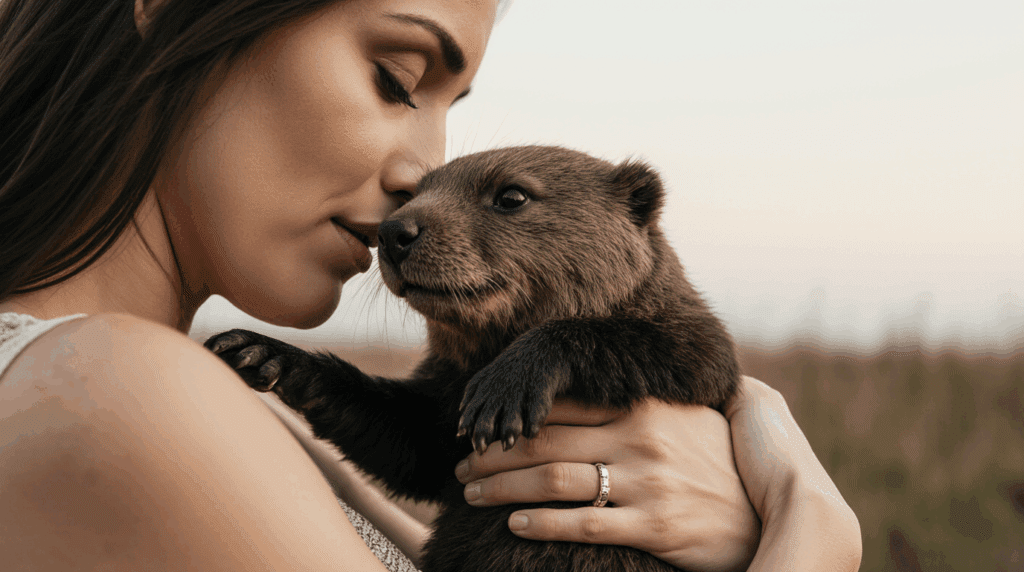
The single most misleading thing circulating on social media, particularly on Instagram and YouTube channels dedicated to “exotic pets”, is the idea that a hand-raised beaver kit will stay manageable and affectionate into adulthood. The videos show a juvenile beaver, maybe 8–12 weeks old, sitting on a lap, nuzzling a face, playing with a dog. The comments fill with “I WANT ONE” within hours.
Here’s what those videos don’t show: what happens at 18 months.
According to the Alaska Department of Fish and Game, beavers in the wild leave their family colony at around age two to find a mate and establish their own territory. That instinct does not disappear in captivity. What it translates to is a 50-pound adult animal that becomes increasingly territorial, increasingly destructive, and increasingly stressed, because you cannot provide the 0.5 to 20 kilometers of river bank or lake shoreline that constitutes a wild beaver’s home range.
I’ve seen owners lose animals over this exact mistake, not through any single dramatic moment, but through a slow decline in the animal’s welfare as its needs outpace what a domestic environment can offer. A captive beaver that can’t build, can’t swim freely, and can’t form a family unit develops what wildlife rehabilitators describe as stereotypic behaviors: repetitive, purposeless movements that signal chronic psychological distress.
The affectionate kit in the video will become a stressed, chewing-everything adult that you cannot legally surrender to most facilities because it’s a wild animal that was never supposed to be yours in the first place.
Dietary Needs and Feeding
Beavers are strict herbivores with a specialized diet. Unlike some rodents, they do not eat pet food or grains. They consume large amounts of plant matter (mostly wood-based material). In spring and summer, beavers eat leaves, grasses, and aquatic plants. In fall and winter, they chew tree bark and cambium (the soft layer under bark) to survive. Preferred trees include willow, birch, poplar, aspen, and alder. Beavers will even store branches in water to nibble on when it freezes.
Meeting these dietary needs as a pet owner is extremely challenging. Pet stores don’t sell “beaver food,” so you would need to provide fresh tree branches regularly. Beavers prefer certain trees, and cattails or pond lilies are good snacks when available. In captivity, wildlife rehabilitators often supplement with garden vegetables and leafy greens. One rehab center fed its beavers around $100 of fresh produce per week, including collard greens, dandelion leaves, carrots, and potatoes, in addition to a constant supply of wood. If you run out of branches or provide the wrong plants, the beaver can starve or chew on whatever it finds – including houseplants or furniture.

In short, a Beaver’s diet is neither simple nor cheap. It requires a variety of vegetation and ample water. Most people cannot source or afford the volume of fresh wood and produce a beaver consumes.
Care Requirements and Behavior
Caring for a beaver is far more demanding than caring for a dog or typical exotic pet. You would need a beaver-proof enclosure with sturdy fencing, possibly buried underground or electrified, a large pond with pumps and filtration, daily cleaning of waste, and constant food replenishment. Beavers are nocturnal and mostly active at night, often making noise while building or chewing, so much of the care would occur after dark.
Beavers have continuously growing incisors that may need periodic trimming by an experienced handler. Veterinary care is difficult because very few vets treat beavers, and those who do often charge high fees. Beavers also carry parasites like Giardia, which can infect humans. Care requirements include 24/7 water maintenance, enrichment for chewing, night-time monitoring, and specialized veterinary care, all of which are labor-intensive and expensive.
Destructive Chewing and Dam-Building
Beavers naturally chew wood constantly, with powerful jaws capable of felling trees. In a home environment, they could chew furniture, door frames, or wooden support beams. They also instinctively build dams and lodges using mud and sticks. In captivity, this could result in flooding yards or even structural damage to homes. These behaviors are natural and cannot be unlearned, making beavers very risky around property. Their chewing and building can permanently alter landscapes, far beyond what other “destructive” pets do.
Cost of Owning a Beaver
The cost of keeping a beaver is extremely high. Building a suitable habitat with pond, fencing, and shelter can cost $50,000–100,000 or more. Food costs are substantial – around $100 per week for fresh produce. Permits, exotic veterinary care, and ongoing maintenance for water pumps, electricity, and repairs add hundreds or thousands more per year.
Property damage caused by a beaver (chewed decks, flooded areas) is another potential cost. Wild beavers already cause millions in flood damage annually, so even a single captive beaver could create similar problems on a smaller scale.
Why didn’t we tame beavers?
Ah, that’s a really interesting question! We didn’t tame beavers the way we did dogs, cats, or even some farm animals because of a mix of biology, behavior, and practicality. Here’s the human-level answer:
- Beavers are wild engineers, not companion animals. They are built to live in water, chew constantly, and build dams and lodges. That instinct is overwhelming and doesn’t translate to living in a backyard or house. Even if you raised one from a kit, it would still gnaw on everything and try to “engineer” its surroundings.
- They’re social and territorial. Beavers naturally live in family colonies, mate for life, and are very protective of their territory. Taking a single beaver out of that social network makes it lonely and stressed. And a stressed beaver is not the cuddly type—it can bite or lash out.
- Space and environmental needs. Beavers need a pond, fresh water, plenty of wood, and space to swim and dig. That’s incredibly hard to replicate in human settlements. A backyard or even a large fenced area is usually not enough.
- Legal and safety hurdles. They’re considered wildlife in almost every place, so private ownership is often illegal. Plus, they carry parasites and can be dangerous if cornered.
- It’s just not practical. They eat a huge amount of wood and plants, are nocturnal, and require constant maintenance. The cost and effort would be enormous for something that can’t really interact with humans the way a dog or cat does.
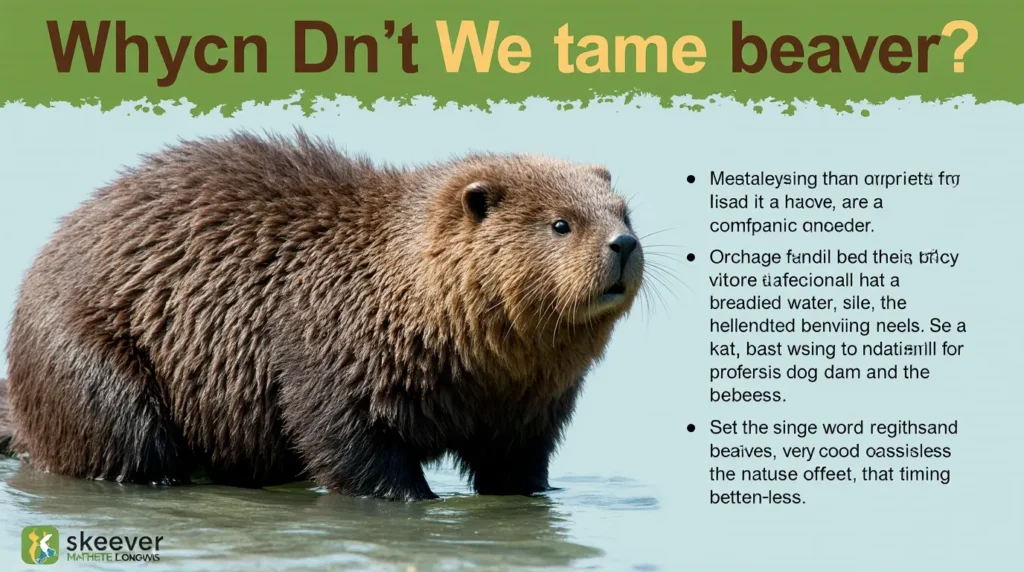
In short: beavers are brilliant, industrious, and fascinating—but they’re designed for wild water-world living, not human homes. Nature made them amazing engineers, but also impossible to “tame” in the traditional sense.
Conclusion
Beavers do not make good pets. They are illegal in most areas and, even where allowed, require enormous care. They need large ponds, constant access to wood, a specific diet, and social companionship. They are territorial, nocturnal, and can be dangerous. Attempting to keep a beaver at home without the resources of a wildlife sanctuary or large protected wetland will almost certainly end poorly. The safest way to enjoy these incredible animals is to observe them in the wild or support licensed conservation programs rather than trying to adopt one.