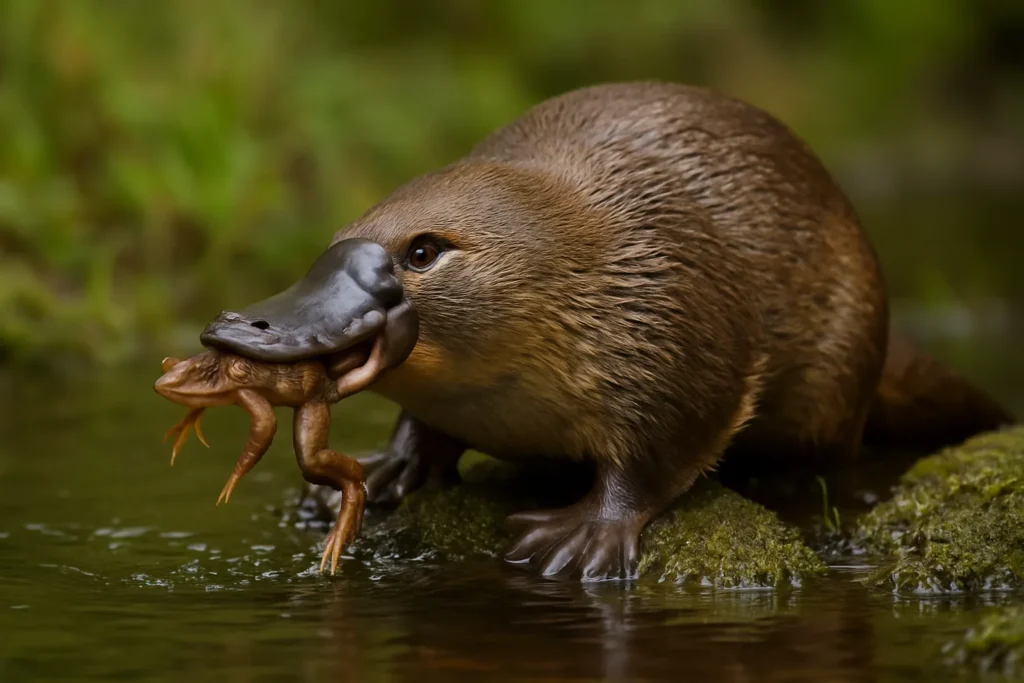
Platypuses are carnivorous and primarily eat aquatic invertebrates. Their diet includes insect larvae, yabbies (a type of freshwater crayfish), worms, and small fish. They are bottom feeders, scooping up food with their bill along with some gravel and mud. The gravel helps them grind their food since they lack teeth.
Here’s a more detailed breakdown:
- Gravel: They scoop up gravel and dirt along with their food, using it to help grind their food since they lack teeth.
- Insect Larvae: Platypuses consume various aquatic insect larvae, such as those from caddisflies, mayflies, dragonflies, and midges.
- Yabbies: These freshwater crayfish are a common part of their diet, though some studies suggest they may not be as significant as previously thought.
- Worms: Both aquatic and terrestrial worms are preyed upon by platypuses.
- Small Fish: Platypuses occasionally eat small fish and even fish eggs.
- Other Invertebrates: They also consume freshwater shrimp, snails, and other small invertebrates.
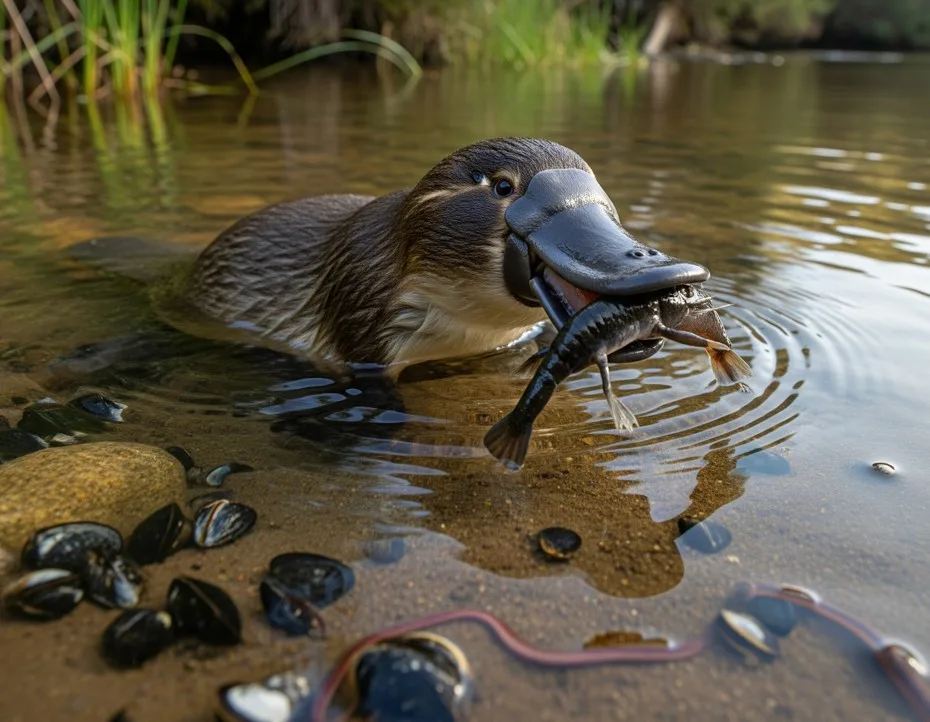
What Does Platypus Eat?
Platypus share many similarities with coatimundi pets. Platypuses are carnivorous mammals that forage in freshwater rivers and streams. They search along streambeds with their sensitive duck-like bills, scooping up small aquatic animals and even some substrate like gravel.
A platypus typically eats about 20% of its body weight in food each day, which often means up to 12 hours of diving and hunting. Notably, adult platypuses have no teeth; they use keratinous grinding plates in their mouths and swallowed grit (sandy gravel) to crush food.
Any hard shells or exoskeletons (from crustaceans or insects) are spat out, while the soft parts are chewed and swallowed. Platypuses feed almost continuously when underwater, then rise to the surface to chew their catch.
- Bottom-dwelling invertebrates – The core diet consists of aquatic insect larvae (caddisfly, mayfly, dragonfly, beetle larvae, midges, etc.), annelid worms, and other small invertebrates. They also eat freshwater snails, small mussels and mussel-like bivalves, and tiny shrimp-like crustaceans (ostracods). In short, anything small and soft on the river bottom is fair game.
- Freshwater crustaceans – Common prey include freshwater shrimp and crayfish (called “yabbies” in Australia). The platypus digs these out of the sediment or catches them swimming, and then crushes them against its plates. (Despite many sources listing crayfish as important, DNA studies have found that in some areas they eat fewer crayfish than assumed.)
- Small fish and eggs – Occasionally a platypus will eat tiny fish and fish eggs. Studies have found trout or goldfish (in captivity) and even frog eggs or tadpoles in a platypus’s pouch. These are not the main diet but they may be eaten if encountered.
- Amphibians – Rarely, platypus cheek-pouch analyses have revealed remains of frogs. For example, a small frog (possibly already dead) was found in one platypus’s pouch. Generally larger animals or adult frogs are not typical prey, but frogs and tadpoles may be taken opportunistically.
- No plants – Platypuses do not eat plant material. Any bits of algae or vegetation found in their pouches are thought to be accidental dirt picked up during feeding. They are strict carnivores, so you won’t see them nibbling on leaves or fruit.
Platypuses live and feed exclusively in freshwater. They are common in streams, rivers, lakes and farm dams in eastern Australia. Unlike some related animals, platypuses do not go out into the ocean; their electrosensory system works only in fresh water. By extension, the water they drink is the same freshwater they swim in (they do not drink salty seawater).
Hunting Behavior and Feeding Mechanism
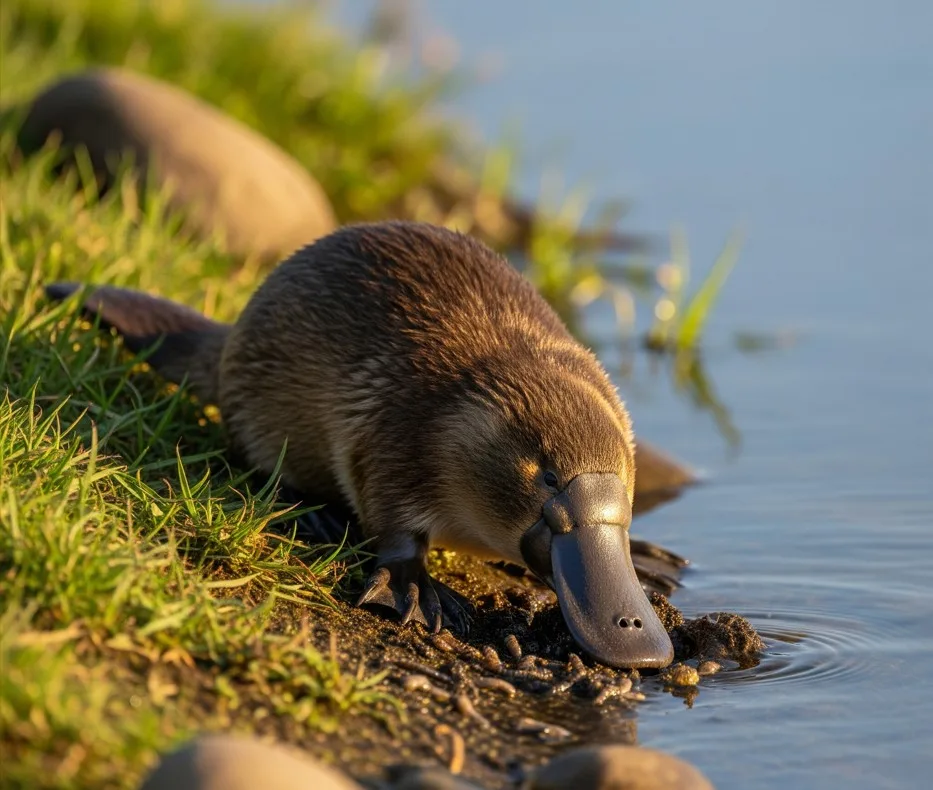
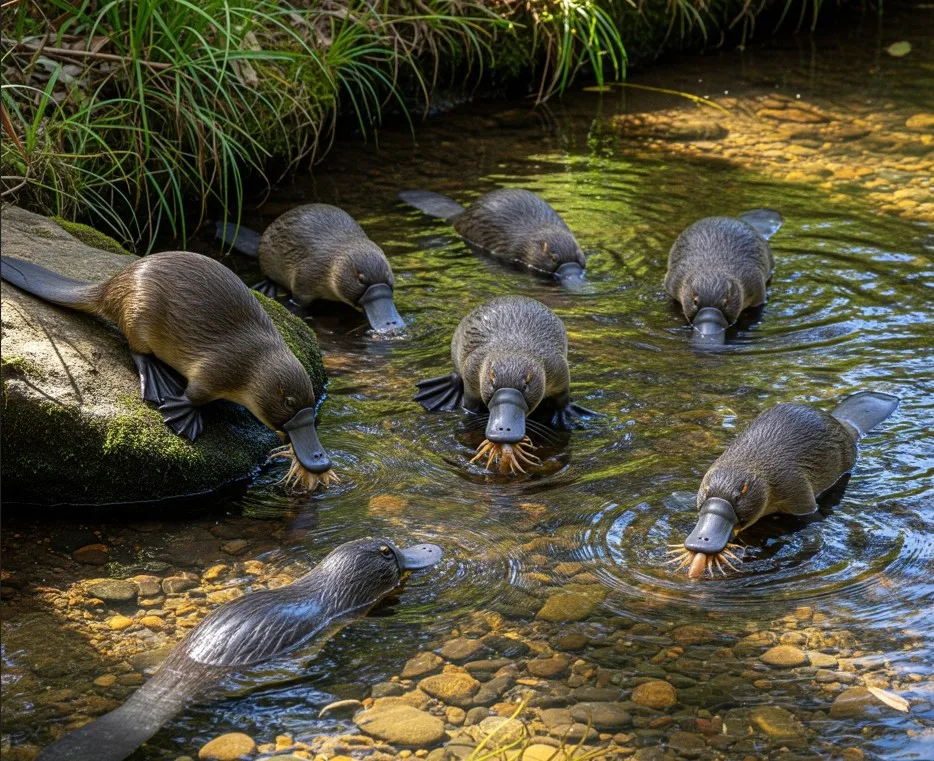
Platypuses forage underwater with remarkable adaptations. When feeding, a platypus closes its eyes, ears and nostrils and sweeps its bill through the substrate. Its bill is studded with over 40,000 electroreceptors and mechanoreceptors, allowing it to detect the tiny electric fields and movements of prey. By moving its head side to side, the platypus can precisely locate hidden insects, shrimp and other creatures in murky water.
As it digs and snuffles, the platypus scoops up both prey and gravel. The prey are held temporarily in cheek pouches while it continues hunting. Periodically, the platypus surfaces and uses its grinding pads (and the ingested grit) to mash the food. In effect, it “chews” by crushing prey between hard mouth plates. Soft parts (meat and innards) are swallowed, and shells or hard bits are ejected.
Platypuses are mainly nocturnal or crepuscular (active at night or twilight). A typical adult may spend 10–12 hours feeding each night. Their high-calorie diet of invertebrates fuels this intense activity. Because of the energy demand, a platypus usually eats around 20% of its body weight every day (for example, a 2 kg platypus might eat ~400 g of food). This is why platypuses must eat often throughout the day and night.
Those who like exotic mammals may also look into keeping a fossa as a pet.
Feeding the Young
Baby platypuses, called puggles, have a different diet initially. Like all mammals, a newborn platypus feeds on its mother’s milk, even though it hatches from an egg. The mother has no nipples; instead, milk is secreted through patches of skin and the puggle laps it up. Puggles remain in the burrow with the mother for several months. In captivity, puggles nurse for about 4–5 months before weaning. Once the puggle reaches roughly 80% of adult weight (~4–5 months old), the mother begins to wean it and goes out to hunt. Around that time the young platypus will leave the burrow and learn to forage underwater.
After weaning, young platypuses eat essentially the same foods as adults. They gradually learn to hunt for benthic insect larvae, worms, shrimp and other small prey in the water. By one year of age, they are fully independent hunters.
Special Notes
- Platypus or Duck-Billed Platypus? – “Duck-billed platypus” is just a common name for the same animal. Whether you call it “platypus” or “duck-billed platypus,” its diet is the same: mostly small aquatic animals.
- What about Perry the Platypus? – Perry is the pet-platypus character in the cartoon Phineas and Ferb. In one episode, Perry is humorously shown eating potato chips on his day off. However, that is a fictional cartoon scene and not representative of real platypus behavior or diet. (Real platypuses would not seek out salty snacks like chips!)
- Paralithodes platypus (“Blue King Crab”): – Don’t confuse the platypus with Paralithodes platypus, the scientific name of the blue king crab. This crab lives in cold northern oceans and has a very different diet. Blue king crabs are generalist scavengers that eat many seafloor invertebrates and even algae. In fact, the Alaska Dept. of Fish & Game notes their diet includes worms, clams, mussels, snails, brittle stars, and even some algae. The Paralithodes crab’s diet has nothing to do with the platypus mammal.
Key Diet Facts (Kid-Friendly)
- Platypuses only eat animals, never plants or fruit. Their favorite foods are things like insect larvae, worms, and freshwater shrimp or crayfish.
- They use their duckbill to find and scoop up food from river bottoms. For example, they gobble up bugs that live in the mud and weeds.
- Typical meals include bugs, larvae, little shrimp and yabbies (tiny crayfish), worms, and snails. If they find a tiny fish or tadpole along the way, they’ll eat those too.
- Platypuses store food in cheek pouches while diving. They come up occasionally to chew and swallow what they’ve collected.
- Because they don’t have teeth, platypuses often swallow gravel along with their prey. The gravel helps grind the food against their mouth pads.
- Every day, a platypus has to eat a lot – usually about one-fifth of its body weight in food, which means many hours hunting in the water.
- Baby platypuses drink their mother’s milk until they’re about 4–5 months old. After that, they start catching insects and shrimp on their own, just like adult platypuses.
In summary, a platypus is a meat-eater that forages underwater for insect larvae, worms, shrimp/crayfish and similar small animals. It uses its special bill and electroreception to find prey, and grinds everything with grit since it has no teeth. This unique diet makes the platypus one of Australia’s most interesting creatures.
Duck-Billed Platypus Diet
Platypus are carnivores, which means that they will spurn everything that is not in the category of meat. That being said, they are mostly after small prey. Insects, larvae and invertebrates are their favourite food.
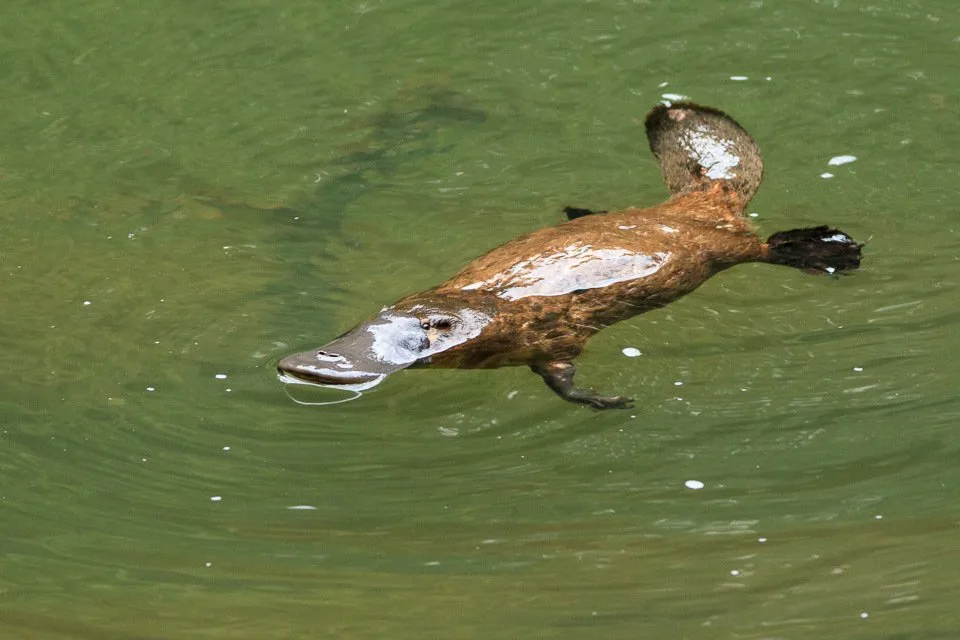
What Animals Do Platypus Eat?
Platypuses mainly eat small aquatic animals that they can crush with their grinding plates instead of teeth. Their usual prey includes insect larvae (like caddisfly, mayfly, and dragonfly larvae), freshwater shrimp, annelid worms, snails, and small crustaceans. Occasionally, they may also eat tiny fish, tadpoles, or small frogs, but these are rare treats rather than staples. Larger animals are safe, a platypus simply can’t handle prey that big.
What Plants Do Platypus Eat?
None. Platypuses are strict carnivores and eat zero plant material — no grass, no seeds, no fruit, no algae. If bits of plants or weeds are found in their mouths or cheek pouches, it’s just debris picked up while scooping prey from the riverbed.
What Animal Eggs Do Platypus Eat?
Platypuses will eat eggs from aquatic animals as long as they’re small enough to swallow. That means eggs from insects, crustaceans, and small fish. They don’t eat shark eggs naturally, since sharks live in saltwater and platypuses stick to freshwater. But if a shark egg somehow drifted into their territory, a curious platypus might well try a bite.
What Species of Crayfish Do Platypus Eat?
In Australia, platypuses often eat yabbies, a type of freshwater crayfish. They may also consume other small freshwater crustaceans like shrimps and juvenile crabs when available. These crustaceans provide a good source of protein and are usually dug out from the mud or caught hiding under rocks.
How Do Platypus Hunt?
Platypus forage in rivers, streams, ponds and lakes. As semiaquatic animals, they live and breed on land, but their whole diet relies on water. They are quite shy and you can mostly observe them at dusk and dawn.
As they close their eyes and nostrils, platypuses need another system to locate their prey. That’s where their typical duckbill, which feels somehow like soft wet rubber when you touch it, into play.
Over 40000 electroreceptors are placed all over the bill. With these, the platypus can locate prey due to electrical signals. The animal turns its head from side to side to gather as many signals as it can.
In general, platypus are bottom feeders that only hunt on the ground of waters. Free swimming larvae and insects are only an occasional snack. While hunting they gather every potential prey in their cheek pouches until they emerge again.
Lunchtime is when they arrive back at the surface. And soon after they swallowed what they have found, it’s time for another dive and more food.
Male platypuses are also venomous. But they use their poison only to defend themselves and to fight with other males over a female. They don’t use the venom for hunting purposes.
The hunting behavior is one of many reasons, why platypus make so terrible pets.
How Much Do Platypus Eat?
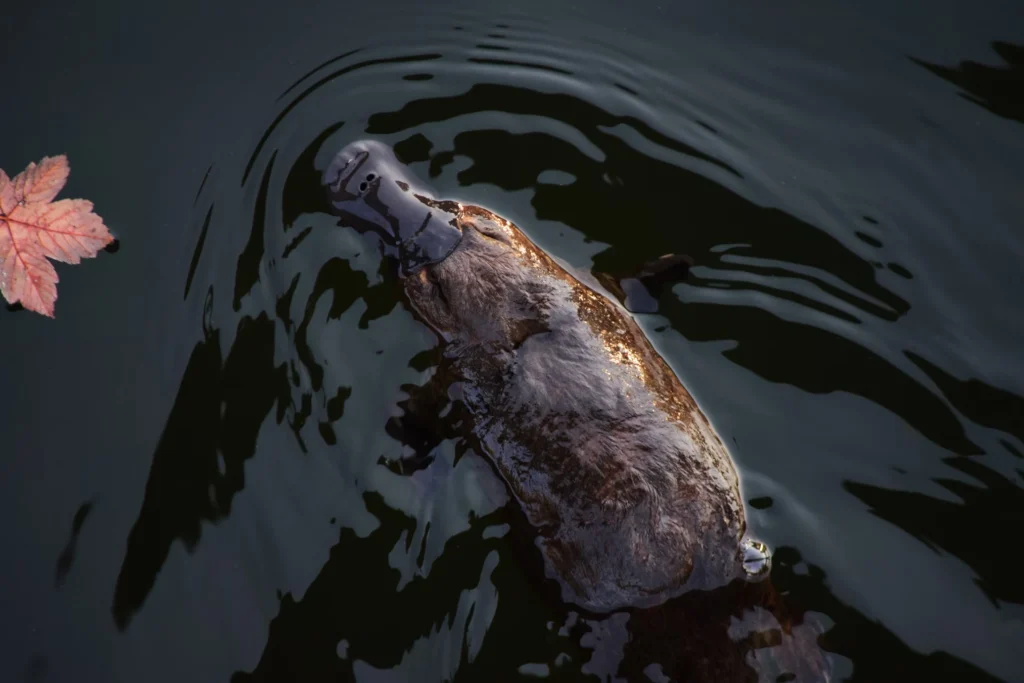
Platypuses eat a whole lot, which is quite surprising regarding the fact, that all their food is high in calories. However, a platypus can weigh up to 3 lbs and eats appr. 20 % of its own body weight daily. In numbers that are 0.6 lbs of food every day.
I bet you can imagine what it means to fill this need with small prey only. The animal usually spends up to 12 hours a day hunting. Each dive lasts 30 to 90 seconds and only a short time on the surface is enough to recover.
The hunting behavior also explains why the animal needs to eat so much. It’s just really energy-consuming.
That being said, platypuses can store energy in the form of fat in their tail.
Read More: Are Platypuses Extinct?
How Do Platypus Eat?
When platypus catch food from the bottom, they occasionally fetch some gravel and store it in their pouches too. Back on the surface, they grind up their prey between plates in the bill. As platypus don’t have teeth, stones they caught accidentally help with crushing the food.
How Do Platypus Eat Without A Stomach?
Platypuses don’t need a stomach with strong acids to digest their food. Everything their diet contains can be easily digested by the intestine itself. After grinding the food platypus swallow and everything goes directly into the intestine, shells and other hard parts are spluttered.
Do Platypus Have Teeth?
No platypus don’t have teeth. They only feed on small prey and don’t need teeth. The animal crushes and grinds its food with plates that are in the bill.
However, baby platypuses have milk teeth which they lose when they leave the burrow of the parents.
How Does A Platypus Feed Its Young?
The babies are nursed by their parents the way other mammals do it. That said, the absence of teeth and a stomach is not the only unique thing about the platypus.
The young are also fed in a way that no other animal does. But before you make your guesses, the milk teeth of the young don’t have any purpose nor has the mother nipples.
Milk simply seeps out of the glands of the mother animal. It’s the only source of food until the baby platypuses learn to forage food on their own.
Do platypuses eat frogs?
They have A flat tail and platypus have sensitive bills they are monotremes and protected species. They lay one-three eggs and they eat frogs, worms and yabbies. Water runs down its tail. Platypus have electroreception in bills to dig food.
Learning about platypus pairs well with understanding the feasibility of Aardvark as a pet.
Is a platypus a meat eater?
Yes, platypuses are meat eaters—they’re carnivorous. Their diet consists mostly of small animals like insect larvae, worms, freshwater shrimp, and small crustaceans.
How do platypuses eat without teeth?
Platypuses don’t have teeth as adults. Instead, they use grinding plates in their mouths and grit or gravel they scoop up along with their prey to help grind and crush food before swallowing.
Is a platypus a carnivore or herbivore?
A platypus is a carnivore. It eats only animal-based food and doesn’t consume plant material.
Is platypus give milk or egg?
Answer: The platypus is a monotreme that reproduces by oviparous reproduction rather than viviparous reproduction. That is, instead of giving birth to live young, it lays eggs. They do, however, milk their young as a viviparous mammal would.
Platypus Venom
Male platypuses have venomous spurs on their back legs that they mainly use to fight other males. Their venom is not deadly to humans, but it can cause extreme pain and swelling that may last for days. This unusual defense makes the platypus one of the few venomous mammals in the world.
What is a platypus’s predator?
Aerial predators like owls, eagles, and hawks may prey upon them. Native threats like dingoes, Tasmanian devils, monitor lizards, snakes, and water rats also await. Invasive feral and unleashed dogs, cats, and foxes also take them. Low platypus numbers in northern Australia may be due to heavy predation by crocodiles.
Platypuses for Sale
Many animal lovers find themselves searching for platypuses for sale, and honestly, who could blame them? These extraordinary creatures, with their quirky bill and venomous spurs, are unlike anything else on Earth. But here’s the truth platypuses are strictly protected under Australian wildlife law, making it 100% illegal to buy, sell, or own one anywhere across the globe.
No exotic pet dealer, private breeder, or online marketplace can legally list a platypus for sale. Instead of searching for one to purchase, we recommend visiting a reputable wildlife sanctuary in Australia or symbolically adopting one through a certified conservation charity — a rewarding experience that also helps protect this amazing species for generations to come.
Can platypuses be pets?
Can a platypus be kept as a pet? No – there is no place in Australia where a platypus can be legally purchased or kept as a pet; large fines and prison terms apply to anyone found in possession of a platypus (except in the case of rescues of displaced or injured animals).
They are protected wildlife in Australia and are extremely difficult to care for:
- They need specific aquatic habitats
- Their diet is hard to replicate
- They’re sensitive and stress easily
Also, male platypuses have venomous spurs on their hind legs, which can be dangerous.



Thanks for finally talking about > What Do Platypus Eat?
– Animal Sound < Loved it!
I think that what you posted made a bunch of sense.
But, consider this, suppose you were to create a killer headline?
I ain’t saying your content is not good., but suppose you
added something that makes people want more? I mean What Do Platypus Eat?
– Animal Sound is kinda boring. You should glance at Yahoo’s home page and note how they create
article titles to get people to click. You might add a
video or a pic or two to grab people interested about everything’ve got to say.
In my opinion, it could make your posts a little livelier.
Pingback: How Do Platypuses Live? - Animal Sound
Pingback: Can You Own a Pet Platypus? - Animal Sound
Pingback: Are Platypuses Extinct? Here's What's Actually Going On - Animal Sound
Pingback: Is it Legal to Own a Platypus? - Animal Sound
Pingback: Are Platypuses Dangerous to Humans? - Animal Sound
Pingback: Platypus Venom: What It Does, How Dangerous It Is! - Animal Sound
Pingback: Platypuses for Sale: Can You Actually Buy One as a Pet? - Animal Sound