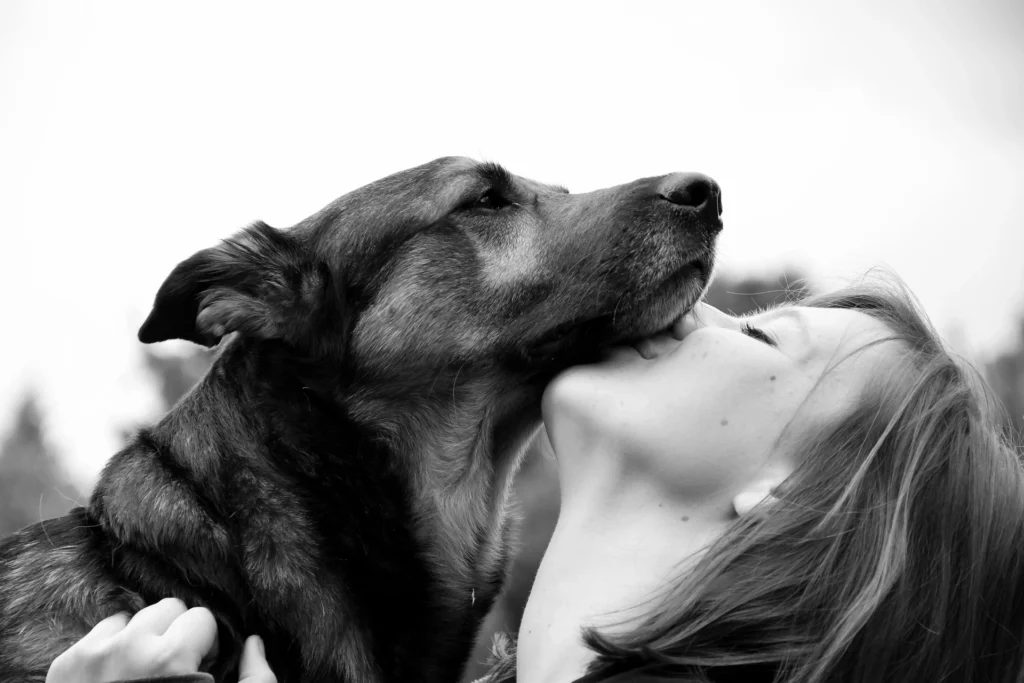
Do dogs feel guilty? The short answer is no, what looks like guilt is usually your dog responding to your tone, body language, or expression, not an understanding of wrongdoing. Many pet owners wonder about this, especially after coming home to chewed-up shoes, a knocked-over trash can, or a puddle on the carpet, and noticing their dog giving them a sad, guilty look, well today we’re breaking down the science, psychology, and behavior behind canine “guilt.”
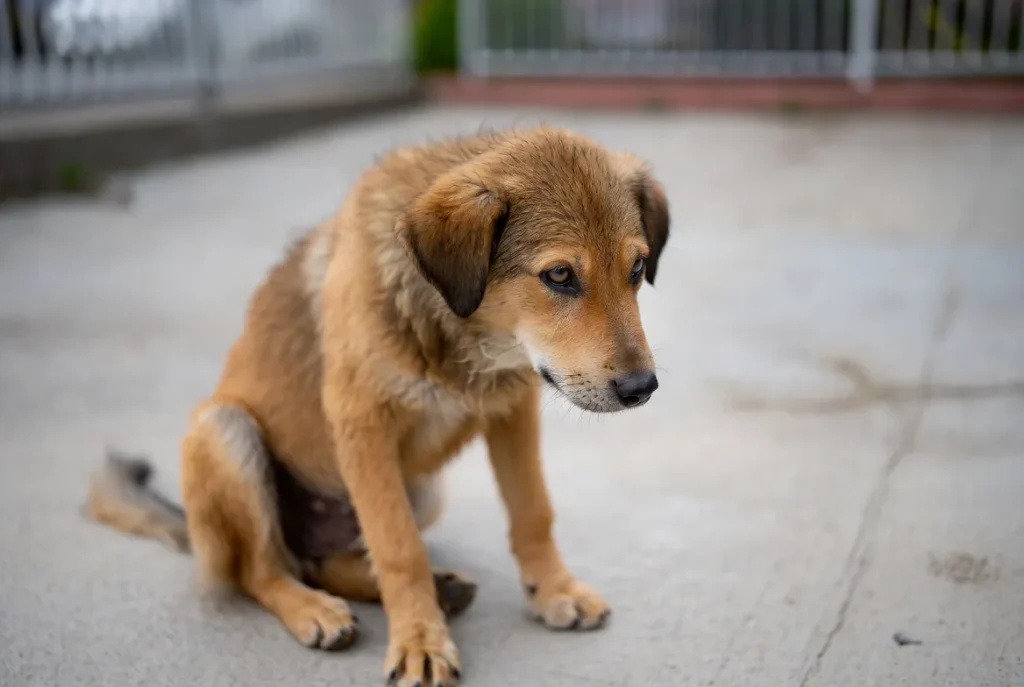
What People Commonly Misread as Dog Guilt
Many owners see a lowered head, tucked tail, or “guilty” look and assume their dog feels bad about what they did. In reality, these behaviors are usually reactions to the owner’s signals, not proof that the dog understands they’ve done something “wrong.” That’s why asking do dogs feel guilt can be a misleading question.
Dogs are extremely sensitive to human signals. They pick up on changes in:
- Tone of voice: A harsh “No!” or loud, angry tone can cause fearful or submissive behavior.
- Facial expressions: Dogs notice frowns, raised brows, and stern looks.
- Body language: Leaning in, pointing, or standing stiffly tells them you’re displeased or in charge.
When a dog notices these signals, it might show what looks like guilty behavior; cowering, avoiding your gaze, rolling onto its back, but these are actually appeasement signals, not signs of moral awareness. Essentially, your dog is trying to calm you down and prevent a confrontation, not feeling bad for breaking a rule.
This can lead owners to believe their dog has “learned right from wrong,” when in reality the dog is simply responding to the owner’s emotional state. Understanding this difference is crucial for effective training and for nurturing a healthy, positive bond with your dog.
With this in mind, you can more clearly address the question “do dogs feel guilty?”: the behavior we interpret as guilt is really a refined ability to perceive and respond to human emotions
Read more about : Why Does My Dog Always Scratch Himself?
What Research Reveals About Guilt in Dogs
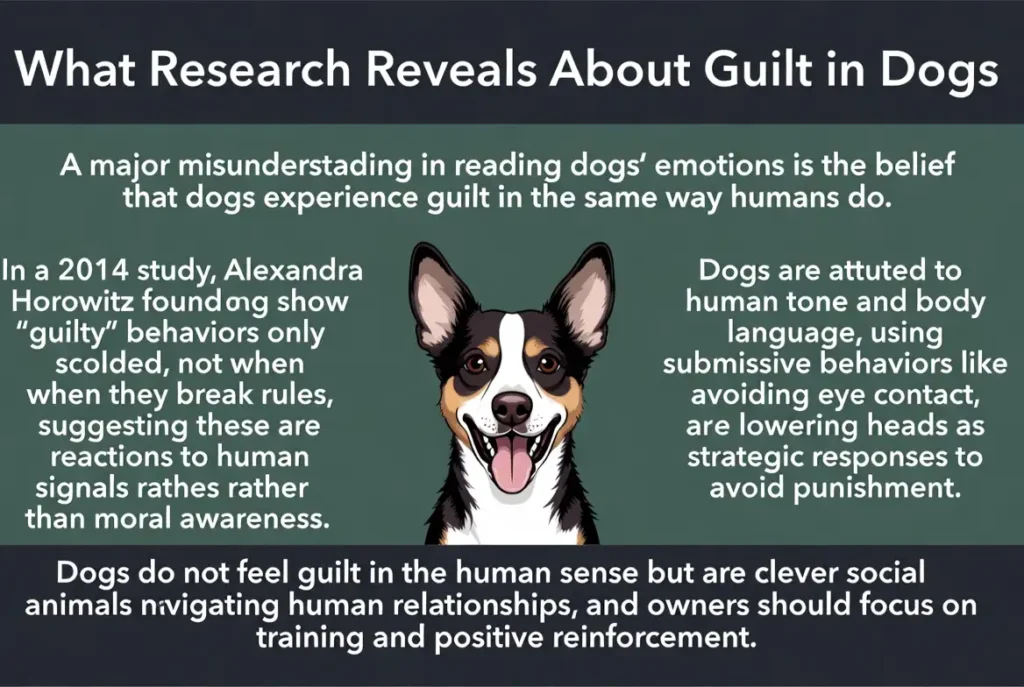
A major misunderstanding in reading dogs’ emotions is the belief that dogs experience guilt in the same way humans do. Scientists have investigated whether dogs genuinely feel guilt or if their so‑called “guilty looks” are really appeasement behaviors, signals meant to soothe their owners rather than express a sense of moral wrongdoing.
In a pivotal 2014 study, dog cognition expert Alexandra Horowitz explored this issue. She designed experiments where dogs sometimes did break a rule (such as eating a forbidden treat) and other times were wrongly blamed. The findings were clear: dogs showed “guilty” behaviors such as avoiding eye contact, lowering their heads, or tucking their tails, only when they were scolded by their owners, not specifically when they had actually done something wrong.
This suggests that what we see as guilt in dogs is mostly a reaction to human signals rather than evidence of moral awareness. Dogs are extremely attuned to tone, facial expressions, and body language, and they modify their behavior to sidestep punishment or tension.
Dogs can also learn basic cause-and-effect relationships. If chewing shoes or getting on the couch consistently results in scolding, they will begin to anticipate that response and may show submissive behaviors in advance. Their “guilty look” is therefore often a learned, strategic response instead of a genuine feeling of remorse.
So, when asking “do dogs feel guilty?”, the answer is nuanced: dogs do not experience guilt in the human sense. Instead, they are clever social animals who use body language and behavior to navigate relationships with humans. Understanding this distinction helps owners respond more effectively, focusing on training and positive reinforcement rather than misinterpreting natural canine responses as guilt.
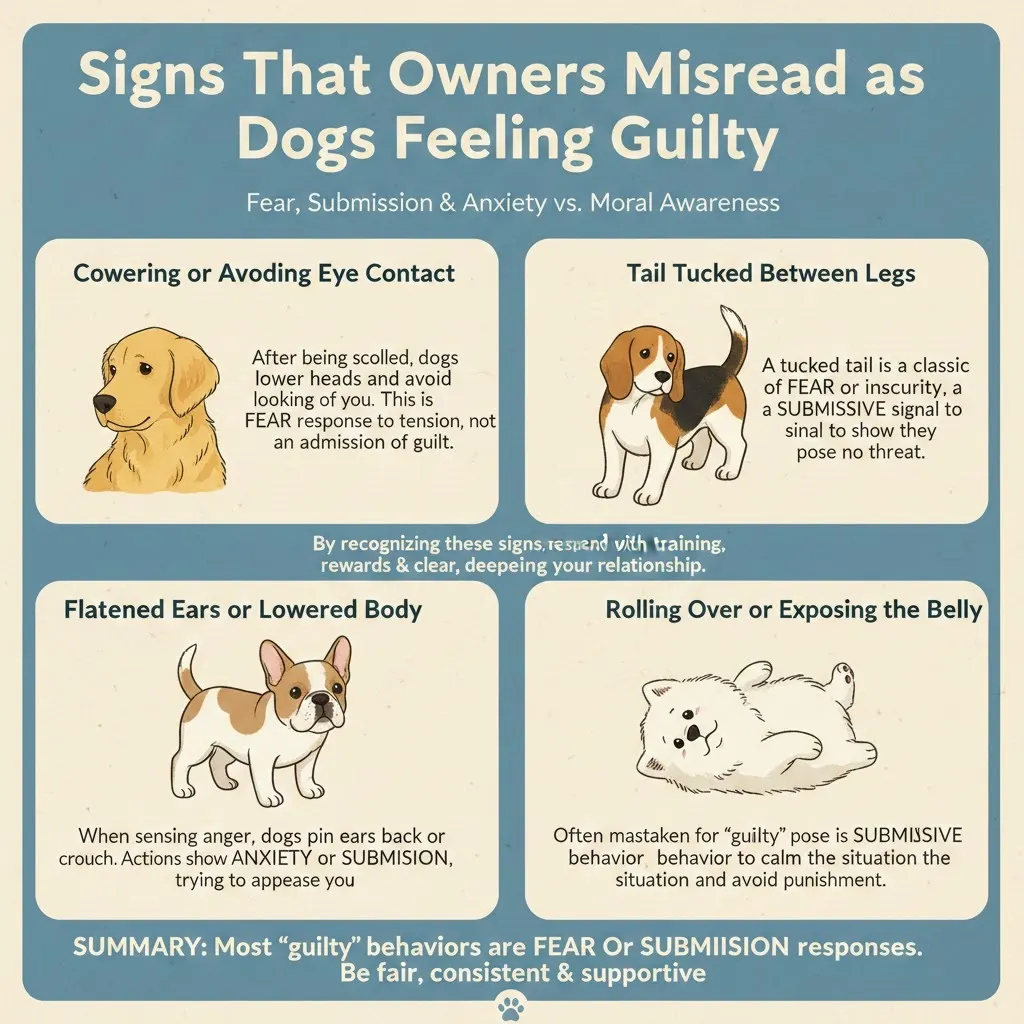
Signs That Owners Misread as Dogs Feeling Guilty
When asking “do dogs feel guilty?”, it’s important to recognize that many behaviors we interpret as guilt are actually responses to fear, submission, or anxiety, rather than moral awareness. Understanding these signs can help you avoid misreading your dog’s intentions and improve your training methods.
Some typical behaviors that can look like guilt, but actually aren’t, include:
- Cowering or avoiding eye contact: After being scolded or hearing a harsh tone, many dogs lower their heads, pull back, or refuse to look at you. This is a fear response to the tension they sense, not proof that they understand they did something wrong.
- Tail tucked between the legs: A tucked tail is a classic sign of fear or insecurity. Even though it may seem like your dog feels guilty, this is really a submissive signal meant to show they pose no threat.
- Flattened ears or lowered body: When dogs sense anger or danger, they may pin their ears back or crouch. These actions show anxiety or submission, not moral guilt. The dog is trying to appease you and prevent conflict.
- Rolling over or exposing the belly: Often mistaken for a “guilty” pose, this is actually another submissive behavior. Your dog is attempting to calm the situation and avoid punishment.
By learning to tell these behaviors apart from genuine guilt, you can respond more appropriately to what your dog does. Rather than punishing them for things that have already happened, emphasize training, rewards, and clear signals. This method deepens your relationship and teaches your dog what’s expected without creating unnecessary fear.
In summary, when asking “do dogs feel guilty?”, it’s clear that most of the classic “guilty” behaviors are actually fear or submission responses. Recognizing this distinction ensures that your interactions are fair, consistent, and supportive of your dog’s emotional well-being.
How Dogs Learn the Difference Between Right and Wrong
After asking the question “do dogs feel guilty?” and learning that, in fact, they don’t, it becomes clear that guilt is not how dogs learn consequences. Dogs do not possess moral reasoning the way humans do. Instead, they learn through training and experience, using a process called operant conditioning, where behaviors are shaped by rewards and consequences.
Here’s how it works:
- Positive reinforcement: Dogs are rewarded with treats, praise, or affection when they perform a desired behavior. For example, sitting on command or using the bathroom outside is reinforced through a reward, encouraging them to repeat that behavior.
- Negative reinforcement: Dogs also learn by the removal of an unpleasant stimulus when they behave properly. For instance, releasing pressure on a leash when a dog stops pulling teaches them that correct behavior leads to relief.
Through consistent training, dogs gradually understand which behaviors lead to positive outcomes and which trigger negative reactions. When a dog displays a “guilty look,” it is not because they feel moral shame, it is because they have learned that certain actions elicit a negative response from their owner. This is about survival, social awareness, and responding to human cues, rather than ethical judgment.
By focusing on clear, consistent training, you help your dog understand expectations without relying on punishment or misunderstanding their behaviors as guilt. This approach ensures that your dog learns effectively, builds trust, and develops a strong bond with you.
In short, after exploring the question “do dogs feel guilty?”, it’s evident that dogs learn right from wrong through experience and reinforcement, not through feelings of remorse.
You may like to read : Why Does My Dog Bark at Squirrels Inside
Can Dogs Feel Empathy or Regret?
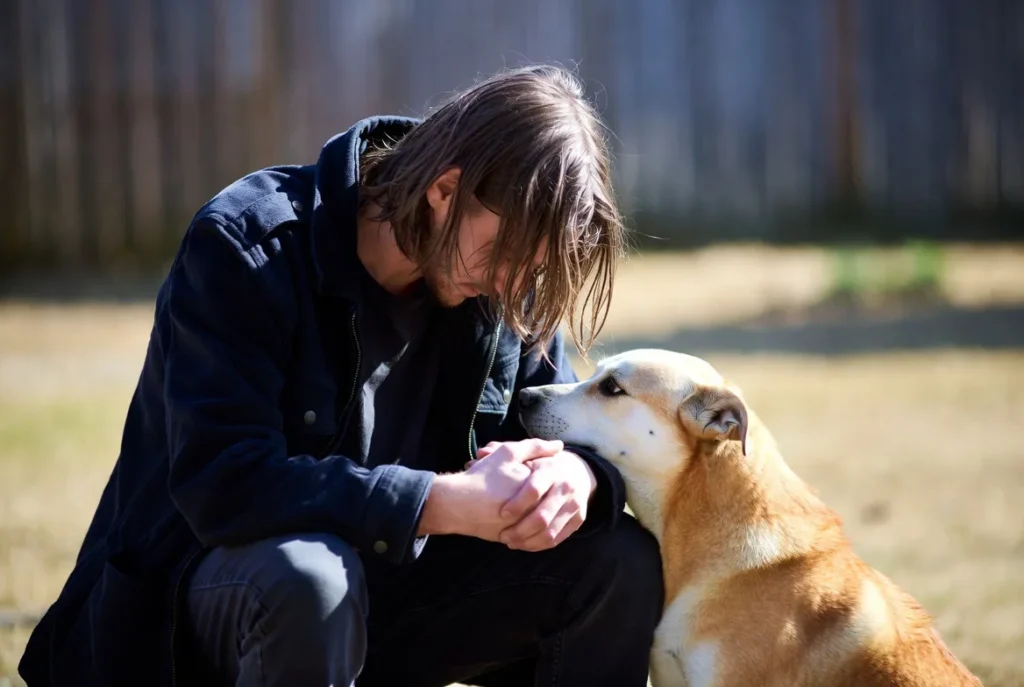
Even though the answer to “do dogs feel guilty?” is generally no, dogs are far from emotionally unfeeling. They are highly social and perceptive animals, capable of empathy and responding to human emotions in ways that can sometimes be mistaken for guilt.
Dogs frequently reflect the emotional states of their owners. For instance:
- When you’re sad or anxious, your dog might become quieter, more clingy, or extra attentive, staying close and offering gentle reassurance.
- When you’re angry or frustrated, dogs often respond with submissive signals – such as lowering their bodies, tucking their tails, or avoiding eye contact – not out of guilt, but because they sense your mood and try to prevent conflict.
These reactions suggest that dogs recognize human emotions and adapt their behavior in response. Although many owners interpret this as guilt, it’s better understood as social awareness and emotional sensitivity rather than true moral remorse.
Interestingly, dogs are also capable of learning from previous experiences. When certain actions lead to unpleasant outcomes (such as being scolded) they’re less likely to repeat those behaviors. This is why your dog might seem “remorseful” after doing something wrong, but in truth, they’re reacting to the consequences they’ve learned and to your emotional signals, rather than experiencing true guilt. In short, although dogs can show empathy and may act in ways that look like guilt, scientific research suggests they do not experience guilt in the same way humans do.
Their behavior reflects emotional sensitivity, social learning, and a natural drive to keep peace with their human companions. Recognizing this difference allows owners to respond more effectively, relying on training, positive reinforcement, and patience, rather than assuming their dog actually feels guilty.
Tips for Handling “Guilty” Behavior
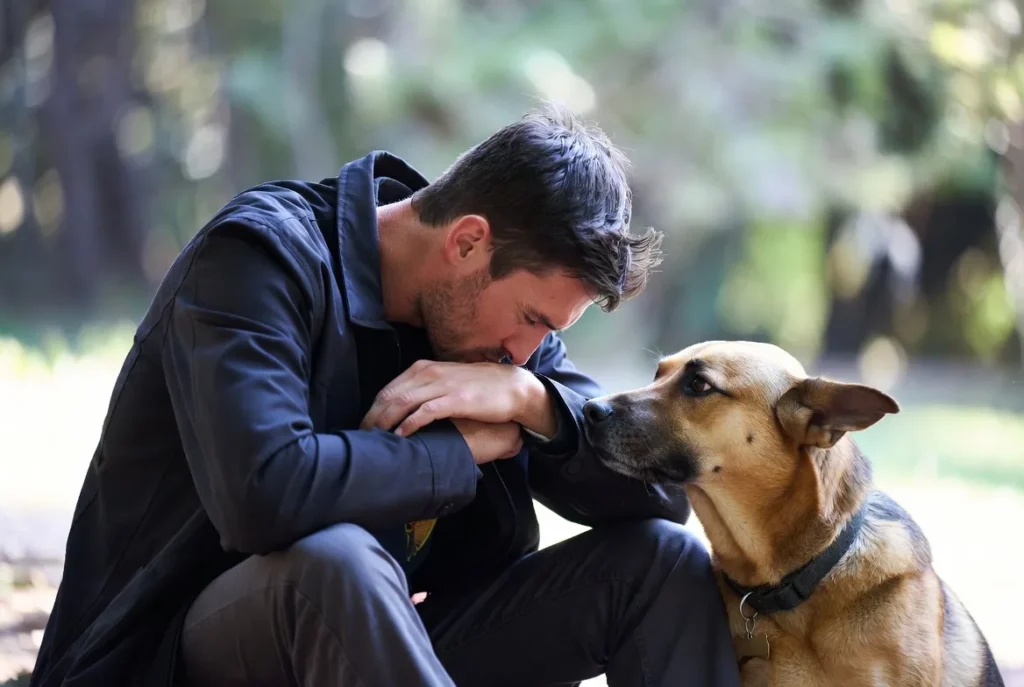
Now that we’ve answered the question “do dogs feel guilty?” and learned that their so-called guilt is actually a response to human cues and learned consequences, it’s important to know how to handle these behaviors effectively. Misinterpreting your dog’s actions as moral guilt can lead to unnecessary scolding and fear, which can harm training and the human-animal bond.
Here are some practical tips to manage “guilty” behavior and promote positive learning:
- Focus on Positive Reinforcement
Rewarding good behavior is far more effective than punishing mistakes. When your dog follows commands or refrains from misbehavior, offer treats, praise, or affection. Over time, this encourages your dog to repeat desirable behaviors because they associate them with positive outcomes, not because they feel guilty.
- Stay Calm When Addressing Accidents
Yelling or showing anger can trigger fear-based behaviors that look like guilt. Instead, calmly redirect your dog and teach the correct behavior. For example, if your dog has an accident indoors, gently guide them to the correct area without creating stress. This way, your dog learns proper behavior without associating mistakes with fear or shame.
- Be Consistent with Rules and Expectations
Dogs thrive on consistency. Clear, predictable rules help them understand what is expected. For instance, if you don’t want your dog on the couch, consistently reinforce this boundary with gentle corrections and positive reinforcement for staying on the floor or their bed.
- Observe Body Language Carefully
Learning to read your dog’s body language helps differentiate true fear or submission from other behaviors. Signs like cowering, tail tucking, or avoiding eye contact are often responses to your tone or posture, not evidence of guilt. Recognizing these cues allows you to respond appropriately and avoid misinterpretation.
- Train Through Learning, Not Punishment
Remember, dogs do not feel guilt like humans. They learn right from wrong through training and experience, not remorse. Focusing on consistent, reward-based training strengthens your bond and encourages desirable behaviors naturally.
By applying these strategies, you can reduce fear-based “guilty” behaviors, improve communication, and create a trusting relationship with your dog. Understanding that your dog’s “guilty look” is not true guilt makes training more effective and ensures your furry friend feels secure and happy.

Frequently Asked Questions
Q: Do dogs feel guilty when they look sad after doing something wrong?
A: No, dogs do not feel guilt in the human sense. What looks like guilt is usually a response to your tone of voice, facial expressions, or body language. Dogs are reacting to your cues, not experiencing moral shame.
Q: Why does my dog look guilty even when they haven’t done anything wrong?
A: Dogs are sensitive to your emotions and may display “guilty” behaviors simply because they sense tension or anger from you. This is a form of appeasement behavior, not actual guilt.
Q: How can I tell if my dog is afraid or actually guilty?
A: Most signs of “guilt”; cowering, tail tucking, lowered ears, or avoiding eye contact, are fear or submission signals, not evidence of moral guilt. Understanding this distinction is key to effective training.
Q: Can dogs feel empathy or regret?
A: Yes, dogs can sense human emotions and may respond with submissive or comforting behaviors. However, this is different from guilt. Dogs mirror emotions and learn from consequences, which may appear like regret but is really social awareness.
Q: How should I handle “guilty” behavior in my dog?
A: Focus on positive reinforcement, clear training, and consistent rules. Avoid scolding after the fact, as dogs do not connect punishment to past actions. Reward desirable behaviors instead to encourage learning.
Q: Do all dogs show “guilty” behaviors?
A: No, some dogs are more expressive and responsive to human cues, while others may hide or ignore your reaction. Their behavior depends on personality, breed tendencies, and past experiences.
Q: Does my dog’s “guilty look” mean they understand right from wrong?
A: Not exactly. Dogs learn through consequences and training, not moral reasoning. Their “guilty look” is a social and survival strategy to respond to your cues, not a sign of ethical judgment.
Conclusion
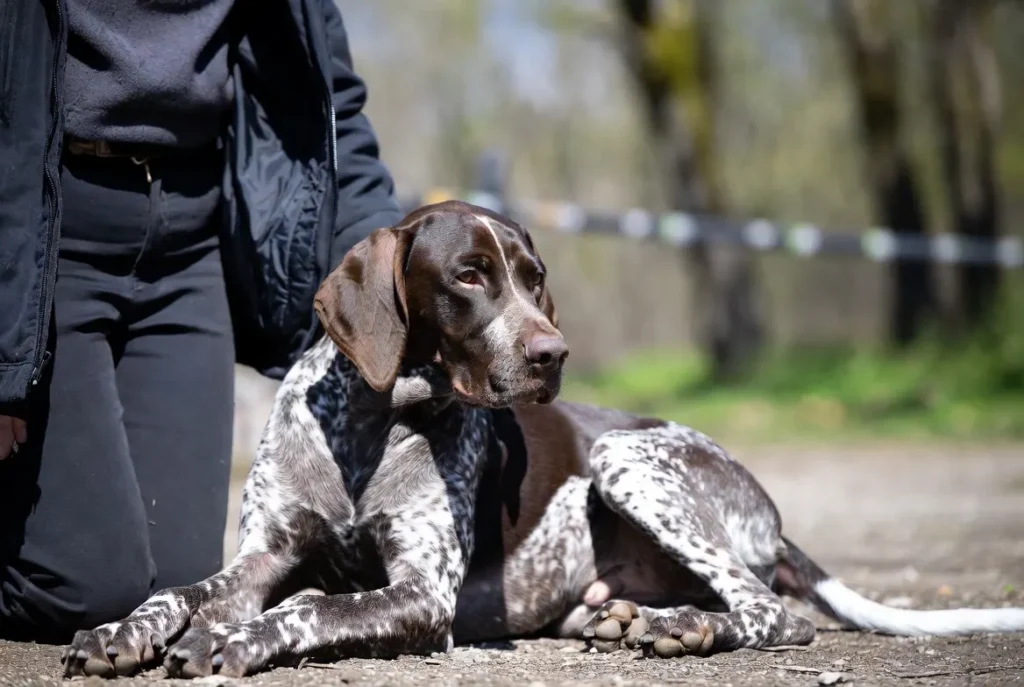
So, do dogs feel guilty? The answer is no, dogs do not experience guilt in the same way humans do. What we interpret as a “guilty look” is usually a combination of fear, submission, and sensitivity to human cues. Dogs are incredibly perceptive and socially intelligent, which allows them to respond to our emotions and learn from consequences, but these behaviors are not moral remorse.
Understanding this distinction is important for every dog owner. Instead of punishing your dog for past mistakes, focus on positive reinforcement, consistent training, and clear communication. This approach helps your dog learn right from wrong, strengthens your bond, and reduces fear-based behaviors that are often mistaken for guilt.
In short, while your dog may act like they feel guilty, their behavior is really about reading your reactions and navigating social dynamics, not ethical judgment. Recognizing this can improve your training, enhance your relationship, and make your home a happier, stress-free environment for both you and your furry friend.