
The ocean, even today, holds mysteries and creatures that can send shivers down your spine. But imagine a time when the seas were ruled by beasts far more colossal and terrifying than anything alive today. From monstrous sharks to serpentine whales and armored fish, the ancient oceans were home to some of the scariest extinct sea creatures imaginable. These scary sea animals that are extinct remind us of a prehistoric world where survival depended on immense size, formidable jaws, and cunning predatory instincts.
This article delves into the depths of paleontological history to uncover the most formidable scary animals that are extinct from our planet’s watery past, exploring what made them so terrifying and how they dominated their ecosystems.
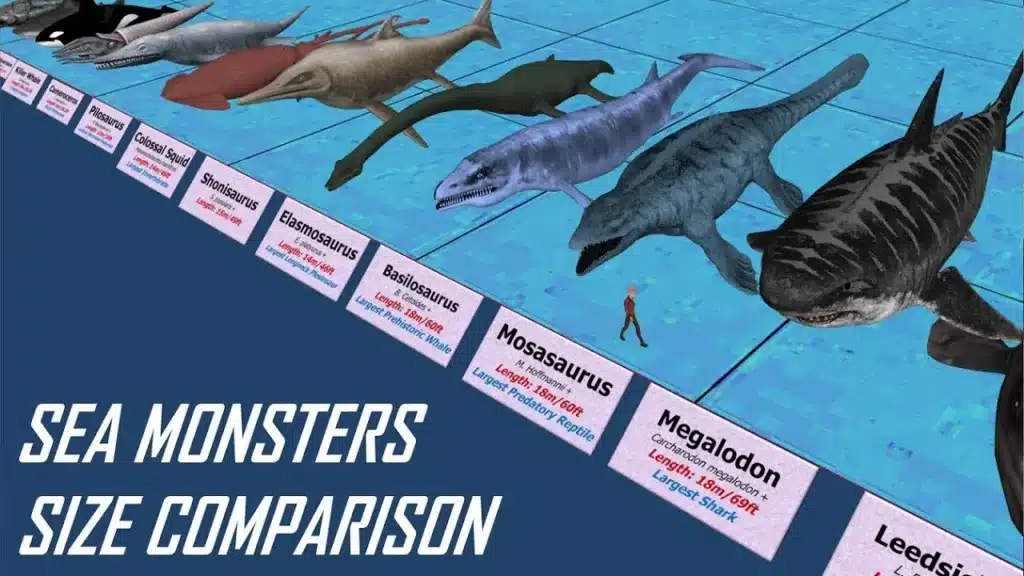
The Reign of the Scariest Extinct Sea Creatures
For millions of years, before humans ever walked the Earth, the oceans teemed with life that would make even the bravest diver think twice. These were not just large animals; they were apex predators, perfectly adapted to their environments, and often possessing features that seem straight out of a nightmare. The sheer scale and power of these scary big ocean animals paint a vivid picture of a truly wild and untamed world.
What is the Scariest Extinct Animal?
While “scariest” is subjective, many would argue that the title of what is the scariest extinct animal from the ocean belongs to the Megalodon. Its immense size and predatory prowess made it a true terror of the ancient seas. However, as we explore other creatures, you might find other contenders for this chilling title.
Giants of the Deep: Scary Big Ocean Animals That Are Extinct
The sheer scale of some ancient marine predators is difficult to comprehend. These scary giant sea creatures were the undisputed rulers of their domains, shaping the evolution of countless other species.
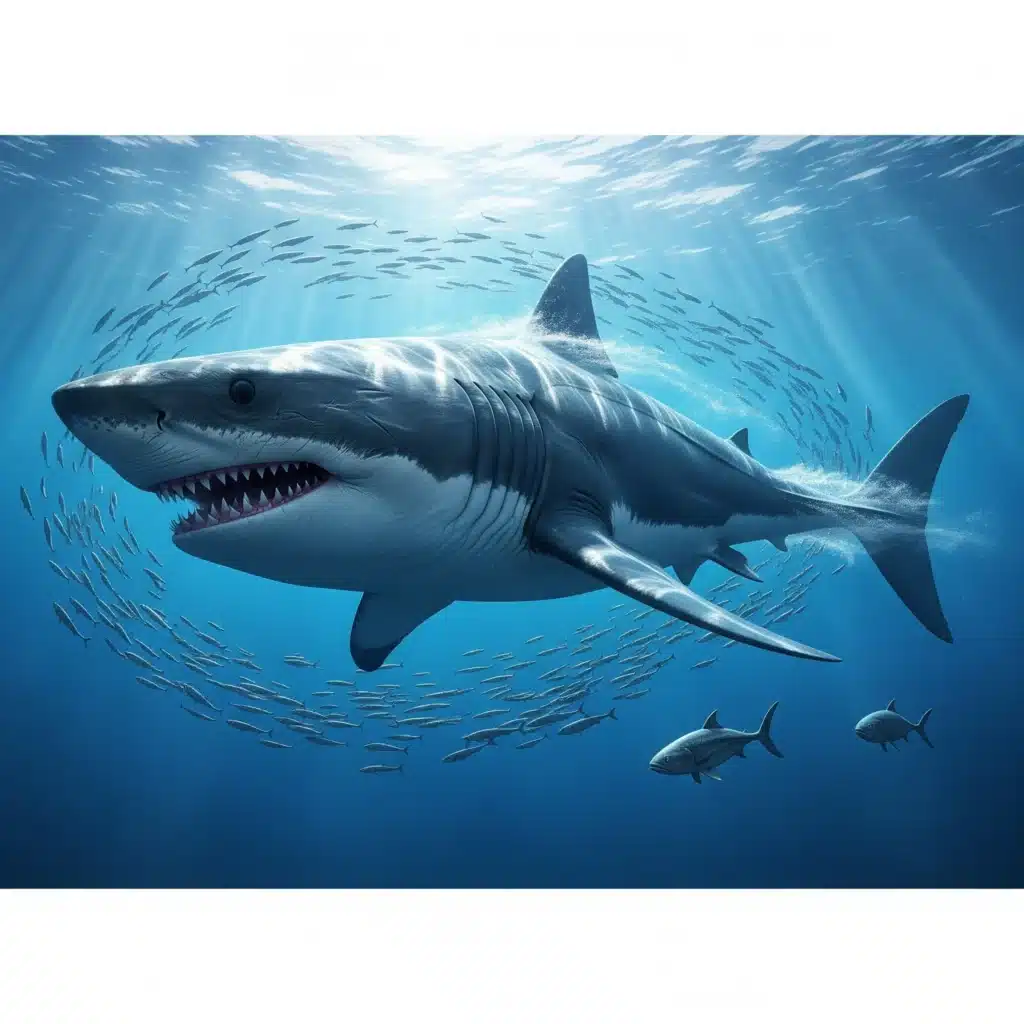
1-Megalodon – The Ultimate Scary Giant Sea Creature
When discussing the scariest extinct animals in the ocean extinct, the Megalodon (Otodus megalodon) invariably comes to mind. This colossal shark was not only the largest shark to ever live but also one of the biggest fish to have ever existed, reaching up to 24.3 meters (80 feet) long – roughly four times longer than the largest recorded great white shark and nearly as long as a blue whale!. Its name, “Megalodon,” literally means “large tooth,” and for good reason: its teeth could reach up to 18 centimetres (7 inches) long, dwarfing those of a great white.
With an estimated bite force between 108,514 and 182,201 Newtons, the Megalodon possessed one of the most powerful bites of any predator in history, capable of crushing the bones of its prey. Its diet included whales, large fish, and even other sharks, leaving telltale bite marks on fossilized whale bones.
The thought of a scary moment on sea encountering this beast is enough to make anyone grateful for its extinction 3.6 million years ago, likely due to climate change reducing warm-water prey and rivalry from swift great whites. Its fossilized tooth marks on whale vertebrae confirm its dominance, solidifying its reputation as a truly scary big ocean animal.
2-Helicoprion – The Buzz-Saw Jaw Terror
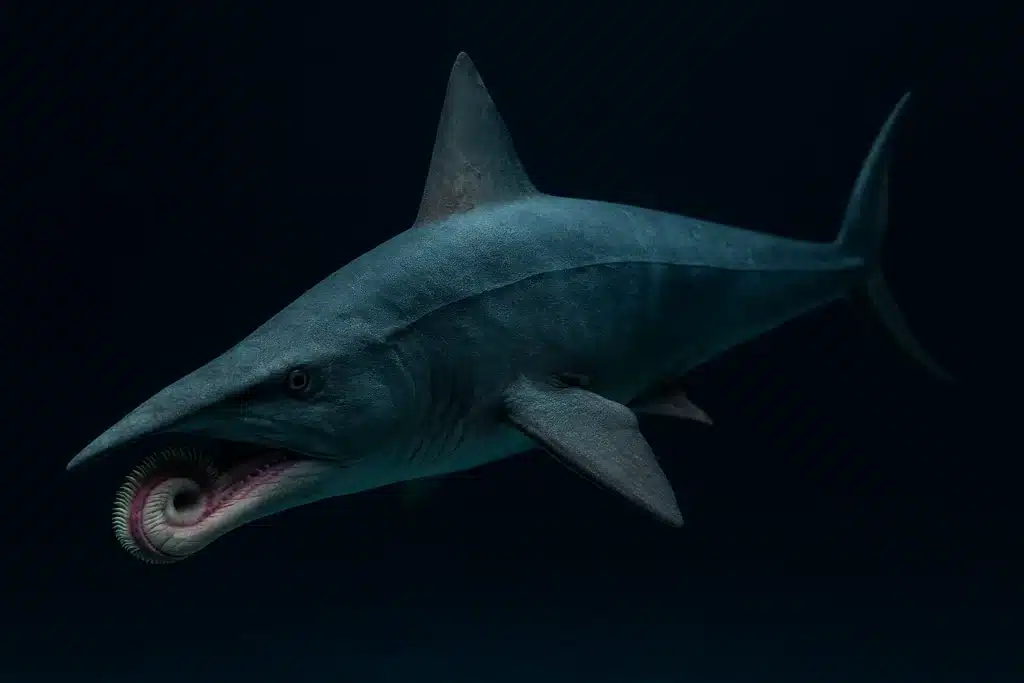
Among the most unique and creepy sea creatures to have ever existed is the Helicoprion, a shark-like creature that lived around 290 million years ago during the Permian Period. This
scary extinct animal in the ocean is famously equipped with a distinctive spiral tooth whorl, earning it the nickname “the buzzsaw jaw”. Growing to about 6 meters (20 feet) in length, its bizarre dental structure was fused into its lower jaw and would rotate, continuously replacing teeth throughout its life. When it closed its jaw, the teeth would be pushed backward, creating a slicing mechanism designed to process soft-bodied prey like squid. Biomechanical studies suggest a multi-stage bite where anterior teeth hooked prey, middle teeth pierced and cut, and posterior teeth pushed the prey further into its oral cavity, allowing it to consume both hard and soft-bodied prey. Fossils of this fascinating predator have been found globally, including in North America, Australia, Asia, and Europe.
3-Liopleurodon – Jurassic’s Scary Sea Monster
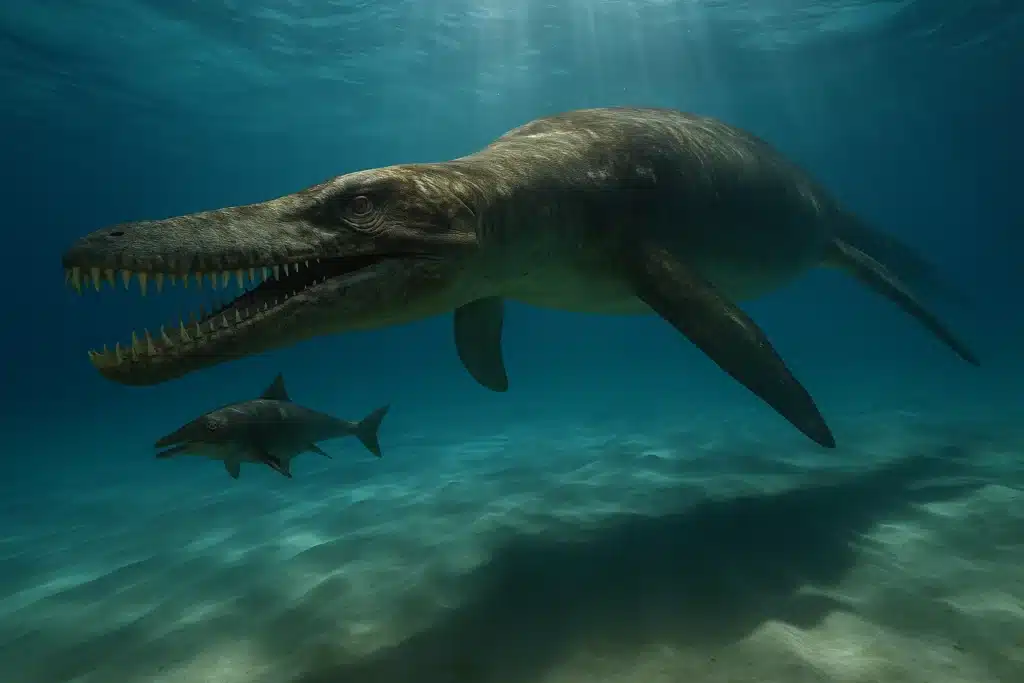
The Liopleurodon, a type of pliosaur, was a formidable marine reptile characterized by its four powerful flippers, a short tail, and a long head. While often misreported as reaching an astonishing 25 meters (82 feet) in popular media, this scary extinct animal actually measured between 5–9 meters (16–30 feet). Despite the size exaggeration, it was still a significantly large predator of the Jurassic seas.
Its predatory traits included massive jaws, suggesting immense bite force, and it was likely a swift and effective hunter, capable of rapidly climbing the food chain in its ancient environment. Its powerful build and predatory prowess truly evoke terror in the ancient seas.
4-Tylosaurus & Mosasaurus – Marine Reptiles of Nightmares
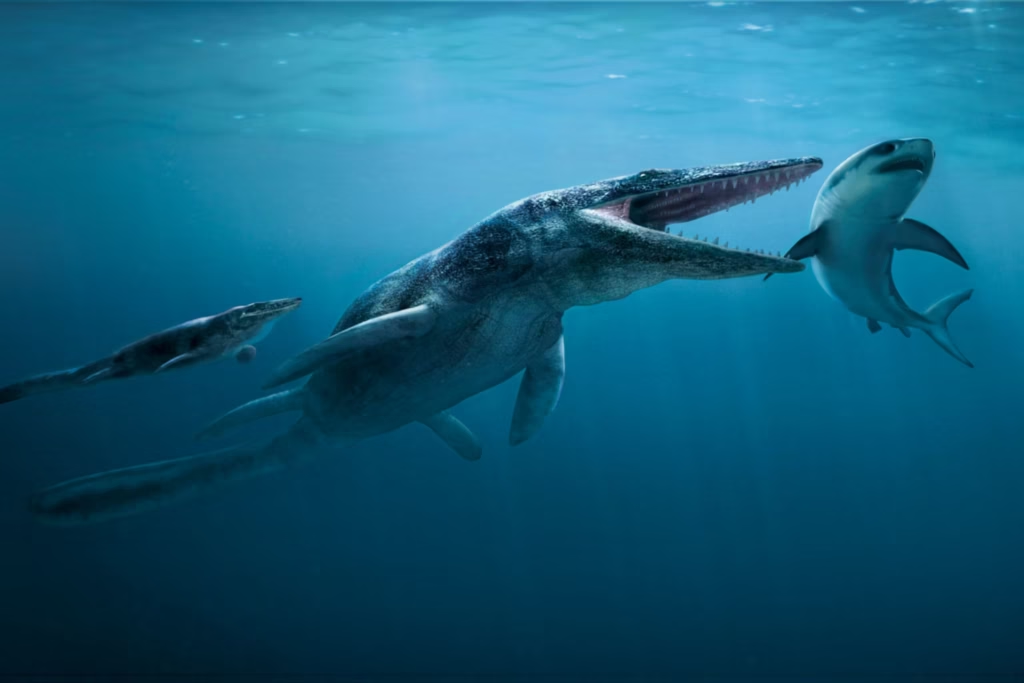
The Cretaceous Period saw the reign of the Mosasaurs, a group of marine lizards that evolved from land-based ancestors and became apex predators of the world’s oceans. These scary extinct animals in the ocean could reach immense sizes, with the Mosasaurus itself growing up to 50 feet (approximately 15.2 meters) long, roughly the size of a bus. They possessed powerful, webbed paddles and long, muscular tails for propulsion. The Tylosaurus, a prominent member of the mosasaur family, reached lengths of about 14 meters (45 feet) and was known for its pointed snout and dual-row teeth, ruling coastal waters.
Both were voracious eaters, with fossilized stomach contents revealing diets that included fish, sharks, cephalopods, birds, and even other mosasaurs – essentially anything that could fit into their enormous mouths. The Mosasaurus, in particular, boasted a bite force up to 33,000 psi, solidifying its status as the apex marine reptile at the end of the Cretaceous. These scary giant sea creatures were truly the stuff of nightmares for the marine life of their era.
5-Dunkleosteus – The Armored Scary Extinct Fish
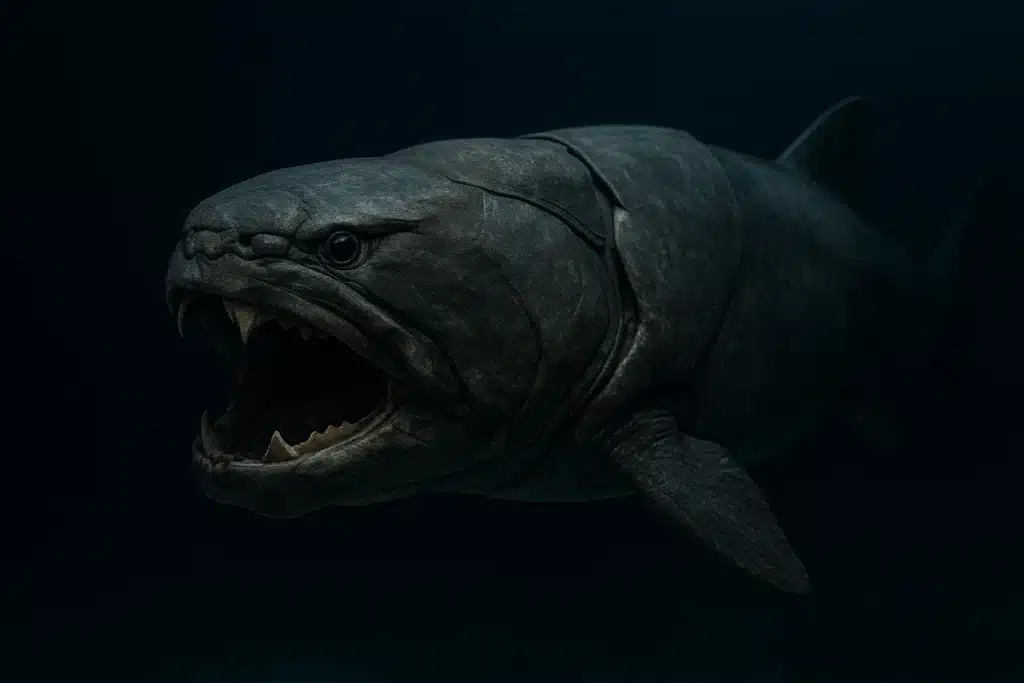
Venturing into the realm of deep sea creatures that are extinct, we encounter the Dunkleosteus, often nicknamed “the Dunk.” This ancient fish existed around 382–358 million years ago during the Late Devonian period, known as the “Age of Fishes”. What makes the Dunkleosteus one of the truly creepy sea creatures is its unique anatomy: instead of traditional teeth, it possessed exposed bony plates on its upper and lower jaws that functioned like self-sharpening scissors, capable of shearing through bones and shells. Covered in a layer of bony armor on its head and thorax, the Dunkleosteus was a formidable predator, reaching lengths of up to 8.8 meters (29 feet) and weighing up to 4 metric tons. It was one of the first vertebrate apex predators in any ecosystem, preying on early sharks, bony fish, and other armored fish. Its powerful bite and armored appearance made it a true “melee predator” of its time.
6-Jaekelopterus – The Sea Scorpion Monster from Shallow Seas
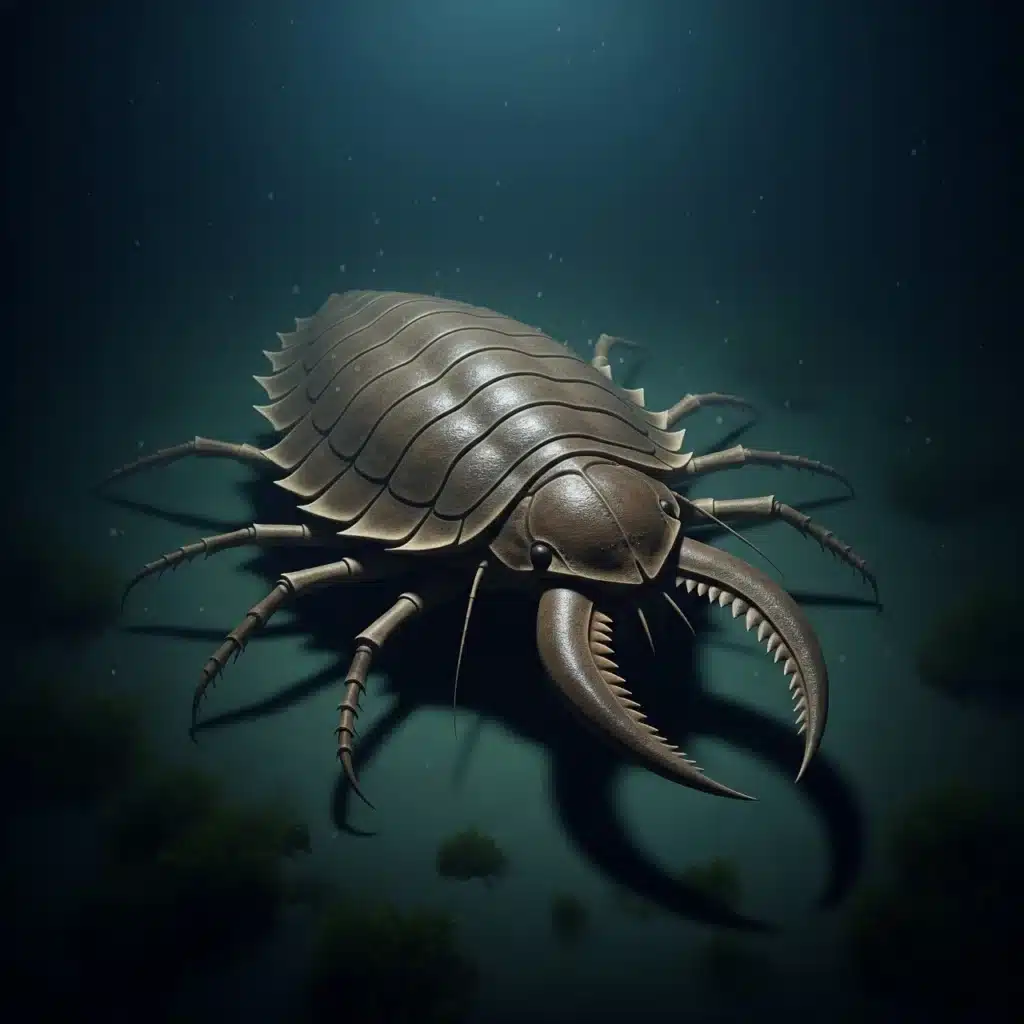
Among the most chilling scary extinct animals is the Jaekelopterus, an ancient arthropod that lived roughly 400 million years ago during the Devonian period. This colossal sea scorpion could reach an impressive length of 2.3–2.6 meters (7.5–8.5 feet), making it the largest arthropod ever discovered. Armed with robust, spiked pincers (chelicerae) and deadly agility, Jaekelopterus was an apex predator in its environment.
Its formidable appearance was characterized by a robust exoskeleton and a pair of large, grasping appendages. It preyed on fish, trilobites, ammonites, and smaller eurypterids, and fossil evidence even suggests it was responsible for puncture wounds found on other ancient fish. This chilling example of
creepy sea creatures likely hunted in brackish to fresh water, making it a truly terrifying presence in ancient aquatic environments.
7-Ichthyosaurs – Fish-Lizard Beasts of Prehistoric Depths
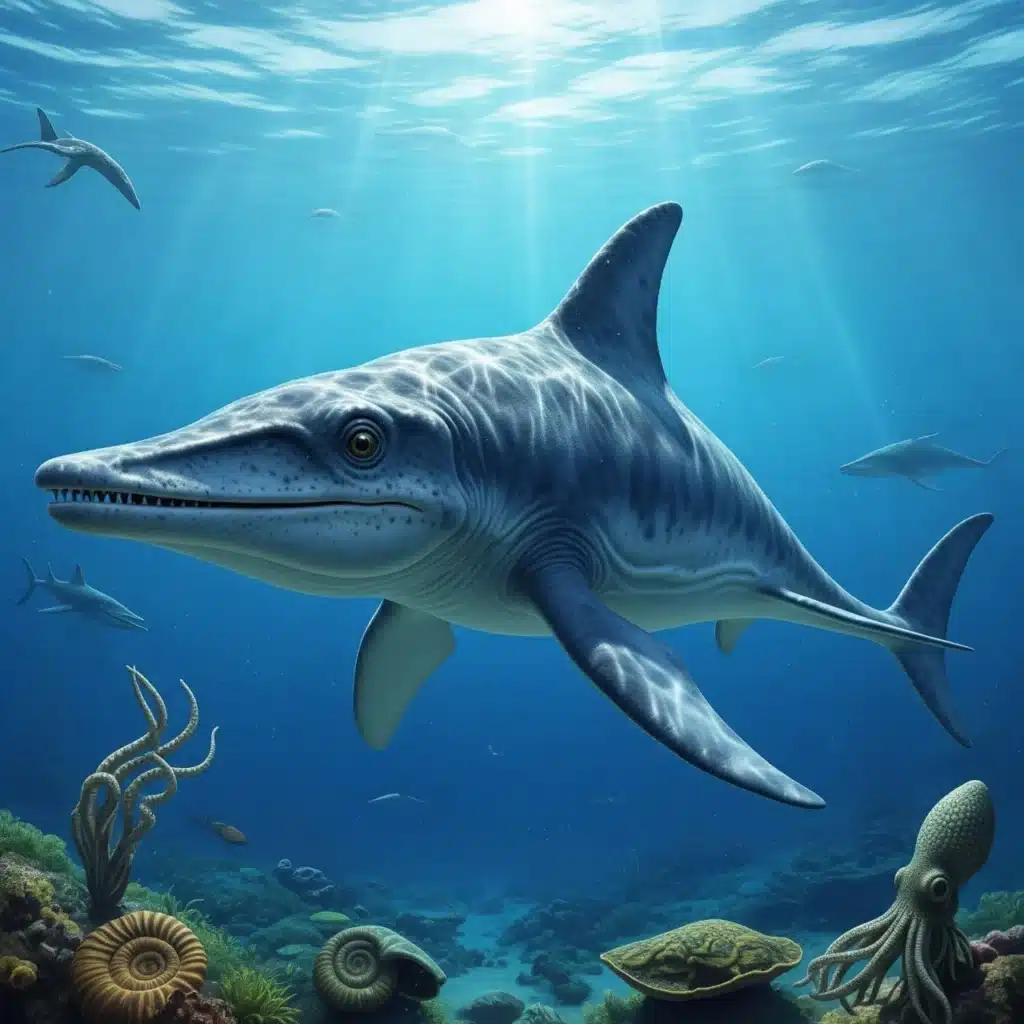
Ichthyosaurs, meaning “fish lizards,” were a diverse group of marine reptiles that thrived from the Early Triassic to the mid-Cretaceous periods, approximately 250 to 90 million years ago. These
deep sea creatures that are extinct varied greatly in size, ranging from 0.6 to 15 meters (2 to 49 feet) in length. Early forms were long and thin, resembling lizards with flippers, moving like eels, but over millions of years, they evolved to become more dolphin- or tuna-like, becoming faster swimmers. They possessed long, thin snouts lined with about 150 teeth, which they used to predominantly eat fish and squid. While not dinosaurs (as dinosaurs lived on land), Ichthyosaurs were dominant marine predators of their time, showcasing remarkable adaptations for a fully marine lifestyle, including giving birth to live young rather than laying eggs. Their streamlined bodies and large eyes suggest they were well-adapted for hunting in aquatic environments, making them a significant group among
8-Xiphactinus – Cretaceous Ocean Harpoon Fish
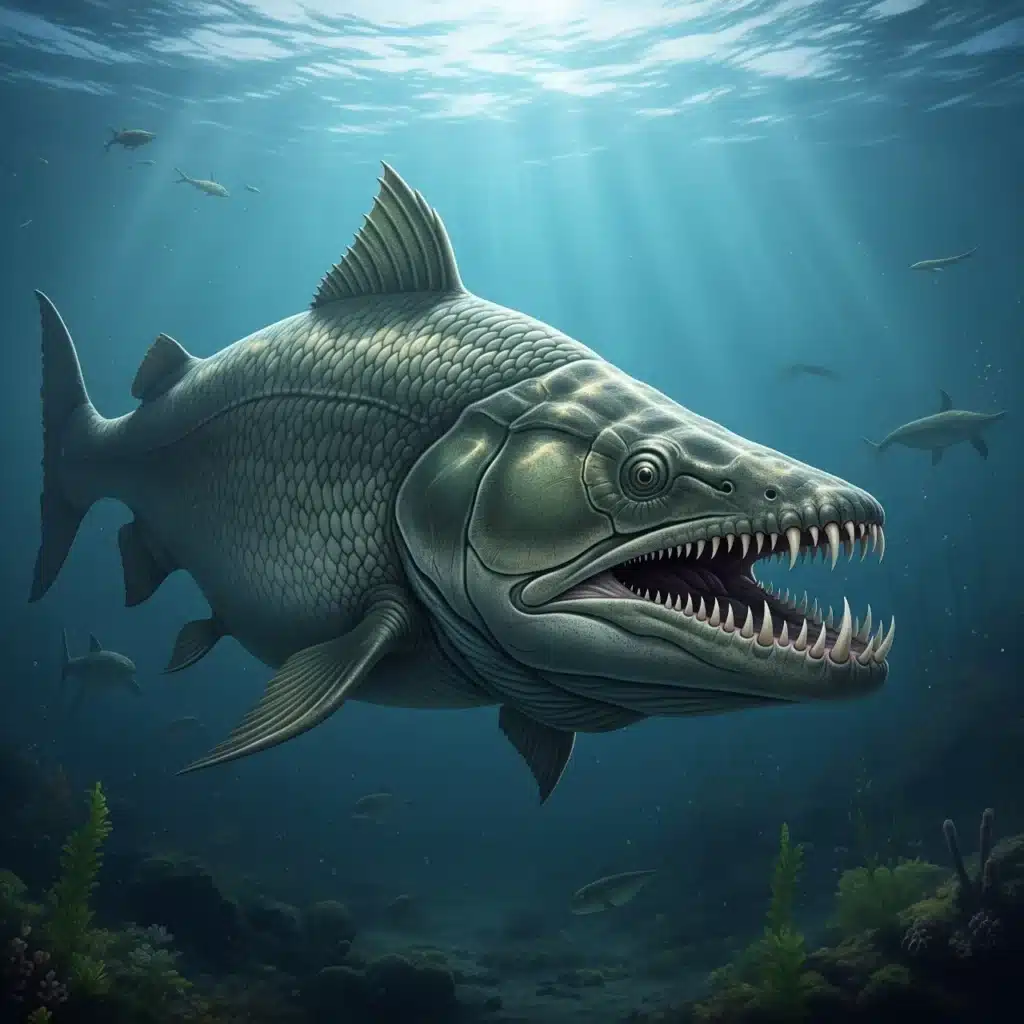
The Xiphactinus was a truly monstrous bony fish that lived during the Late Cretaceous period, from about 112 to 65 million years ago. Reaching lengths of 4.5 to 6 meters (15-20 feet) and weighing up to half a ton, this
scary animal that is extinct had a slender, torpedo-shaped body, allowing it to achieve extremely fast speeds, possibly up to 60 km/hour (37 miles/hour), when chasing prey. Its prominent, fang-like teeth and distinctive underbite made it a voracious predator, feeding on smaller fish, turtles, pterosaurs, and even juvenile mosasaurs. Known for its gluttonous nature, several Xiphactinus fossils have been found with undigested prey in their stomachs, including one famous specimen containing a nearly intact 10-foot-long fish. Its ability to leap out of the water like modern dolphins to prey on surface animals further cemented its reputation as a formidable ambush predator of the ancient seas.
9-Vampire Squid Ancestor (Simoniteuthis) – Creepy Deep-Sea Snapshot
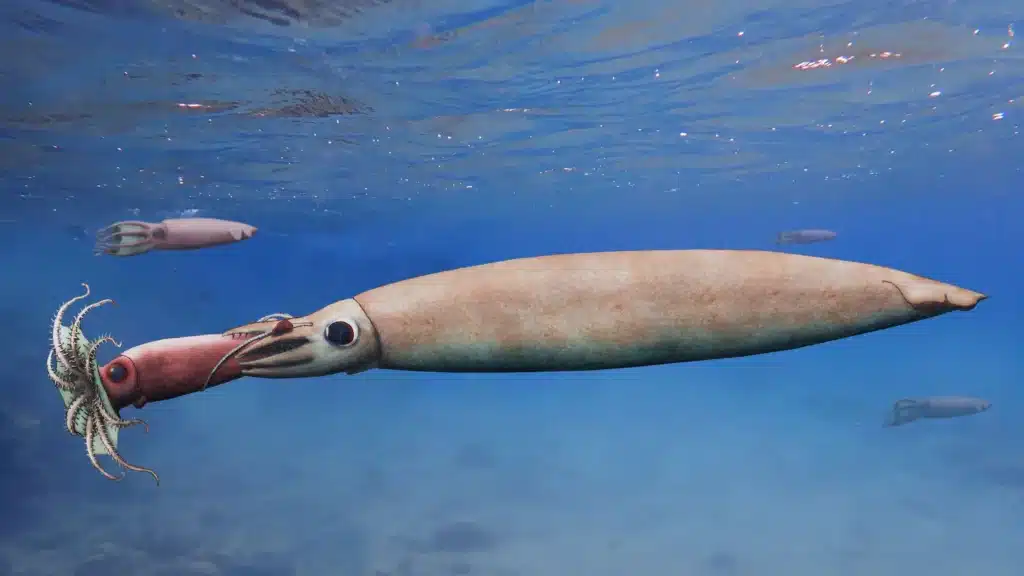
Among the more unusual deep sea creatures that are extinct is the Simoniteuthis michaelyi, a newly discovered species of ancient vampyromorph (a group closely related to octopods) from the Early Jurassic period, approximately 183 million years ago. This
creepy sea creature is known from exceptionally preserved fossils, including one found in Luxembourg in 2022 that captured it clutching two bony fish, its last meal, at the moment of its death. This rare “distraction sinking” phenomenon occurred when the creature, distracted by its prey, sank into oxygen-depleted waters and suffocated, preserving it remarkably well. Unlike modern deep-sea vampire squids, early vampyromorphs like Simoniteuthis likely roamed and hunted in shallower waters, providing unique insights into the feeding habits and evolutionary history of this mysterious order.
FAQ
Q: What is the scariest extinct animal?
A: While subjective, most paleontologists agree that Megalodon tops the list due to its enormous size and jaw-crushing bite force.
Q: What is the most terrifying extinct sea creature?
A: Alongside Megalodon, creatures like Mosasaurus, Dunkleosteus, and Livyatan are contenders for their predatory adaptations.
Q: What sea creature went extinct?
A: Numerous, including Megalodon, Mosasaurus, Dunkleosteus, Helicoprion, Liopleurodon, Basilosaurus, and Livyatan.
Q: What is the most mysterious sea creature?
A: Helicoprion—its spiral jaw puzzled scientists for decades, making it one of the most enigmatic extinct sea animals.
Q: Why did NASA stop exploring the ocean?
A: NASA hasn’t stopped exploring the ocean—they explore Earth’s oceans to better understand planetary systems. Marine research often complements space studies rather than replaces them.
Q: What is the scariest mythical sea creature?
A: Legends cite the Kraken and Leviathan—mythical beasts likely inspired by real giants like Livyatan or giant squid fossils.
Conclusion: The Enduring Legacy of Ocean Terrors
The stories of these scary extinct animals in the ocean serve as a powerful reminder of the dynamic and often terrifying history of life on Earth. From the crushing jaws of the Megalodon to the armoured might of the Dunkleosteus and the unique buzz-saw of the Helicoprion, these creatures dominated their ecosystems for millions of years. Their existence highlights the incredible diversity and evolutionary adaptations that have occurred in our planet’s oceans. While we can only imagine a scary moment on sea encountering these beasts, their fossils continue to reveal the awe-inspiring and sometimes chilling secrets of a world long past.



Pingback: Top 10 Extinct Fastest Sea Animals That Once Ruled the Seas - Animal Sound