
A consistent feeding routine is crucial for a puppy’s growth and well-being. Puppies have very high energy needs, so a puppy eating schedule by age helps ensure they get the right nutrition at each stage. Young puppies (under ~6 months old) typically eat 3–4 small meals per day. For example, an 8 week old puppy eating schedule often includes about 3–5 meals each day to support rapid growth.
Over time, the feeding frequency is reduced: by roughly 5–6 months old, most puppies can transition down to 2 meals per day. Establishing set meal times helps regulate digestion and even makes potty training easier

Feeding Schedule by Age
Puppies grow quickly, so their feeding routine changes every few weeks. Here are common guidelines by age:
- 7–9 weeks old (≈2 months): Very young puppies often eat 3–5 meals per day. At around 7 weeks, pups are typically weaning and need frequent small feedings (3–4 times/day) for energy. By 8–9 weeks, a puppy eating schedule 8 weeks suggests 4–5 meals per day (as one chart recommends for 8–10 week old pups).
- 10–12 weeks old (≈3 months): At this stage, most puppies eat 3–4 times daily. For example, by 10 weeks many puppies settle into roughly 3–4 meals a day. A puppy eating schedule 10 weeks typically still has 3–4 feedings. By 3 months old, the 3 month old puppy eating schedule usually consists of three meals (morning, lunch, evening).
- 3–6 months old: Puppies in this range grow into “teenage” pups. The puppy eating schedule 14 weeks (3.5 months) still calls for 3 meals per day, spaced about 5–6 hours apart. A 4 month old puppy eating schedule remains ~3 meals/day. Around 5 months, many guides still advise three meals daily. In short, the puppy eating schedule 5 months and 5 month old puppy eating schedule typically mirror the 3-month plan.
- 6 months old and beyond: By about half a year, most puppies’ growth slows. A 6 month old puppy eating schedule usually drops to 2 meals per day (often morning and evening). Adult feeding patterns (twice daily) can begin at this point for many breeds. Of course, each puppy is unique – always monitor body condition and adjust portions or meal frequency as advised by your veterinarian.
Across all ages, feed measured portions (not free-feed) to manage weight and appetite. Stick to quality puppy food and follow label guidelines, then divide the total into the meals above. This feeding schedule by age framework provides a starting point; consult your vet for adjustments based on breed, size, and health.
Breed and Size Considerations: Note that puppy size affects schedule. Tiny breeds (like Shih Tzus) often need the upper end of meal frequency, whereas giants may eat fewer large meals. Pet experts warn toy-breed pups can become hypoglycemic if meals are too far apart, so they may eat 4–6 times daily in early months. Large breeds should also start with multiple feedings to avoid bloat. The following breed-specific examples illustrate these principles.
Calculating Daily Food Allowance: A Guide to Puppy Eating Schedule Portions
Determining the correct amount of food to provide is a key component of a successful puppy eating schedule. There are two primary methods for calculating a puppy’s daily food allowance, each offering a different level of precision.
The most common and accessible method is to simply follow the feeding chart provided on the puppy food packaging. These charts offer a general guideline based on the puppy’s current age and weight, and often on their estimated mature weight.
A more scientific and personalized approach involves calculating a puppy’s daily caloric needs based on its Resting Energy Requirement (RER). This method accounts for individual metabolic differences and provides a more precise target. The formula for RER is
(70×Bodyweight in kg)0.75. For puppies, this RER is then multiplied by a growth factor:
2.2 for puppies from birth to half their mature weight, and 1.5 from half-mature weight to full maturity. The resulting number is the daily kilocalorie (kcal) target, which can be divided by the kcal-per-cup information on the food bag to determine the exact portion size.
The following table provides a general guideline for a puppy eating schedule, consolidating data from multiple sources to help owners visualize daily food allowances based on their puppy’s estimated adult weight and age.
| Estimated Weight at Maturity (lbs) | 1.5 – 3 Months (cups/day) | 4 – 5 Months (cups/day) | 6 – 8 Months (cups/day) | 9 – 11 Months (cups/day) |
| 3 to 12 | ½ to 1 | ⅔ to 1⅓ | ½ to 1½ | Feed as Adult |
| 13 to 20 | ½ to 1¼ | 1⅛ to 2 | ¾ to 1⅓ | ½ to 1½ |
| 21 to 50 | ½ to 1½ | 1½ to 2¾ | 1⅛ to 2⅓ | 2 to 3 |
| 51 to 75 | ⅝ to 2⅓ | 1½ to 4 | 1½ to 3¾ | 2½ to 4¾ |
| 76 to 100 | 1 to 2⅔ | 2⅞ to 3¾ | 2⅞ to 6⅓ | 3⅞ to 7 |
| 101+ | 2⅔ cups + ⅓ cup for each 10 lbs of body weight over 100 lbs | 3¾ cups + ⅓ cup for each 10 lbs of body weight over 100 lbs | 6⅓ cups + ⅓ cup for each 10 lbs of body weight over 100 lbs | 7 cups + ⅓ cup for each 10 lbs of body weight over 100 lbs |
Table values are general guidelines. Always consult your veterinarian and the specific feeding chart on your chosen puppy food package.
Choosing the Right Food: Dry, Wet, and Raw Options
When selecting a food to support a puppy eating schedule, the most important consideration is choosing a formula that is “complete and balanced” for the “Growth and Reproduction” life stage, as certified by the Association of American Feed Control Officials (AAFCO). This certification ensures the food contains all the necessary nutrients a puppy needs to thrive.
- Dry Kibble: This is the most common and cost-effective option. It is easy to store and, for certain dogs, can help promote better dental health once their adult teeth have come in.
- Wet Food: Wet food is highly palatable and can be a good source of hydration. It is often used as a meal topper to entice picky eaters or to add moisture to a dry food diet.
- Raw Food: Proponents of raw food diets cite the use of natural, whole ingredients such as meat, organs, and bones. However, it is important to note that scientific studies on the long-term effects of a raw food diet are limited. This type of food requires careful handling and storage to prevent bacterial contamination.
The “best” food is ultimately a personal decision based on a puppy’s individual needs, an owner’s lifestyle, and a veterinarian’s professional guidance. The key is to ensure the food is nutritionally complete, regardless of its form.
Navigating Transitions and Troubleshooting
The Seven-Day Food Transition Plan
Any change to a puppy’s diet or puppy eating schedule should be implemented gradually to prevent digestive upset, such as diarrhea, or the development of food aversion. A standard seven-day transition plan is widely recommended to allow a puppy’s digestive system to adjust to the new ingredients.
| Day | New Food (%) | Old Food (%) |
| 1-2 | 25% | 75% |
| 3-4 | 50% | 50% |
| 5-6 | 75% | 25% |
| 7 | 100% | 0% |
This structured transition minimizes gastrointestinal distress and increases the likelihood that the puppy will accept the new food. If a puppy shows signs of refusal or digestive issues at any point, it is best to revert to the old food for a few days and then restart the transition at a slower pace.
Beyond the dietary aspect, the food transition process is also a part of behavioral training. If a puppy doesn’t finish a meal within a set timeframe, such as 15 to 30 minutes, it is important to remove the food. This teaches the puppy that food is a finite resource offered at scheduled times, preventing picky eating habits and ensuring they are hungry for the next meal.

When to Transition from Puppy to Adult Food
Transitioning from puppy to adult food is a major milestone, and the timing is determined by a puppy’s expected mature size. Small breeds reach skeletal maturity earlier and can typically transition to an adult formula around 9 to 12 months of age. Medium-sized breeds generally make the switch at about 12 months, while large and giant breeds may require puppy food for up to 18 to 24 months to support their prolonged growth and development. Making this transition too early can deprive a puppy of the essential nutrients needed for full, healthy development.
Addressing Common Puppy Eating Schedule Challenges
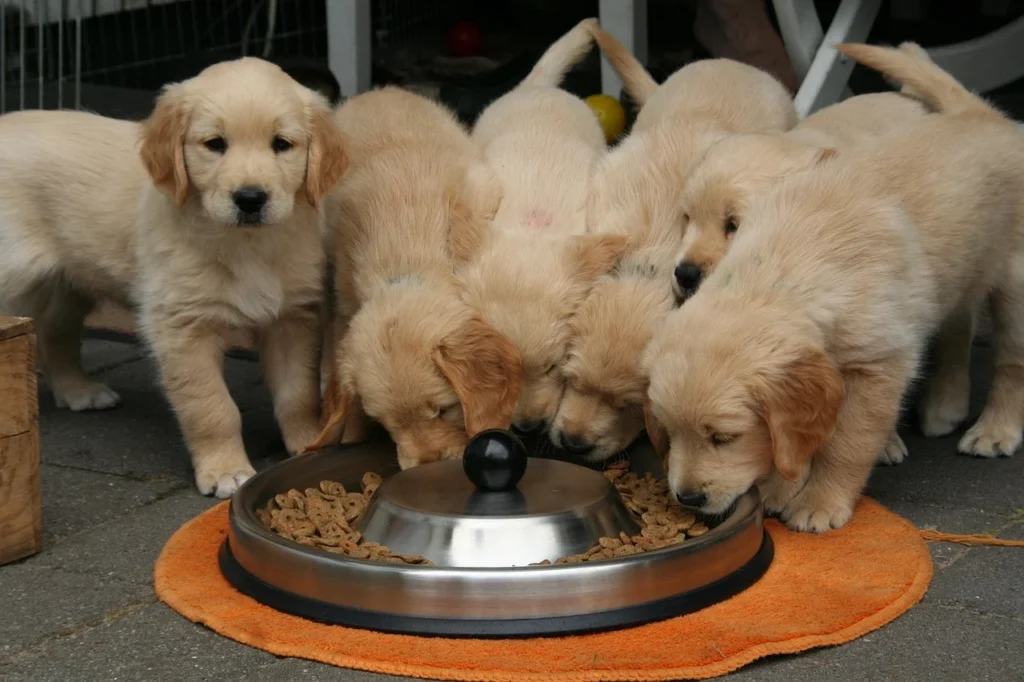
Even with a well-planned puppy eating schedule, owners may encounter challenges. A puppy who eats too fast can be helped by using puzzle feeders or a food-slowing bowl. For picky eaters, a meal topper like a small amount of wet food or low-salt broth can be used to increase palatability.
Ultimately, the most important tool for any owner is careful observation of their puppy’s behavior, weight, and energy levels. While a structured puppy eating schedule provides a roadmap, it is a dynamic plan that must be adapted based on the individual puppy’s needs, activity level, and health status. If a puppy shows a persistent loss of appetite, vomiting, diarrhea, or other signs of illness, a veterinarian should be consulted immediately. A guide, no matter how comprehensive, is never a substitute for professional medical advice.
The German Shepherd Puppy Eating Schedule
German Shepherds are a large breed known for their rapid growth and high risk for certain orthopedic conditions, including hip and elbow dysplasia. To support their powerful bodies and manage their high energy demands without overstressing their developing joints, a German Shepherd puppy typically requires three to four meals per day until they are approximately six months old.
The specific feeding guidance for large breeds like the German Shepherd is a direct application of the core nutritional principle about controlled calcium intake. The research indicates that excessive calcium can lead to excessively rapid growth, which can, in turn, contribute to orthopedic problems. For this reason, while a structured
puppy eating schedule is important, the type of food is paramount. Feeding a large-breed-specific formula ensures the optimal calcium-to-phosphorus ratio for healthy, controlled skeletal development. Because large breeds mature more slowly, they often remain on a puppy food formula for a longer period than smaller dogs, typically up to 12 to 16 months.
The Golden Retriever Puppy Eating Schedule
Golden Retrievers are another fast-growing, large breed with a deep-chested body type, which makes them susceptible to gastric dilatation-volvulus, or bloat, a life-threatening condition. The
puppy eating schedule for a Golden Retriever generally begins with three meals a day, with a transition to a two-meal schedule around 11 to 12 weeks, as recommended by some breeders.
For this breed, practical feeding habits are as important as the schedule itself to mitigate health risks. A common recommendation is to place a clean, large rock or a food-slowing device in the center of the food bowl to prevent the puppy from eating too quickly. This simple piece of advice is a key preventative measure against bloat. Similarly, the recommendation to not feed a Golden Retriever puppy after 6 p.m. is not solely for house training; it ensures their stomach has time to empty before bedtime, which may also reduce the risk of this serious condition.

The Shih Tzu Puppy Eating Schedule
Shih Tzus are a toy breed with a high metabolism, small stomachs, and a predisposition to obesity. Their small size and physiology make them particularly susceptible to hypoglycemia, a rapid drop in blood glucose that can cause lethargy, weakness, and even seizures. For this reason, a Shih Tzu’s
puppy eating schedule is a direct medical necessity, not just a matter of convenience. They require more frequent, smaller meals—three to four times a day—to ensure a steady supply of glucose and prevent a potential medical emergency.
Given their small size and proneness to weight gain, precise portion control is also vital for Shih Tzus. Even a small amount of extra food or a few extra treats can contribute to an unhealthy weight.
Conclusion
A meticulously planned puppy eating schedule is a fundamental element of a new dog’s well-being and a testament to an owner’s commitment to their pet’s long-term health. The structure of meal times provides more than just nourishment; it is a critical tool for house training, a method for proactive health monitoring, and a means to prevent common behavioral and medical issues.
The analysis of a proper puppy eating schedule reveals that the approach is not a rigid dogma but a dynamic, adaptable plan that evolves with a puppy’s age and is refined by its breed-specific needs. The precise timing and quantity of food must be tailored, with frequent, smaller meals for young puppies and small breeds, and larger, less frequent meals for older, larger puppies. The transition to a new food or a new stage of life requires patience and a gradual approach to protect a puppy’s sensitive digestive system. By understanding the science behind the schedule and applying it with consistency and care, a new owner can lay a solid foundation for a lifetime of health and happiness for their canine companion.