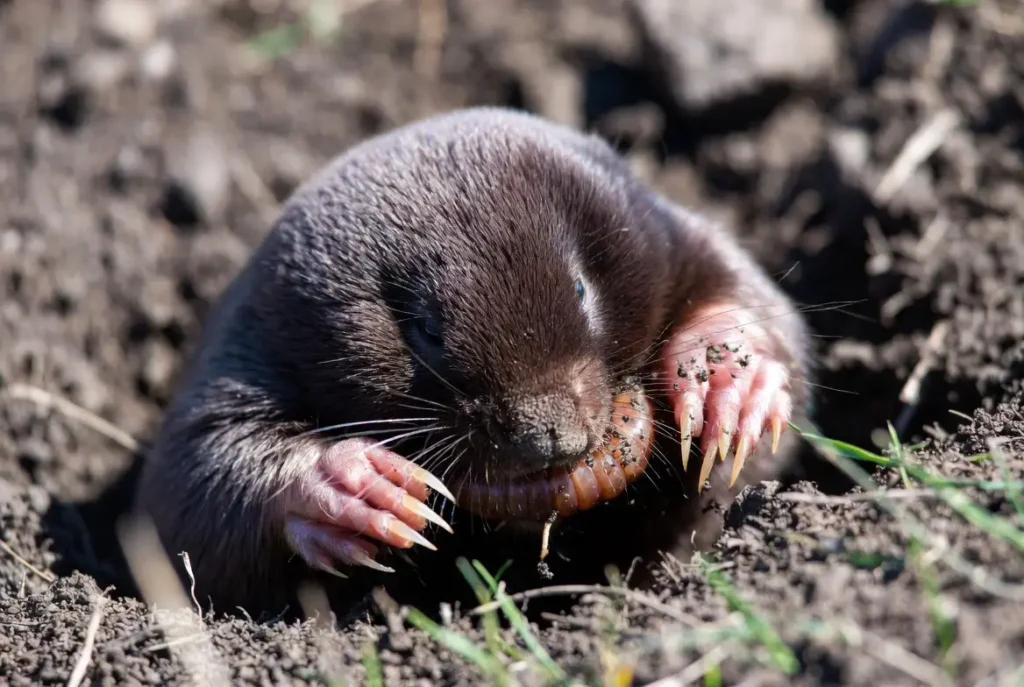
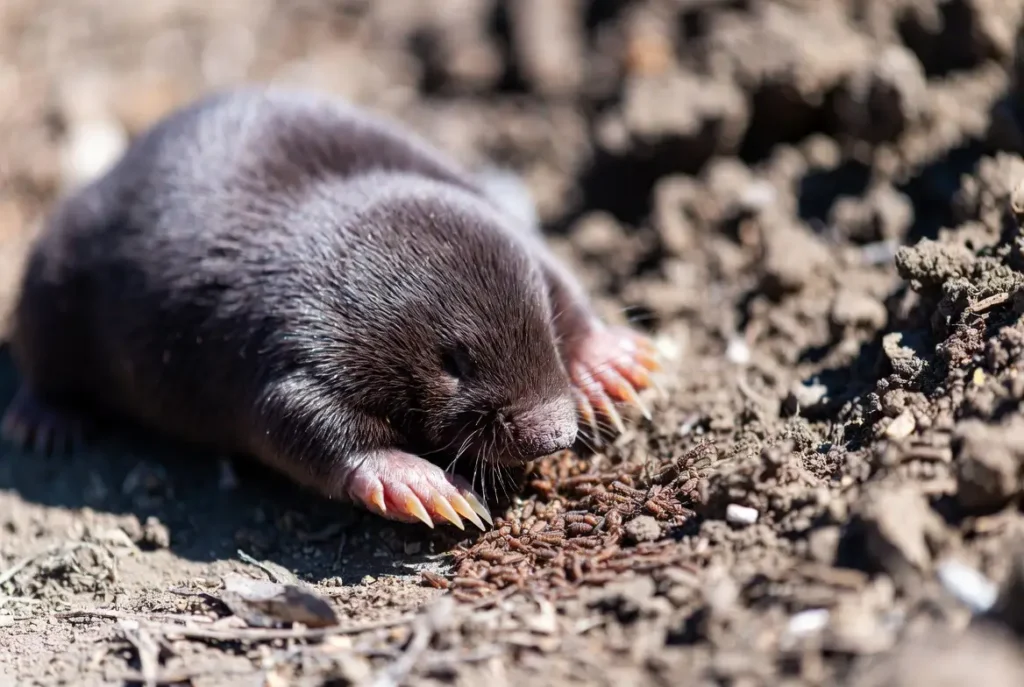
What do moles eat? Moles primarily eat earthworms, insects, and soil invertebrates. Contrary to popular belief, moles aren’t after your garden veggies or flower bulbs; they are actually high energy carnivores with a metabolism that demands constant fuel. These subterranean hunters spend nearly their entire lives patrolling a complex network of tunnels in a relentless search for protein, primarily in the form of earthworms, which make up the vast majority of their diet. By consuming their weight in prey nearly every day, moles act as nature’s underground pest control, favoring grubs, beetles, and larvae over anything you might have planted in your garden beds.

Understanding Moles
Moles are small, secretive mammals that spend almost their entire lives underground, which makes them both fascinating and misunderstood. With their velvety fur, shovel-like forelimbs, and cylindrical bodies built perfectly for tunneling, moles are true specialists of the subterranean world. Because they’re rarely seen above ground, many people are curious about how they live, what moles eat, and whether it’s even possible to have a mole as a pet.
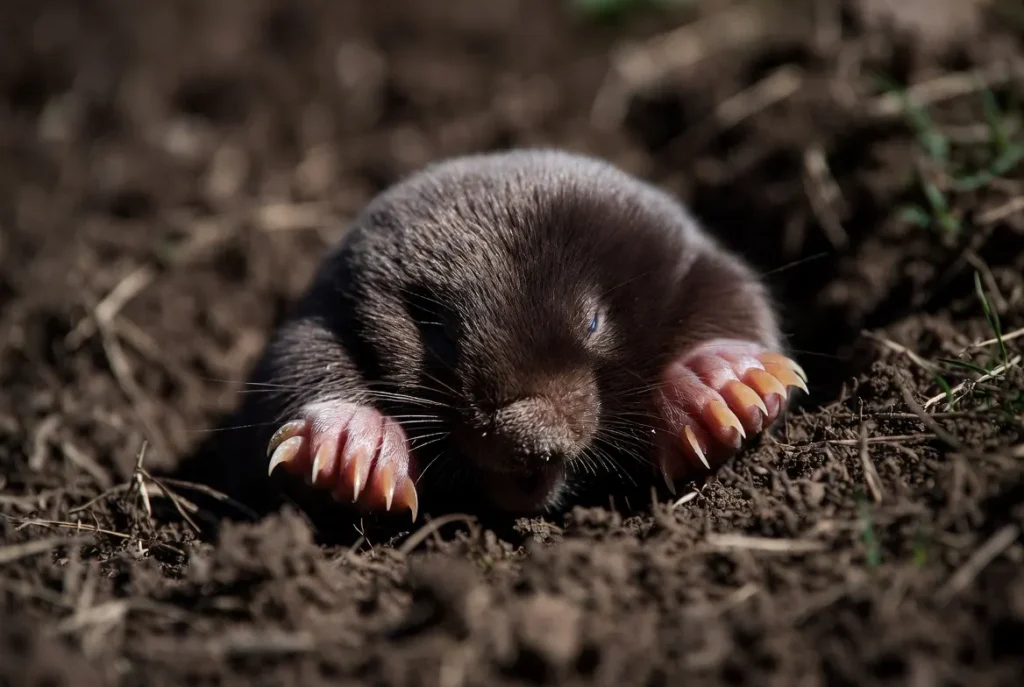
These solitary animals create intricate networks of tunnels that can stretch for hundreds of meters, using them for hunting, nesting, and escaping predators. Their biology is uniquely adapted to life beneath the soil: reduced eyesight, heightened touch and hearing, flexible skeletons, and an incredible digging speed—some species can dig more than 15 feet of tunnel in just one hour.
Despite being labeled as pests by gardeners and homeowners, moles play an important ecological role. They aerate the soil, control insect populations, and help maintain healthy underground ecosystems. Understanding their behavior and lifestyle helps us appreciate why they thrive underground—and why they do not adjust well to life in captivity.
What Do Moles Eat?
Understanding what moles eat is essential to understanding how these underground animals survive. Moles are strict insectivores, meaning their entire nutrition comes from insects and soil invertebrates. Their bodies are built for nonstop digging, and because they burn an enormous amount of energy tunneling through the earth, they require a constant, high-protein diet to stay alive.
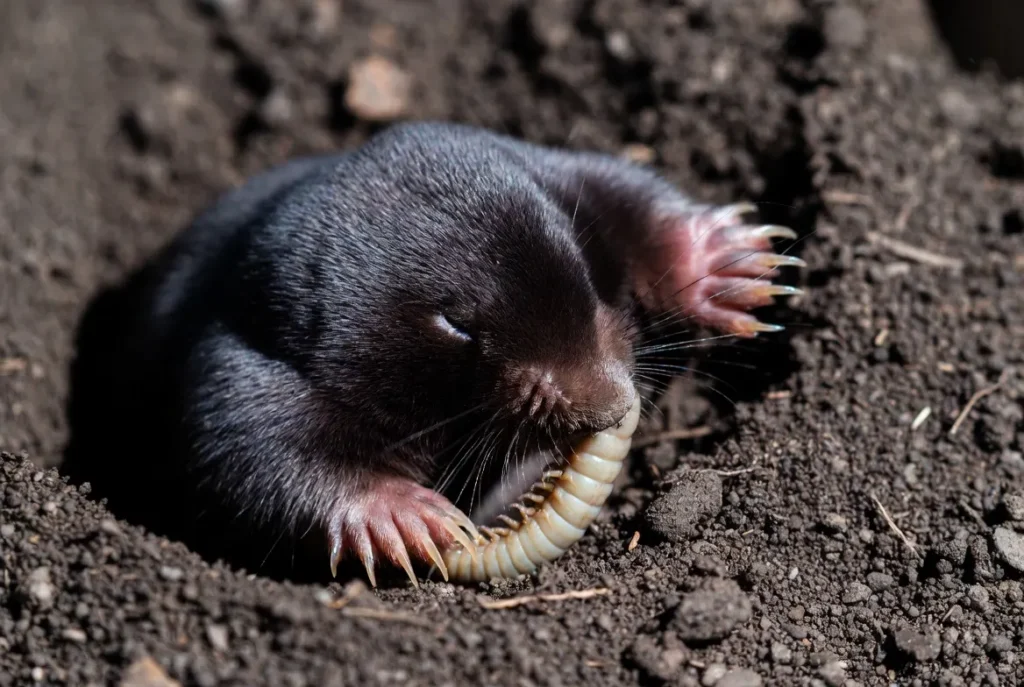
So, what do moles eat on a daily basis?
Moles feed on a variety of underground prey, including:
- Earthworms (their preferred and most abundant food source)
- Grubs and beetle larvae
- Ants and ant larvae
- Termites
- Centipedes
- Various soil insects and invertebrates
- Occasionally tiny amounts of seeds or plant material
Earthworms are so important in a mole’s diet that many moles create specialized “worm traps” in their tunnels. When a worm falls into one of these feeding tunnels, the mole instantly detects the vibration, rushes toward it, and grabs it with its extremely sensitive snout.
Because of their high metabolic rate, a single mole may consume 70–100% of its body weight in food every day. That means they must hunt constantly, making it clear why their tunnel networks are so extensive and why their lifestyle revolves around the availability of underground prey.
This highly specialized diet is also a major reason why keeping a mole as a pet is not realistic. A mole pet would require nonstop access to fresh earthworms, grubs, and insects, something nearly impossible to provide in a home environment. This strict feeding requirement makes moles extremely poor candidates for captivity, and they often become weak or stressed if they don’t receive their natural diet.
How Moles Hunt for Their Food
Although they’re nearly blind, moles have:
- Hyper-sensitive noses
- Incredible hearing
- Vibrational detection abilities
They use these senses to locate prey beneath the soil. They dig complex tunnel systems that act like traps, allowing insects and worms to fall right into their path.

Are Moles Dangerous?
When people learn about what moles eat and how strong their digging abilities are, they often wonder whether moles pose any threat. In reality, moles are not aggressive toward humans and prefer to avoid contact altogether. They spend almost their entire lives underground and rarely come to the surface unless they are injured, confused, or forced out of their tunnels.
Even if someone is considering a mole as a pet, it’s important to understand that moles are shy, solitary animals that do not seek human interaction. They instinctively retreat from people and will only defend themselves if they feel cornered.
Indirect Risks Linked to Moles
Although they aren’t physically dangerous, moles can cause certain indirect problems:
- Parasites: Wild moles often carry fleas, mites, or ticks. This is another reason why a mole pet is unsafe—they can introduce parasites into your home.
- Biting when handled: Like any wild mammal, a mole may bite if picked up, frightened, or restrained. Their bite isn’t powerful, but it can still be unpleasant.
- Property damage: Their tunneling can disrupt lawns, gardens, roots, and small crops. While this isn’t a danger to humans, it can be a nuisance for homeowners.
So, are moles dangerous to humans?
No. In terms of physical risk, moles are not a threat. They don’t attack, they don’t chase, and they don’t intentionally interact with people. The only real issues come from parasites or accidental bites—problems that disappear entirely if the mole is simply left undisturbed in its natural environment.
This is one more reason why keeping a mole as a pet is strongly discouraged. Their wild behaviors, stress in captivity, and potential parasites make them unsuitable for home life.
Can Moles Be Kept as Pets?
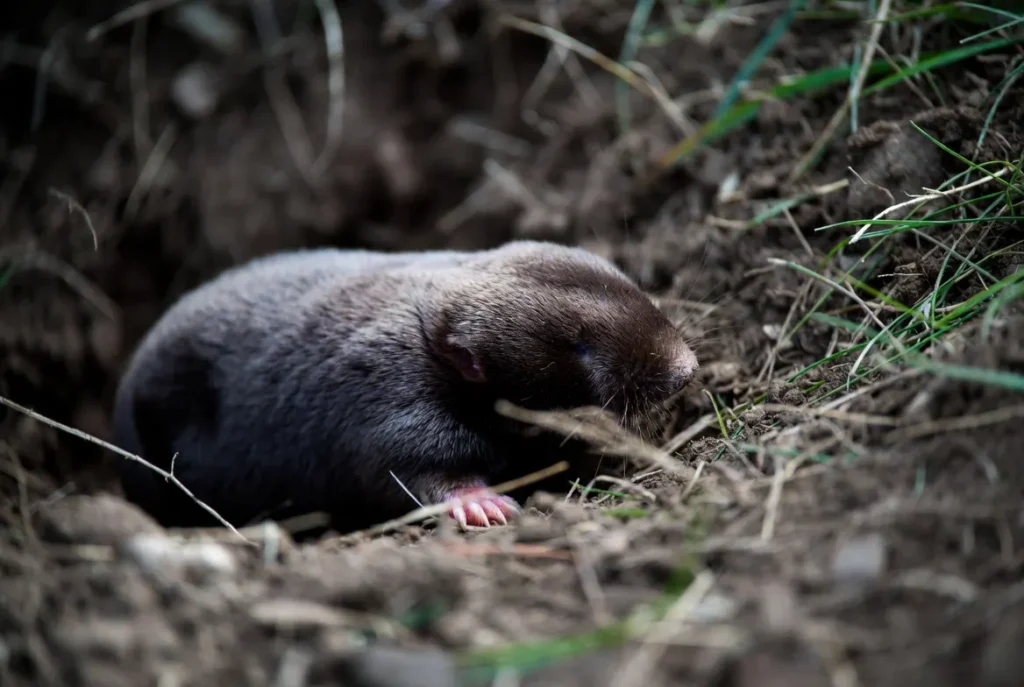
Many people who find moles fascinating or want to learn more about what moles eat end up wondering whether a mole as a pet is possible. The short answer is simple: No, moles should not be kept as pets. Moles are wild, highly specialized animals that rely on very specific environmental and dietary conditions to survive.
Trying to keep a mole pet almost always results in stress, health problems, or early death, even when good intentions are involved. Here’s why moles do extremely poorly in captivity:
- They Have an Extremely Specialized Diet
Moles require a steady supply of fresh earthworms, grubs, insects, and soil invertebrates, the same foods found in the wild when discussing what moles eat. They burn enormous amounts of energy digging tunnels, so they need a continuous, high-protein food source throughout the day.
For a pet owner, maintaining this diet would be nearly impossible without an insect farm. Without proper nutrition, a captive mole quickly becomes weak or sick.
- They Experience Severe Stress in Captivity
Moles are adapted to live in complete darkness beneath the soil. Removing them from this environment exposes them to:
- Light
- Noise
- Open spaces
- Human handling
All of these cause extreme stress. Moles panic easily, become disoriented, and often refuse to eat when kept above ground. This stress alone is enough to make a mole pet unsafe and inhumane.
- They Need Deep, Loose Soil for Digging
A mole’s entire life revolves around digging. Their tunnel networks can stretch for hundreds of meters, and they use them for hunting, nesting, and protection.
No cage or terrarium can replicate this underground world. Without enough space to dig naturally, captive moles develop physical injuries, behavioral problems, or tunnel obsessively until they exhaust themselves.
- Legal and Ethical Concerns
In many countries and regions, keeping a wild mole as a pet is illegal due to wildlife protection laws. Even in places where it isn’t explicitly banned, it is strongly discouraged because domestic settings simply cannot meet a mole’s physical and psychological needs.
Even Wildlife Rehabilitators Avoid Long-Term Care
Professionals who work with wild animals seldom keep moles for more than a short healing period. Once stable, moles are released back into the wild immediately because they do not adapt to domestic life and suffer greatly in captivity.
Why do Moles Dig Tunnels?
To understand why moles spend nearly their entire lives digging tunnels, you must first understand what moles eat and how they survive underground. Moles don’t dig for fun—tunneling is their way of hunting, building shelter, and protecting themselves. Their entire lifestyle revolves around these underground pathways, which is one of the biggest reasons a mole as a pet cannot adapt to home environments.
- Tunnels Help Them Find Food
The main reason moles dig is to search for prey. Since what moles eat includes earthworms, insects, grubs, and soil invertebrates, they create long feeding tunnels to increase their chances of finding food.
As insects and worms fall into these tunnels, the mole senses the movement immediately and rushes to catch them. Without tunnels, a mole simply wouldn’t be able to access enough food to survive.
- Tunnels Provide Protection From Predators
Living underground keeps moles hidden from foxes, birds of prey, snakes, and domestic animals. Their complex tunnel systems act as an escape network, allowing them to vanish instantly if threatened.
This need for safety is another reason why a mole pet would experience extreme stress in captivity—they feel secure only when surrounded by deep, loose soil.
- Tunnels Are Their Homes
Moles build deeper tunnels for nesting, resting, and raising young. These tunnels stay stable, humid, and temperature-controlled, creating the perfect living environment.
Above ground, a mole would feel exposed and vulnerable, which makes keeping a mole as a pet unrealistic and harmful.
- Tunnels Keep the Soil Aerated
While not the mole’s intention, their digging naturally loosens and aerates the soil. This process helps water movement, root growth, and healthy soil conditions. Homeowners may see mounds as a nuisance, but they are a sign of an active, functioning underground ecosystem.
- Digging Is Instinctive and Essential for Survival
Moles are born with the instinct to dig, just like birds are born knowing how to build nests. Their strong forelimbs, adapted skeletons, and sensitive snouts are all designed for tunneling.
Changing this behavior isn’t possible, which is another reason a mole pet cannot adapt to domestic life. Tunneling isn’t optional for them, it’s their entire survival strategy.
When Are Moles Most Active?
Moles have a very unusual schedule compared to most animals. Because they live underground and rely heavily on what moles eat, their activity patterns revolve around feeding cycles rather than day and night. Unlike pets or typical wildlife, they don’t follow a strict diurnal or nocturnal rhythm, which is another reason a mole as a pet cannot adjust to household routines.
- Moles Are Active in Short Cycles, Day and Night
Instead of sleeping once, moles operate in 4-hour activity cycles. A typical pattern looks like this:
- 4 hours digging, hunting, and eating
- 4 hours resting or sleeping
This rhythm repeats constantly, meaning moles are active every day, at all hours, depending on their needs.
Because they burn so much energy searching for what moles eat, they must wake up frequently to replenish calories.
- Early Morning and Late Afternoon Are Peak Times
While moles are technically active 24/7, they often dig the most:
- Just before sunrise
- Late afternoon to early evening
During these periods, soil moisture increases and earthworms move closer to the surface, making hunting easier.
- Weather Influences Their Activity
Moles adjust their patterns based on environmental conditions:
- After rain: Extremely active because worms rise to the surface
- Hot, dry weather: Moles move deeper underground where soil is moist
- Winter: Activity slows slightly but does NOT stop—they continue tunneling
Their constant movement and adaptation to soil conditions make them excellent underground hunters, but terrible candidates for captivity. A mole pet simply cannot recreate these natural cycles indoors.
- Seasonal Patterns
- Spring and early summer: Peak activity due to breeding and abundant food
- Fall: Increased digging to prepare deeper winter tunnels
- Winter: Reduced surface activity but steady underground movement
These natural cycles are instinctive and cannot be altered or suppressed.

Where Do Moles Live and Hunt?
Moles prefer:
- Moist, soft soil
- Gardens
- Forest floors
- Farmlands
- Areas with rich worm populations
Their tunnel systems can stretch for hundreds of meters, which is another reason captivity does not work for them—they simply need too much space.
Do Moles Eat Plants or Roots?
One of the biggest myths about these animals is that they destroy gardens because they eat plants. In reality, understanding what do moles eat clears up this misconception immediately. Moles are strict insectivores, and they do not eat plant roots, vegetables, fruits, seeds, or flowers.
Their diet revolves entirely around earthworms, grubs, beetle larvae, and soil invertebrates, which is why trying to keep a mole as a pet or feeding a mole pet at home is nearly impossible—humans cannot easily recreate their natural, insect-based diet.
So Why Do Plants Get Damaged?
If plants in a yard or garden are suffering, the cause is almost never the mole itself. The damage usually comes from:
- Voles and other rodents using abandoned mole tunnels to eat plant roots
- Tunnels drying out the soil, causing roots to lose moisture
- Soil disturbance from digging activities that disrupts root structure
The mole’s role in this is indirect. They dig tunnels while searching for what moles eat, but they do not feed on the plants growing above.
What Moles Actually Eat (And Why It Matters)
To repeat clearly: what do moles eat? Only insects, earthworms, and soil invertebrates.
This strict insect-based diet is one reason a mole as a pet cannot thrive. A typical household cannot provide hundreds of fresh worms and grubs every single day. Without that constant supply, a mole pet would quickly become malnourished.
Moles’ Role in the Ecosystem
Even though many homeowners think of moles as pests, these animals provide several important ecological benefits. When moles dig for food underground—following their natural instinct based on what moles eat—they unintentionally improve soil quality.
Here’s how moles help the environment:
- They aerate the soil, allowing more oxygen to reach plant roots
- They control insect populations, reducing harmful pests naturally
- They improve soil structure, making it looser and healthier
- Their tunnels allow water to penetrate deeper, promoting stronger root systems
Ironically, by doing what nature designed them to do—digging for what do moles eat—they help lawns and gardens more than they harm them.
This natural behavior is another reason why keeping a mole as a pet is not appropriate. Removing them from the ground deprives them of their ecological role and causes extreme stress.

Should You Feed Wild Moles?
No, wild moles should never be fed, even if you’re curious about what do moles eat or tempted to offer insects.
Feeding wild moles can:
- Create dependency
- Disrupt their natural hunting instincts
- Attract predators to the area
- Interfere with their underground ecosystem
Just like making a mole pet is harmful, feeding wild moles also causes more problems than benefits. Moles are healthiest when allowed to hunt insects and earthworms naturally, exactly as nature intended.
Conclusion
Moles are fascinating, highly specialized creatures whose entire lives revolve around the underground world. Understanding what do moles eat, mainly earthworms, insects, and soil invertebrates—helps explain nearly all their behaviors, from tunneling to their irregular sleep cycles. Although their digging may accidentally disturb gardens, moles do not eat plants or roots and actually contribute positively to the ecosystem by aerating soil and controlling insect populations.