
Can Mice Chew Through Concrete? No, mice cannot chew through solid, cured concrete or cement. We should treat concrete walls and cement boards as effective barriers, while paying attention to smaller weaknesses around them. With common-sense prevention (good sealing, clean environment) our homes are safe from these tiny gnawers. After all, as the pros say, cement and concrete provide a strong barrier against rodents – and that’s something we can all appreciate.
Why Mice Chew through Concrete?
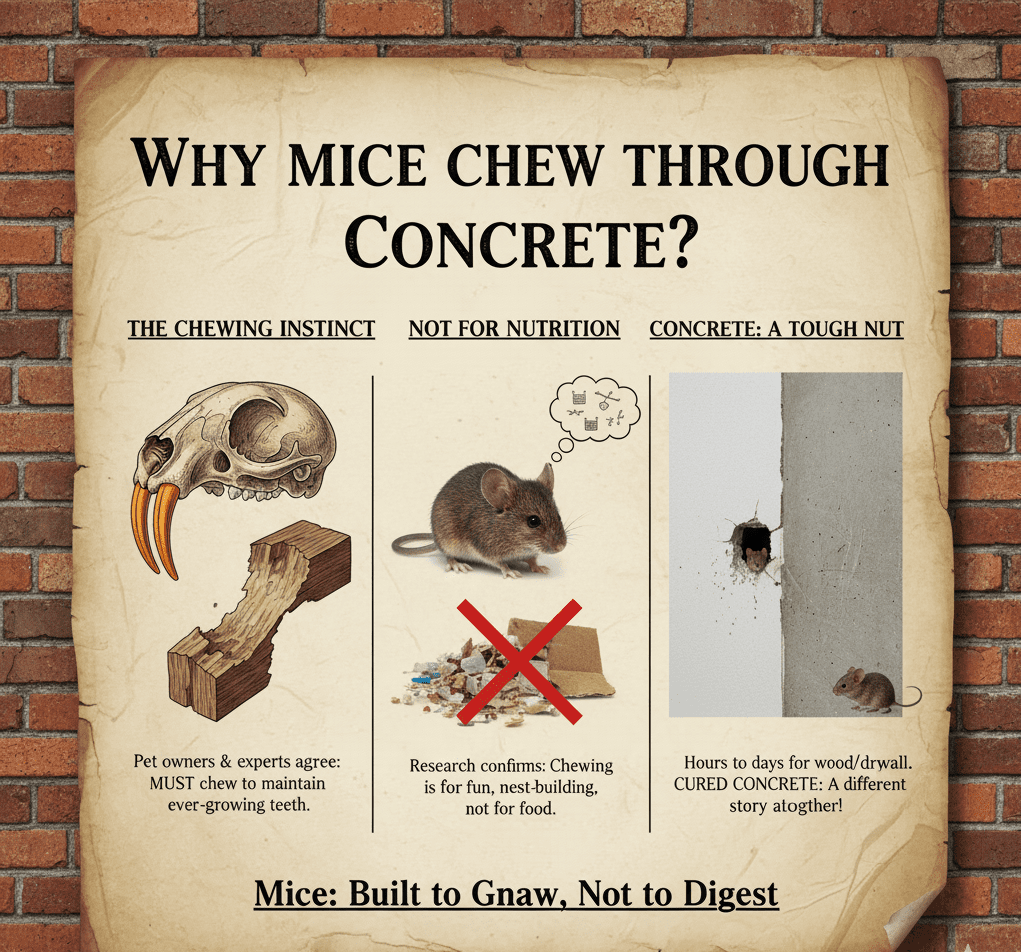
As pet owners and animal experts, we know that mice are natural chewers. Their front incisors never stop growing, so they chew constantly to keep their teeth in check. This isn’t because they have a taste for concrete, but because they instinctively gnaw on things like wood, plastic, and drywall. In fact, our research confirms
that mice will chew just for fun or when building nests, not to eat the material for nutrition.
They Mice don’t eat concrete in the digestive sense – they might just chew or scratch it. For example, one rodent-control manual points out that mice can chew through thin wood or drywall in hours to days, but a cured concrete wall is another story altogether
Concrete vs. Cement: What Are We Talking About?
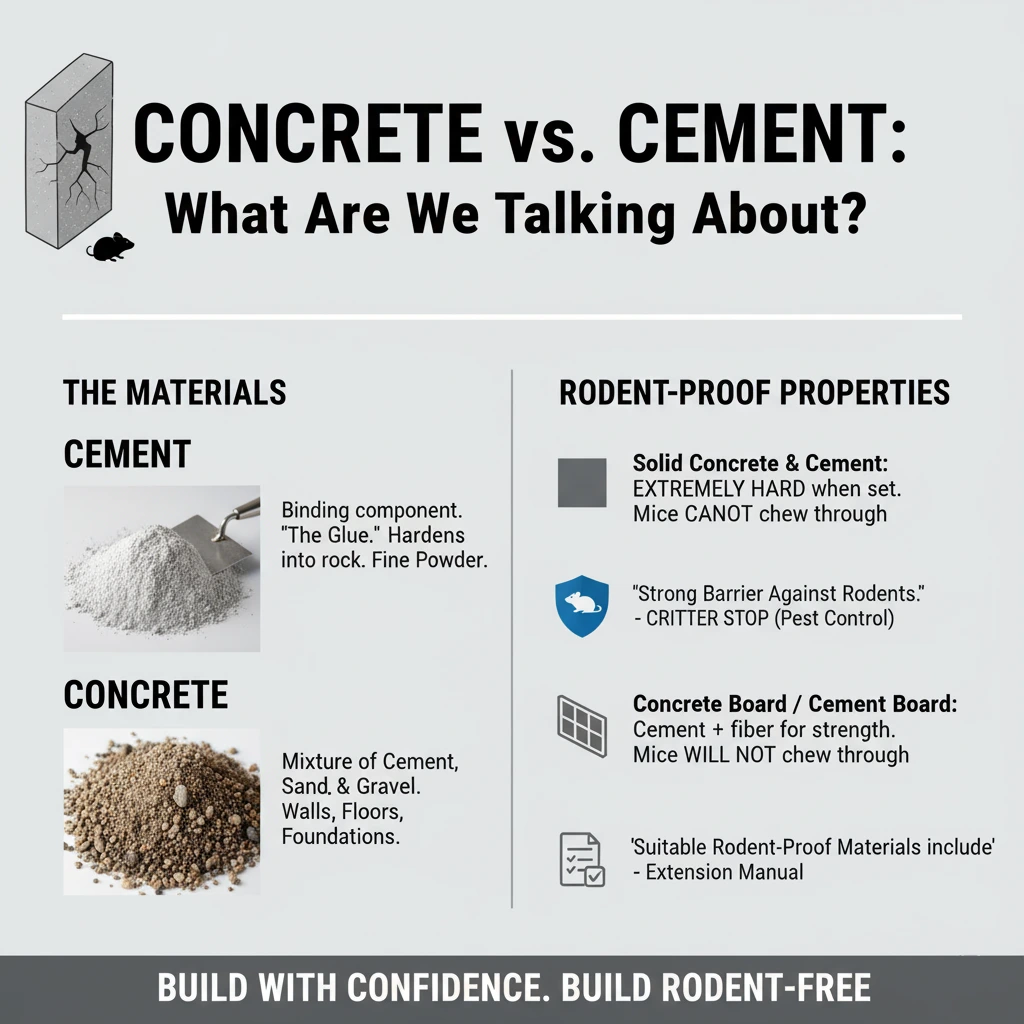
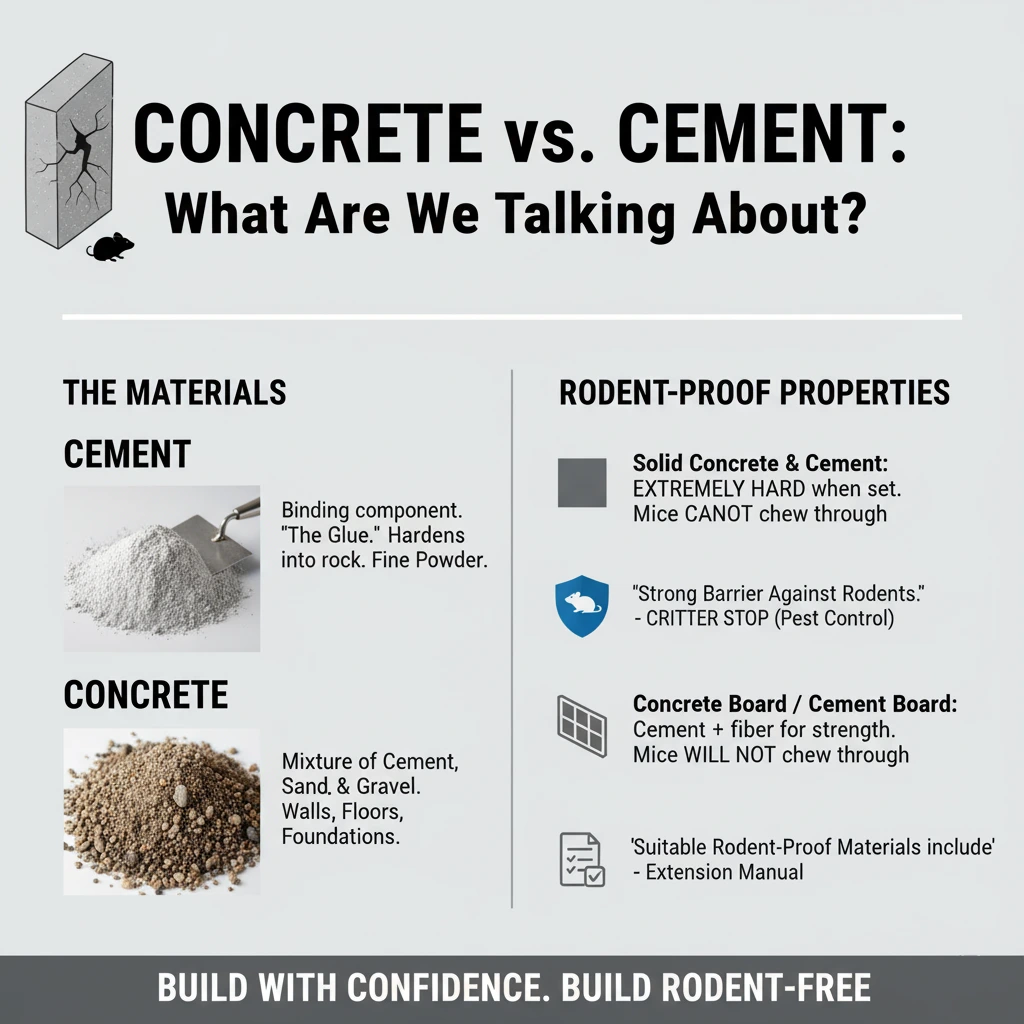
People often use concrete and cement interchangeably. Technically, cement is the binding component (like the glue in concrete), whereas concrete is the mixture of cement, sand, and gravel. In home construction, concrete (walls, floors) and cement (like patches or cement block) are both extremely hard when set. Fortunately, experts agree that mice cannot chew through solid concrete or cement. For example, Critter Stop – a pest control company – notes that cement provides a “strong barrier against rodents”
. In other words, saying mice can’t chew cement is the same as saying they can’t chew concrete.
We should also mention concrete board or cement board, which are materials used as siding or tile backing. These boards are essentially cement mixed with fiber for strength. Rodent-proof building guidelines even recommend using cement board as a protective covering outdoors. In practice, mice cannot chew through cement board. As one extension manual explains, suitable rodent-proof materials include “cement board” and fiberglass-reinforced panels
. In short, if a structure is built with real cement board or fiber-cement panels, mice will not chew them into pieces.
Solid Concrete Walls and Foundations vs Mice
So, what about poured concrete walls or foundations can mice chew through? Our interviews with pest management pros reveal that fully cured concrete is virtually impervious to mice. A Wildlife Troopers article notes that “even the strongest and most determined mouse will never manage to chew a hole in… cured concrete”. This matches other expert advice: a mouse’s tiny teeth simply aren’t strong enough to bite through solid concrete. Even large rats struggle to chew thick concrete. For real protection, builders follow guidelines like making exterior walls at least 2–3¾ inches thick so rodents can’t penetrate them.
For example, Nebraska’s rodent-proof construction handbook recommends at least 2 inches of reinforced concrete (and 3¾ inches if unreinforced) to keep mice out. That’s more than enough thickness to stop a mouse.
However, there’s an important caveat. If concrete is new or improperly cured (too much water in the mix), it can be surprisingly weak. Wildlife experts explain that a mouse can chew through damp or uncured concrete. A fresh slab (with high water content) might be soft enough to gnaw a little. Once fully set, though, concrete gains strength quickly – a properly cured wall becomes nearly impossible for a mouse to penetrate. In the real world, if you ever see mouse damage near concrete, it’s usually because they found a crack or a gap first. Even cured concrete can have tiny gaps or joints. And mice can squeeze through very small openings – as little as a ¼-inch hole. So mice won’t chew a new hole in a perfect concrete wall, but they will exploit any existing weak point or gap.
Can mice chew or eat through Concrete Blocks and Mortar Joints?
What about concrete blocks, cinder blocks, or brick walls? can mice chew through or eat it? These can be trickier. A pest-control guide points out that rodents can gnaw on concrete blocks and mortar. This is partly because many blocks are hollow and have softer mortar between them. A persistent mouse (or rat) may chew on the mortar or grout to enlarge a hole. For instance, a Nebraska Extension guide warns that rats and mice can “gnaw through a wide variety of materials, including… concrete block”. In practice, a wood rat or house mouse could nibble on crumbly mortar or rough edges of block walls.
Still, it’s not easy. Mice are small, and concrete blocks are heavy and mostly hollow. They won’t chew a brand-new block into pieces. Instead, they’ll look for old mortar cracks or gaps in the foundation. Remember: mice can fit through a quarter-inch gap, so even a slight crack between blocks can let them slip in. The key is that the seams between blocks, or deterioration in older concrete, is where mice get through. They usually won’t chew a big hole in solid concrete blocks the way they would chew plasterboard or wood.
Can Mice eat through Cement Board and Fiber-Cement Siding
We mentioned cement board as a recommended rodent-proof material
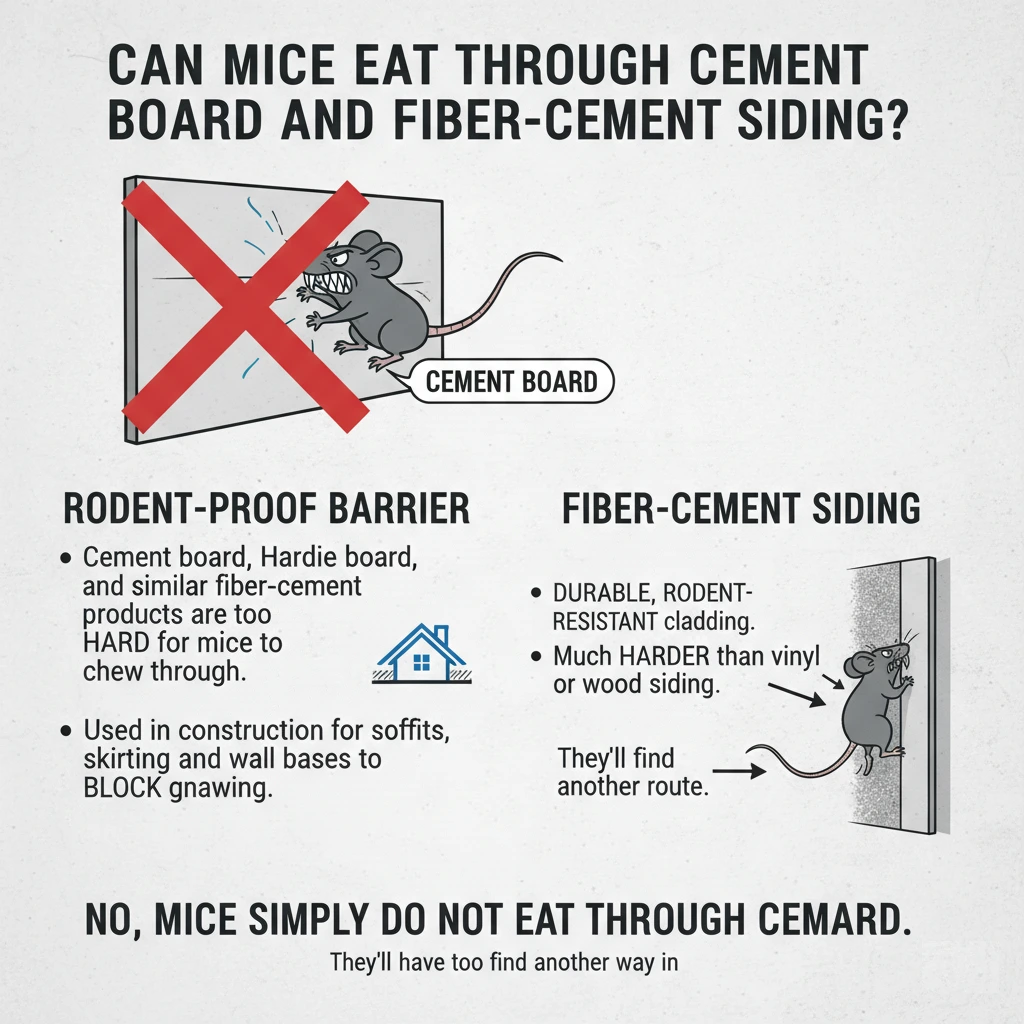
. This holds true: cement board, Hardie board, and similar fiber-cement products are so hard that mice cannot chew through them. Home construction guides often use cement-board soffits or skirting to keep rodents out of crawlspaces, for example. One construction handbook explicitly lists cement board among materials “suitable” for protecting insulation – implying mice can’t chew it . In my experience, when remodeling a home, professionals will install metal flashing and cement board around the base of walls to block any gnawing. In short, if you are asking “can mice chew through cement board?” – the answer is practically no. They’ll have to find another route.
Similarly, fiber-cement siding (made of cement, sand, cellulose fiber) is used as a durable, rodent-resistant cladding on many houses. It’s much harder than vinyl or wood siding. Mice might climb on it, but they won’t bore holes through it. Instead, they might climb underneath it or find gaps around it. As one homeowner forum user put it, “doing the ceiling in cement board will keep them out” – meaning cement board is an effective barrier. (This user was referring to a ceiling, but it holds for walls too.) Therefore, cement board or fiber cement simply does not get eaten by mice.
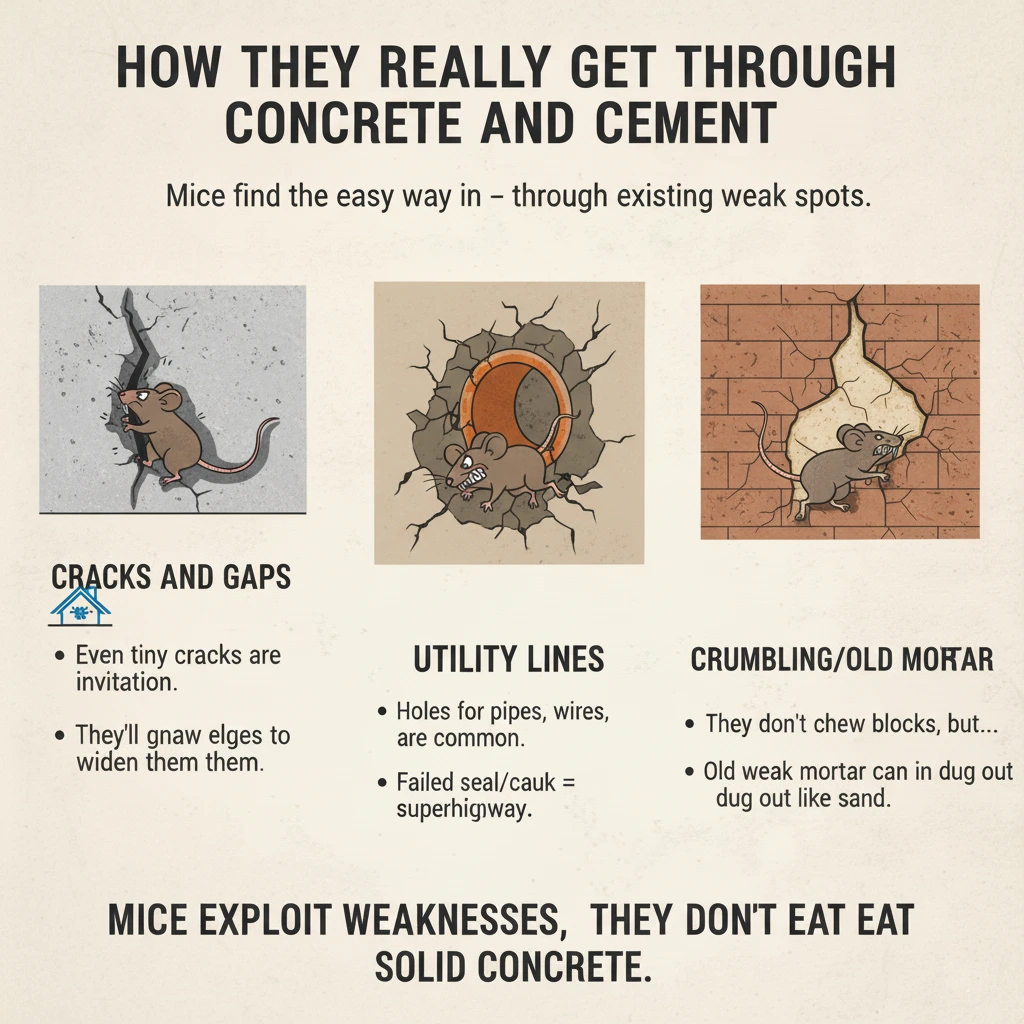
How They Really Get Through Concrete and Cement
Mice are masters of finding the easy way. They don’t want to chew through a wall; they want to find a hole that’s already there. When we see mice getting through a concrete foundation, it’s almost never because can mice eat through concrete walls. It’s because they found a weak spot.
Here’s what they look for:
- Cracks and Gaps: Even a tiny crack in a foundation is an invitation. They can squeeze through holes you wouldn’t believe, and if a crack is just a little too small, they will gnaw at the edges to widen it.
- Utility Lines: The holes drilled for pipes, electrical wires, or plumbing are the most common entry points we find. The seal or caulk around the pipe might fail, and boom—they’ve got a superhighway right into your home.
- Crumbling or Old Materials: This is where we get to “can mice chew through cement?” or “can mice chew through concrete blocks?” A mouse isn’t going to chew through the block itself. But the mortar—the cement—holding the blocks together? If that mortar is old, poorly mixed, or already crumbling, they absolutely do mice chew through cement. They can dig it out like hard-packed sand.
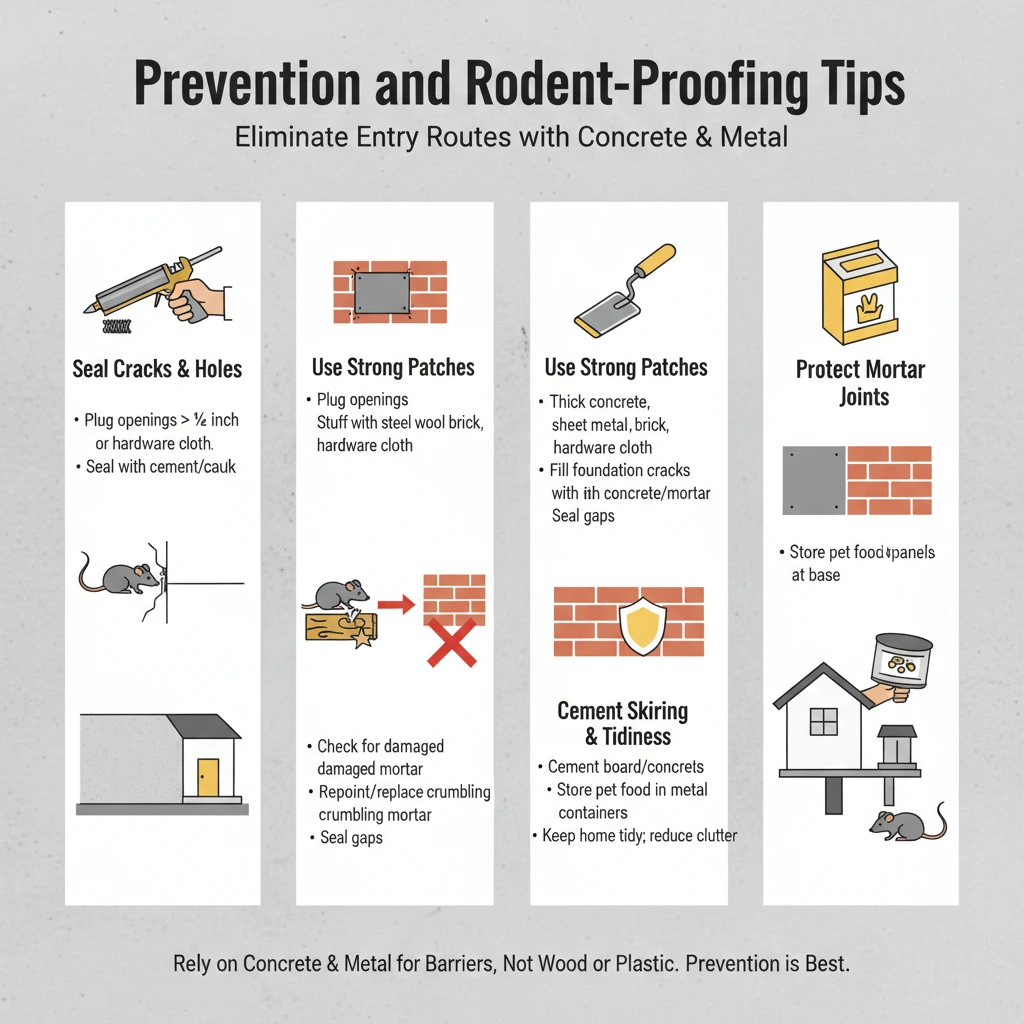
Prevention and Rodent-Proofing Tips
Even though mice generally can’t chew through solid concrete or cement board, no structure is 100% rodent-proof if there are cracks or gaps. Based on expert advice, here are some practical steps we recommend to keep mice out:
Seal Cracks and Holes:
Plug any openings larger than about ¼ inch. Use steel wool (which mice dislike) or hardware cloth (fine wire mesh) stuffed into cracks, then seal over with cement or caulk. Pest-control professionals emphasize sealing all entry points with durable materials like metal or steel wool so mice can’t gnaw through.
Use Strong Patches:
When patching holes or gaps, use materials rodents cannot chew. Experts advise using thick concrete, sheet metal, brick, or hardware cloth to cover larger holes. For example, if a foundation crack appears, filling it with concrete or mortar (rather than wood or foam) prevents mice from enlarging it.
Protect Mortar Joints:
Check mortar between blocks or bricks for damage. Repoint or replace crumbling mortar and seal gaps. A well-maintained mortar joint is as difficult for mice to breach as solid concrete.
Consider Cement Skirting:
At the base of exterior walls, using cement board or concrete panels as a skirt creates a tough barrier. Since cement board is considered a suitable material for rodent protection, wrapping the foundation with it can help keep mice out.
Keep Food and Shelter Away:
We also remind pet owners and homeowners that food or clutter attracts mice. Store pet food in metal containers and keep the home tidy. Even the sturdiest concrete wall won’t help if mice find an unsealed hole. Once inside, they can chew on softer materials like drywall, wiring, or wood to navigate. Prevention is best.
By following these steps, you essentially eliminate any route for mice to chew or squeeze through. Pest-control professionals often say that making your home “rodent-proof” is about exclusion—using materials and techniques that mice simply cannot gnaw through or bypass. In other words, rely on concrete and metal for barriers, not wood or plastic.
Final Thoughts
In my experience studying pets and pests, the myth that “mice will chew through concrete” is just that – a myth. The facts are clear: a healthy, adult mouse has neither the jaw strength nor the need to bite through solid concrete or cement. All the evidence from wildlife guides and pest control experts confirms this. Only damaged or uncured concrete could be vulnerable, and even then it’s usually existing cracks that give rodents an entry point, not brand-new holes chewed by their teeth.
Of course, we humans have to stay vigilant. If a mouse does get inside, it’s almost always because it found a tiny gap and squeezed through – not because it chewed a new hole in your foundation. That’s why we emphasize sealing up those gaps tightly. By keeping concrete well-maintained and using rodent-proof building materials like cement board, we can rest easy knowing that mice won’t “eat through” our walls.
In summary: No, mice cannot chew through solid, cured concrete or cement. We should treat concrete walls and cement boards as effective barriers, while paying attention to smaller weaknesses around them. With common-sense prevention (good sealing, a clean environment), our homes are safe from these tiny gnawers. After all, as the pros say, cement and concrete provide a strong barrier against rodents – and that’s something we can all appreciate.