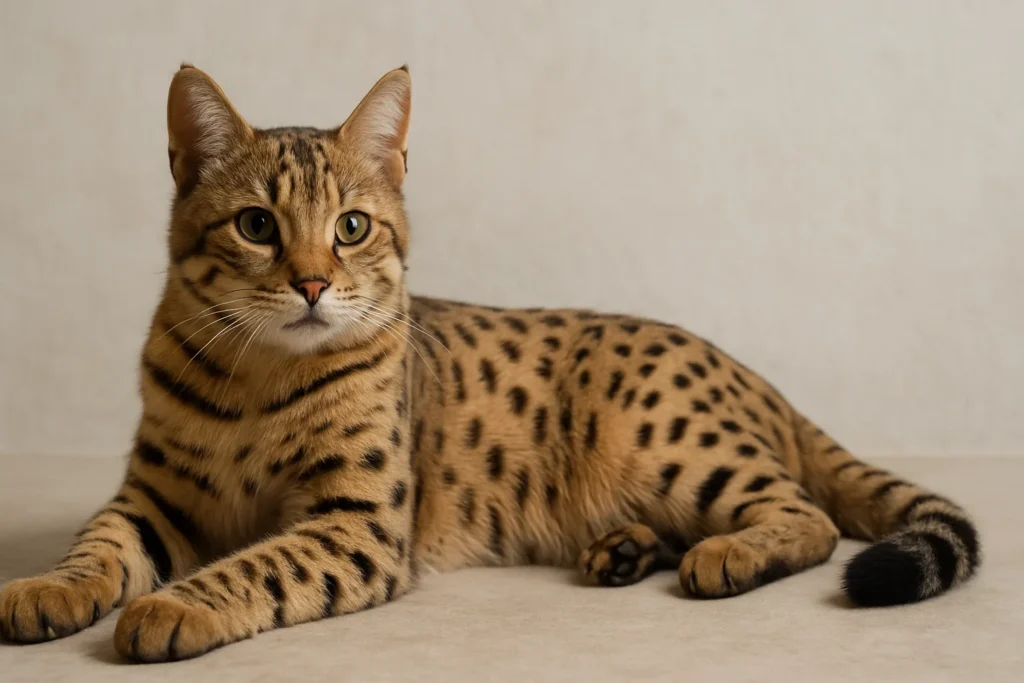
Many cat lovers dream of a pet with the striking appearance of a wild feline. Luckily, house cats that look like cheetahs do exist in the form of specially bred domestic breeds. These cats have golden or tawny coats with black spots or rosettes, giving them a mini-cheetah or wildcat look. In fact, the ancient Egyptian Mau is the only naturally spotted domestic cat breed. Other breeds achieve the look through careful breeding or hybridization.
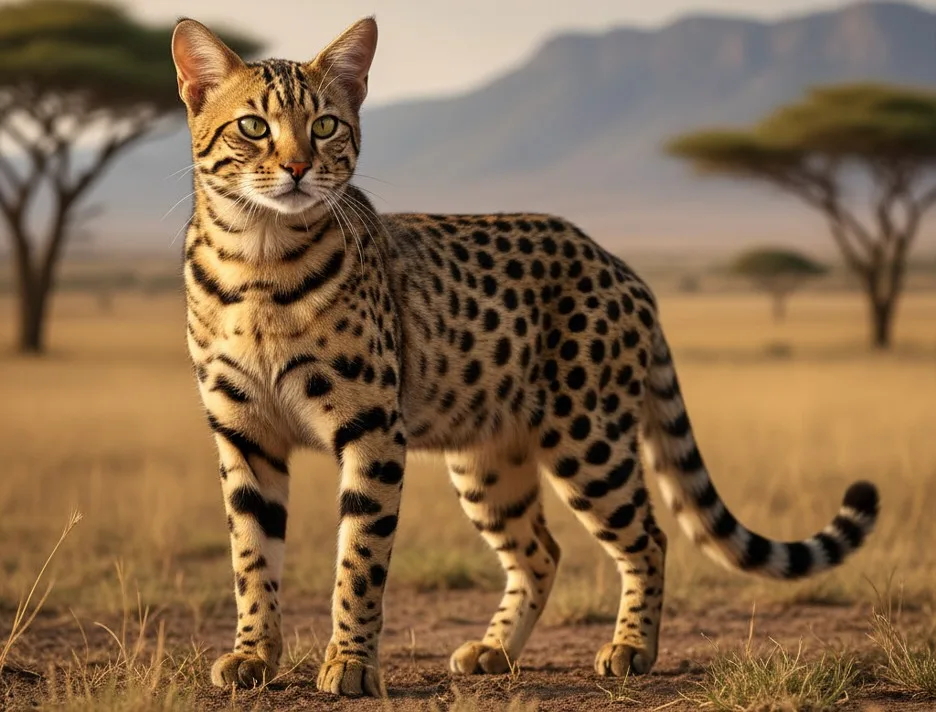
Below we explore every known domestic breed with cheetah-like coats, detailing their origins, appearance, personality, and pet suitability. (For context, there are also breeds like the Pixiebob that resemble bobcats, but true bobcat–domestic crosses are uncommon and often illegal.)
Note: Exotic wild animals such as an African Wild Dog as a pet are not suitable or legal, whereas these domestic breeds retain friendly house-cat temperaments
House Cats that Look like Cheetahs
The fascination with wild cats like the swift cheetah has inspired breeders to create domestic cats that capture that same exotic beauty while staying loving, safe companions. These stunning felines bring the “wild look” into everyday homes with their spotted coats and playful personalities. Below, we give you a list of House Cats That Look Like Cheetahs:
Cheetoh Cat
Among the House Cats That Look Like Cheetahs, the Cheetoh is a much rarer hybrid breed that explicitly references the cheetah in its name. Developed in the early 2000s, Cheetoh cats are a cross between the Bengal and the Ocicat.
Key points:
- Origin: Created in the United States in 2003 by crossing a Bengal with an Ocicat. It is a formal hybrid breed (several generations removed from wild ancestors).
- Coat: heavily spotted like a cheetah. Colors can be brown, cinnamon, silver, or snow (light-colored), all with bold, contrasty spots or marbling.
- Size: Very large – often 20+ lbs. They are among the largest domestic cat breeds.
- Personality: Cheetohs are described as “fun-loving, playful, and affectionate”. A Cats.com profile notes they are “large, exotic, and active,” craving family attention and getting along with other pets. They are still domestic in temperament: eager to cuddle on your lap as much as they love playtime.
- Pet Suitability: With their friendly, energetic nature, Cheetohs suit families who can give plenty of play and space. They need a safe indoor environment (they do well with leash walks or secure outdoor enclosures) due to their curiosity. As a new breed, they remain relatively rare. Prospective owners should seek reputable breeders or rescues.
In short, the Cheetoh lives up to its name – it really looks like a cheetah cub grown into a big cat, yet it purrs at night on your couch. Their uncommon spotted coats and muscular build give an exotic “jungle cat” aesthetic. Importantly, by the time Cheetohs reach homes, they have all the sweetness and loyalty of other affectionate breeds
Egyptian Mau
One of the most famous House Cats that Look like Cheetahs, the Egyptian Mau an ancient natural breed from Egypt and the only domestic cat with true wild-style spots. Its coat is silver, bronze, or smoke-colored with random black spots that resemble a cheetah’s pattern. An introduction might read:
- Origin: Ancient Egypt (namesake and original home).
- Coat: Short, silky fur in silver or bronze with irregular black spots.
- Size: Small to medium (about 6–14 lbs).
- Personality: Mau are highly social and affectionate with their families, though they may be shy around strangers.
- Pet Suitability: They are playful and loyal, enjoying interactive play. Their sensitive nature means they thrive in calm, loving homes.
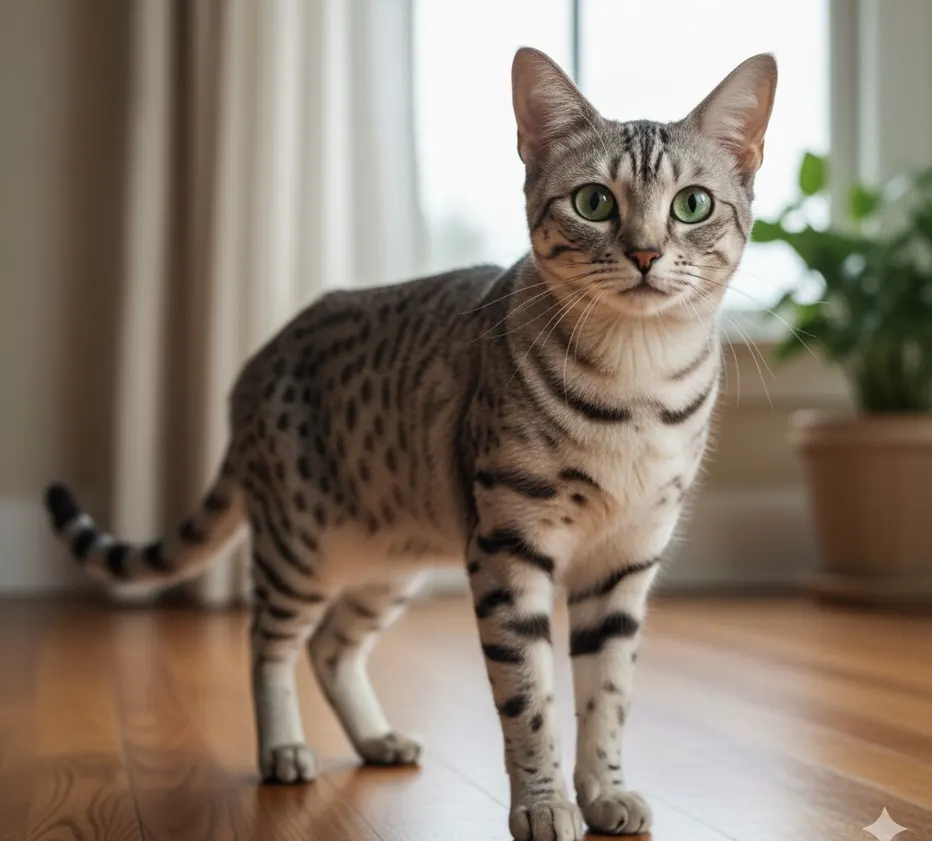
With its striking “leopard” spots and gentle disposition, the Egyptian Mau looks wild but is 100% domestic. Its history even shows cheetah-like cats in Egyptian art. As pets, Maus are energetic yet devoted: they love fetch games and puzzles, and form strong bonds with owners.
Ocicat
When you want a House Cats that Look like Cheetahs, you can see the Ocicat is the right one. It is a domestic breed (created in the USA in the 1960s) with a bold, spotted coat and a feel of wild elegance. Interestingly, it has no wild blood – breeders combined a Siamese with Abyssinian and American Shorthair stock until an accidentally ocelot-like spotted pattern appeared.
Key points:
- Origin: Developed in the United States by crossbreeding Siamese, Abyssinian, and American Shorthair cats. It’s a House Cats that Look like cheetah.
- Coat: Golden or tawny background with contrasting dark brown or black spots (resembling an ocelot).
- Size: Medium (about 9–11″ tall, 6–15 lbs).
- Personality: Despite its wild look, the Ocicat is affectionate and friendly. It loves attention and can even get along with strangers.
- Pet Suitability: Ocicats are active, playful cats. They enjoy toys, puzzles, and family activities. Their sociable nature makes them excellent indoor pets, though they require regular playtime to channel their energy.
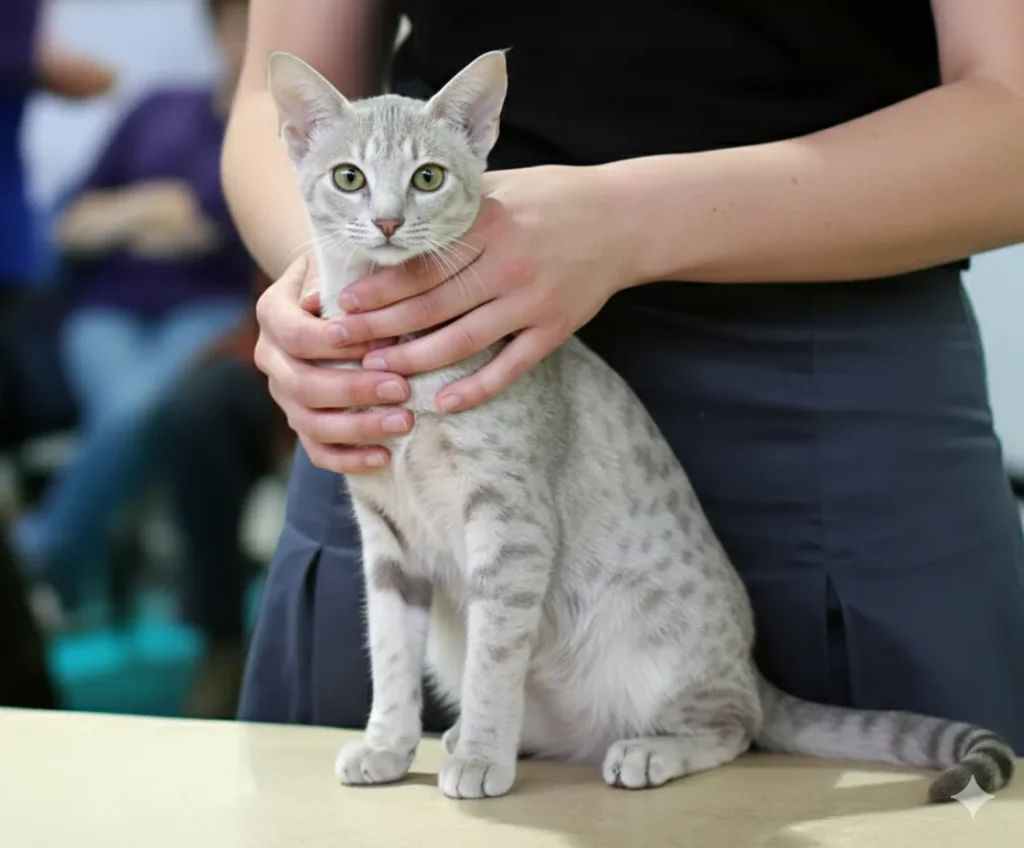
In short, the Ocicat looks as if it stepped out of the jungle, yet it is a domestic breed through and through. Owners praise its gentle, even “dog-like” personality – loyal and loving but never having the unpredictable behavior of a wild animal.
Bengal Cat
The Bengal is perhaps the most famous of the House Cats that Look like Cheetahs. First developed in the 1960s, this breed originated from crossing domestic cats with the Asian leopard cat, a small but striking wild feline native to Asia. The goal was to create a domestic cat with the exotic appearance of the wild but the temperament of a loving companion.
Bengals are known for their sleek, muscular bodies, large rosetted or spotted coats that closely resemble those of leopards and cheetahs, and their playful, high-energy personalities. They are extremely intelligent, enjoy interactive play, and often love water—an unusual trait for cats. Their confident, outgoing nature makes them one of the most sought-after breeds for families who admire wild beauty in a safe, domestic package.
Key traits:
- Origin: Hybrid breed from the United States (crossing domestic cats with the Asian leopard cat, Prionailurus bengalensis).
- Coat: Luxurious, short hair with large rosettes or arrowhead spots on a gold or brown background. Some are “snow” Bengals with lighter coats, but all retain distinct spots.
- Size: Large for a cat (averaging 8–15 lbs).
- Personality: Highly energetic, curious, and intelligent. Bengals love climbing and water, and stay very active throughout life. They are playful and form strong bonds but need stimulation.
- Pet Suitability: Bengals make affectionate and entertaining pets if their activity needs are met. They require a lot of play and climbing space. Because of their wild ancestry, some areas regulate ownership of first-generation Bengals, but later generations are fully domestic. Bengals are generally confident and can walk on a leash or do tricks with training.
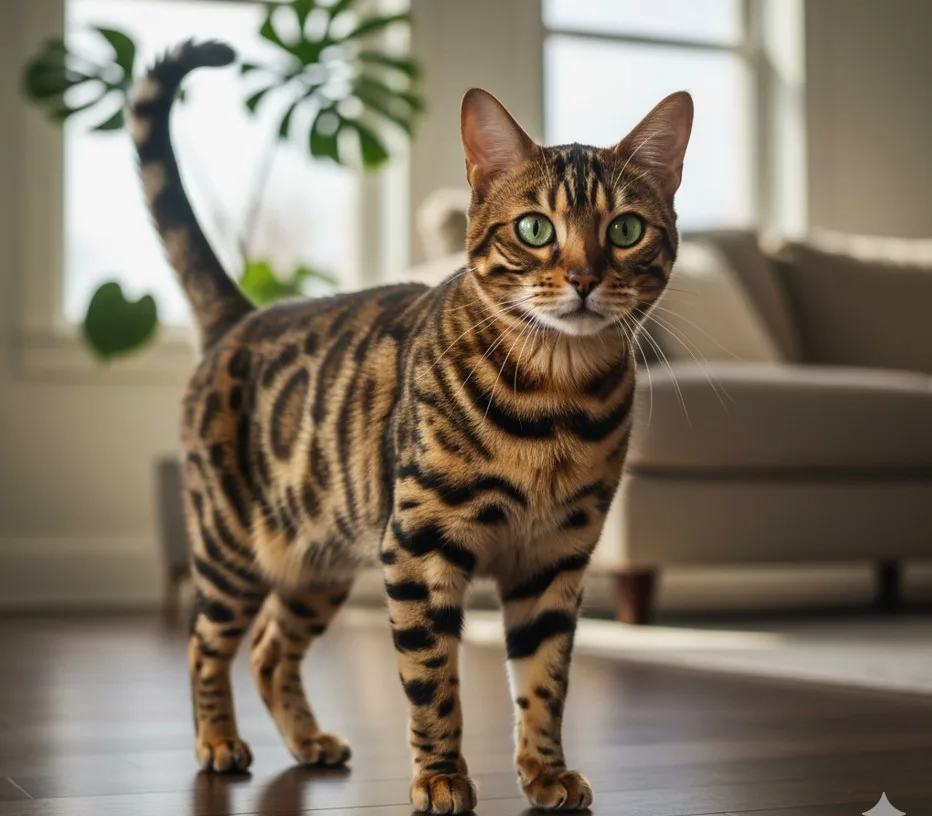
In sum, the Bengal is literally a “leopard cat” in domestic form. Its bold, leopard-like spots and muscular build give a cheetahish impression. Properly socialized Bengals are loyal and love their human companions, combining wild looks with a friendly house-cat temperament.
Savannah Cat
The Savannah cat is another hybrid designed to resemble a wild cat (specifically the African serval). While serval are long-legged, the Savannah is built slim and spotted, often compared to a small cheetah or ocelot in stance.
Important facts:
- Origin: Hybrid created in the 1980s in the USA by crossing domestic cats with the African serval. Early generations (F1–F2) contain more serval ancestry, while later generations (F3+) are more domestic.
- Coat: Short-haired with bold black spots on a golden-yellow or tan coat. The underbelly is lighter. Ears are large and often tipped black.
- Size: One of the largest domestic breeds: F1 females may reach 8–12 lbs, males even larger (F3+ are often around 9–15 lbs). They stand tall (10–13″ at shoulder).
- Personality: Extremely energetic, playful, and loyal. Savannahs are known for their agility (they can jump very high) and intelligence. Early-generation kittens may retain wild instincts, but by F3 most are very gentle. They form strong bonds with owners.
Pet Suitability: These house cats that look like cheetahs demand lots of attention and activity. They enjoy fetch, walking on a harness, and interactive play. A bored Savannah can become mischievous. They are sociable and often get along with dogs or other pets. (Legal status varies by region for the more “wild” generations.)
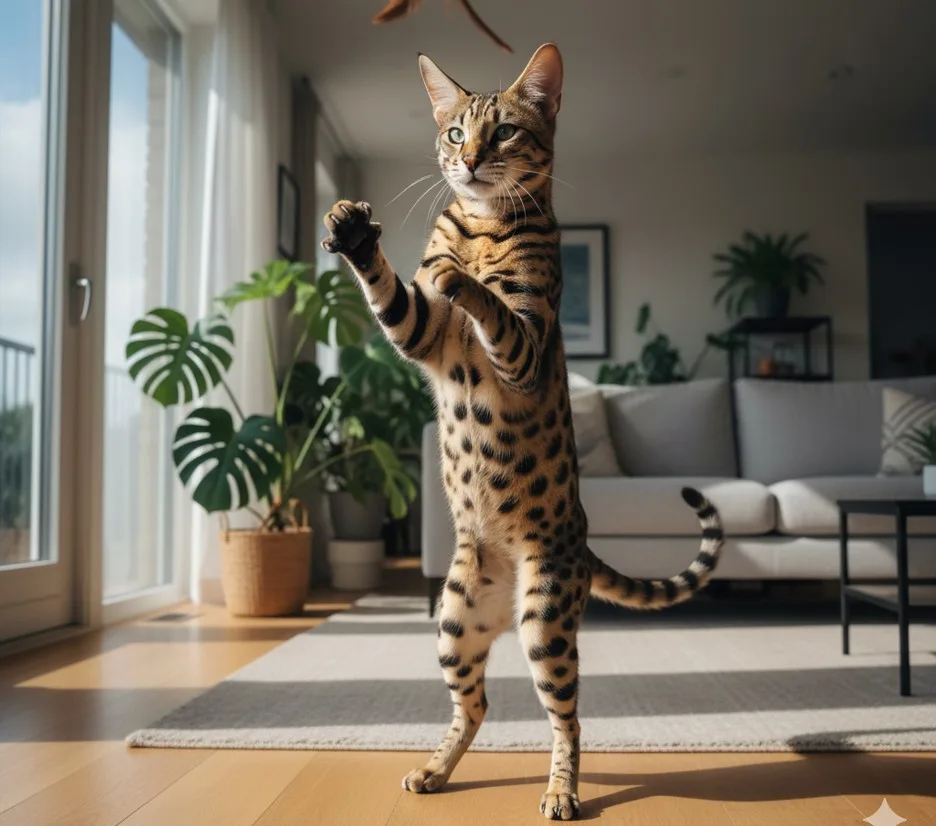
The Savannah cat’s lean, spotted body and bold face markings give it an unmistakable cheetah-like air. According to experts, later-generation Savannahs become very “domesticated” pets, though they always need an active home. In wild, servals are pack-independent; similarly, Savannahs enjoy family play but will keep their independence by exploring high perches and staying curious.
Serengeti Cat
The Serengeti is a newer breed that was specifically developed to look like a wild cat, inspired by the tall, elegant serval but without using any serval in its ancestry. Instead, breeders crossed Oriental Shorthairs with Bengals to create a domestic cat with a strikingly exotic appearance. As one of the House Cats that Look like Cheetahs, the Serengeti is admired for its long legs, large ears, and bold spotted coat that captures the essence of the wild.
Despite its fierce looks, the Serengeti has a friendly, playful, and highly active personality, thriving in homes where it can climb, leap, and explore. This breed is also very vocal and social, forming close bonds with its families while showing off the grace of a miniature wildcat.
Highlights:
- Origin: Created in California in the 1990s to mimic a wild serval-like look. No wildcat was used; it’s 100% domestic genetics (Oriental Shorthair + Bengal).
- Coat: Creamy or golden background with distinct dark brown spots and bars, long legs, and large cupped ears – overall giving a “mini serval” or cheetah vibe.
- Size: Medium (around 8–15 lbs). Taller than it is bulky, with a long neck and legs.
- Personality: Very energetic and agile. Serengetis are affectionate and form strong attachments to their families. They love climbing and interactive play.
- Pet Suitability: These house cats that look like cheetahs thrive in active homes. They’re intelligent and may learn tricks. Because they have no actual wild genes, Serengetis generally behave like affectionate domestic cats – albeit very active and curious.
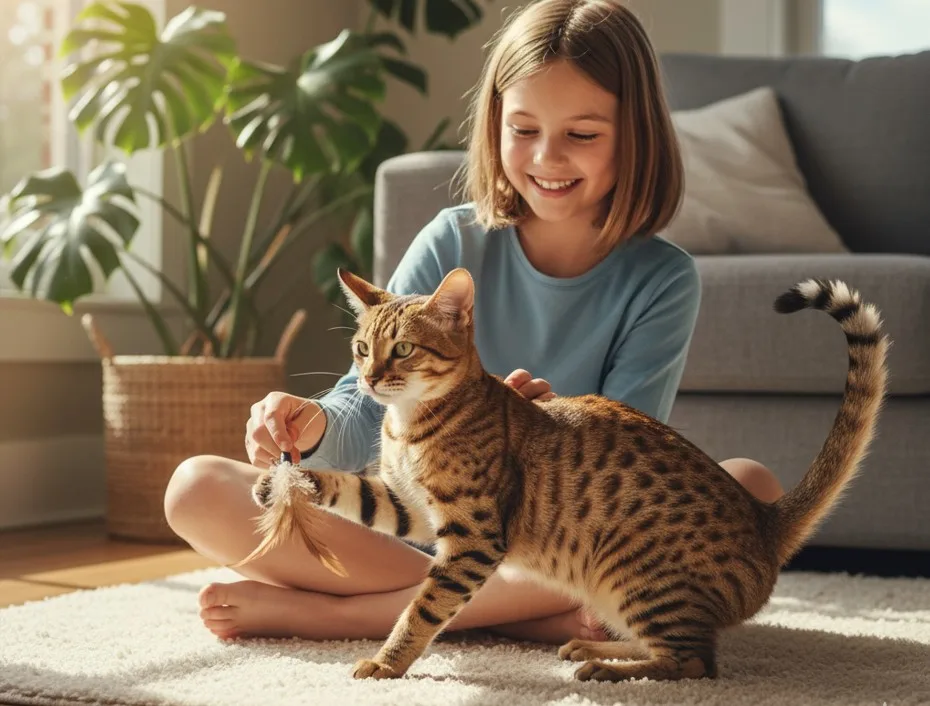
The Serengeti’s wild beauty is purely aesthetic. According to breed sources, they are as domestic as any housecat, behaving like a loyal, playful companion. For families, Serengetis offer the exotic look of a spotted wildcat without the unpredictability.
Beyond Cheetahs: Domestic Cats That Look Like Bobcats
The world of wild-looking felines doesn’t stop at cheetah-like spots—some domestic breeds have been carefully developed to resemble the rugged North American bobcat. These Cats That Look Like Bobcats often share signature traits such as muscular builds, tufted ears, and, most notably, short bobbed tails that give them their wild allure.
The Pixie-bob is the best-known breed in this category. Early legends claimed it originated from a Bobcat crossed with Domestic Cat, but genetic studies have since confirmed that Pixie-bobs are fully domestic. Through selective breeding, fanciers were able to replicate the bobcat’s physical traits without introducing wild genes. With their pear-shaped heads, heavy brows, and even polydactyl (extra-toed) paws, Pixie-bobs look strikingly wild while remaining loyal and loving companions. They also have a unique way of communicating—often chirping or chattering instead of meowing—and many enjoy interactive play and even leash training.
Other breeds, such as the American Bobtail and Highlander, also carry the same wild-inspired look. These cats are known for their athletic bodies, short tails, and affectionate natures, making them popular choices for families who want the “wildcat” aesthetic without the unpredictability of an actual wild animal. Together, these breeds prove that domestic cats can mirror the mystique of the bobcat while still being safe, sociable pets.
My Thoughts about House Cats That Look Like Cheetahs.
In summary, several domestic cat breeds can give you that cheetah-like look while still being safe, legal pets. These House Cats That Look Like Cheetahs include the Egyptian Mau, Ocicat, Bengal, Savannah, Serengeti, and Cheetoh – all of which feature spotted coats and wildcat-inspired appearances.
Each breed has its own unique origin story (from ancient Egypt to modern U.S. hybrid programs) and a friendly domestic temperament. When choosing, consider activity level and care needs: Bengals and Savannahs are extremely active and need lots of play, while Egyptian Maus and Ocicats are more laid-back but still curious. All of these breeds are affectionate with their families but require space to climb and explore.
It’s also important to note that true wild animals – whether a cheetah cub, an African Wild Dog, or a bobcat crossed with a domestic cat – do not make suitable pets. (Indeed, African wild dogs are endangered pack animals, and bobcat/domestic hybrids are rarely bred or kept.)
By contrast, House Cats That Look Like Cheetahs give you all the exotic beauty with none of the danger. In the right home, any of these breeds can be a confident companion – from the playful Serengeti who leaps at your window to the gentle Cheetoh who loves a cuddle. Always adopt or buy from reputable sources, and enjoy the thrill of owning a mini “big cat” that’s truly a loving family pet at heart.