If you’re wondering, “Mole vs. Shrew vs. Vole: which one is the best pet?” the reality is simple: moles, shrews, and voles aren’t suitable pets. If someone insisted on choosing anyway, the vole would be the least unsuitable. That’s a point many websites gloss over
Although they’re small and appealing, these animals are wild and require very specific conditions that most households can’t provide. Keeping them may be illegal in some places, captivity can cause intense stress, and they haven’t been domesticated. Below, we’ll break down mole vs. shrew vs. vole in a direct comparison temperament, difficulty of care, legal status, lifespan, and safety, so it’s clear why none belong in a home and which one is most often misidentified as the “best pet.”
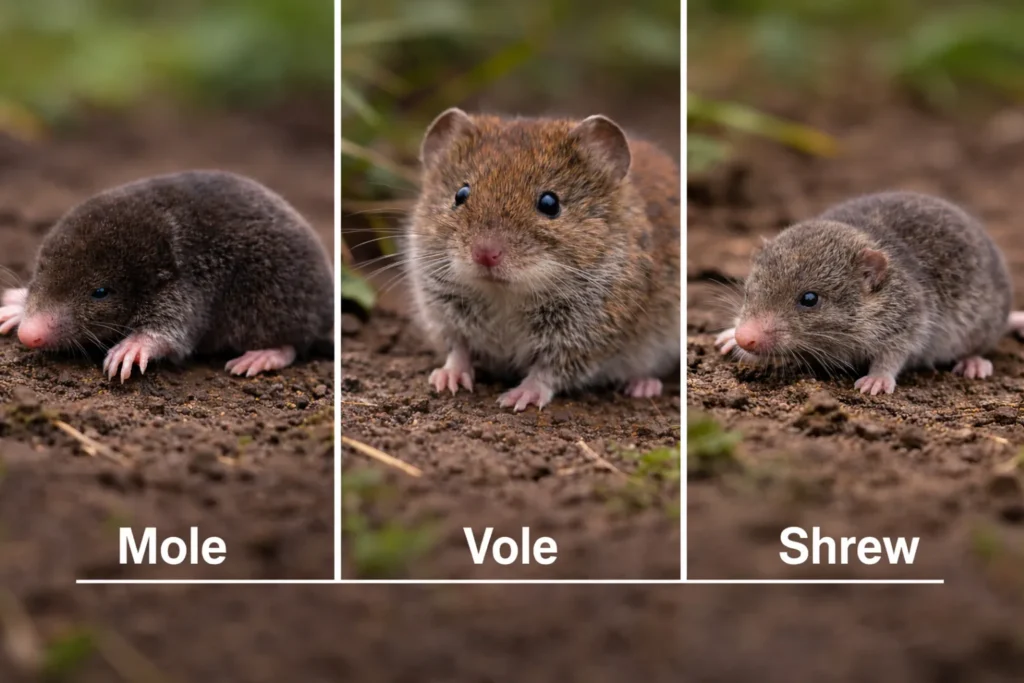
Quick Overview: Mole vs. Shrew vs. Vole
Before deciding which might theoretically be the better pet, it helps to first clarify what these animals are, where they’re found, and how large they get. Though they’re often mistaken for one another, moles, shrews, and voles live in very different ways and use different survival strategies, differences that greatly influence how suitable they are as pets.
1. Mole (Talpidae)
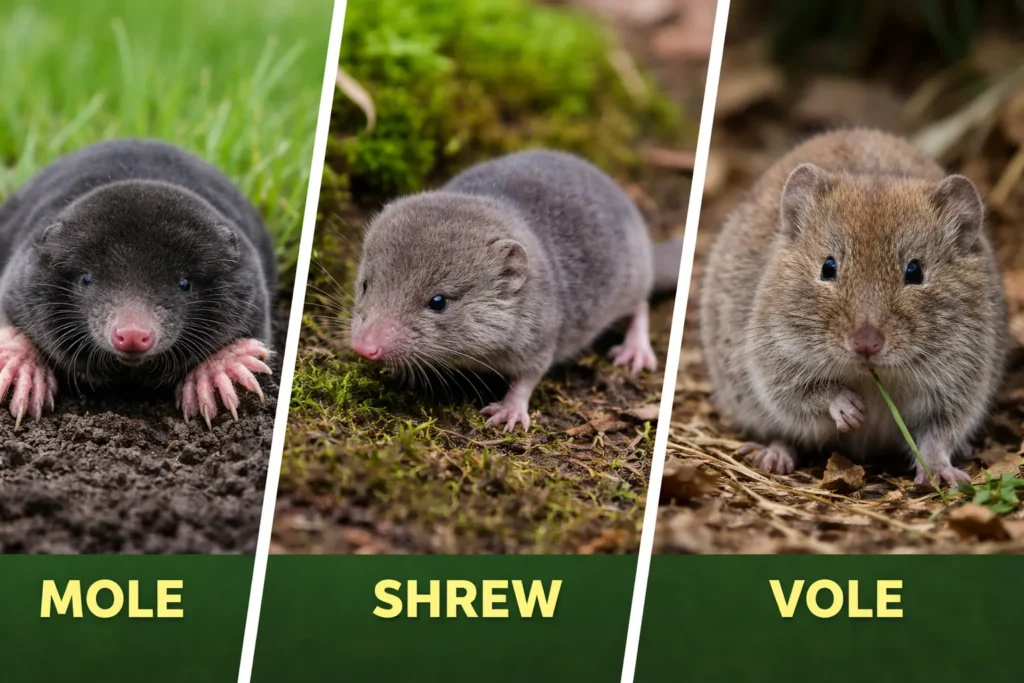
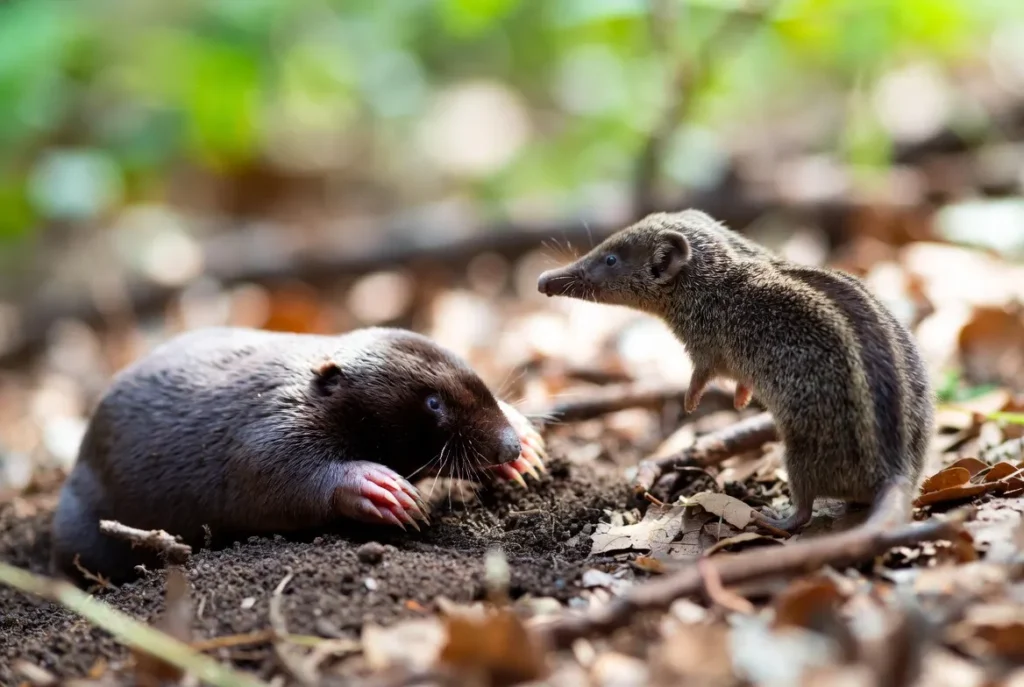
Moles (Talpidae) are burrowing mammals that live almost entirely underground. Found in forests, fields, gardens, and farmland, they dig large networks of tunnels beneath the soil. Adults are usually 12–18 cm (5–7 inches) long and have strong front limbs built for digging. Their bodies are suited to darkness, solitude, and continual movement through earth, not to social interaction or being kept in confinement.
2. Shrew (Soricidae)
Shrews are small, mouse-like insect-eating mammals that live in forests, grasslands, and wetlands around the world. Most are only about 5–10 cm (2–4 in) long and have extremely rapid metabolisms. They need to feed nearly nonstop to survive and are notoriously aggressive and easily stressed, which makes them among the hardest small mammals to maintain in captivity.
3. Vole (Arvicolinae)
Voles are small rodents found in meadows, fields, and grassy edges of woodlands. They’re frequently confused with mice, but they have shorter tails and more rounded bodies. Adults are typically 8–15 cm (3–6 in) long. Unlike moles and shrews, voles spend more time above ground and mostly eat plants, which can make them seem easier to care for though they’re still wild.
Side-by-Side Comparison: Mole vs. Shrew vs. Vole
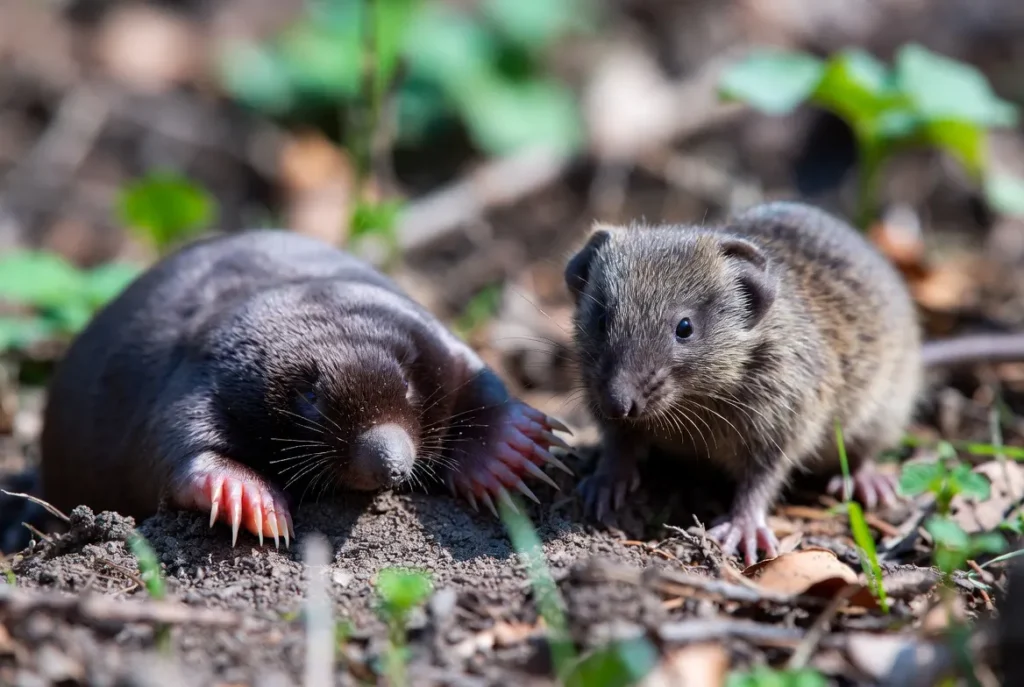
| Category | Mole | Shrew | Vole |
|---|---|---|---|
| Status | Wild animal | Wild animal | Wild animal |
| Typical behavior | Strongly solitary | Notably aggressive | Timid, somewhat anxious |
| Where it spends time | Almost entirely underground | Constantly on the move | Mix of surface activity and burrowing |
| Main food | Worms and insects | Primarily insects (near-constant feeding) | Mostly plants and roots |
| Average lifespan | 3–6 years | 1–3 years | 2–4 years |
| Ownership legality | Usually not legal | Frequently not legal | Only rarely legal |
| As a pet | Very poor choice | Very poor choice | Still a poor option but less than the other two |
To fairly compare mole vs. shrew vs. vole, we first need to look at each animal individually as a potential pet. While they’re often grouped together due to their size and appearance, moles, shrews, and voles have very different behaviors, care requirements, and limitations.
Below, we’ll break down each one as a pet, outlining the pros and cons, care challenges, and realistic expectations.
1. Mole as a Pet
When discussing mole vs. shrew vs. vole, the mole is often the first animal people rule out, and for good reason.
Can You Keep a Mole as a Pet?
Moles are not suitable pets under any realistic circumstances. They are highly specialized burrowing mammals that spend nearly their entire lives underground. Removing a mole from its natural environment causes extreme stress and often leads to rapid decline.
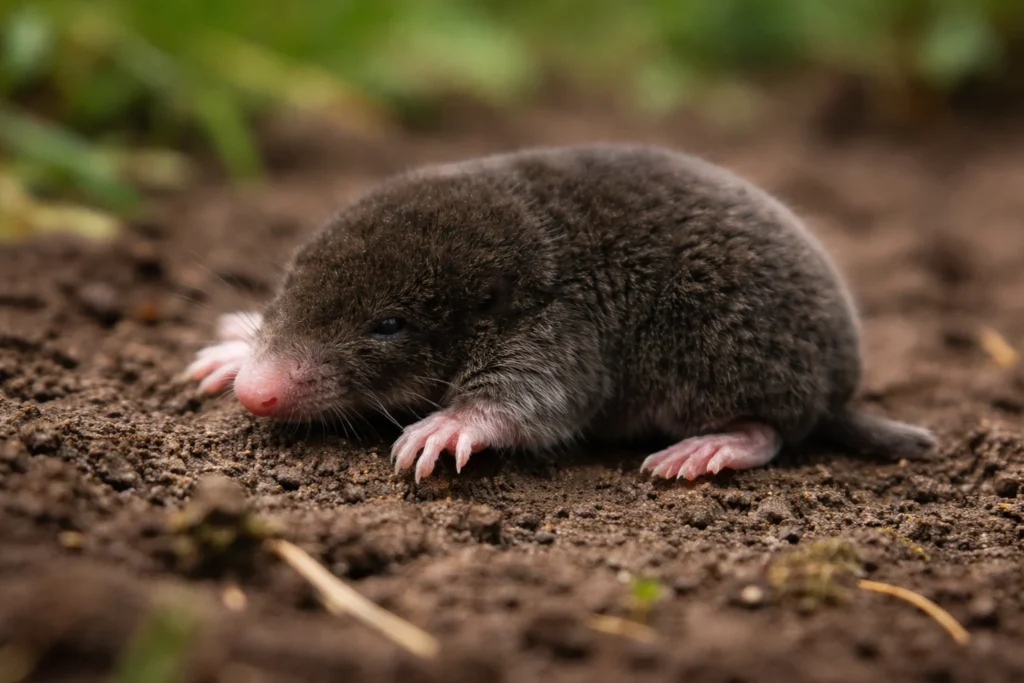
Mole Behavior in Captivity
In the mole vs. shrew vs. vole comparison, moles are:
- The most environment-dependent
- Completely solitary
- Unable to adapt to cages or enclosures
They do not tolerate handling and show no signs of social bonding with humans.
Mole Care Requirements
To survive, a mole would need:
- Deep, natural soil for tunneling
- Constant access to live insects and worms
- Silence and minimal vibration
These needs are nearly impossible to meet in a home setting.
Pros and Cons of Keeping a Mole as a Pet
Pros
- Unique and fascinating digging behavior
- Very low noise levels
- No shedding or odor issues
Cons
- Cannot live in standard enclosures
- Extremely high stress in captivity
- Requires live prey daily
- No interaction or bonding potential
- Often illegal to keep
In the mole vs. shrew vs. vole debate, the mole ranks as one of the least viable pets due to its extreme habitat needs and inability to adapt to captivity.
2. Shrew as a Pet
Shrews often attract curiosity because of their tiny size, but within the mole vs. shrew vs. vole comparison, they are the most difficult to keep alive.
Can You Keep a Shrew as a Pet?
Shrews are not suitable pets and are widely considered one of the most difficult small mammals to keep in captivity. Despite their tiny size, shrews have extremely fast metabolisms and are under near-constant physiological stress. In the mole vs. shrew vs. vole comparison, shrews present the highest risk of rapid decline in captivity.
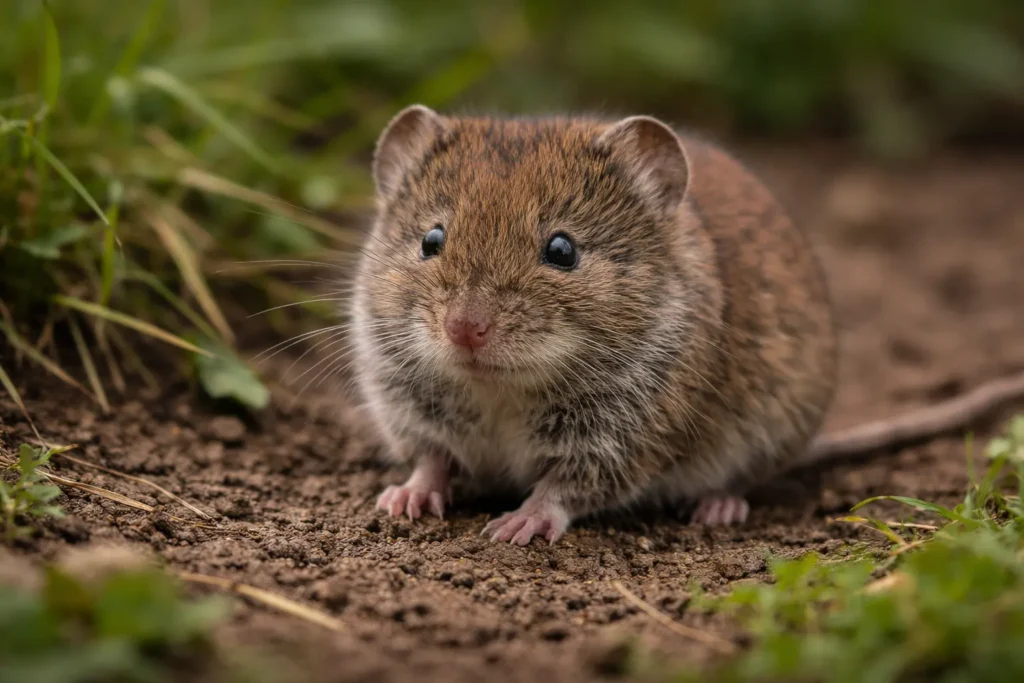
Shrew Behavior in Captivity
In the mole vs. shrew vs. vole comparison, shrews are known for being:
- Highly aggressive
- Extremely hyperactive
- Very sensitive to handling and noise
Shrews often react to human presence with panic or biting. They do not tolerate confinement well and rarely survive long-term captivity.
Shrew Care Requirements
To survive, a shrew would need:
- Feeding every 2–3 hours
- Constant supply of live insects
- Strict temperature and humidity control
- Minimal disturbance
Even brief disruptions in feeding or environment can be fatal.
Pros and Cons of Keeping a Shrew as a Pet
Pros
- Very small size
- Fascinating to observe briefly
- No chewing or gnawing damage
Cons
- Must eat almost constantly
- Extremely high stress levels
- Aggressive and prone to biting
- Very short lifespan
- Often illegal to capture or keep
In the mole vs. shrew vs. vole debate, the shrew is generally considered the worst possible pet option due to its fragile health, aggression, and intensive care needs.
3. Vole as a Pet
If someone asks which is the “best” animal out of a mole, a shrew, and a vole, the answer is typically the vole, although the standard for “best” here is extremely low.
Can You Keep a Vole as a Pet?
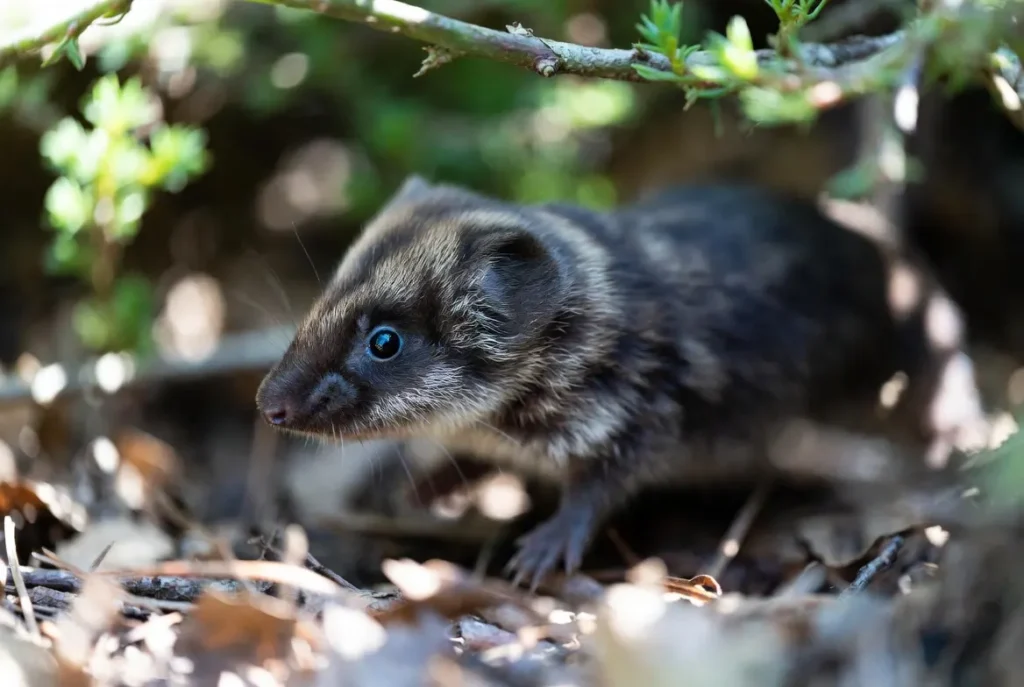
When people ask which animal is the “best” in the mole vs. shrew vs. vole comparison, the vole is usually mentioned. While voles are easier to care for than moles or shrews, they are still wild rodents, not domesticated pets.
Vole Behavior in Captivity
In the mole vs. shrew vs. vole comparison, voles tend to be:
- Timid rather than aggressive
- Easily startled
- Tolerant of humans but not affectionate
Voles may adapt slightly better to enclosures but remain prone to stress and fear-based behaviors.
Vole Care Requirements
To live in captivity, a vole would need:
- A large, enriched enclosure
- Constant access to grasses, roots, and hay
- Opportunities for burrowing and hiding
- Protection from noise and frequent handling
Even with proper care, stress-related health issues are common.
Pros and Cons of Keeping a Vole as a Pet
Pros
- Plant-based diet (easier than insects)
- Less aggressive than shrews
- More active above ground than moles
Cons
- Still a wild animal
- Easily stressed and frightened
- Short lifespan
- Limited interaction or bonding
- Legal restrictions in many areas
In the mole vs. shrew vs. vole comparison, the vole is the least unsuitable option, but it is still not a good pet and should not be considered a domesticated companion.
Legality in the USA
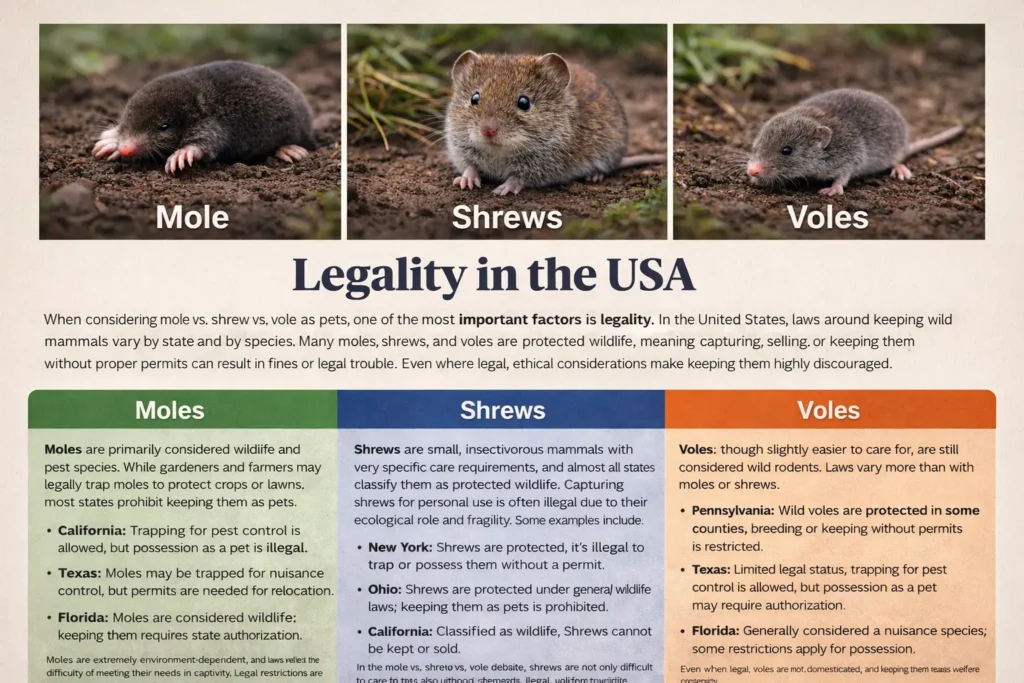
When considering mole vs. shrew vs. vole as pets, one of the most important factors is legality. In the United States, laws around keeping wild mammals vary by state and by species. Many moles, shrews, and voles are protected wildlife, meaning capturing, selling, or keeping them without proper permits can result in fines or legal trouble. Even where legal, ethical considerations make keeping them highly discouraged.
Moles
Moles are primarily considered wildlife and pest species. While gardeners and farmers may legally trap moles to protect crops or lawns, most states prohibit keeping them as pets. For example:
- California: Trapping for pest control is allowed, but possession as a pet is illegal.
- Texas: Moles may be trapped for nuisance control, but permits are needed for relocation.
- Florida: Moles are considered wildlife; keeping them requires state authorization.
Moles are extremely environment-dependent, and laws reflect the difficulty of meeting their needs in captivity. Legal restrictions are one of the many reasons moles are unsuitable as pets.
Shrews
Shrews are small, insectivorous mammals with very specific care requirements, and almost all states classify them as protected wildlife. Capturing shrews for personal use is often illegal due to their ecological role and fragility. Some examples include:
- New York: Shrews are protected; it’s illegal to trap or possess them without a permit.
- Ohio: Shrews are protected under general wildlife laws; keeping them as pets is prohibited.
- California: Classified as wildlife, shrews cannot be kept or sold.
In the mole vs. shrew vs. vole debate, shrews are not only difficult to care for but also almost universally illegal, reinforcing their status as poor pets.
Voles
Voles, though slightly easier to care for, are still considered wild rodents. Laws vary more than with moles or shrews:
- Pennsylvania: Wild voles are protected in some counties; breeding or keeping without permits is restricted.
- Texas: Limited legal status; trapping for pest control is allowed, but possession as a pet may require authorization.
- Florida: Generally considered a nuisance species; some restrictions apply for possession.
Even when legal, voles are not domesticated, and keeping them raises welfare concerns. In the mole vs. shrew vs. vole comparison, voles are often labeled the “least unsuitable,” but legality is still a barrier in many areas.
FAQs: Mole vs. Shrew vs. Vole
Q: Mole vs. Shrew vs. Vole: Which One Is the Best Pet?
A: None of them are good pets. All three are wild animals that experience high stress in captivity. If forced to choose, the vole is considered the least unsuitable, but it is still not recommended.
Q: Is a mole ever a good pet?
A: No. Moles require deep underground environments, constant live prey, and complete isolation. These needs cannot be met in a home setting.
Q: Why are shrews so difficult to keep alive?
A: Shrews have extremely fast metabolisms and must eat every few hours. Even short periods without food or added stress can be fatal.
Q: Mole vs. Shrew vs. Vole: Which Is Easiest to Care For?
A: Among mole vs. shrew vs. vole, the vole is the easiest to care for, mainly due to its plant-based diet. However, “easiest” does not mean suitable.
Q: Do voles make good pets compared to hamsters?
A: No. Hamsters are domesticated animals bred for captivity, while voles are wild rodents that do not adapt well to human care.
Q: Are shrews dangerous to humans?
A: Shrews can bite when stressed, and some species have mildly venomous saliva. While not typically dangerous, they are not safe to handle regularly.
Q: Mole vs. Shrew vs. Vole: Which Lives the Longest?
A: Moles generally live the longest in the wild, followed by voles, then shrews. In captivity, all three often have significantly shorter lifespans.
Q: Can you legally keep any of these animals as pets?
A: In many regions, keeping moles, shrews, or voles is illegal or requires special permits. Laws vary by location, so local wildlife regulations should always be checked.
Q: Why do people think voles might be good pets?
A: Voles resemble mice and have calmer behavior than shrews, which leads to confusion. However, they are still wild animals and not domesticated.
Q: What is a better alternative to these animals?
A: Domesticated pets like hamsters, gerbils, fancy mice, or rats provide similar size and behavior without the ethical or legal issues.
Conclusion
When comparing mole vs. shrew vs. vole as pets, the reality is simple: none are truly suitable. Moles are highly specialized burrowers, unable to adapt to cages or human interaction. Shrews are hyperactive, aggressive, and require near-constant feeding, making them nearly impossible to care for. Voles, while slightly calmer and more adaptable, are still wild animals that can become stressed easily and are challenging to keep safely.
In the mole vs. shrew vs. vole debate, moles and shrews are the least suitable, while voles are the most suitable option, though still far from ideal. For those seeking a small, low-maintenance pet, domesticated rodents like hamsters, gerbils, or fancy mice provide a much safer, ethical, and legal alternative. Ultimately, appreciating moles, shrews, and voles in the wild is the best choice.