
The first time a binturong walked past me, I didn’t see it coming. I was helping a licensed keeper in the Southeast do a routine enclosure check, crouched down adjusting a climbing rope, when this massive dark shape shuffled past my shoulder and the entire space filled with the smell of hot buttered popcorn. Not a hint of it. A wall of it. I actually turned around looking for a microwave before the keeper laughed and said “that’s just Mango.” Mango was a 38-pound male binturong who had absolutely zero interest in me and every interest in the mango slices at the far end of his platform. That smell stayed in my jacket for four days.
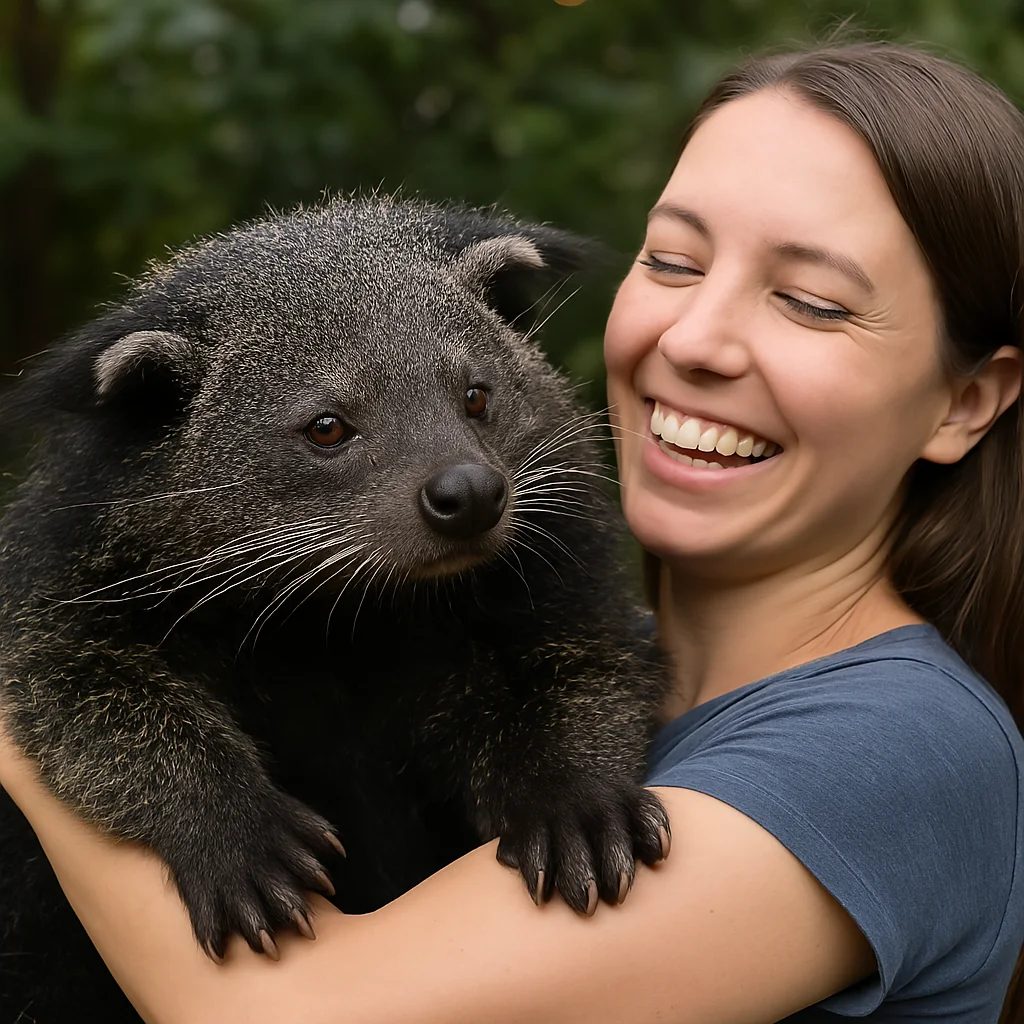
Is a Binturong as a Pet Worth It?
Keeping a binturong as a pet is legal in select US states with the correct permits, but it requires expert-level exotic mammal experience, a large custom-built outdoor enclosure, a specialist exotic vet, and a realistic budget of $1,500 to $3,000+ per year in ongoing care costs, on top of a purchase price of $3,000 to $8,000 from a licensed breeder. Most households are not equipped for this, and most pet binturongs suffer because of it.
What a Bearcat Animal Actually Is Before You Fall for the Idea
Size, Weight, and What They Actually Look Like Up Close
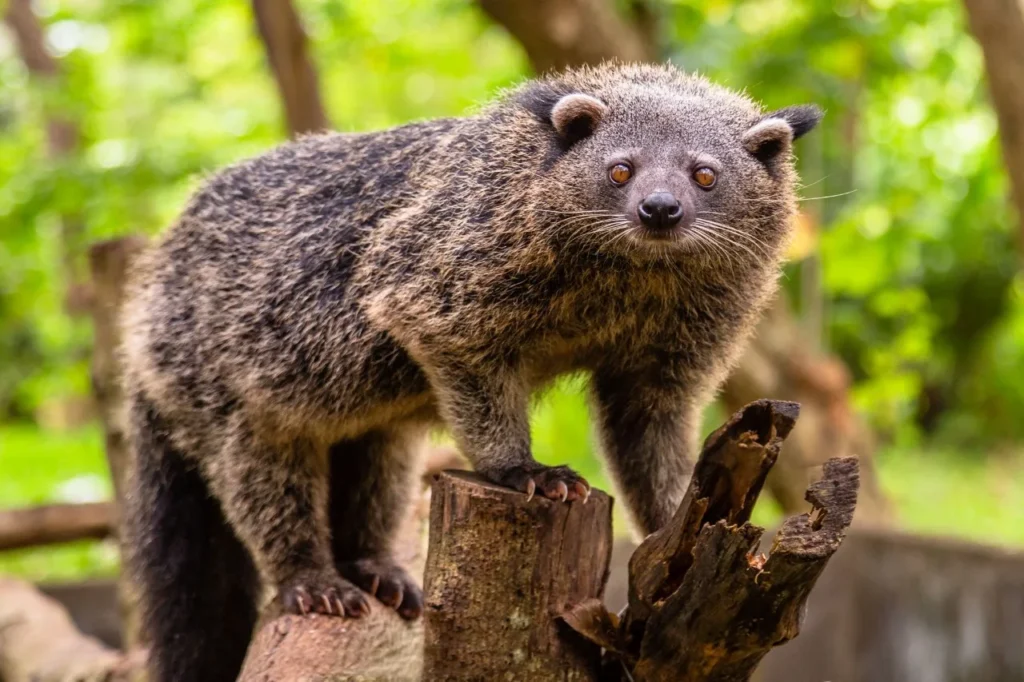
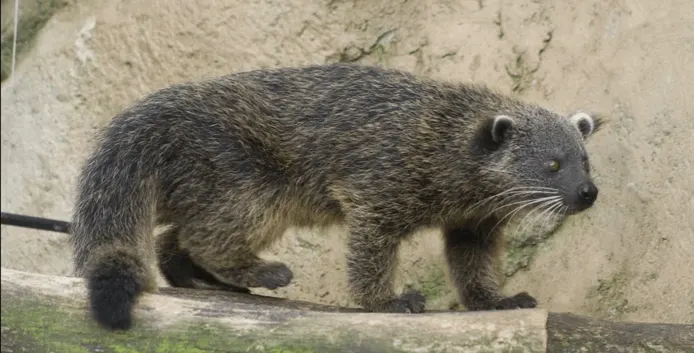
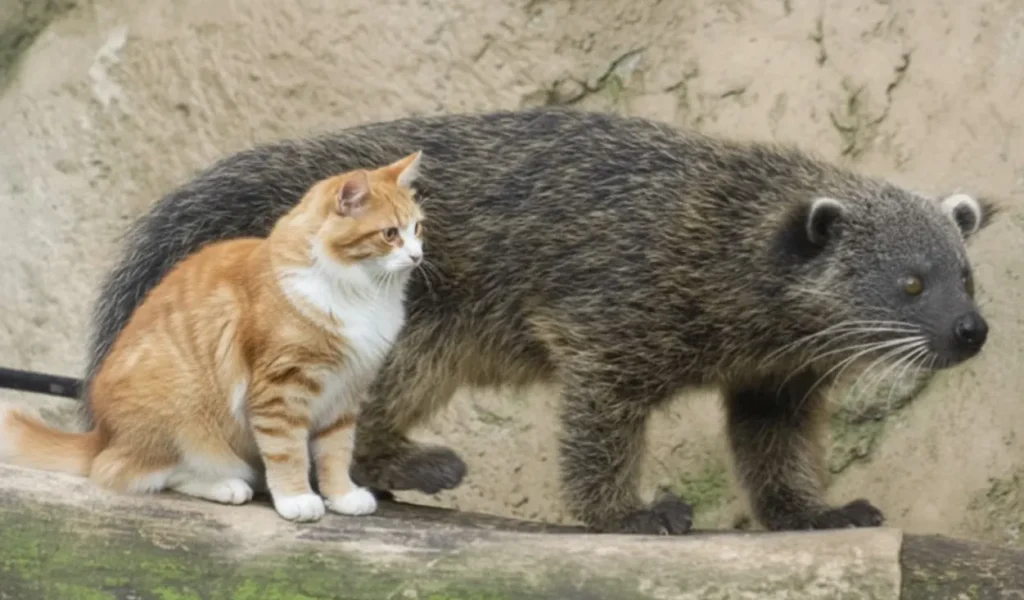
A binturong, the bearcat animal of Southeast Asia, is classified as Arctictis binturong and sits in the family Viverridae alongside civets and genets. It is neither bear nor cat, despite the nickname. Adults measure 60 to 96 centimeters in body length with a tail of similar length, and typically weigh between 9 and 20 kilograms, with females running significantly larger than males.
In person, a binturong looks nothing like the photos online. The photos show something fluffy and manageable. What you actually get is coarse, almost wiry black fur sometimes tipped with gray, a heavy-jowled face with prominent white whiskers, rounded tufted ears, and a prehensile tail that is thick, scaled on the underside, and visibly strong. When you pick up a healthy adult, it feels dense in a way that catches you off guard, the weight concentrated toward the hindquarters and tail, nothing like how it looks from a distance. If it feels lighter than expected or the fur is patchy and dull instead of coarse and dark, that is a warning sign you should not ignore.
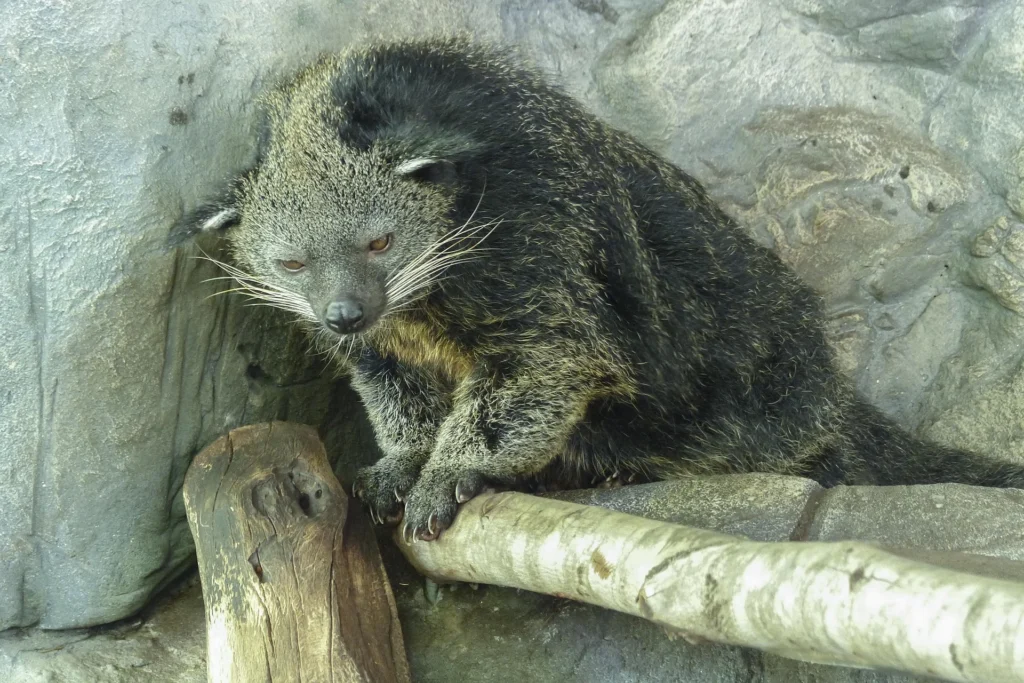
Binturongs, or “bearcats,” are exotic animals not commonly seen in homes. If you like rare pets, explore our guide on Can You Own a Pet Pangolin? for another extraordinary creature.
The Smell, the Sound, and What Stress Actually Looks Like
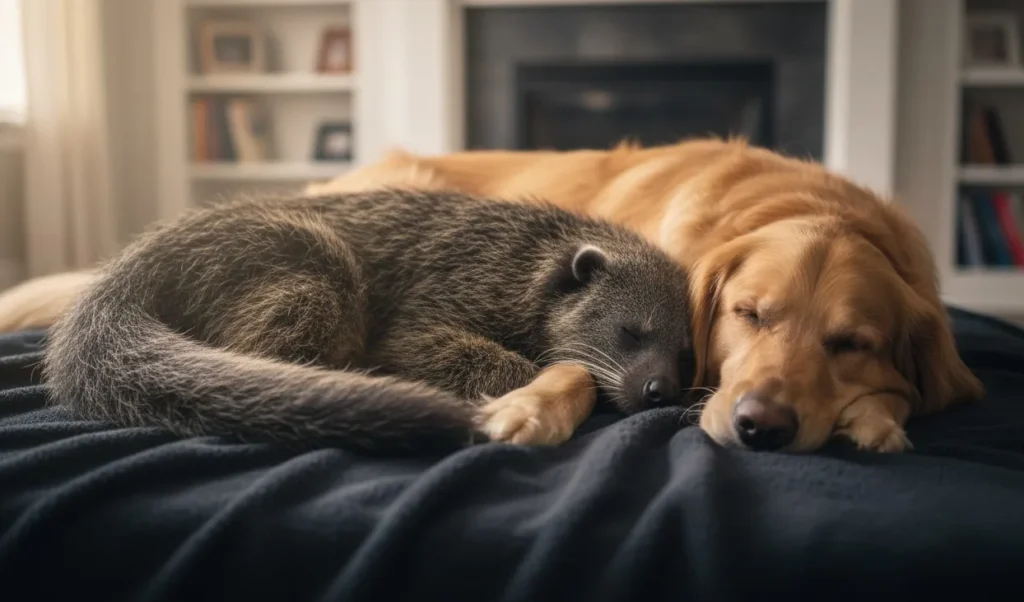
The smell is real and it is constant. The compound responsible is 2-acetyl-1-pyrroline, the same molecule found in freshly popped popcorn and cooked rice. It comes from a perineal scent gland near the base of the tail and the animal uses it continuously for territory marking. A healthy enclosure smells like warm fruit mixed with buttered popcorn. It should not smell like ammonia, sharp urine, or rot. If you’re getting those sharp, acidic smells, something is wrong with sanitation, diet, or the animal’s health.
A stressed binturong sounds completely different from a relaxed one. A content animal is quiet, occasionally producing low chuffing vocalizations. A frightened or threatened binturong produces a high-pitched hissing that is genuinely startling, and that sound is your signal to back off immediately. Most biting incidents happen when keepers push past that vocalization.
Binturong as a pet: A binturong as a pet is legal in select US states with proper permits, but requires expert-level exotic mammal experience, a large custom-built enclosure, a specialist vet, and $1,500 to $3,000+ per year in care on top of a $3,000 to $8,000 purchase price. Most people are not set up for this, and most pet binturongs suffer because of it.
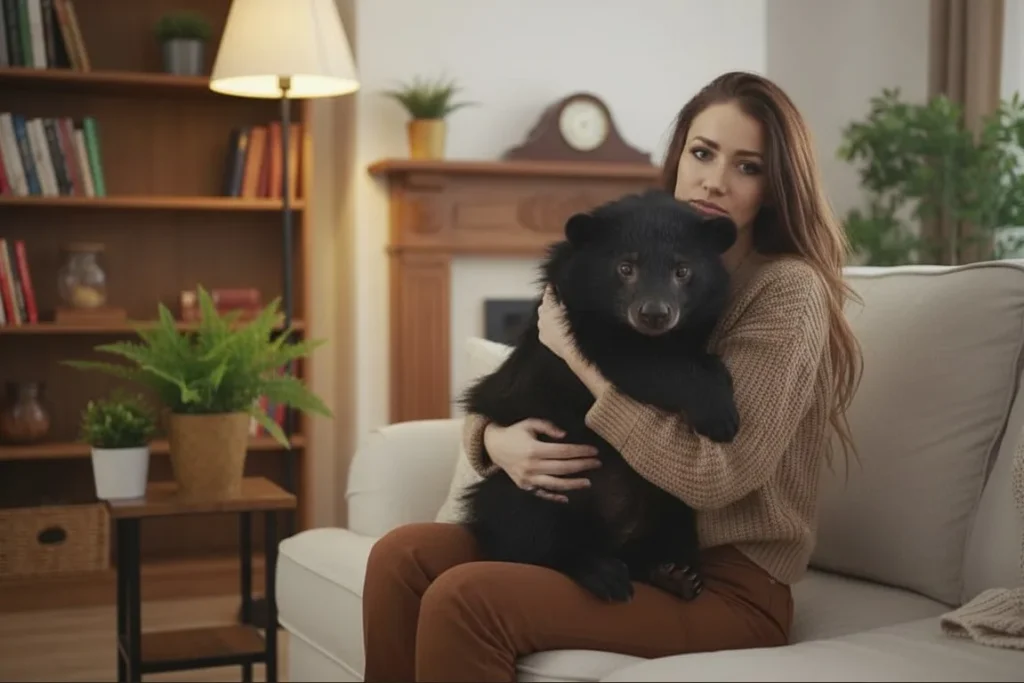
What the Internet Gets Completely Wrong About Pet Binturongs, And Why Animals Pay for It
The “They Bond Like Dogs” Myth That Gets Animals Surrendered
The misconception I see spread most aggressively across TikTok “cute exotic pet” accounts and unmoderated Facebook exotic mammal groups is that binturongs bond like dogs and just need love to thrive. People watch a 30-second video of a captive binturong nuzzling a keeper and decide these animals are naturally affectionate companion animals. That framing gets animals hurt.
Dr. Laurie Hess, a board-certified avian and exotic animal specialist who has worked extensively with exotic mammals, has documented how viverrids in captivity develop severe behavioral pathologies when their environmental and social needs go unmet, and that keeper bonding is not a substitute for species-appropriate enrichment and space. A binturong that seems cuddly in a short video is very often an animal that has shut down its normal behavioral range because it has nothing appropriate to do in an undersized, understimulated enclosure.
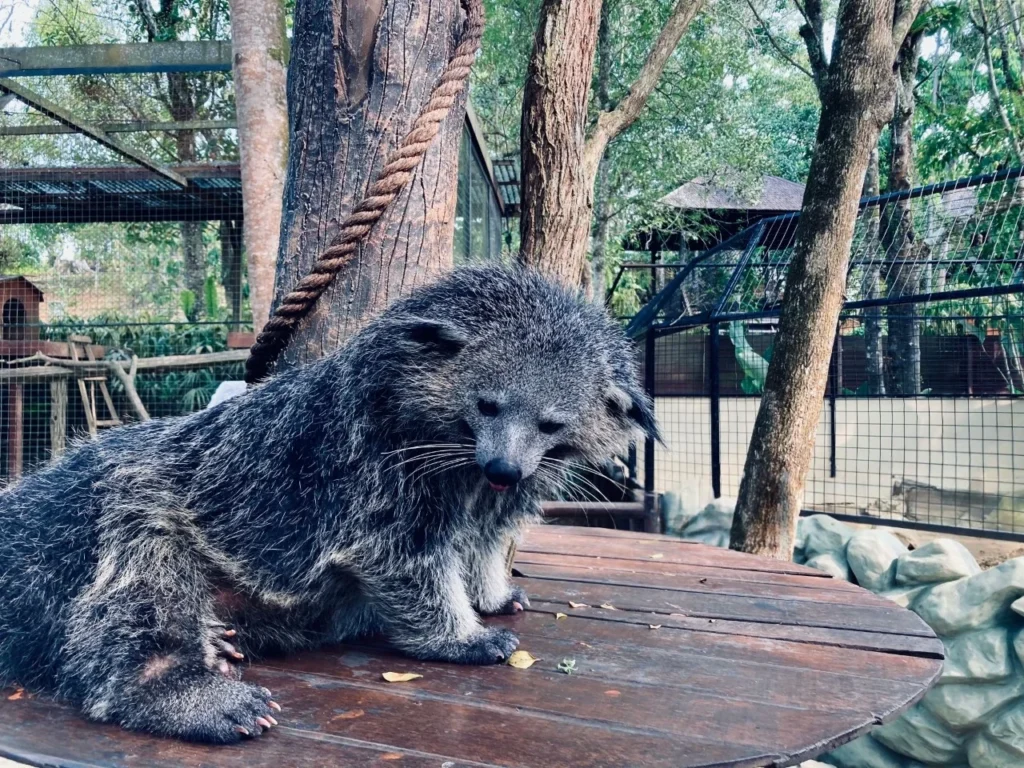
What Actually Happens When People Follow That Advice
What actually happens when people follow the “just love them” approach: the animal never gets the complex arboreal environment it requires, the diet becomes monotonous and nutritionally incomplete, and the binturong either withdraws into depression or redirects frustration into biting, scent-marking furniture, and destroying whatever it can reach. I’ve seen owners lose animals over this exact mistake. Not to illness. To having to surrender them to sanctuaries after years of improper housing, with the keeper genuinely bewildered because everything they’d seen online said binturongs were sweet.
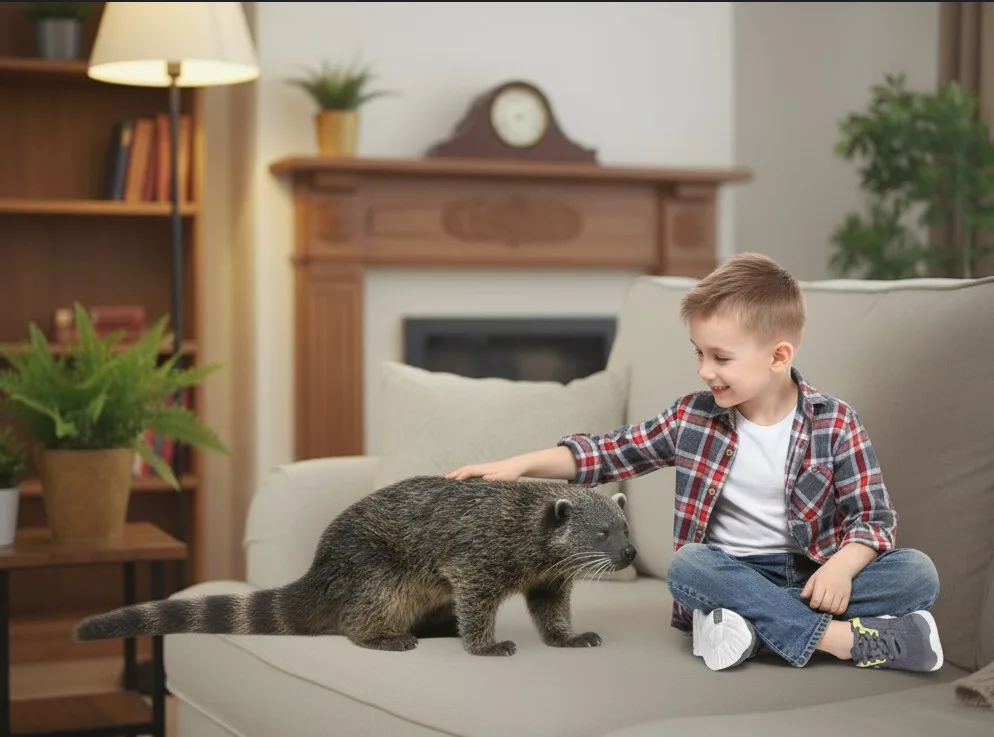
A well-socialized pet binturong raised from infancy by an experienced, licensed keeper can become tolerant of human contact and predictable in its routines. That is different from being an animal that wants to cuddle with strangers. Know the difference before you spend $8,000 and build an enclosure.
What a Pet Binturong Actually Needs, The Non-Negotiables
Enclosure Size, Structure, and Security
Space comes first. The minimum outdoor enclosure for one adult binturong should be at least 10 feet tall, 10 feet wide, and 12 feet long, and that is a starting floor, not a goal. Binturongs are arboreal. They need vertical height, sturdy horizontal platforms at multiple levels, thick climbing ropes, and nesting boxes they can retreat to and feel genuinely hidden in. Use hardware cloth with appropriate gauge, not chicken wire. Binturongs are strong and patient and will identify and exploit every weak seam in your fencing.
Before I even start planning any exotic mammal enclosure, my routine is always to walk the perimeter and mentally inhabit it as the animal. Binturongs find weak door latches. They test every corner connection. Build for an animal that has all day to work on the one spot you didn’t double-check.
Temperature, Climate, and Heating Requirements
Temperature matters more than most people expect. Binturongs are native to tropical rainforests across South and Southeast Asia, covering India, Myanmar, Thailand, Malaysia, and the Philippines. Below roughly 50 degrees Fahrenheit, supplemental heating becomes necessary. For anyone pursuing a pet binturong in the UK, this means a heated, climate-controlled indoor space functioning year-round alongside any outdoor access. That is a significant infrastructure project before you even address the Dangerous Wild Animals Act license requirement.
Diet, Feeding Rotation, and What Monotony Does to These Animals
Diet requires real variety. A healthy feeding rotation includes whole fruits like figs, bananas, mangoes, papayas, and apples; protein sources including raw eggs, cooked chicken, insects, and commercially formulated exotic carnivore diet; and calcium and vitamin D supplements as needed to support bone health, which is a genuine and documented issue in captive binturongs fed inadequate diets. After years of working alongside a licensed facility that keeps viverrids, I can tell you that a binturong eating the same three foods every day is a binturong that starts redirecting its frustration into the enclosure structure. Feeding them cat or dog food as a staple is not sufficient and causes real harm over time.
The biggest mistake I made when I first helped care for a viverrid at a licensed facility was underestimating how specific the protein rotation needed to be. I thought “omnivore” meant flexible. It does, but flexible within a range that takes time and observation to get right, and the signs of dietary monotony show up behaviorally before they show up in bloodwork.
The Real Annual Budget, Without the Optimistic Version
Budget reality: plan for $1,500 to $3,000 per year in food and routine care for one animal. First-year costs run higher because you’re building the enclosure, which runs $2,000 to $5,000 in materials alone depending on your region. Exotic specialist vet visits typically cost $400 to $800 per appointment, and that assumes you can locate a vet with viverrid experience at all.
Are Binturongs Legal Pets, And How Do You Actually Find One
Federal Law, CITES, and What Import Actually Means
Are binturong legal pets? The answer depends entirely on jurisdiction. In the United States, as of 2025, federal law intersects with the patchwork of state exotic animal regulations in ways that make binturong pet USA ownership possible in theory and genuinely difficult in practice.
At the federal level, binturongs appear on CITES Appendix III, which restricts international trade and requires documentation proving captive-bred origin for any legal transfer. The Endangered Species Act creates additional import barriers. Importing a binturong from outside the US is effectively impossible for a private individual without an institutional framework behind them.
State by State: Where Ownership Is Legal and Where It Isn’t
At the state level, California, New York, and Hawaii are among the states with outright bans on this category of exotic mammal. Some Southern and Midwestern states with more permissive exotic animal frameworks may allow ownership with a state wildlife permit, and in some cases a USDA exhibitor’s license if the animal is shown publicly. You need to verify this directly with your state wildlife agency, not from forums, not from a dealer’s assurances.
A friend of mine who runs a small licensed viverrid collection in the Southeast told me her permitting process alone took 18 months before she could legally bring her first animal home. That is typical, not unusual. If someone offers you a pet binturong for sale with no discussion of permit history, documentation, or your state’s legal requirements, walk away. That animal is almost certainly not legally owned, and the legal liability transfers to you the moment it enters your possession.
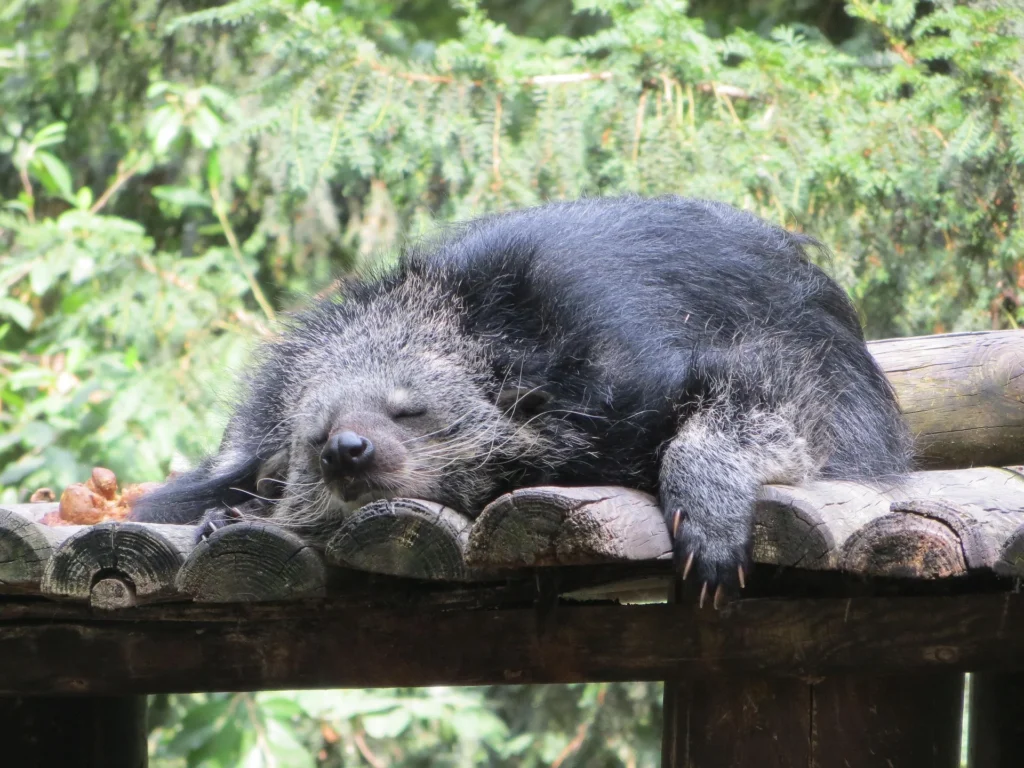
Due to their unique care requirements, binturongs aren’t suitable for everyone. Learn about another quirky yet legal pet in our article on the Beaver as a Pet.
Binturong Pet Price: What Legitimate Animals Actually Cost
Binturong pet price from a legitimate licensed captive breeder runs between $3,000 and $8,000 for the animal, with babies sometimes listed lower and proven breeding adults or specific pairings running higher. Some sources in the exotic animal trade list prices between $6,000 and $12,000 for young adults with full documentation. If you see a binturong pet for sale at $800, or $1,200, or without any paperwork, that animal came from somewhere it shouldn’t have. Legitimate breeders have permit histories, USDA documentation, and typically waiting lists. They do not have surplus stock available at discount.
Peternakan Binturong and the Conservation Breeding Context
For context around the concept of peternakan binturong, there are licensed breeding facilities in Indonesia operating under conservation frameworks aimed at producing captive-born generations that reduce pressure on wild populations. These are tightly regulated programs with conservation as the stated goal, not supply chains for the private pet market. The IUCN classifies binturongs as Vulnerable, with populations estimated to have declined by over 30% since the 1980s, largely due to habitat loss and exactly the kind of wildlife trade that informal acquisition feeds.
Pet Binturong UK and European Ownership Reality
Pet binturong UK ownership falls under the Dangerous Wild Animals Act 1976, requiring a DWA license from your local authority, specific enclosure inspections, and relevant liability insurance. Permits for private individuals are rarely granted. In Canada and most of the EU, ownership is prohibited outright. This is not a situation where a workaround exists. Either you have the paperwork or you don’t, and operating without it is a criminal offense in most of these jurisdictions.
Binturong Diet, Vet Care, and the Health Reality Nobody Posts About
What a Proper Feeding Plan Actually Looks Like Day to Day
Most pet sites will tell you that binturong diet care is simply “fruits and protein,” but after 15 years working with exotic animals, I’ve found that the gap between that summary and what actually keeps a binturong healthy is where most private keepers get into serious trouble.
A proper captive diet includes figs and tropical fruits as the base, supplemented with varied protein sources on rotation. Raw eggs two to three times per week. Cooked chicken or similar lean protein. Insects including mealworms and crickets for enrichment and nutritional variety. A commercially formulated carnivore diet, specifically one designed for exotic small carnivores or viverrids, should be part of the regular rotation. Calcium and vitamin D3 supplementation is typically necessary because captive binturongs do not get the UVB exposure their wild counterparts do, and bone density issues are a documented problem in under-supplemented animals.
Obesity, Overfeeding, and What Healthy Weight Looks Like
Overfeeding is a real issue. Obesity is common in captive binturongs that have unrestricted access to high-sugar fruits without adequate protein balance and physical enrichment to offset calorie intake. A healthy binturong at appropriate weight feels solid and muscular when handled, not soft or doughy in the abdominal region. If you’re free-feeding fruit with no portion control, you’re heading toward a problem that shows up slowly and then all at once.
Finding a Vet Who Actually Knows This Species
Finding a vet is the part that most people seriously underestimate until they need one at 2am. Exotic vets with viverrid experience are genuinely rare outside of major metropolitan areas and university veterinary programs. If you can’t afford or locate an exotic specialist in your area, do not get a binturong. This is not negotiable. Routine dental work, joint issues, skin conditions, and digestive problems all require a vet who understands this species, and improvised treatment from a general practice vet working from textbooks on a species they’ve never seen is a real risk for the animal.
If you can’t locate a specialist vet for binturong care in your region before you acquire the animal, I’ve had great results by contacting university exotic animal departments and asking for referrals to practitioners in the area with viverrid or civet experience, because those facilities often maintain informal networks with private practitioners who’ve trained under them.
The Lifespan Commitment Most People Haven’t Thought Through
Binturongs in captivity live between 18 and 25 years with appropriate care. That is a longer commitment than most dogs. It spans career changes, moves, relationship changes, and financial circumstances you cannot fully predict. Anyone considering a pet binturong needs a concrete, documented plan for the animal’s care across that full lifespan before the animal comes home. Sanctuaries that accept surrendered binturongs are few, and surrendering a 15-year-old exotic mammal without a plan causes real harm to the animal.
Where Can You Actually Pet a Binturong Responsibly
Accredited Zoos and Legitimate Encounter Programs
If you’re asking where can I pet a binturong, the answer is limited but legitimate options do exist. Some accredited zoos in the US, including Zoo Atlanta, and a number of wildlife education facilities maintain binturongs in their collections. A small number of these offer supervised animal encounter experiences where guests can observe a binturong at close range and sometimes have limited supervised interaction under the guidance of trained keepers.
These encounters are the right way to answer the question “can you pet a binturong” before making any ownership decisions. Watching how an experienced keeper handles the animal, observing what the enclosure actually looks like beyond photo angles, and seeing firsthand how the animal responds to different situations tells you more in an hour than any amount of online research.
Why That Viral Photo Isn’t the Benchmark You Think It Is
Someone in my exotic animal community once asked me why every photo of a “pet binturong” on social media seemed to show the same kind of docile, draped-over-a-human pose, and the honest answer is that many of those photos involve animals in tourist attraction settings across Southeast Asia that are chronically stressed and possibly wild-caught. An animal that sits completely still while being held by strangers is not necessarily a calm animal. That stillness can be fear response. Do not use those images as your benchmark for what normal binturong behavior looks like.
Legitimate encounter programs at accredited facilities prioritize conservation education over the handling experience itself. The interaction is brief, controlled, and structured around the animal’s comfort thresholds. If you want to know what it actually feels like to be near one of these animals, that is where to go.
For anyone also exploring other complex exotic mammals at similar keeper experience levels, the legal and ethical considerations around owning a capybara share meaningful overlap with binturong ownership and offer useful context for what exotic mammal permitting actually involves in practice.
Questions I Actually Get Asked About Binturong as Pets
Are binturong good pets for experienced exotic animal keepers?
A binturong can work for a licensed keeper with the right infrastructure, appropriate permits, access to a specialist exotic vet, and genuine prior experience with large exotic mammals. They are not appropriate for someone whose previous exotic experience is a reptile or a small primate. The gap in keeper skill and infrastructure between those levels is significant, and the animal absorbs the consequences of that gap directly.
What is the real binturong pet price including full setup?
The animal runs $3,000 to $8,000 from a legitimate licensed breeder, with some documented sales in the $10,000 to $12,000 range for captive-bred young adults with full paperwork. A proper enclosure with heating, verified-gauge hardware cloth, climbing structures, and secure double-latch doors costs $2,000 to $5,000 in materials. First-year food, vet establishment visit, permits, and enrichment items add another $2,000 to $3,500. Over the animal’s 20-plus year lifespan, total care cost routinely exceeds $50,000 to $60,000 when vet costs are included honestly.
Do binturongs make good pets if raised from infancy?
Binturongs raised from very young and handled consistently by experienced keepers are more tolerant of human presence and more behaviorally predictable than wild-caught adults. They do not domesticate in any meaningful sense and retain the full set of needs, vocalizations, scent-marking behaviors, and physical capabilities of their wild counterparts. A young animal is not easier to care for, it is simply less physically capable of expressing its displeasure in ways that cause immediate injury, which is not the same thing as being a manageable pet.
How long do binturongs live in captivity, and what does that commitment actually mean?
In captivity with proper care, binturongs regularly reach 22 to 25 years. That is longer than many dogs and longer than many people’s careers at a single employer or residence in one city. Before committing, you need a documented contingency plan for who provides care if you become ill, relocate internationally, or if your financial circumstances change substantially. Sanctuaries that take surrendered binturongs are few, and surrendering a 15-year-old exotic mammal without a plan causes real harm to the animal.
The Honest Bottom Line on Binturong as a Pet
If you’ve read this far with your interest still intact, that is actually a meaningful signal. The people who should genuinely not own a binturong usually stop reading when they see the enclosure dimensions or the vet availability situation.
If you have real exotic mammal experience, a specific licensed vet you’ve already spoken with, the physical space and financial runway for a proper setup, and a clear-eyed view of a 20-plus year commitment, this is an animal that offers a genuinely unusual relationship with a keeper who earns it. The scent alone, that constant warm popcorn smell embedded in everything the animal has touched, becomes something you either love completely or can’t live with. Find out which one you are before you commit.
If any part of this gave you genuine pause, starting somewhere with less consequence is the right call. For people who want a complex, intelligent exotic mammal with less prohibitive legal barriers, exploring what it takes to keep a red panda as a pet illustrates exactly why certain animals remain firmly in the hands of accredited institutions, and that context is useful for understanding where binturongs sit on that spectrum too.
The bearcat animal is not for everyone. It isn’t for most people. But for the right keeper with the right setup, it’s one of the most distinctive animals you’ll ever have the privilege of caring for, popcorn smell in your jacket and all.
[Photo placeholder: Close-up of a binturong prehensile tail wrapped around a keeper’s forearm at a licensed facility, showing the rough scaled underside and the actual grip tension visible in the keeper’s skin, fluorescent lighting of the indoor enclosure visible in the background]
This post reflects 15+ years of personal animal care experience and research. All veterinary or scientific claims are attributed to named sources. This content is not a substitute for professional veterinary advice. If your animal is unwell, contact your vet or an emergency exotic animal clinic directly.


I dont think its really nice if i keep Binturong as a Pet, its so expensive anda so hard to have one
Pingback: Fennec Fox for Sale Near You – USDA-Licensed Breeder - Animal Sound