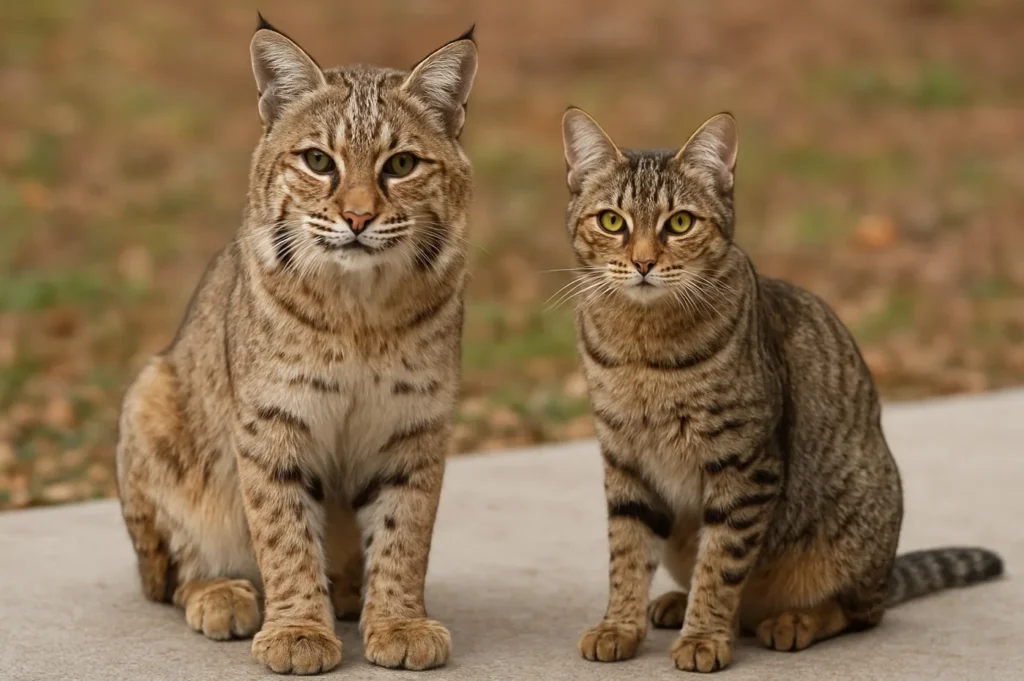
The idea of a bobcat crossed with domestic cat has long captured the human imagination. This romantic notion is fueled by a desire for a creature that combines the exotic appeal of a wild feline—its distinctive tufted ears, muscular physique, and a short, “bobbed” tail—with the beloved temperament and social nature of a domestic house cat. The very concept of a
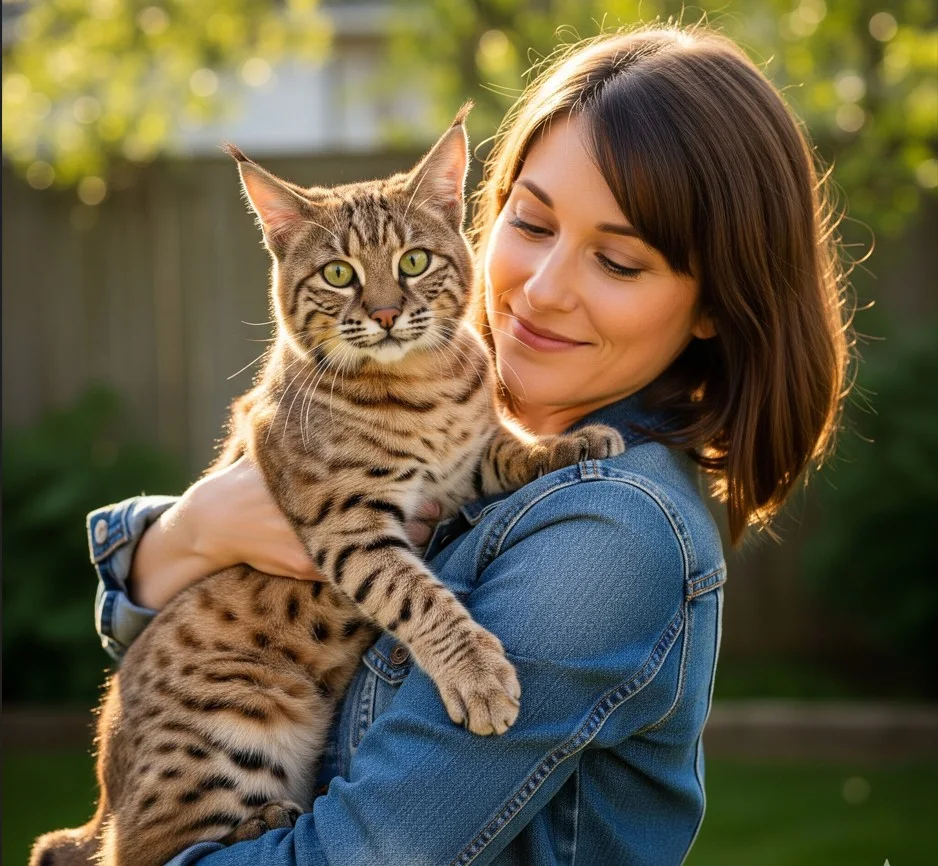
Bobcat domestic Cat mix
bobcat domestic cat mix offers the promise of a pet that is both a symbol of untamed wilderness and a gentle, manageable companion. This fascination is reinforced by a steady stream of anecdotal accounts and viral videos purporting to showcase such a unique creature. From historical reports in journals to modern social media posts, stories about a bobcat house cat mix have persisted, leading many to believe that such a hybrid is not only possible but has occurred in backyards across North America.
This pervasive belief in a bobcat house cat cross is more than a simple misunderstanding of biology; it is a manifestation of a deeper human desire to selectively breed for the most appealing traits while discarding the inconvenient or dangerous ones. The fantasy of a wild-looking yet perfectly tame animal is a form of idealization, a projection of human will onto the natural world. This report’s purpose is to move beyond these captivating stories and to provide a definitive, scientifically-backed analysis. It will systematically deconstruct the myth and explore the underlying reasons why a bobcat crossed with domestic cat is a biological impossibility. By examining the genetic realities, deconstructing the most famous anecdotes, and comparing this myth to the verifiable existence of other hybrids, this document will provide a comprehensive understanding of why this long-standing urban legend persists and why, in the final analysis, it is a journey into fiction.
Can we have a hybrid Bobcat?
Many people wonder if a bobcat crossed with domestic cat – often called a bobcat domestic cat mix, bobcat house cat mix, or bobcat house cat cross – might exist. These terms suggest an exotic hybrid pet blending a wild bobcat (Lynx rufus) with a tame housecat (Felis catus). In reality, however, this concept is a myth. Scientists and wildlife experts agree that domestic cats and bobcats are too genetically different to breed.
For example, one pet-care resource notes there is “no scientific evidence supporting the existence of hybrid offspring between domestic cats … and bobcats”, since the two species belong to different genera. In laboratory tests, bobcat sperm may fertilize a domestic cat egg, but the embryo never develops beyond the earliest stage. In short, a true bobcat crossed with domestic cat cannot occur naturally.
Past claims of hybrid bobcat cats have all turned out to be misunderstandings. For instance, the Pixie-Bob breed was once marketed as descended from a bobcat/domestic cross, but DNA testing found no bobcat genes. Today, Pixie-Bobs are understood to be 100% domestic cats, selectively bred to look wild. Even sensational cases like “Rocky,” a huge alleged hybrid in New Jersey, ended without proof: experts could not confirm any domestic ancestry and ultimately said Rocky was effectively a wild bobcat too dangerous to keep as a pet. In essence, the phrase “bobcat crossed with domestic cat” refers only to a rumour or marketing label, not a real animal..
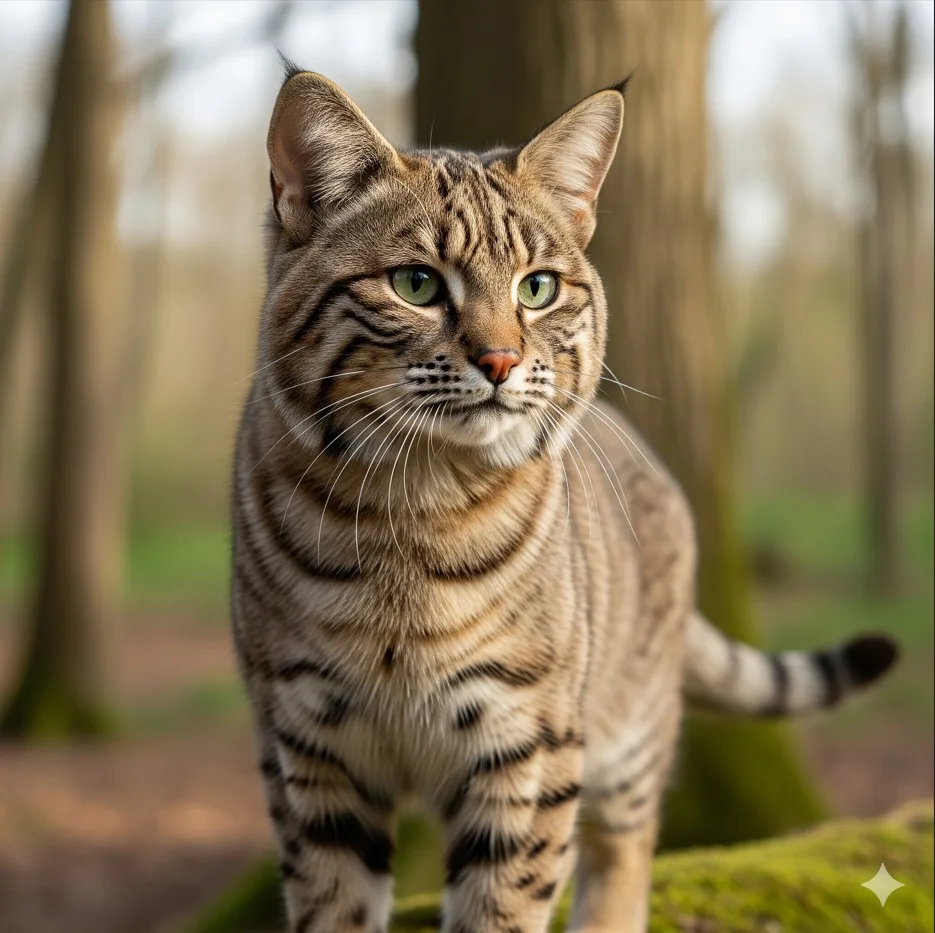
Why a Bobcat Crossed with Domestic Cat Isn’t Possible
The Genetic Barrier
A bobcat crossed with domestic cat sounds exciting, but it’s biologically impossible. Bobcats (Lynx rufus) and domestic cats (Felis catus) are too far apart genetically. Even though they both have 38 chromosomes, the DNA doesn’t line up properly, which means a bobcat domestic cat mix can’t develop. Laboratory attempts show that while fertilization may start, the embryo doesn’t survive.
DNA Testing Confirms the Truth
Every claim of a bobcat house cat mix has been debunked through DNA testing. Breeds like the Pixie-Bob were once said to come from a bobcat house cat cross, but testing shows they are 100% domestic. Modern genetic tools prove that these supposed hybrids are either pure bobcats or just domestic cats with wild-looking traits.
Myths That Keep the Story Alive
Look-Alike Breeds
Many cats look like a bobcat domestic cat mix because of natural features like short tails, tufted ears, or spotted coats. Breeds such as the Pixie-Bob or American Bobtail were selectively bred to look wild, but they have no actual bobcat blood.
Old Stories and Anecdotes
Historical accounts of supposed hybrids – like the 1950s Texas “Stubby” cat – fall apart under science. Male hybrids from wildcats and housecats would be sterile, so fertile “hybrids” must have been ordinary domestic cats with unusual traits.
Modern Misidentifications
The famous case of “Rocky,” a 38-pound cat, was reported as a bobcat domestic cat mix, but DNA showed he was simply a bobcat. Misreporting and sensational stories keep the myth alive, even when science proves otherwise.
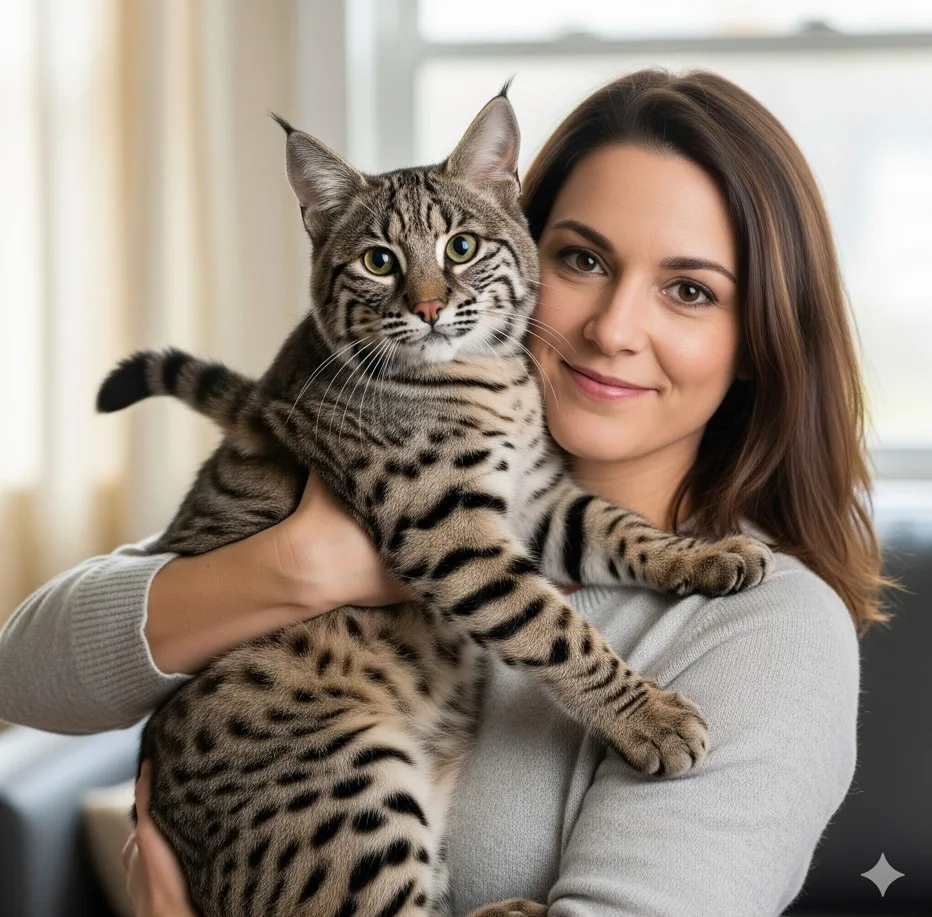
Appearance and Physical Characteristics
A domestic cat with wild markings might prompt owners to say it’s a “bobcat house cat mix,” but all the tiger‑like features still occur in normal housecats. Typical “bobcat-like” traits include:
- Large size (especially over 12–15 pounds)
- Spotted or striped coat patterns
- Tufted or lynx‑like ears
- A very short or “bobbed” tail
- Thick muscular build and large paws
These characteristics do make a cat look wild, which is why some describe it as a bobcat domestic cat mix. However, each of these traits can be produced by selective breeding or natural variation in domestic breeds. For example, Pixie‑Bob cats often have a short tail and spotted coat, and American Bobtails have bobbed tails – yet genetic tests confirm that both are 100% domestic cats. In fact, research explicitly found no bobcat DNA in these breeds; they were just bred to resemble bobcats
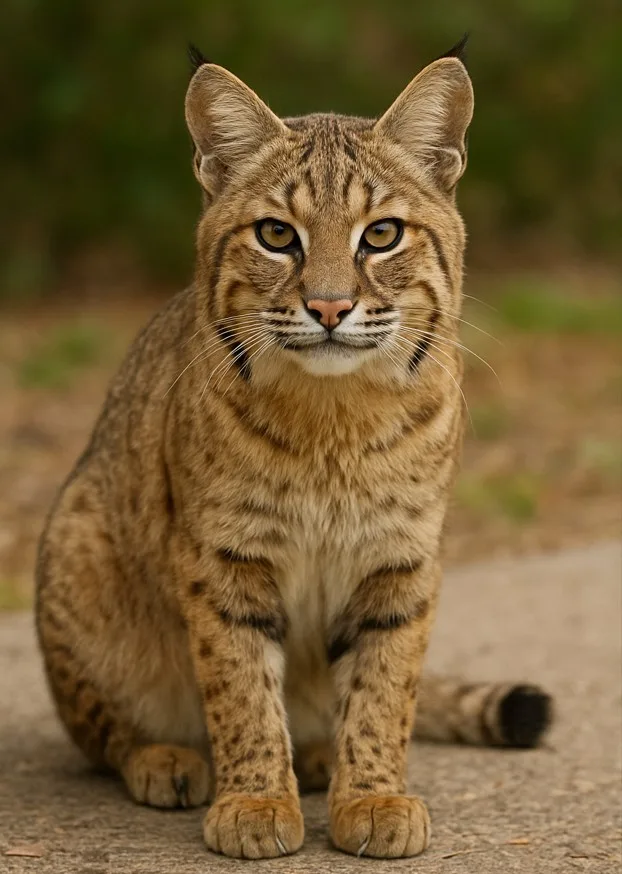
By contrast, a real bobcat is unmistakably different. Wild bobcats are larger (15–40 pounds) and have black-tipped tufted ears, facial ruffs, and very short stumpy tails . If you see a cat that is really big or with a true bobcat tail and ear tufts, it’s almost certainly a wild bobcat, not a hybrid. In practice, any cat advertised as a bobcat house cat cross is simply a domestic cat with some wild look – there is no unique hybrid phenotype. Pet experts warn that phrases like “bobcat domestic cat mix” or “bobcat house cat mix” refer to the illusion of wildness, not an actual mixed-species animal.
Temperament and Behavior
Because no verified bobcat-cat hybrid exists, we can only speculate about temperament. In general, domestic cats have a wide range of personalities – some are very affectionate and playful, others more aloof or independent. A wild bobcat, by comparison, is solitary, territorial, and accustomed to hunting and fending for itself in the wild.
Owners might imagine a bobcat crossed with domestic cat as having an extra “wild” edge, but veterinarians emphasize that pet behavior is shaped by upbringing, not ancient genes. In fact, a vet-reviewed article notes that “if your kitten is overly aggressive, it is likely due to temperament, environment, or lack of socialization rather than any ‘wild blood’”. In other words, normal kitten play or shyness can look fierce, but it isn’t evidence of bobcat ancestry.
Real bobcats do not make easy pets. They often hiss, claw, and may become aggressive if frightened. For example, one exotic pet guide warns that even a domestic-trained bobcat “will spray all over your house” to mark territory. A so-called hybrid that behaved like a housecat would be a genetic curiosity. In Rocky’s case, despite claims he was a half-domestic cat, he eventually had to be moved to a zoo because “due to his enormous size and tendency to escape and cause trouble, he has been moved to the zoo”. In short, anything you hear about a bobcat-house cat mix enjoying cuddles or easy care should be taken with skepticism. Veterinary experts bluntly advise that the idea of keeping such a wild companion is best left in fantasy. If a pet ever really exhibits dangerous wild-cat behavior, the safest step is to consult wildlife professionals, not assume it has a hidden bobcat gene.
Legality and Ownership Challenges
Legally, there is no special status for a “bobcat domestic cat mix” – authorities treat it as either a domestic cat or as an unlicensed wild cat. In most places, bobcats are regulated as exotic wildlife. One sanctuary guide bluntly states: “Not every state will allow you to own a bobcat…”. In fact, many U.S. states ban bobcats or require strict permits to keep them. Federal law (and growing state laws) also tighten exotic cat ownership. Thus, claiming your pet is a “bobcat crossed with domestic cat” won’t circumvent any rules. If animal control or game officials suspect a wild ancestry, they will demand the standard exotic-pet permits – or seize the cat.
By contrast, a purely domestic look-alike cat (like a Pixie-Bob) is legally just a house pet, with no special requirements. But any actual hybrid would almost certainly be classified as a wild cat under the law. In practical terms, that means a person keeping such an animal might need a zoo or wildlife permit, pass inspections, and meet stringent cage and care standards. Violating these rules can lead to heavy fines or criminal charges. For example, experts note that “keeping actual bobcats as pets is typically illegal without proper permits”. Owners who thought they had a bobcat-domestic cross have often found themselves in legal limbo. In short, the legality is a major hurdle – anyone selling or buying a so-called “bobcat house cat cross” is treading into exotic animal law, not normal pet regulations.
Care Needs and Considerations
In theory, caring for a bobcat house cat mix would mean treating it much like a pet bobcat. Exotic-pet resources specify huge living spaces for bobcats – on the order of a 24×24×12 foot outdoor enclosure with heavy wire mesh. This provides room to climb and roam, which far exceeds a typical cat condo. Such guidelines are not optional: one care guide emphasizes that a top, bottom, and sturdy door are “ABSOLUTE MINIMUM” requirements for a bobcat’s run. A hybrid cat with any bobcat traits would likely need similar accommodations.
Diet is another key issue. Bobcats are obligate carnivores, meaning raw meat is essential. Specialists recommend feeding around 80% muscle meat, 10% bone, and organ meats to mimic natural prey. Commercial kibble alone is inadequate for a true wild cat; supplements like taurine are often required. So a purported bobcat-cat mix would need a very meat-rich diet – far more expensive and labor-intensive than standard cat food.
Veterinary care would also be complex. Most family vets will not treat exotic felines; you would need a veterinarian specialized in zoo or wildlife medicine. That means finding a doctor, often far away, who is willing to handle a potentially dangerous large cat. In summary, the care requirements of a bobcat-cat hybrid would mirror those of a bobcat itself: enormous enclosure, raw whole-prey diet, and specialist vet care. This contrasts sharply with ordinary cat care. In practice, if someone truly had a bobcat-like cat, they would need resources (land, money, expertise) far beyond a typical pet owner.
Pros and Cons of Owning a Bobcat Domestic Cat Mix
- Pros: The main appeal is exotic appearance and novelty. A hypothetical bobcat domestic cat mix would be a one-of-a-kind pet with a striking wild coat and large size, which some enthusiasts find thrilling. Being able to say you own a “bobcat house cat mix” would be very unique. (In reality, anyone seeking this look usually adopts a Pixie-Bob or similar breed instead, to get the bobcat look legally.)
- Cons: In truth, the downsides are severe. First, it’s essentially a mythical animal – no official breed or hybrids exist. Trying to keep one is treated exactly like owning a bobcat. That means it’s usually illegal without permits. Secondly, the care challenges are immense: you would need a massive outdoor enclosure, raw-meat diet, and exotic‑animal vet visits. This is far more than any household cat. Third, there’s a safety and legal risk. Regulators warn that bobcats are “wild animals and… illegal to own”. A veterinarian-author of the Catster pet column sums it up: “even if the idea… seems cool and unique, it’s best left as an idea”. In short, any “bobcat domestic cat mix” owner is almost certain to face legal trouble, very high costs, and potential danger. Many stories of hybrids end with cats in sanctuaries or zoos, not cozy homes.
Bottom Line: A bobcat domestic cat mix or bobcat house cat cross exists only in the imagination. Every cited expert source stresses that domestic cats cannot have real bobcat ancestry. For those fascinated by the bobcat’s look, the safest option is to adopt a domestic breed that resembles it (like a Pixie-Bob or American Bobtail) rather than pursue an actual wild hybrid.
Sources: Expert veterinarian and wildlife references have been consulted, including Catster’s veterinarian-reviewed articles and exotic pet care guides, which all underscore that true bobcat–housecat hybrids do not exist and would be impractical or illegal to keep.
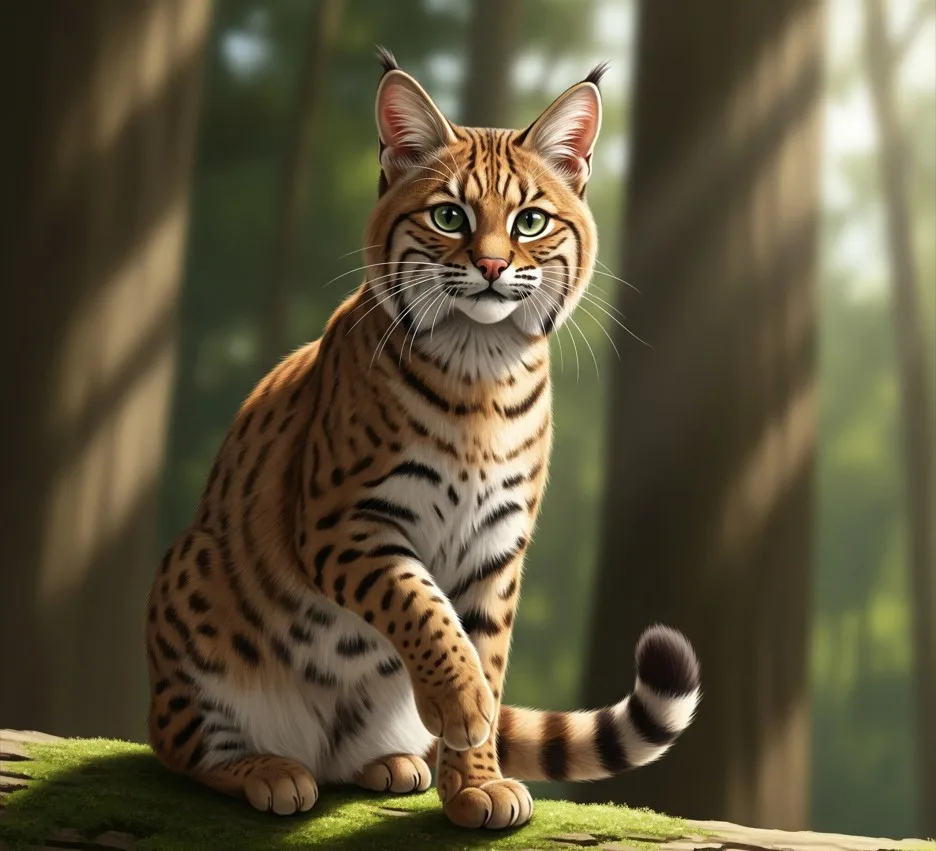
Domestic Cat that looks like a Bobcat
Many cat lovers dream of owning a domestic cat that looks like a bobcat—wild in appearance, but tame and affectionate in personality. Luckily, several breeds fit this description without any wild DNA.
1. Pixie-Bob
The Pixie-Bob is often considered the ultimate domestic cat that looks like a bobcat. With its muscular frame, spotted coat, and short bobbed tail, it closely resembles a wild bobcat. Despite the myths, DNA testing has proven that Pixie-Bobs are 100% domestic cats with no wild ancestry.
2. American Bobtail
Another domestic cat that looks like a bobcat is the American Bobtail. It has tufted ears, a sturdy build, and a naturally short tail. Their shaggy coats and athletic stance add to their wildcat appearance, but their personalities are affectionate and playful.
3. Highlander (Highland Lynx)
Highlanders are striking cats with curled ears, spotted or marbled coats, and bobbed tails. Selective breeding has given them a rugged, wild look, making them a popular choice for anyone who wants a domestic cat that looks like a bobcat while still being friendly and social.
4. Maine Coon
Although not directly resembling bobcats, Maine Coons are large, tufted, and rugged-looking cats. Their size and lynx-like ears often make people mistake them for bobcat hybrids.
5. Savannah Cat
While Savannahs are hybrids with the African Serval (not bobcats), their tall, spotted bodies often lead people to confuse them with wildcats. They share the exotic look while still being manageable household pets for experienced owners.
In short, if you want a domestic cat that looks like a bobcat, breeds like the Pixie-Bob, American Bobtail, and Highlander give you the wild appearance without the challenges of owning an actual wild animal.
The Final Word on the Bobcat Crossed With Domestic Cat
The analysis presented in this report leads to one definitive conclusion: a bobcat crossed with domestic cat is a captivating but scientifically baseless myth. The overwhelming evidence from evolutionary biology, modern genetic testing, and the deconstruction of anecdotal claims all point to the same fact. The insurmountable genetic barrier between the genera Felis and Lynx makes the successful production of a viable offspring a biological impossibility. Claims of a bobcat domestic cat mix are, in every case, a result of misidentification or a misunderstanding of genetic principles.
The existence of confirmed hybrids, such as the Bengal and the Savannah, serves to contextualize and, by contrast, disprove the possibility of a bobcat house cat cross. These hybrids, which have been painstakingly created and documented, demonstrate the precise conditions required for a successful cross. The ultimate proof is the Blynx, a true bobcat hybrid, which only occurs with another species within its own genus, proving that a bobcat crossed with domestic cat is a fundamentally different and impossible matter.
For those captivated by the exotic appearance of the bobcat, the responsible, legal, and humane path is to explore domestic breeds like the Pixie-Bob, American Bobtail, or Bengal. These cats have been carefully bred to possess the bobcat’s aesthetic without its wild temperament or complex needs. The greatest marvel of feline diversity is not a hypothetical hybrid but the vast and beautiful range of cats that have been safely and successfully domesticated over thousands of years. The quest for a bobcat house cat cross is a journey into fiction; true exoticism can be found in the reality of responsible cat ownership.