Yes, owning a jellyfish as a pet can be a fascinating experience, but it requires careful preparation and specialised care. Jellyfish are mesmerising and unique creatures that many people are now considering as pets. While they require special care and equipment, keeping jellyfish as a pet can be a rewarding experience.
This guide will walk you through everything you need to know about owning pet jellyfish, from selecting the best species to caring for them properly.
Why Keep a Jellyfish as a Pet?
Keeping a jellyfish as a pet is a unique and mesmerizing experience. These graceful marine creatures offer several distinct benefits that make them an intriguing choice for aquatic enthusiasts. Here’s why you might consider having a jellyfish in your home:
1. Aesthetic Appeal
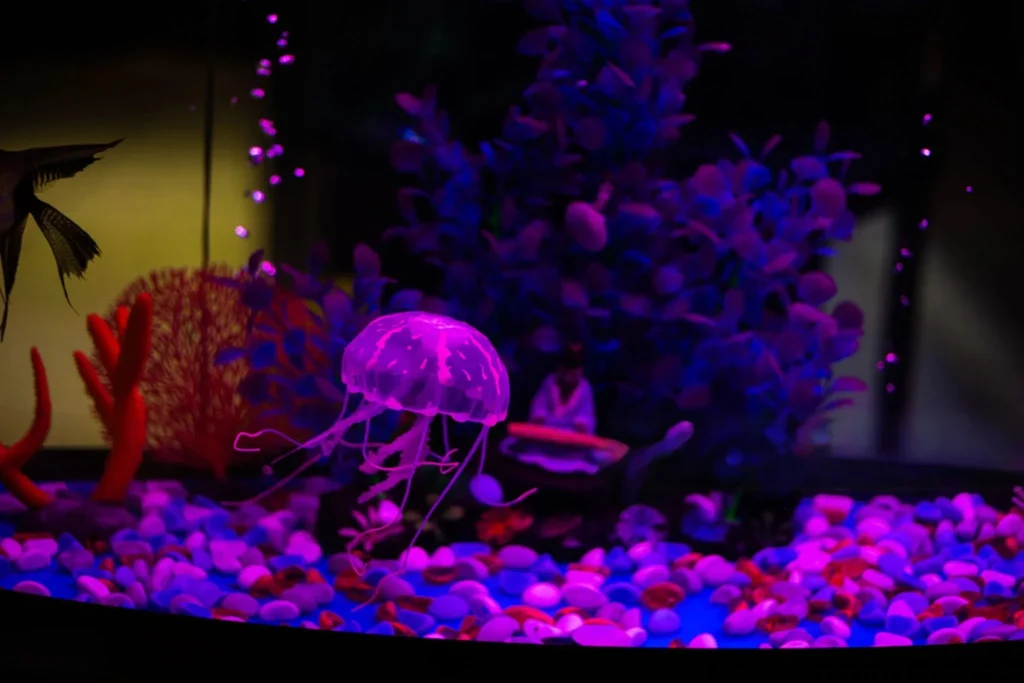
Jellyfish are elegant and calming to watch as they float effortlessly in the water. Their translucent bodies and gentle movements create a soothing visual experience, while their bioluminescent glow under LED lighting adds a stunning, almost magical touch to any space.
2. Low Maintenance Compared to Other Aquatic Pets
Unlike fish, jellyfish don’t require decorations, rocks, or plants in their tank. With a properly set up jellyfish aquarium, routine maintenance is relatively simple, making them an appealing choice for those who want a beautiful pet without excessive upkeep.
If you enjoy low-maintenance odd pets, check out our guide on keeping beetles as pets.
3. A Unique Pet
Owning a jellyfish is rare and fascinating. They are unlike traditional pets such as dogs, cats, or even fish, making them a conversation starter and a captivating addition to your home or office.
4. Independent and Low-Interaction
Many pets require frequent social interaction and attention, but jellyfish do not. This makes them ideal for people who prefer an independent pet that doesn’t demand constant care or companionship.
5. Educational Value
Keeping a jellyfish provides a hands-on opportunity to learn about marine life, ecosystems, and the delicate balance required to sustain these unique creatures in captivity. It’s a wonderful way to explore biology and environmental science in a personal, engaging way.
6. Relaxing to Watch
The slow, rhythmic movement of jellyfish creates a serene and calming effect similar to a lava lamp. Many owners report that watching their jellyfish tank is a natural stress reliever, and aquarium experts note that their gentle pulsing can act as “nature’s own stress therapy.”
7. Safe and “Animal-Friendly”
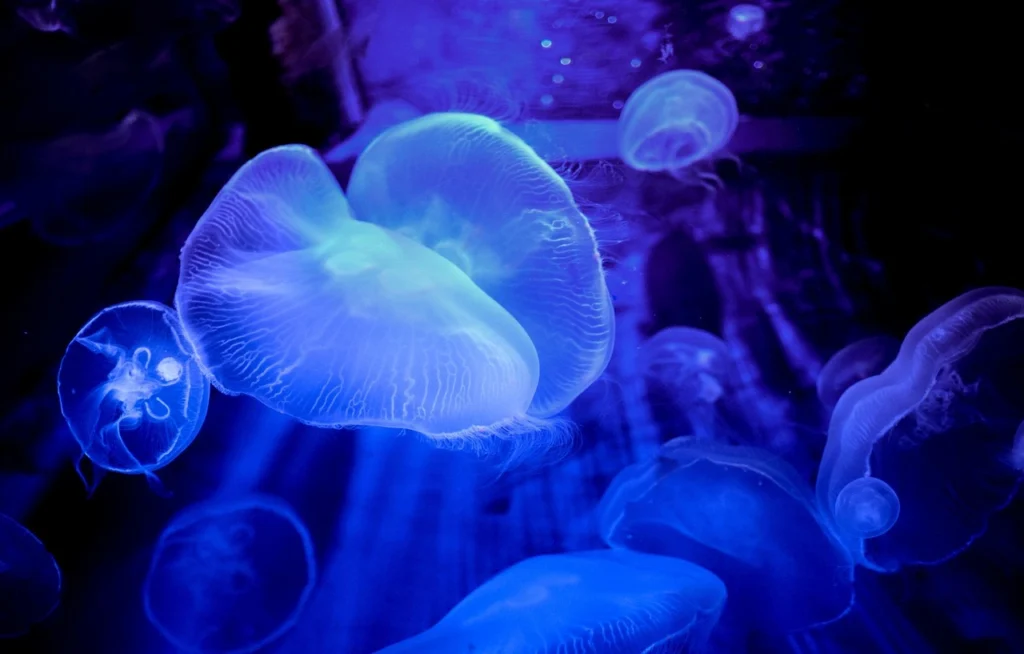
Jellyfish, especially moon jellies, have no hard bones and minimal to no sting, making them safe to observe. Moon jellyfish, in particular, are sting-free, can live up to two years in a tank, and lack a brain, meaning they do not experience fear or aggression—traits that make them unique among pets.
8. A Fascinating Conversation Starter
A glowing jellyfish aquarium is not just a pet—it’s an eye-catching decoration. Their graceful movement and luminescence under LED lights often intrigue guests and spark conversations. They are especially popular as desktop aquariums in offices or as unique additions to children’s rooms.
Overall, jellyfish are calm, low-maintenance, and mesmerizing pets. While they require some learning and proper tank setup, the reward is a truly one-of-a-kind aquatic companion that combines beauty, relaxation, and educational value.
Types of Pet Jellyfish
Not all jellyfish are suitable for home tanks. Here are a few categories of jellyfish (from beginner-friendly to dangerous) you might hear about:
Moon Jellyfish (Aurelia aurita):
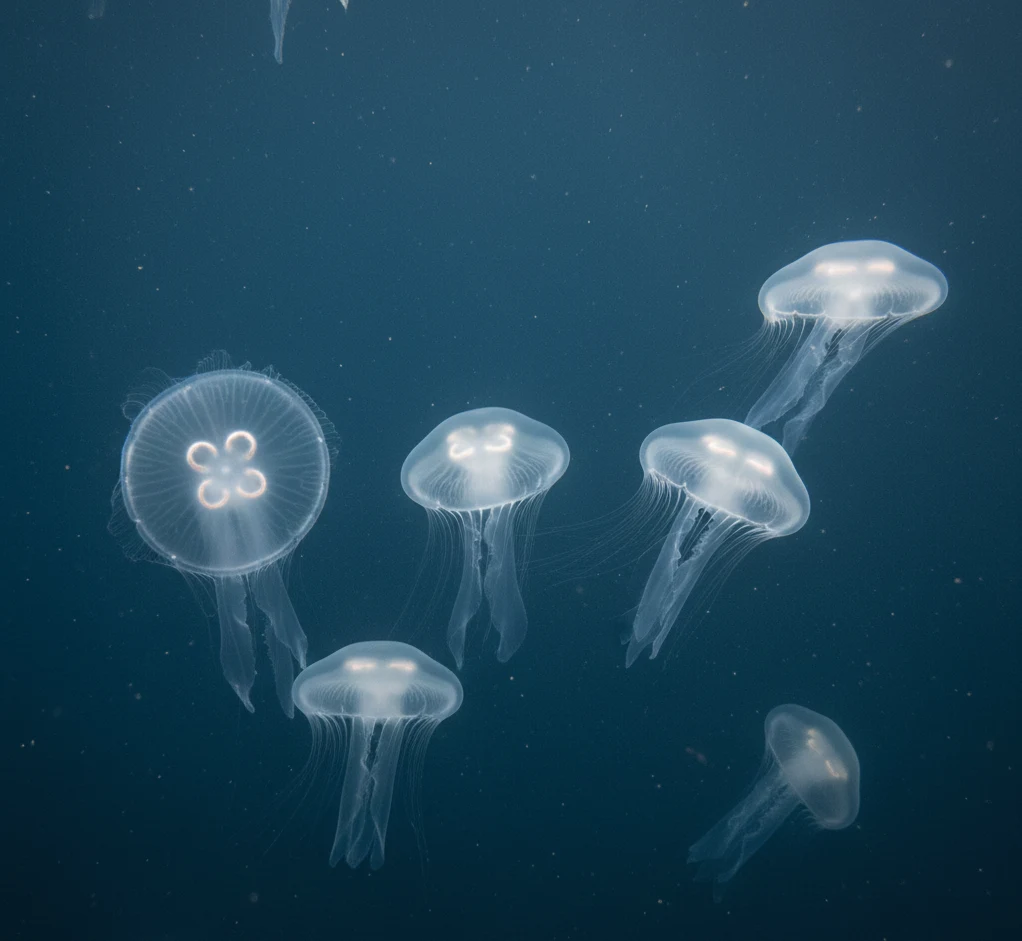
The classic pet jelly. Moon jellies have a translucent white bell and make gentle swirling movements. They’re sting-free to people and are considered “relatively easy to keep”. Typical moon jellies range from 1–3 inches across (sometimes called tiny jellyfish when young). Prices are quite reasonable – for example, small moon jellies cost around $24, medium $32, and large $45 each. Their average lifespan is about 1–2 years. Why popular: Safe sting, easy to feed (brine shrimp or jellyfish food), and well-adapted to aquarium life.
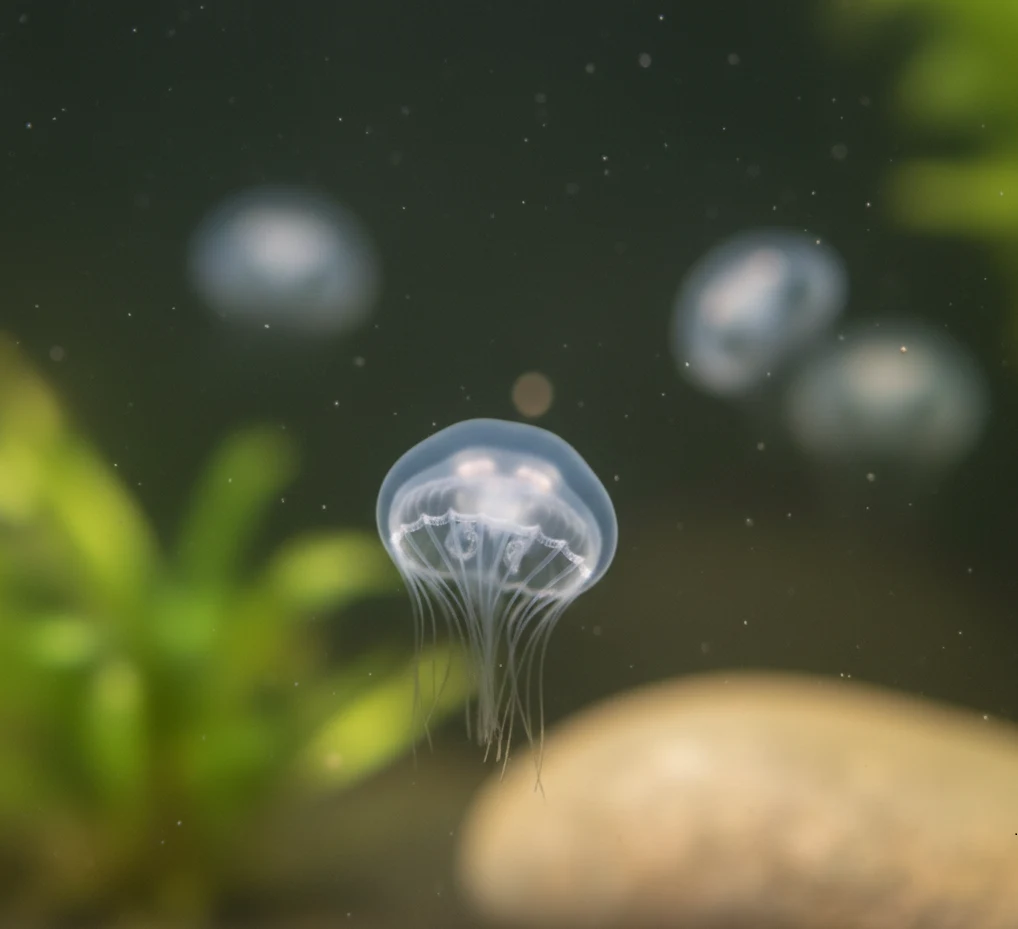
Freshwater “Jellyfish” (Craspedacusta sowerbyi):
These are tiny, coin-sized jellies that sometimes appear in ponds. They are not true marine jellyfish, but small hydrozoans. In aquarium conditions, they need very calm water (gentle flow) and very stable chemistry. Most people report their pet freshwater jellies stay under 1 inch diameter. They do have stinging cells, but “their sting is generally too weak to be felt by humans”. Some hobbyists collect or buy them (often sold as polyp colonies). Key point: They require soft, warm water (60–78°F) and delicate care. If you search “buy freshwater jellyfish”, you’ll find a few specialty sellers or kits.
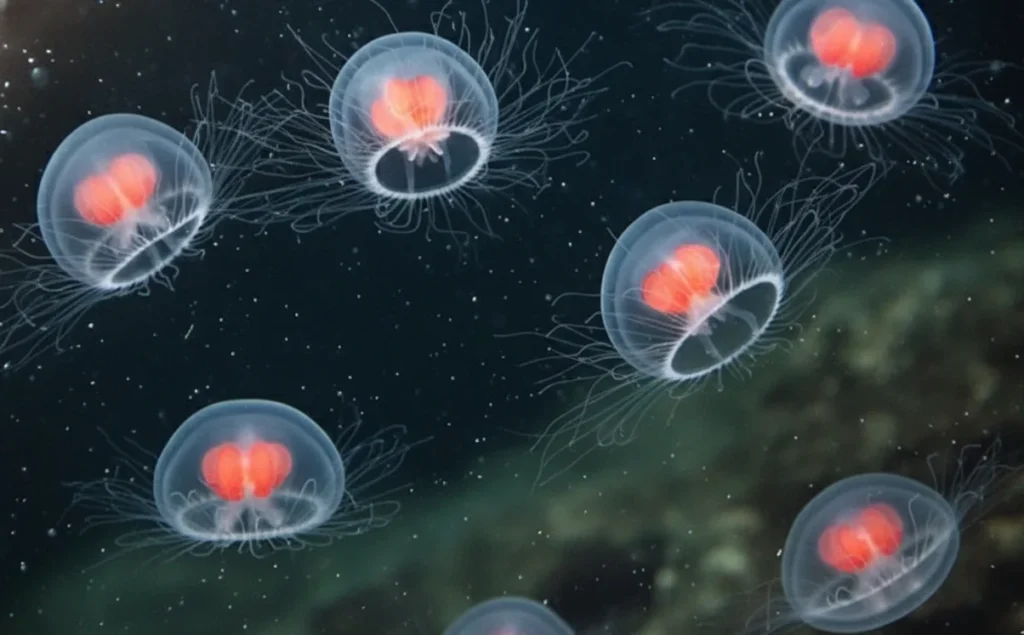
Immortal Jellyfish (Turritopsis dohrnii):
Often called the “immortal jelly,” this tiny species can literally revert to a juvenile stage instead of dying. It fascinates hobbyists but is very delicate to keep. In theory an immortal jellyfish pet could live indefinitely under perfect conditions. In practice, they require near-perfect water and often die if injured. They are rarely sold in pet stores (sometimes available to serious collectors). Note: While the idea of an immortal pet is cool, these jellies are not a good choice for beginners.
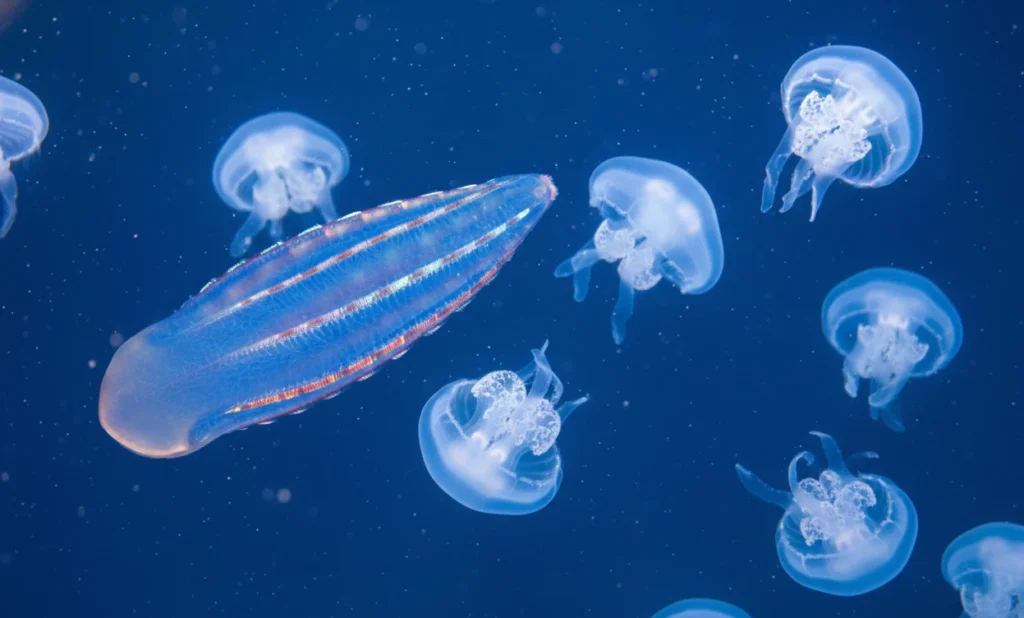
Other Jellyfish:
Many other species like comb jellies, blue blubber jellies, etc., are not typically kept by hobbyists. They may have strong stings or special needs. For instance, some small “blue jellyfish” sold as decorations are actually sterile silicone models (see below).
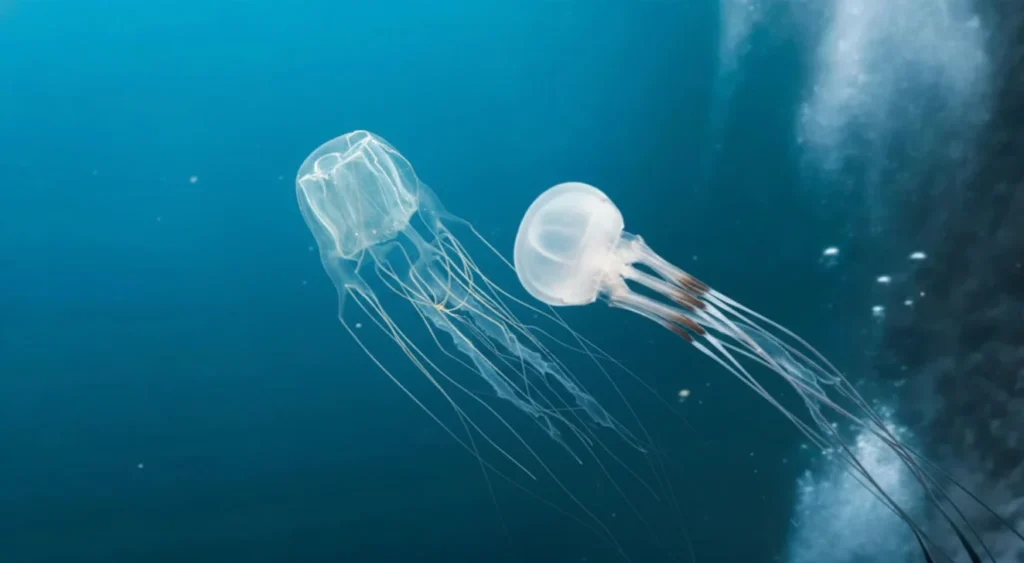
Dangerous Jellyfish (do NOT keep):
Box Jellyfish (class Cubozoa) and some Portuguese Man O’ War types are extremely venomous. Box jellyfish can have stings that are “extremely painful and often fatal to humans”. These belong in the ocean or major public aquariums, never a home. Searching phrases like “buy box jellyfish” or “box jellyfish as a pet” should immediately raise red flags – even trying to keep one could be illegal and deadly.
You should stick with beginner-friendly species like the moon jelly or freshwater types, and avoid any jellyfish known for venom. For a safe way to see dangerous jellyfish up close, our guide on exotic animal experiences can help—so you don’t have to keep a jellyfish as a pet.
Setting Up a Jellyfish Aquarium
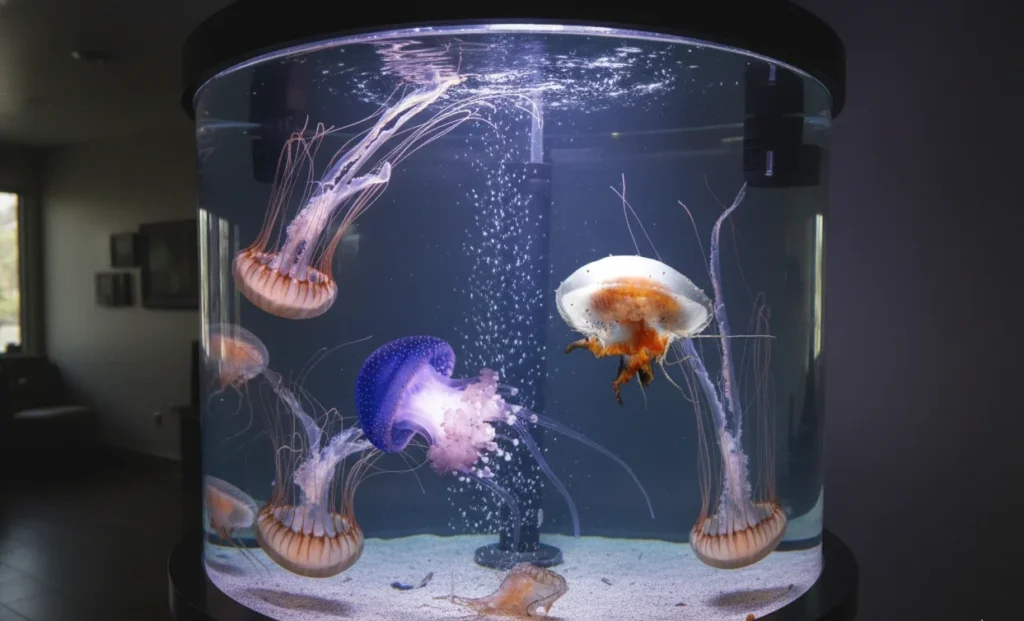
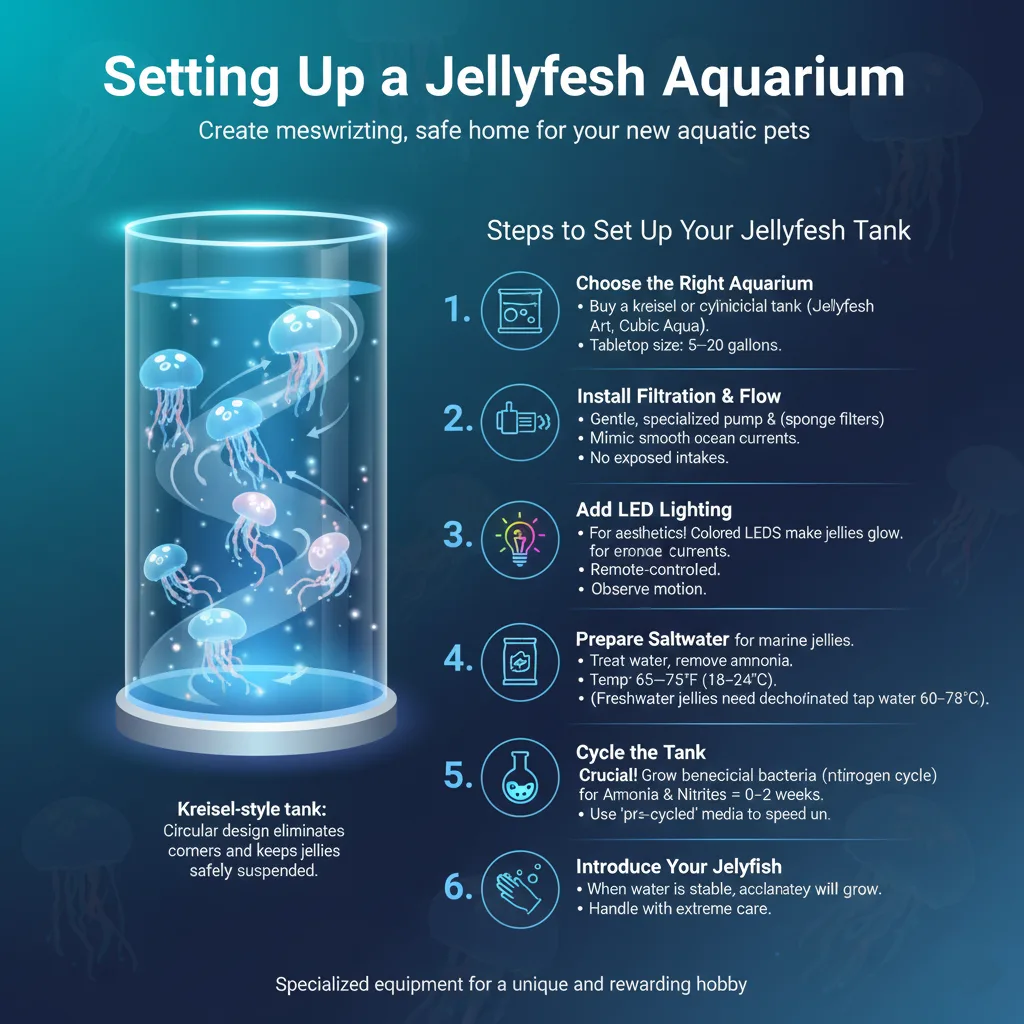
To keep a jellyfish, you must have a specialized tank. Regular rectangular fish tanks won’t work, because jellyfish can get sucked into filters or jammed in corners. Instead, jellyfish tanks use a kreisel or circular design that keeps them drifting safely.
A kreisel-style jellyfish tank. Notice the circular flow—this design keeps jellies suspended safely without corners.
Experts explain that “a jellyfish tank needs to have a circular flow of water… along with rounded corners and no sharp edges”. This gentle, spiraling current is crucial so jellies don’t sink or collide with the glass. Many manufacturers now sell home aquariums built just for jellies. For example, one retailer describes their top-of-the-line jelly tanks as “specialist pieces of kit” designed to keep jellies safely in your home or office.
Steps to set up your jellyfish tank:
1. Choose the right aquarium:
Buy a kreisel-style jellyfish tank. These are often circular or cylindrical. (Brands include Jellyfish Art, Cubic Aqua, etc.) Some start kits include the tank, filter, and 3 baby moon jellies. For a tabletop setup, a common size is ~5 gallons (23 liters), up to ~20 gallons for a small group. Very large tanks (100+ gallons) exist but are for advanced hobbyists or public displays.
2. Install filtration and flow:
Even little setups need a pump. Use a gentle pump and filter specifically made for jellies (often sponge filters). The flow should be continuous but not too strong. As Exotic Aquaculture notes, “in the wild jellyfish… drift along ocean currents,” so mimic that smooth flow. No filtration intakes or corners should be exposed.
3. Add LED lighting:
While not required for jellyfish health, most jelly setups include colored LEDs. These lights make the jellies’ translucent bodies glow beautifully. Many home jellyfish tanks (23–160 L) come with remote-controlled LEDs built in. Lighting also helps you observe the jellies’ motion.
4 . Prepare saltwater:
If you’re keeping marine species (like moon jellies), use marine salt mix. Fill the tank with properly mixed seawater and treat it to remove ammonia (cycle the tank beforehand, just like a fish tank). Maintain temperature around 65–75°F (18–24°C) for moon jellies. Freshwater jellies need dechlorinated fresh water at 60–78°F (15–26°C).
5. Cycle the tank:
It’s crucial to let beneficial bacteria grow (nitrogen cycle) before adding jellies. This can take a few weeks. Some hobbyists use “pre-cycled” filter media or sponges to speed this up (there are products like “Skip the Cycle” filters). The filter should eventually hold ammonia at 0 and nitrites at 0, with only low nitrates.
6.Introduce your jellyfish:
When water is stable and clean, gently add your jellyfish. Many sellers ship jellies in small bags; acclimate them slowly to your tank’s water. Initially, only a few jellyfish (2–3) should go in, as they can grow.
Tip: Always follow detailed instructions that come with your jelly tank kit. The equipment is specialized, and brand instructions will cover setup nuances.
Jellyfish are beautiful but require specialized tanks and care. If you’re drawn to aquatic pets, you might also be interested in the Seal as a Pet for a more interactive marine companion.
Looking for a cute exotic pet that’s from the land? See my guide on quokkas as pets.
Feeding Jellyfish and Care
Once your tank is running, jellyfish care is relatively straightforward but must be consistent.
Diet:
Most pet jellyfish eat tiny planktonic foods. The classic food is live baby brine shrimp (nauplii). Some hobbyists hatch shrimp eggs daily for their jellies. Others use powdered or prepared jellyfish foods (like “JellyFuel”) designed for jellyfish. As one seller puts it, moon jellies’ diet includes “Live Artemia (Baby Brine Shrimp) or JellyFuel (freeze-dried plankton)”. Feed sparingly: a pinch of food once or twice a day, just enough that they can catch it. Too much food will quickly foul the water.
Water quality:
Keep ammonia and nitrites at 0. Jellyfish are sensitive to poor water. Do frequent small water changes (for example, 10–20% weekly) with properly mixed, clean saltwater (for marine jellies) or clean water (for freshwater jellies). Use gentle methods (like siphon away waste carefully). Monitor temperature (e.g. 72°F) and pH (marine ~8.0).
Tank mates:
It’s best to keep jellyfish by themselves. Many fish will eat or injure jellies. Even some freshwater aquarium fish will snack on tiny jellies. On the flip side, some fish might nip at jelly tentacles. As one care guide warns, “Yes, some fish do eat freshwater jellyfish… In an aquarium setting, it’s important to be cautious about types of fish housed with jellyfish”. Best to keep them alone or only with other jellyfish of the same species.
Lifespan:
With good care, a moon jellyfish will live about 12–24 months in captivity. Some species live shorter; freshwater jellies only last a few months in jelly form. The “immortal” jellyfish can theoretically regenerate indefinitely, but this is not guaranteed in practice.
A small home jellyfish tank with LED lighting. These kits (5–20 gallons) usually include everything: tank, filter, pump, and sometimes starter jellyfish. Notice the gentle circular flow and the glowing lights.
Keeping the environment calm and clean is key. Equipment like protein skimmers or ozone generators can help in larger setups, but are overkill for beginner tanks. Just stick to the basics: proper flow, filtration, and regular maintenance.
Where to Buy and How Much It Costs
If you’ve decided on a pet jellyfish, you’ll need to buy both live jellyfish and a jellyfish tank. Unlike goldfish, you can’t get these at a typical pet store. Instead, look for specialized aquarium suppliers or online vendors.
Jellyfish:
Live jellies (usually moon jellies) can be ordered online from a few specialty retailers. Prices vary by size: as mentioned, one U.S. seller lists small moon jellyfish at ~$24, medium at ~$32, and large at ~$45. Some shops ship adult moon jellyfish in small insulated packages. Always order from a reputable source. (Tip: Search for “live jellyfish for sale” or even “jellyfish near me” to find local shops; some aquarium stores or “aquaculture” businesses sell them.)
Aquarium Kits:
Complete jellyfish tank kits (including the aquarium, filter, lights, and some starter accessories) range in price. A small “nano jellyfish kit” (about 5 gallons plus 3 baby jellies) can be around $130. Larger kits cost more: for example, a 5-gallon cylindrical Jellyfish Art kit (with 3 jellies) is about $760–$900 depending on options. In the US, companies like Jellyfish Art, PetJellyfishUS, and others sell these kits. In the UK and Europe, brands like Ocean’s Clouds or Medusae Lab offer similar products.
Additional Supplies:
Don’t forget salt mix, test kits, and extra food. These items can add $20–$50.
In short, expect to spend at least a few hundred dollars up front. You’re buying specialized equipment and delicate animals, so plan a budget of $200–$1000+ depending on tank size and where you source it. Many shops label their products with all-in-one prices (e.g., “Complete Jellyfish Starter Kit: $319, includes tank and jellies” etc.). Check for sales or holiday deals on “jellyfish sale” events.
Safety and Legal Considerations
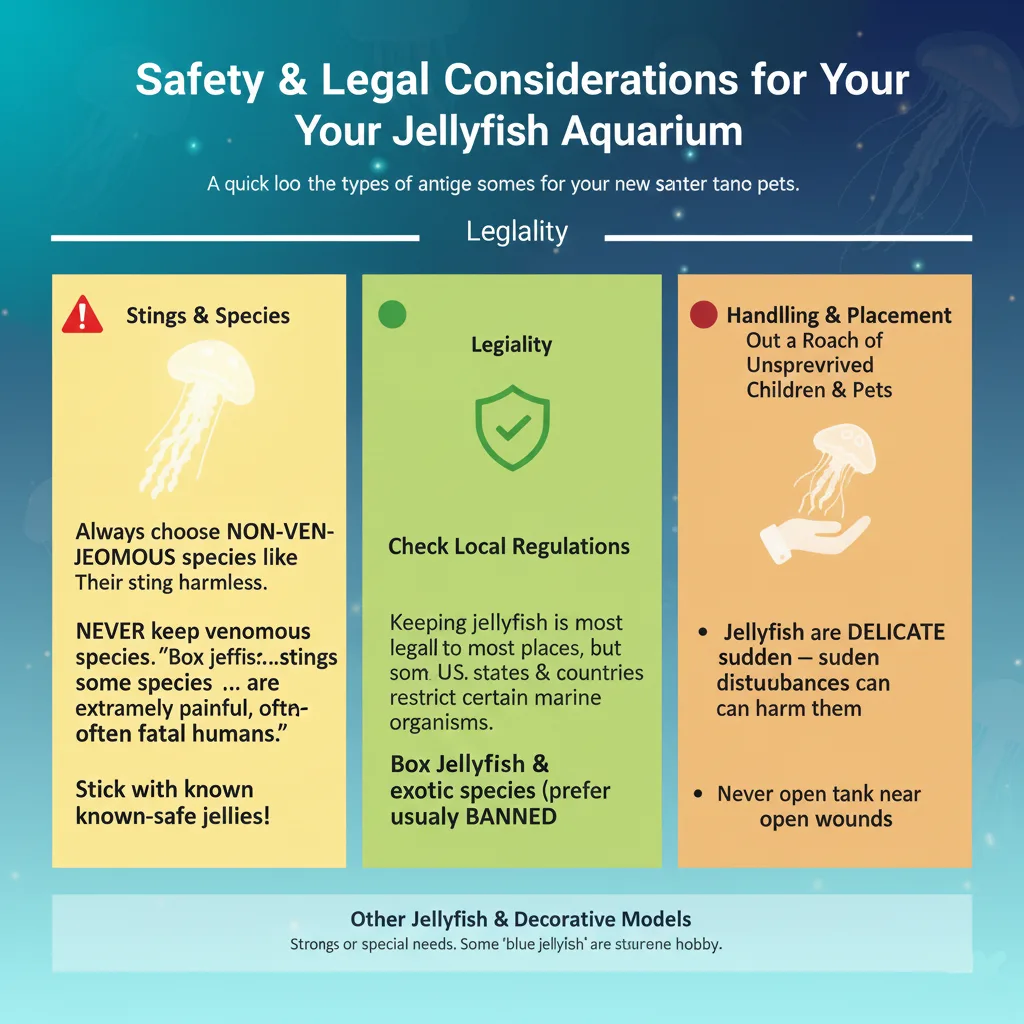
- Stings and Species: Always pick non-venomous species like moon jellies. Moon jellies are completely harmless to humans – their sting is absent or too weak to feel. Never attempt to keep a venomous species. As a reminder, “Box jellyfish…stings from some species…are extremely painful and often fatal to humans”. Even mildly venomous species (e.g. certain sea nettles) can sting and hurt. So stick with known-safe jellies.
- Legality: In most places, keeping jellyfish is legal, but check local regulations. In some U.S. states and countries, certain marine organisms are restricted. Box jellyfish and some exotic species are usually banned for private ownership. Make sure your supplier follows wildlife laws (prefer captive-bred jellies, not wild-caught ones).
- Handling: Jellyfish tanks should be out of reach of unsupervised children and pets. While moon jellies won’t sting you, they are delicate – a sudden disturbance can harm them. Also never open the tank near open wounds or with a spoonful of jellyfish.
Ocean lovers might also enjoy reading whether a seal makes a good pet.
Fake Jellyfish and Decor
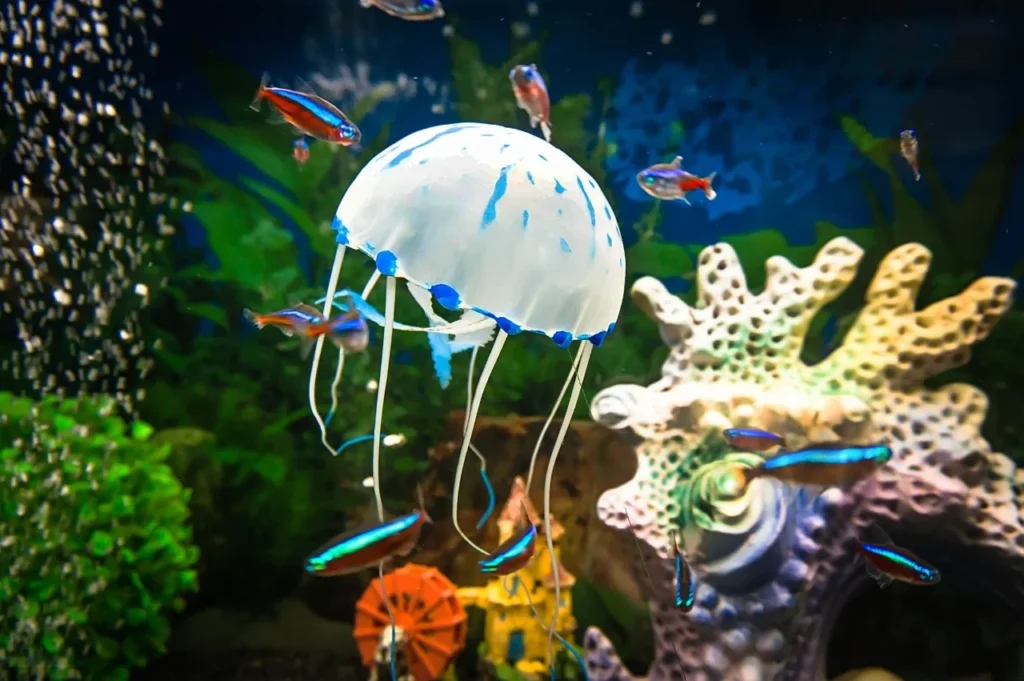
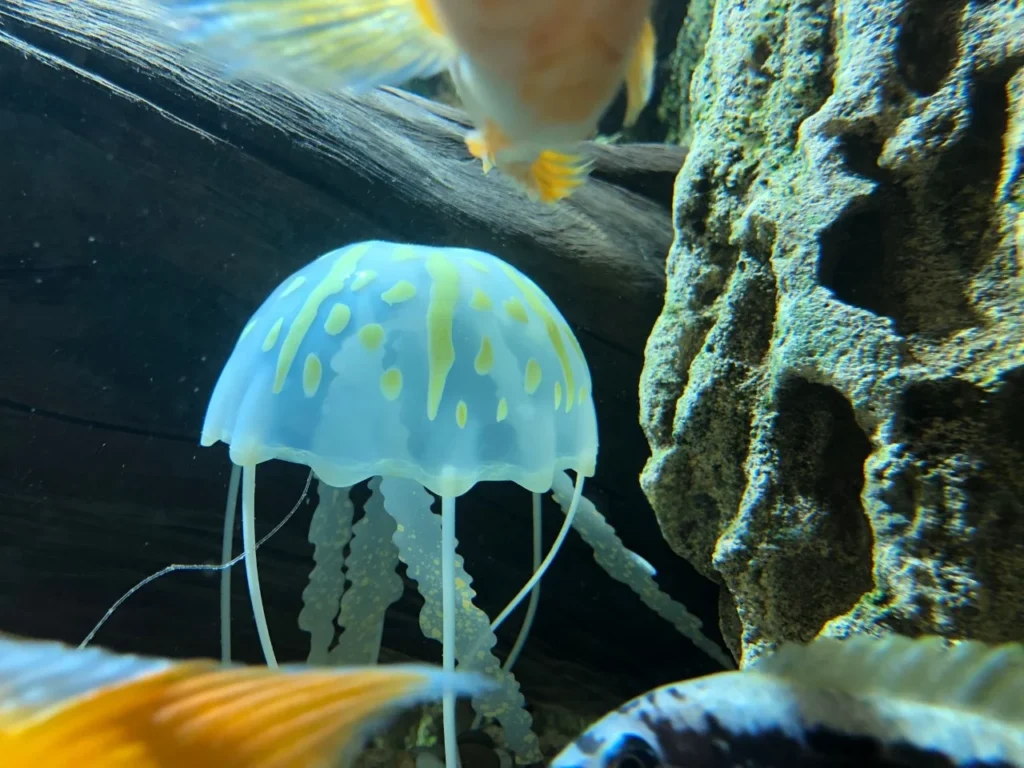
If keeping live jellyfish sounds like too much work or expense, there are artificial alternatives. “Fake jellyfish” kits use silicone or plastic jellies that float in an aquarium with LED lights. These need no care beyond the occasional cleaning. They’re sold as aquarium ornaments or novelty lamps.
For example, stores sell packs of glowing silicone jellyfish decorations (you simply toss them in a regular fish tank). One 6-pack of glowing jellyfish ornaments is about $10.88 (roughly $1.80 each). Single neon “glowing” jelly figurines can be as cheap as $2–$3 each. These won’t move on their own (you need a gentle air pump or water flow to float them), but under color-changing LED lights, they look very cool.
These fake options can be great for kids or office desks: no feeding, no water changes. Just remember they’re decorations, not living animals. If someone searches “fake jelly fish tank”, they’ll find these glowing ornaments or even full aquarium kits with faux jellyfish.
FAQs About Pet Jellyfish
How do I keep a jellyfish in an aquarium?
You need a special circular-flow tank (a “kreisel”) with gentle filtration. Cycle it like a normal fish tank, then add the jellyfish. Keep the water clean and feed tiny foods like baby brine shrimp. See above for setup steps.
Can I keep jellyfish with other fish?
Generally no. Jellyfish are delicate and most fish will eat them. Even peaceful freshwater fish can nibble. It’s safest to keep jellyfish alone or only with other jellies of the same species.
What should I feed my pet jellyfish?
Most eat planktonic foods. Common feeds are live baby brine shrimp (Artemia nauplii) or specially formulated jellyfish food. Feed once daily or every other day. Use small amounts so the water doesn’t get dirty.
How much does a jellyfish tank cost?
A full jellyfish aquarium kit (tank, filter, lights) typically starts around $100–$300 for a small desktop kit, and can go to $700+\ for larger setups. Live jellyfish themselves are extra (dozens of dollars each).
Are jellyfish hard to care for?
They require more care than a goldfish, but once set up, they’re straightforward. The key is keeping the water clean and flow gentle. Many hobbyists find them surprisingly easy if you follow instructions. Moon jellyfish in particular are often recommended for beginners.
What is the “immortal jellyfish”?
The immortal jellyfish (Turritopsis dohrnii) can revert to a baby stage instead of dying. In perfect conditions it could theoretically live forever. It’s a cool science novelty, but not commonly kept as a pet because it’s tiny and finicky. Don’t expect a pet jellyfish that lives forever in your living room – accidents and predators still kill them.
Can I keep a box jellyfish as a pet?
No, absolutely not. Box jellies have extremely potent venom. Even experienced hobbyists avoid them. Their sting can be fatal. Stick to benign species like moon jellies.
Where can I buy live jellyfish or jellyfish tanks?
Look for specialized aquatic retailers or online stores. In the US, companies like Jellyfish Art or PetJellyfishUS sell tanks and live jellies. In the UK/EU, brands like Ocean’s Clouds offer kits. You can also try local fish shops or aquarium expos. Searching for “live jellyfish for sale” or “pet jellyfish near me” can point you to hobbyist vendors. Always ensure they ship safely and legally.
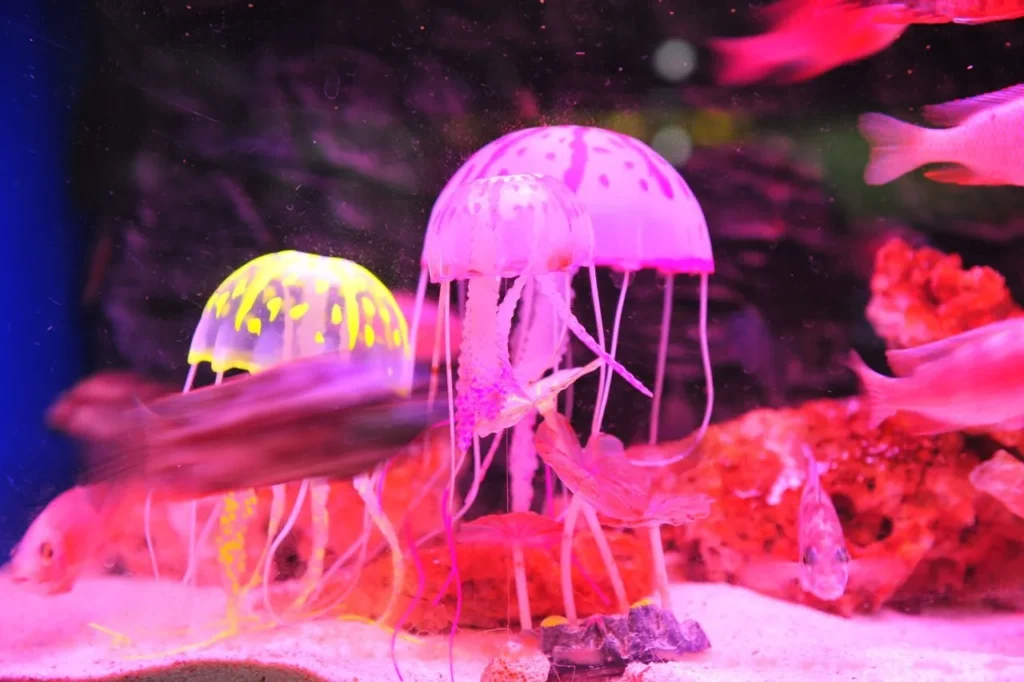
What is a “fake jellyfish tank”?
This refers to an aquarium set up with artificial (plastic/silicone) jellyfish. They glow under LEDs and don’t need feeding. If you want the jellyfish look without live animals, these are an easy alternative (you can find them on sites like Amazon or Walmart).
How Long Do Pet Jellyfish Live?
The lifespan of pet jellyfish depends on the species and care:
- Moon Jellyfish Pet – 1 to 2 years with proper care.
- Pet Immortal Jellyfish – Can theoretically live indefinitely under the right conditions.
- Tiny Jellyfish – Lifespan varies but usually under a year.
What Reddit Users Said About Pet Jellyfish
From a thread on r/ReefTank (“What it’s like having pet jellyfish”):
atthehill: “They are not very hardy.”
IceNein: Mentioned problems with food sediment building up, making cleaning difficult without harming the jellies.
Total_Calligrapher77: Argued that not every jelly species needs a round tank.
zvekl: Said, “Feed live brine only … They get boring after awhile though, ngl.”
God_of_Fun: “Not very hard. Low key kinda fun at first.”
crashandwalkaway: “Did it once, never again … Small water column means crazy parameter swings … They lasted about 8 weeks …”
navalxeagle: Warned that the water flow must be “just right” or they die, adds that they’re expensive and live “like a year max.”
proxissin: From a commercial/aquaculture POV: “They require much more maintenance and specialized nutrition… not worth the hassle, imo.”
modern_katillac: “Agreed. PITA, expensive, frustrating, rarely survives. Hard pass.”
13drakon777: Very skeptical: “For every 1000 tanks they sell, 1 person is going to be successful … They’re popular bc they’re the newest novelty … when there’s a new generation … to peddle them.”
Awsimical: Curious but realistic: “I don’t see myself setting up a jelly fish tank … but … I’m sure it would feel like an accomplishment to manage one successfully.”
Pixelhustler23: Offered practical advice: “You just need a specialized tank, consistent feeding and water changes … Moons … If you’re interested … check out the dedicated Facebook groups.”
Sir_Percival123: Reported some success: “I managed about 14 months with my Moon Jellies.”
DJBeckyBecs: Admired them but wasn’t sure about care: “God, they’re beautiful. But I would not be able to care for them.”
Author’s Note
Keeping jellyfish can be a fascinating project. I’m a marine hobbyist and have seen how peaceful these tanks can be. From my experience, the most important tip is patience: set up your tank and let it stabilize before adding any jellies. Always double-check tank parameters and flow. For more details, credible sources (linked above) are invaluable. Good luck, and enjoy your new gliding pets!



Prosta Peak looks like a promising supplement for men dealing with common prostate symptoms such as frequent bathroom trips, weak
flow, or discomfort at night. I like that it’s designed with natural ingredients to support
prostate health and overall urinary function. It could be a helpful option for men wanting to feel more comfortable and confident as they age.